
Chef Juliana
Arroz-Doce de Festa Junina
You can make the pot your tia guards at every arraiá. Rice, milk, sugar, cloves, cinnamon, and patience turn into a creamy spoonful of June.
A cooking platform built around craft, culture, and the stories behind what we eat.
Created by
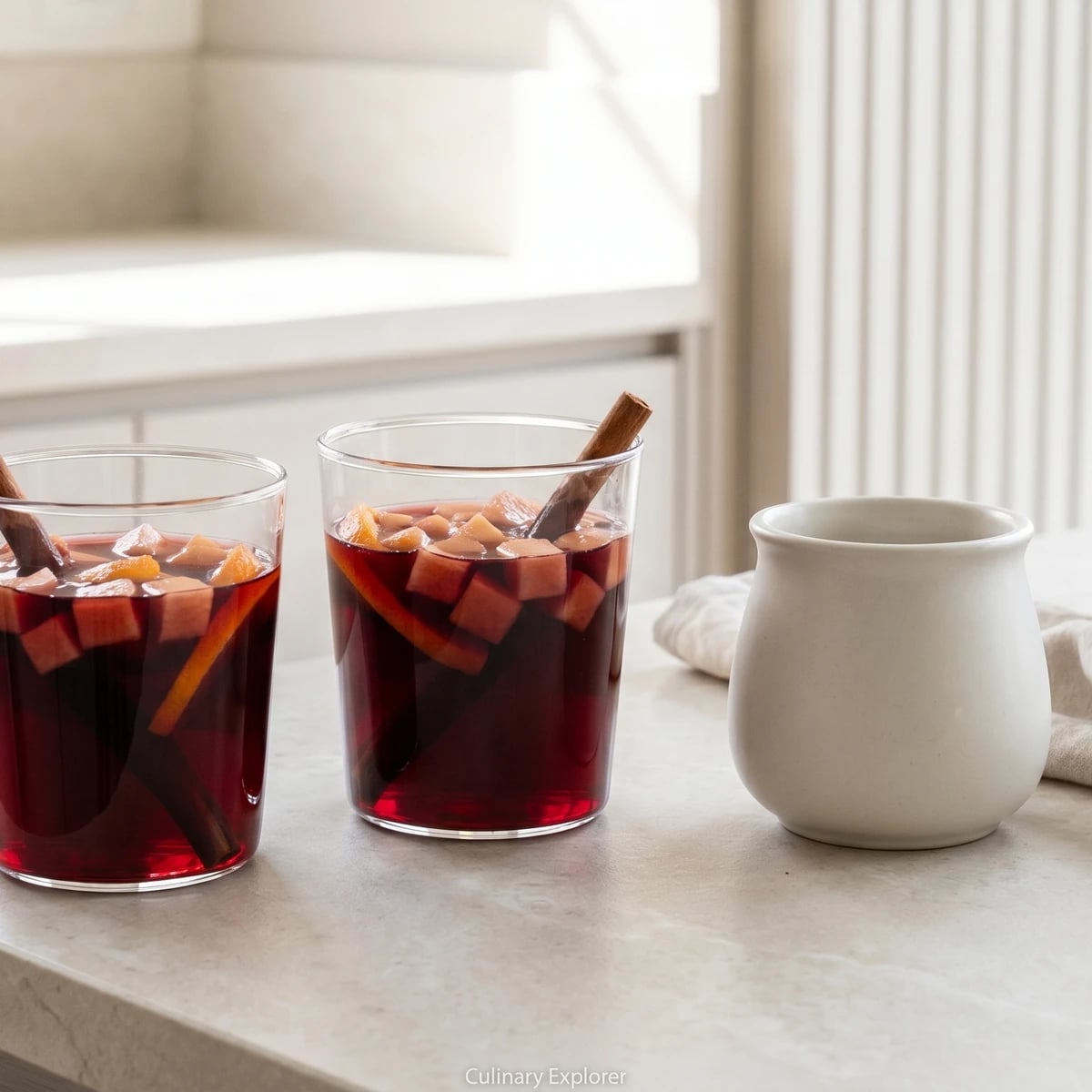
You don't need a bar cart or a secret talent. You need wine, sugar, spices, fruit, and the discipline to warm it gently so June smells like itself.
You may be standing there thinking, isso não é pra mim, because warm wine sounds like something people make with confidence, a scarf, and opinions. Nonsense. It's a pot. It's fruit. It's spices. Cozinhar não é dom, é um aprendizado, and this one is a very friendly lesson.
Vinho quente isn't the everyday pê-efe, rice and beans and a piece of meat and something green, but it belongs to the same table logic: real ingredients, a simple method, everybody served from the same pot. Festa junina food is Brazilian home cooking dressed for a party, not food trying to become theater. A gente warms the wine, sweetens it, perfumes it with clove, cinnamon, orange, and apple, and lets the kitchen do the inviting.
The why is simple. Dissolve the sugar first so it doesn't sit grainy at the bottom. Toast the spices briefly so they wake up before the wine goes in. Keep the heat low once the wine is in the pot, because boiling drives off the fruit and spice aroma and turns the drink harsh. This is not quentão, anota aí: quentão is usually cachaça. This is wine.
Use an honest, inexpensive dry red. Not a precious bottle, not a box of powder pretending to be festa. By the end you'll have a warm, ruby drink with soft fruit, round spice, and that unmistakable smell of June gathering people near the stove.
Vinho quente is tied to Brazilian festas juninas, the June celebrations for Saints Anthony, John, and Peter that became especially strong in rural and interior communities before spreading through school parties and city fairs. It is often confused with quentão, but in much of Brazil the distinction is clear: vinho quente is made with red wine, while quentão is commonly made with cachaça, ginger, sugar, and spices. Regional habits vary, especially in the south where wine culture is stronger, but the shared idea is the same: a hot communal drink for cold June nights.
Quantity
1 bottle (750 ml)
Quantity
1 cup
Quantity
1/2 cup, plus more to taste
Quantity
1 medium
peeled in wide strips and juiced
Quantity
1 small
cored and diced
Quantity
1 small
cored and diced
Quantity
2
Quantity
8
Quantity
2
Quantity
1 thin slice
Quantity
1 tablespoon
| Ingredient | Quantity |
|---|---|
| dry red wine | 1 bottle (750 ml) |
| water | 1 cup |
| sugar | 1/2 cup, plus more to taste |
| orangepeeled in wide strips and juiced | 1 medium |
| applecored and diced | 1 small |
| pear (optional)cored and diced | 1 small |
| cinnamon sticks | 2 |
| whole cloves | 8 |
| star anise (optional) | 2 |
| fresh ginger (optional) | 1 thin slice |
| cachaça (optional) | 1 tablespoon |
Peel the orange in wide strips, leaving as much white pith behind as you can, then juice the orange. Dice the apple and pear, if using, into small spoonable pieces. The wide peel gives perfume without too much bitterness, and the small fruit pieces soften quickly enough to eat from the cup.
Put the cinnamon, cloves, star anise, and ginger, if using, in a heavy pot over medium heat for about 1 minute, shaking the pot once or twice. Stop when you can smell the spices clearly. Don't let them scorch, because burnt clove tastes medicinal and bossy in the worst way.
Add the water, sugar, orange peel, orange juice, apple, and pear. Stir until the sugar dissolves, then simmer for 5 minutes, until the fruit starts to look glossy and the syrup smells like orange and cinnamon. Dissolving the sugar here means the drink sweetens evenly instead of leaving grit at the bottom of the pot.
Pour in the wine and lower the heat. Warm it gently for 10 to 12 minutes, until the surface trembles at the edges but does not boil. This matters. Boil the wine and you bully the flavor out of it, drive off the aroma, and make the whole pot taste sharp.
Taste a spoonful carefully. Add more sugar 1 tablespoon at a time if the wine is very dry, stirring until it dissolves before tasting again. Sweetness should round the spice and fruit, not turn the drink into syrup. If you want the cachaça, add it now, off the heat, so it stays bright instead of harsh.
Ladle into heatproof cups, letting a few pieces of fruit fall into each one, and leave the whole spices in the pot. Serve while warm and ruby-colored, with the fruit soft but still holding its shape. That's the ponto: fragrant, rounded, and easy to drink slowly.
1 serving (about 170g)
Culinary guides, cultural storytelling, and the editorial depth that makes cooking meaningful.
Discover Culinary Explorer
Chef Juliana
You can make the pot your tia guards at every arraiá. Rice, milk, sugar, cloves, cinnamon, and patience turn into a creamy spoonful of June.

Chef Juliana
You think a creamy cake needs a mixer and courage. It doesn't. A thin blender batter, real erva-doce, and patience in the oven give you cake on top, cream underneath.

Chef Juliana
You think a creamy corn cake is for someone else's kitchen. It's not. Cut the kernels, blend the batter, bake until the edges go gold and the center still gives a little.

Chef Juliana
You don't need a whole festa junina to make canjica. Soak the corn, cook it tender, then simmer it in spiced milk until the pot turns creamy.