
Chef Lesia
Buzhenyna (буженина, garlic-studded roast pork)
A whole pork neck takes garlic into little knife pockets, roasts until the crust goes dark and fragrant, then rests overnight so every cold slice tastes better than shop ham.
A cooking platform built around craft, culture, and the stories behind what we eat.

Created by
The roe is the treasure: a salty amber seam hidden inside a dried river fish, peeled open by hand and eaten slowly with rye bread, sunflower oil, and something cold.
The most arresting thing is the color. A fresh river fish goes into salt silver and soft, and days later it hangs in the shade like amber glass, the flesh tightened, the belly holding roe that tastes of salt, river mud, and spring all at once. You do not serve taranka with a knife and fork. You peel, tear, pass pieces across the table, lick salt from your thumb.
This belongs to the southern rivers and markets, to the Dnipro, the Black Sea edges, the Azov habit of drying what the nets gave before the heat could steal it. It is budget food, picnic food, beer-table food, but never throwaway food. The roe-filled ones are chosen first, quietly, by people pretending not to be greedy.
The one thing that decides the dish is drying, not salting. Salt makes the fish safe enough to begin; moving cool air makes it taranka. Hang it where the air can pass around every body, where flies cannot reach it, where the skin tightens and the smell changes from raw fish to clean salt and dried river. My father would tap one against the table and say, 'now it has a voice.' He was teasing, but he was right.
Make enough for eight guests or one hungry Ukrainian. It keeps, it travels, and it turns a park bench, a riverbank board, or a balcony table into a meal.
Taranka takes its name from taran, a Black Sea and Azov roach, though the word now covers many small salted and dried fish eaten across southern Ukraine. The roe-filled spring catch was especially prized because female fish before spawning dried with a rich, granular belly inside. Long before refrigeration, salting and air-drying let river and estuary communities carry fish inland to markets, taverns, trains, and picnic tables.
Quantity
2 kg
very fresh, 15 to 22 cm long, ideally with roe
Quantity
350g
non-iodized
Quantity
2 litres
for soaking
Quantity
1 tablespoon
for the soaking water
Quantity
a little
Quantity
to serve
Quantity
to serve
| Ingredient | Quantity |
|---|---|
| whole roach or small breamvery fresh, 15 to 22 cm long, ideally with roe | 2 kg |
| coarse sea salt or rock saltnon-iodized | 350g |
| cold waterfor soaking | 2 litres |
| fine sea saltfor the soaking water | 1 tablespoon |
| unrefined sunflower oil (optional) | a little |
| rye bread (optional) | to serve |
| cold beer or kvass (optional) | to serve |
Because roach is freshwater fish and this dish is not cooked, freeze the cleaned, very fresh whole fish first at -20C or colder for 7 days, then thaw overnight in the fridge. If your freezer cannot hold that cold, buy fish that has already been commercially frozen. Tradition has strong hands, but parasites do not care about nostalgia.
Rinse the thawed fish quickly and pat them dry. Lay a thick bed of coarse salt in a non-reactive dish, pack the fish belly-side up, and cover every layer generously with more salt, especially around the gills and belly. Put a plate and a weight on top, then keep the dish in the fridge until the fish firm up, release brine, and smell cleanly of sea salt and river, not raw blood.
After 48 hours for small fish, or up to 72 hours for thicker ones, lift one out and press behind the head. The flesh should feel tight and springy, the eyes dulled, the skin slick with brine. If the belly still feels soft as fresh fish, give it another day under salt. This is the step that does not forgive impatience.
Rinse off the surface salt, then soak the fish in cold water with the tablespoon of fine salt stirred through it. Change the water once or twice until the fish tastes salty enough to make you want bread, not so salty it hurts your tongue. Aunt Nadia wrote only, 'until it sounds right,' which is comedy when the fish is silent, so taste a tiny flake from near the tail and trust that.
Thread kitchen string through the eye sockets or tie around the tails, then hang the fish in a cool, shaded, moving-air place, protected from insects with clean muslin or a mesh food cover. They are ready when the skin has tightened, the flesh has turned amber and faintly translucent at the edges, and the fish bends stiffly instead of flopping. No damp cellar business. Cool air, salt, and movement are the whole recipe.
To eat, crack the skin along the back with your thumb, peel it away, and tear the flesh from the bones in long salty strips. If there is roe inside, eat it slowly. Put rye bread, a little green sunflower oil, and something cold beside it, then let everyone work with their hands. This is not polite food. Good.
1 serving (about 70g)
Culinary guides, cultural storytelling, and the editorial depth that makes cooking meaningful.
Discover Culinary ExplorerChef Lesia
A whole pork neck takes garlic into little knife pockets, roasts until the crust goes dark and fragrant, then rests overnight so every cold slice tastes better than shop ham.
Chef Lesia
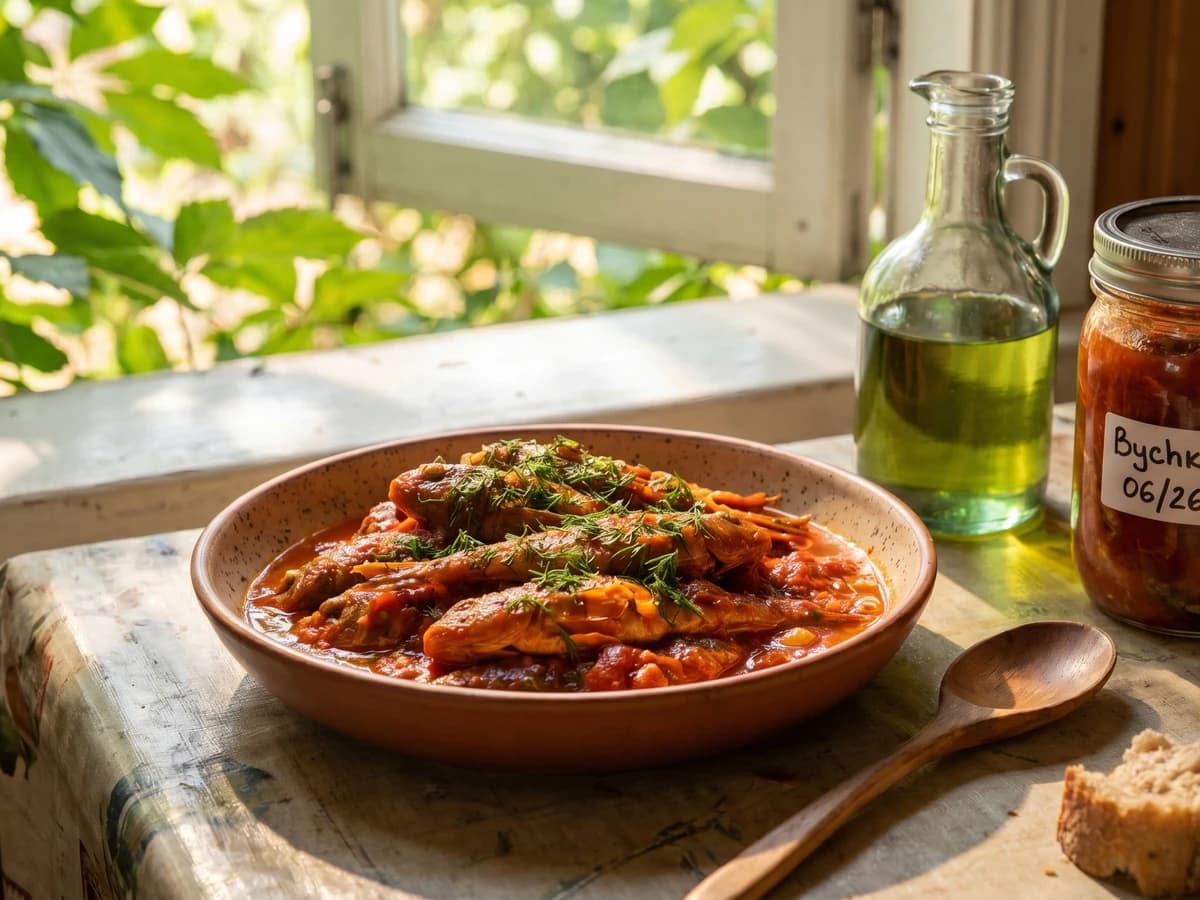
Small Azov gobies go into tomato bright as market cloth and come out soft enough that the bones give up. This is Mariupol food: cheap, red, generous, and better tomorrow.

Chef Lesia
The first sound is the meat against the board: flat, sharp, changing as the fibres loosen. Fry the cutlets fast, then let onion gravy do the soft finishing.

Chef Lesia
A heap of tiny silver fish becomes supper by the oldest Odesa trick: clean them, press them together, fry until the edges crackle, and let lemon and dill do the talking.