
Chef Lesia
Buzhenyna (буженина, garlic-studded roast pork)
A whole pork neck takes garlic into little knife pockets, roasts until the crust goes dark and fragrant, then rests overnight so every cold slice tastes better than shop ham.
A cooking platform built around craft, culture, and the stories behind what we eat.

Created by
A whole fish arrives cold, lacquered in its own clear jelly, with carrot coins like little suns along the back. This is Odesa showing off, softly but with both elbows on the table.
Awhole fish that sets its own jelly is a clever thing. You poach the skin, bones, head, and flesh together, then the broth cools into a clear, trembling aspic that holds the carrot coins in place like little suns. Nothing powdered, nothing theatrical. The fish brings its own architecture.
This is Odesa food: Black Sea light, Jewish holiday patience, market carp still smelling of river reeds, onion and carrot cooked slowly until the sharpness leaves them. The filling is not meant to be bouncy or grand. It should be tender, sweet in the southern way, and cold enough that the dill looks brighter against it. At Passover the binder is matzo meal; the rest of the year, some cooks use soaked white bread. Change that and make it work for your table. The dish lives because people keep making it.
The step that matters is restraint. Sweat the onion and carrot until the smell changes, then fold them into the minced fish instead of boiling all their sweetness away in the stock. Keep the poach quiet too. Aunt Nadia's kind of instruction would be 'until it sounds right,' and here that means no rattling lid, no angry bubbles, only the small edge-murmur of a pot behaving itself.
Serve it cold and proud. Enough for eight guests or one hungry Ukrainian family with opinions.
Farshyrovana ryba belongs especially to Odesa and the Ukrainian Black Sea coast, where Jewish, Ukrainian, Moldovan, and port-city cooking met around abundant carp, pike, and market vegetables. The dish is a local cousin of Ashkenazi gefilte fish, but the southern Ukrainian version often keeps the drama of the whole fish shape and a clear natural aspic from the bones and head. Odesa's twentieth-century Jewish kitchens carried it through holidays, weddings, and make-ahead tables, even when Soviet catering tried to flatten festive fish into anonymous cold platters.
Quantity
1, about 2.2 to 2.5 kg
scaled and gutted, head and bones reserved
Quantity
2 large
finely diced
Quantity
2 large
1 finely grated, 1 sliced into coins
Quantity
3 tablespoons
Quantity
2
Quantity
60g
or fresh white breadcrumbs if not cooking for Passover
Quantity
1 teaspoon
Quantity
2 teaspoons, plus more to taste
Quantity
1/2 teaspoon
Quantity
1 small
peeled and sliced
Quantity
2
Quantity
8
Quantity
1 small bunch
fronds saved for serving
Quantity
enough to barely cover the fish
Quantity
to serve
Quantity
to serve
| Ingredient | Quantity |
|---|---|
| whole carp or pikescaled and gutted, head and bones reserved | 1, about 2.2 to 2.5 kg |
| onionsfinely diced | 2 large |
| carrots1 finely grated, 1 sliced into coins | 2 large |
| unrefined sunflower oil | 3 tablespoons |
| eggs | 2 |
| matzo mealor fresh white breadcrumbs if not cooking for Passover | 60g |
| sugar | 1 teaspoon |
| fine sea salt | 2 teaspoons, plus more to taste |
| white pepper or black pepper | 1/2 teaspoon |
| beet (optional)peeled and sliced | 1 small |
| bay leaves | 2 |
| black peppercorns | 8 |
| dill stalksfronds saved for serving | 1 small bunch |
| cold water | enough to barely cover the fish |
| lemon wedges (optional) | to serve |
| prepared horseradish or khrein (optional) | to serve |
Ask the fishmonger to remove the flesh from the skin in one piece if they can, keeping the head, bones, and skin for you. At home, scrape every good bit of flesh from the frame and pull out any obvious pin bones. The skin is your serving dish now, so keep it cool and don't worry if it tears once or twice; fish mixture patches better than pride.
Warm the sunflower oil in a wide pan and sweat the diced onions with the grated carrot until they soften, turn glossy, and smell sweet instead of sharp. Don't brown them. This is the one why that decides the dish: the slow onion and carrot go into the fish at the end so their sweetness stays bright and clean, instead of flattening into the poaching stock.
Mince the fish flesh finely with a knife, meat grinder, or food processor, stopping before it turns to paste. Mix it with the cooled onion and carrot, eggs, matzo meal, sugar, salt, and pepper. Beat it with a spoon until it gets sticky and starts to hold together, the sound changing from loose slap to a thicker thud against the bowl. Aunt Nadia would have written only 'until it sounds right,' and for once she would be annoying but correct.
Lay the fish skin on a board and fill it loosely with the mixture, shaping it back into the look of a whole fish. Do not pack it tight; matzo meal swells and fish firms as it poaches. Sew the belly with kitchen string or close it with toothpicks, then rub the outside with a little salt. It should look generous, not strained.
Line a fish kettle, wide stockpot, or deep roasting pan with the fish bones, head, sliced carrot, beet if using, bay leaves, peppercorns, and dill stalks. Set the stuffed fish on top and pour in cold water to barely cover. Bring it up slowly until the surface trembles. Not a boil. A hard boil clouds the aspic and bullies the fish.
Keep the liquid at the quietest simmer, the kind that makes small lazy bubbles at the edge and smells cleanly of sweet fish, onion, and carrot. Spoon the broth over any exposed skin now and then. Cook until the fish feels firm when pressed and the broth tastes rounded, not watery. If the kitchen smells harsh or muddy, turn the heat down; the pot is shouting at you.
Lift the fish out carefully onto a long platter and strain the broth through a fine sieve. Taste it boldly now, because cold food mutes salt. Reduce the broth if it seems thin, until it coats a spoon lightly and feels a little sticky between your fingers. Spoon a shallow layer over the fish, arrange the carrot coins along the top, and chill until the broth sets into a clear, trembling aspic.
Serve the fish cold, sliced thickly, with its own aspic, dill fronds, lemon, and khrein. The knife should meet gentle resistance, then the slice should open pale and speckled inside, sweet onion against clean fish. Make it ahead. This dish likes a night to gather itself.
1 serving (about 170g)
Culinary guides, cultural storytelling, and the editorial depth that makes cooking meaningful.
Discover Culinary ExplorerChef Lesia
A whole pork neck takes garlic into little knife pockets, roasts until the crust goes dark and fragrant, then rests overnight so every cold slice tastes better than shop ham.
Chef Lesia
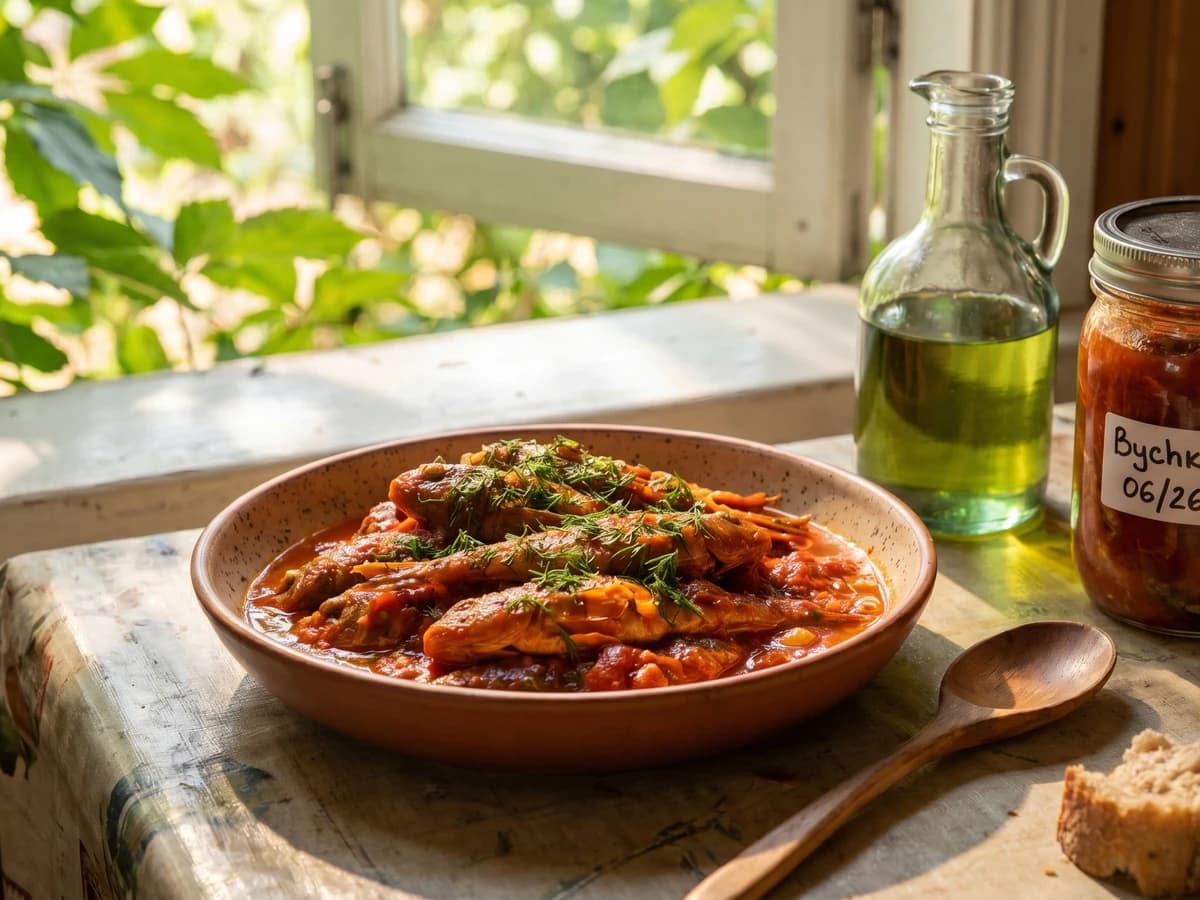
Small Azov gobies go into tomato bright as market cloth and come out soft enough that the bones give up. This is Mariupol food: cheap, red, generous, and better tomorrow.

Chef Lesia
The first sound is the meat against the board: flat, sharp, changing as the fibres loosen. Fry the cutlets fast, then let onion gravy do the soft finishing.

Chef Lesia
A heap of tiny silver fish becomes supper by the oldest Odesa trick: clean them, press them together, fry until the edges crackle, and let lemon and dill do the talking.