Culinary Explorer

A cooking platform built around craft, culture, and the stories behind what we eat.
Discover Culinary Explorer
Dunaiskyi Oseledets (дунайський оселедець, salted Danube herring)

Dunaiskyi Oseledets (дунайський оселедець, salted Danube herring)

Created by

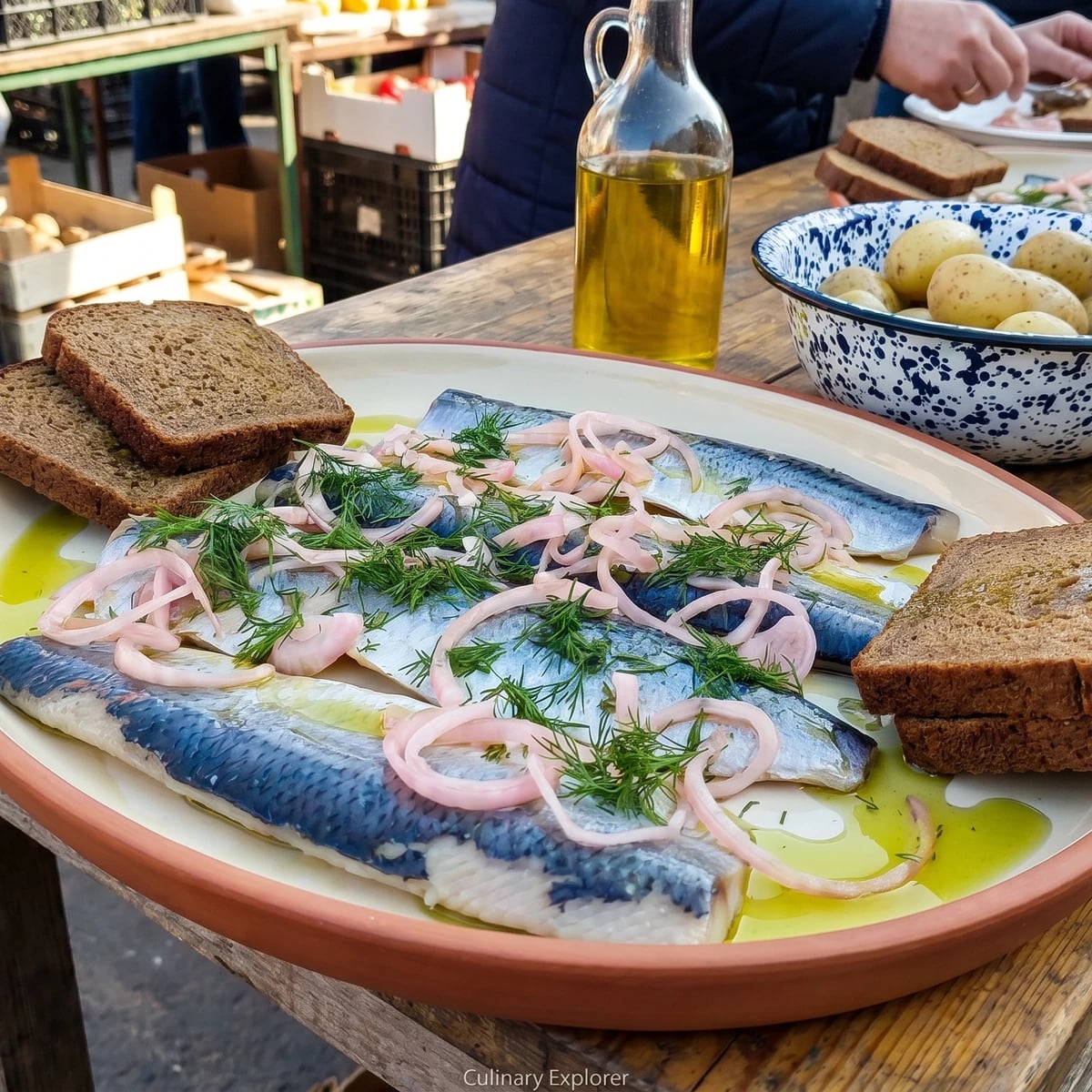
This is the silver spring fish of the Danube Delta, rich enough to perfume your fingers, salted gently until silky, then laid under onion and green sunflower oil.

Main Dishes
Ukrainian
Make Ahead
Budget Friendly
Special Occasion
35 min
Active Time
0 min cook72 hr 35 min total
Yield6 to 8 servings

The first thing is the shine. A good Danube herring flashes blue-silver in the hand, then turns satin-soft after a few days in salt, the flesh oily and clean, the belly rich enough to make black bread feel necessary rather than polite.

This is not the harsh barrel herring some people know from dusty jars. Dunaiskyi oseledets, Danube herring, wants a lighter hand: enough salt to cure and firm the fish, not so much that you have to punish it back into life with endless soaking. Aunt Nadia wrote once, maddeningly, "salt it until it behaves." What she meant was this: the skin tightens, the flesh loses its raw softness, and the smell changes from river and iron to something round, marine, and appetizing.

The onion matters because the fish is oily. Slice it thin, rinse it if it bites too hard, then let it sit with vinegar, a pinch of sugar, and dill while the herring rests. The sharp onion cuts the fat, the unrefined sunflower oil brings that green-gold nutty glow, and the bread catches everything that tries to escape.

Serve it cold, generous, and a little messy. This is food for a table with glasses already poured, boiled potatoes somewhere nearby, and someone reaching across you before you've even sat down.

Dunaiskyi oseledets is the Ukrainian name used around Odesa and the Danube Delta for the migratory Black Sea shad that runs into the Danube in spring, especially around Vylkove, Izmail, Kiliia, and the Bessarabian fishing villages. Its season made it a prized local fish long before refrigeration: fresh when the run was strong, salted or lightly cured so the taste of spring could travel inland. The dish sits in the southern Ukrainian pantry beside brined tomatoes, aubergines, and watermelons, proof that preservation here was never dull necessity, it was how the region kept abundance speaking.

The technique, the tradition, and the story behind every dish.

Discover Culinary Explorer

Ingredients

fresh Danube herring or small oily herring

Quantity

4 fish, about 250g each

cleaned and scaled

cold water

Quantity

1 litre

sea salt

Quantity

60g

sugar

Quantity

1 tablespoon

bay leaves

Quantity

2

black peppercorns

Quantity

1 teaspoon

coriander seeds

Quantity

1 teaspoon

white onion

Quantity

1 small

thinly sliced, for the brine

red or white onions

Quantity

2 medium

very thinly sliced, for serving

apple cider vinegar or mild wine vinegar

Quantity

2 tablespoons

sugar

Quantity

1 teaspoon

for the onions

unrefined sunflower oil

Quantity

3 tablespoons, plus more to serve

dill

Quantity

1 small bunch

chopped

boiled potatoes (optional)

Quantity

to serve

dark rye or black bread

Quantity

to serve

Equipment Needed

  • A glass or enamel dish deep enough to submerge the fish
  • A small plate or fermentation weight
  • A sharp filleting knife
  • Tweezers for pin bones

Instructions

  1. 1

    Clean the fish

    Rinse the fish under cold water, then pat them dry. If they still have heads, remove them, slit the bellies, and clean out the blood line carefully with your thumb or the back of a small knife. That dark line is where muddy bitterness hides, and you don't want it in the cure.

    Use the freshest fish you can. The eyes should be clear, the skin bright, and the smell clean, like cold water and oil, not sour.
  2. 2

    Make the brine

    Stir the salt and tablespoon of sugar into the cold water until dissolved, then add the bay leaves, peppercorns, coriander seeds, and the small sliced onion. Taste the brine with the tip of your tongue. It should be clearly salty but not brutal, like seawater that has learned manners.

    This is a light cure, about 6 percent salt against the water. It firms and seasons the fish without turning it into something you must soak for half a day.
  3. 3

    Cure the herring

    Lay the fish in a glass or enamel dish and pour the brine over so they are fully covered. Weigh them down with a small plate if they float, cover, and refrigerate for 2 to 3 days. Turn them once a day. They are ready when the flesh feels springy, the skin has tightened, and the smell changes from raw fish to clean, salted richness.

  4. 4

    Soften the onion

    An hour before serving, toss the serving onions with the vinegar, teaspoon of sugar, a pinch of salt, and half the dill. Scrunch them lightly with your fingers until they relax and shine. If your onions are very sharp, rinse them first with cold water, then dress them. We are cutting the fish's oiliness, not setting fire to the table.

  5. 5

    Fillet and slice

    Lift the herring from the brine and pat dry. Fillet them with a small sharp knife, pulling out the fine pin bones you can feel, then slice the flesh on a slight diagonal into generous pieces. Taste one piece before you dress the rest. If it is saltier than you like, give the fillets a brief cold-water rinse and pat them dry again.

  6. 6

    Dress and serve

    Spread the softened onions over a shallow stoneware plate, lay the herring pieces on top, and spoon over the unrefined sunflower oil until the fish gleams. Scatter with the remaining dill. Serve cold with boiled potatoes and black bread, enough for eight guests or one hungry Ukrainian.

Chef Tips

  • If you cannot get Danube herring, use the freshest small oily herring, shad, or mackerel you can find. It becomes a bit more modern and less local, but the method still teaches you the southern table.
  • The curing time bends with the fish size. Thin fish may be ready in 36 hours; thick ones may need 3 days. Press the flesh gently: raw softness means wait, a springy satin feel means eat.
  • Do not cure fish that smells tired. Salt preserves good fish, it does not rescue bad fish.
  • Unrefined sunflower oil matters here because it goes on raw. It is Ukraine in a bottle of oil, green-gold, nutty, and loud enough to stand beside the herring.
  • Leftover cured herring keeps 3 days in the fridge under a film of sunflower oil with onions on top. After that it gets stronger, and not always in a charming way.

Advance Preparation

  • The herring needs 2 to 3 days in the refrigerator to cure, so start it before the day you want to serve it.
  • The onions can be dressed up to 4 hours ahead and kept chilled; they get softer and sweeter as they sit.
  • Cured fillets can be sliced and laid under sunflower oil the morning of serving.

Frequently Asked Questions

Nutrition Information

1 serving (about 310g)

Calories
405 calories
Total Fat
18 g
Saturated Fat
3 g
Trans Fat
0 g
Unsaturated Fat
14 g
Cholesterol
55 mg
Sodium
1380 mg
Total Carbohydrates
42 g
Dietary Fiber
5 g
Sugars
5 g
Protein
21 g

Note: Chef personas and recipes are created with AI assistance. Cook with care: follow safe food-handling practices, check doneness with a thermometer when needed, and adapt for allergies and your kitchen.

Where cooking meets culture.

Culinary guides, cultural storytelling, and the editorial depth that makes cooking meaningful.

Discover Culinary Explorer

More from The Southern Fish & Steppe Table

Browse the full collection