Culinary Explorer

A cooking platform built around craft, culture, and the stories behind what we eat.
Discover Culinary Explorer
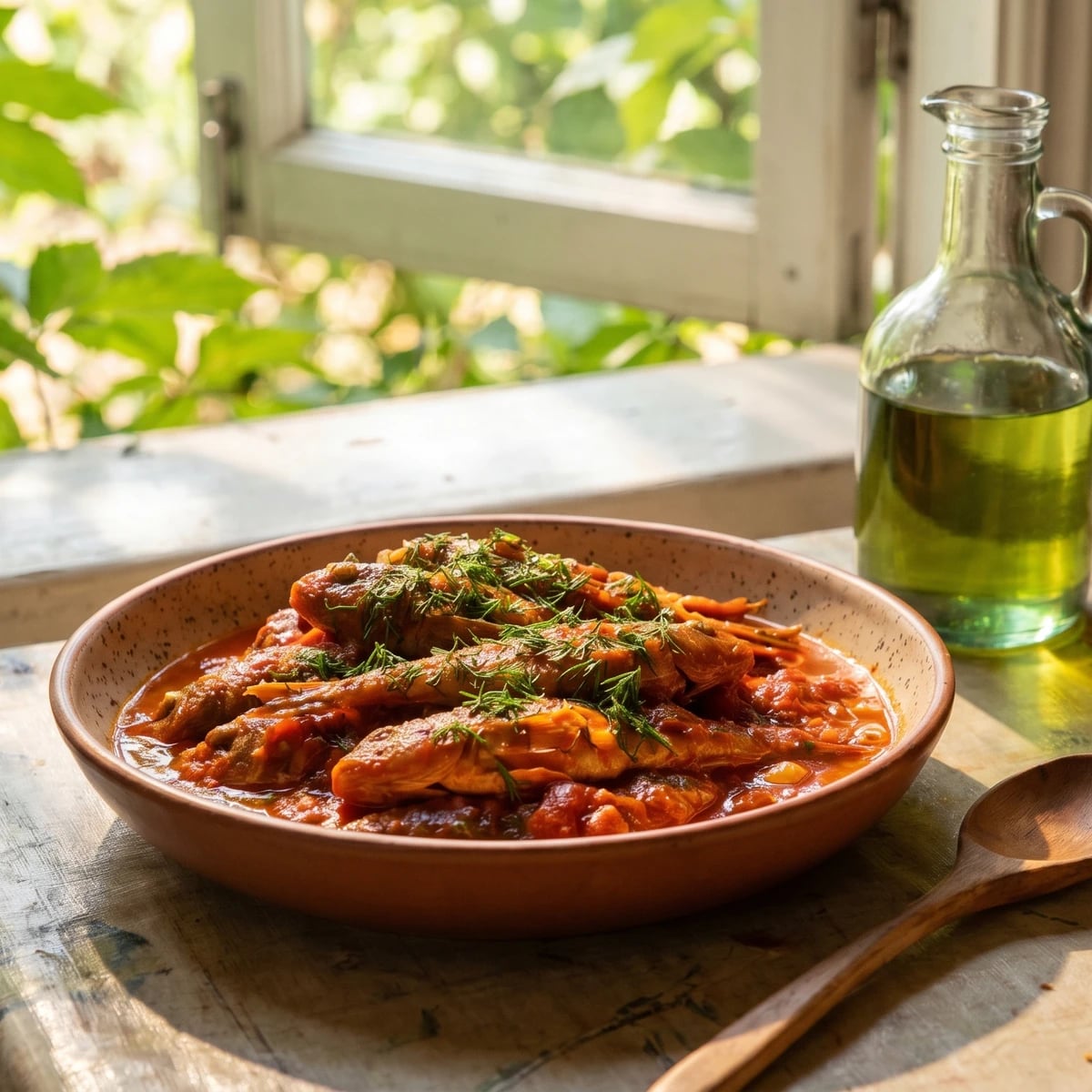
Bychky v Tomati (бички в томаті, Azov gobies in tomato)

Bychky v Tomati (бички в томаті, Azov gobies in tomato)

Created by

Small Azov gobies go into tomato bright as market cloth and come out soft enough that the bones give up. This is Mariupol food: cheap, red, generous, and better tomorrow.

Main Dishes
Ukrainian
Make Ahead
Budget Friendly
Batch Cooking
35 min
Active Time
2 hr cook2 hr 35 min total
Yield6 to 8 servings

The small bones are meant to disappear. That is the whole trick of this dish, and the reason people along the Azov coast could turn a bucket of little fish into food for days: fry them first so the skins tighten and the fish keep their shape, then tuck them under a sweet-sour tomato sauce and let time do the chewing for you.

This is not a delicate fish supper. It is red sauce food, Mariupol food, market fish food, the kind you eat hot with bread on the first day and cold from the jar on the second, standing at the fridge with the door open like a guilty person. The tomato should taste sunny and a little sharp, the onions should go sweet, and the oil should shine orange around the edges. When Aunt Nadia wrote about small fish she never gave minutes, only "until it sounds right," which in this pot means the sauce stops spluttering angrily and begins to murmur thickly around the fish.

The why is simple: the fish must be browned before it is braised. Raw gobies collapse into the sauce and sulk. Fried first, they stay themselves while the tomato works slowly through the bones, softening them into something you barely notice under your teeth. Make a big pot. There is no tradition of a small one.

Gobies from the Sea of Azov were everyday food in Mariupol, Berdiansk, Henichesk, and the fishing towns of the southern coast, where small, bony fish were preserved by frying and stewing in tomato long before home freezers were ordinary. The canned version, bychky v tomati, became familiar across Soviet shop shelves, but its home-kitchen root is older and more local: Azov fish, southern tomatoes, sunflower oil, and a pot cooked until yesterday's catch could feed tomorrow's table. Mariupol's red-sauce style belongs to the Ukrainian Azov coast, not to a generic pantry category.

The technique, the tradition, and the story behind every dish.

Discover Culinary Explorer

Ingredients

small cleaned gobies or other small firm whole fish

Quantity

1.5 kg

scaled if needed, gutted, rinsed, patted dry

fine sea salt

Quantity

1 teaspoon, plus more to taste

black pepper

Quantity

to taste

plain flour

Quantity

120g

for dusting

unrefined sunflower oil

Quantity

120ml

divided

onions

Quantity

3 large

thinly sliced

carrots

Quantity

2 large

coarsely grated

garlic

Quantity

4 cloves

sliced

tomato passata or crushed ripe tomatoes

Quantity

700ml

tomato paste

Quantity

2 tablespoons

sugar

Quantity

1 tablespoon

or to taste

apple cider vinegar or tomato brine

Quantity

2 tablespoons

or to taste

bay leaves

Quantity

2

black peppercorns

Quantity

8

small hot pepper (optional)

Quantity

1

dill

Quantity

1 small bunch

chopped, to serve

rye bread or boiled potatoes (optional)

Quantity

to serve

Equipment Needed

  • A wide heavy frying pan
  • A heavy lidded casserole or deep saute pan
  • A shallow bowl for flour
  • Clean glass jars or a covered dish for chilling

Instructions

  1. 1

    Salt the fish

    Pat the gobies very dry, then season them with salt and black pepper. Let them sit while you slice the onions and grate the carrots. The salt tightens the flesh a little, which helps the fish stay whole later instead of dissolving into tomato.

    If you cannot find Azov gobies, use small sardines, smelt, sprats, or little mullet. Choose fish small enough that a long braise can soften the bones.
  2. 2

    Fry the gobies

    Dust the fish lightly in flour and shake off every sulky excess bit. Heat a good layer of sunflower oil in a wide pan and fry the fish in batches until the skins are golden and firm, turning once. You are not cooking them through with ceremony; you are building a jacket so they can survive the sauce.

    Do not crowd the pan. Crowded fish weep, the flour goes pasty, and the sauce later tastes muddy instead of clean and red.
  3. 3

    Sweeten the onions

    Pour off any tired dark oil and leave about three tablespoons in the pan. Add the onions with a pinch of salt and cook them low and slow until soft, gold at the edges, and sweet-smelling. Add the carrots and garlic and keep cooking until the oil turns orange. This is the zasmazhka, the slow-sweated flavour base, doing quiet work.

  4. 4

    Build the sauce

    Stir in the tomato paste and let it darken by one shade, then add the passata, sugar, vinegar or tomato brine, bay leaves, peppercorns, and hot pepper if you want one. Let the sauce bubble until the raw tomato smell changes into something rounder and cooked, like summer tomatoes left too long in the sun. Taste it now: it should be sweet-sour and slightly too bold, because the fish will soften it.

    Tomato brine from fermented tomatoes is beautiful here if you have it. Vinegar works, a bit more modern and sharper, but the brine gives a deeper sourness.
  5. 5

    Layer and braise

    Spoon a little sauce into the bottom of a heavy pot, lay in a layer of fried fish, then repeat with sauce and fish until everything is tucked in. Add just enough water to loosen the sauce so it can move around the fish, not so much that you make soup. Cover and cook at the gentlest tremble until the sauce thickens, the oil glows at the edges, and a small bone from the thickest fish crushes easily between your fingers.

    This is the step that does not forgive rushing. If the bones still resist, the dish is not finished, no matter what the clock says.
  6. 6

    Rest and serve

    Turn off the heat and let the pot rest until the sauce settles and the fish stop looking separate from it. Taste for salt, sugar, and sourness, then finish with dill if serving hot. For the Mariupol red-sauce way, pack the fish into clean jars or a covered dish once cool and chill overnight. Tomorrow it will be better.

Chef Tips

  • The fish size decides everything. Very small gobies can soften beautifully; larger fish may keep a few firm bones, so lift out the backbone at the table if needed and do not make a religion of it.
  • Use unrefined sunflower oil if you can. It gives the sauce that green-gold southern smell, Ukraine in a bottle of oil.
  • The sauce should taste stronger before the braise than you want it at the end. Fish, flour, and time will round off the edges.
  • This keeps well in the fridge for 4 days. Serve it cold with bread, hot with boiled potatoes, or tucked into lunchboxes for people who know what good leftovers are.

Advance Preparation

  • The dish is better made a day ahead, once the tomato has soaked into the fish and the bones have softened further.
  • You can fry the fish and make the sauce a few hours ahead, then layer and braise when the kitchen has cooled down.
  • Chilled leftovers keep for 4 days. Do not can this recipe for shelf storage unless you are following tested pressure-canning guidance for fish.

Frequently Asked Questions

Nutrition Information

1 serving (about 380g)

Calories
480 calories
Total Fat
20 g
Saturated Fat
3 g
Trans Fat
0 g
Unsaturated Fat
17 g
Cholesterol
130 mg
Sodium
550 mg
Total Carbohydrates
33 g
Dietary Fiber
5 g
Sugars
11 g
Protein
46 g

Note: Chef personas and recipes are created with AI assistance. Cook with care: follow safe food-handling practices, check doneness with a thermometer when needed, and adapt for allergies and your kitchen.

Where cooking meets culture.

Culinary guides, cultural storytelling, and the editorial depth that makes cooking meaningful.

Discover Culinary Explorer

More from The Southern Fish & Steppe Table

Browse the full collection