
Chef Lesia
Buzhenyna (буженина, garlic-studded roast pork)
A whole pork neck takes garlic into little knife pockets, roasts until the crust goes dark and fragrant, then rests overnight so every cold slice tastes better than shop ham.
A cooking platform built around craft, culture, and the stories behind what we eat.
Created by
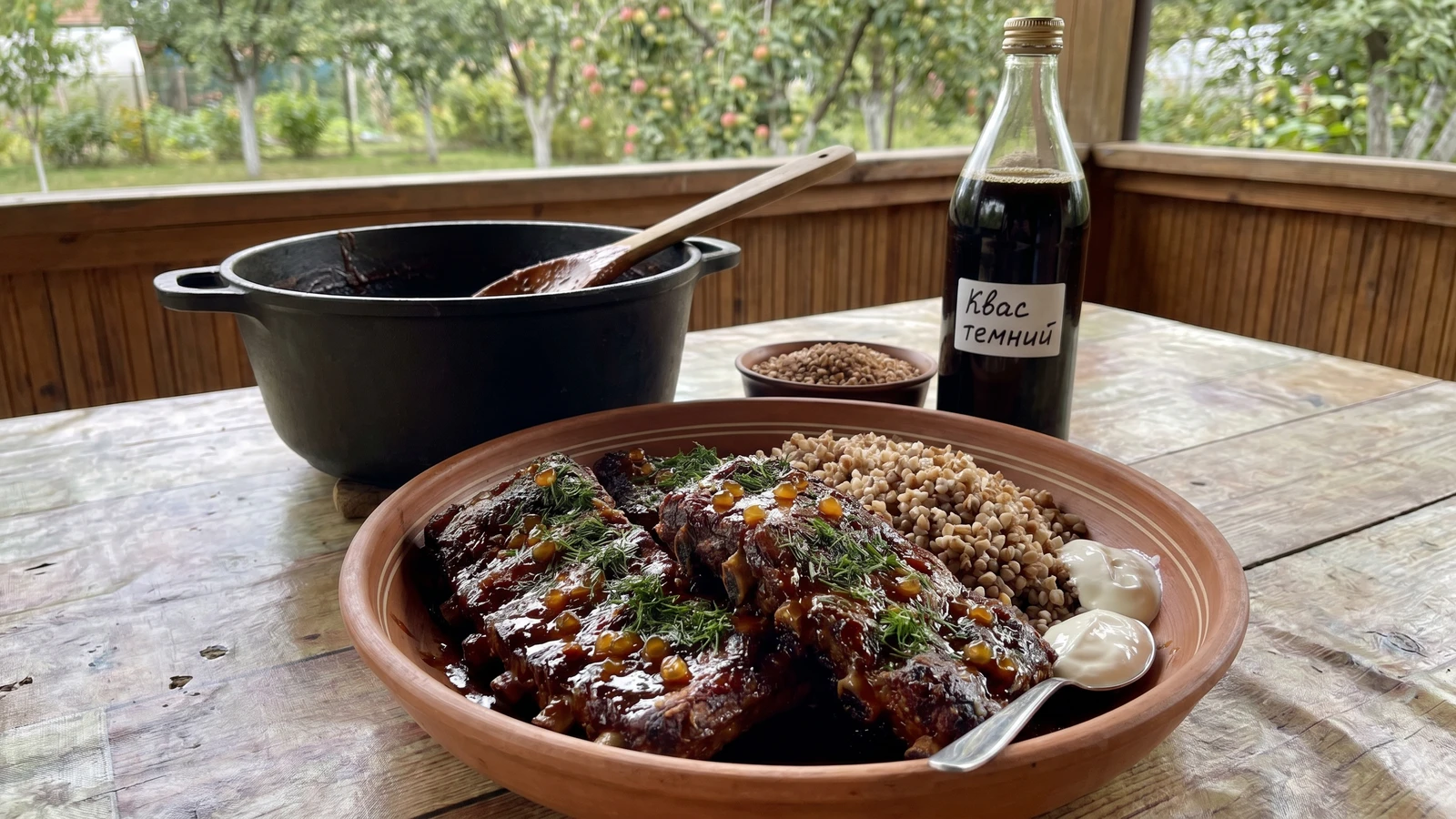
The pot should talk back: pork ribs browned until they hiss, then stewed in dark kvas until the sauce turns sour, glossy, and loud enough to earn its name.
The first true thing is the sound. Pork ribs hit the hot pan and complain, sharp and hungry, before the dark kvas goes in and the whole pot settles into a sour, brown-red roar. Vereshchaka comes from vereshchaty, to squeal or shout, and whoever named it had ears as good as a cook's nose.
This is not a delicate dish. It belongs to a crowded table, with buckwheat kasha or potatoes waiting to catch the sauce, pickles nearby, and someone already reaching across you for the bread. The kvas gives the ribs their bite: sour enough to cut the fat, dark enough to make the sauce taste like rye crust and cellar apples. If your bottled kvas tastes like soda, don't let it bully the pot; use beet kvas, rye kvas from a bakery, or cut the sweet stuff with water and a spoon of sauerkraut brine.
My Aunt Nadia wrote this one as if the ribs would explain themselves: brown them well, pour in kvas, cook until it sounds right. She was annoying and correct. The one thing that decides the dish is the browning at the start, because the kvas will lift every dark sticky bit from the pan and turn it into sauce. Pale ribs make a pale vereshchaka. Let them shout first.
Vereshchaka is an old central Ukrainian pork dish, strongly tied to Cossack-era table cooking and often associated with Poltava and the middle Dnipro lands, where pork, rye bread, buckwheat, and sour kvas belonged naturally together. Ivan Kotliarevsky's 1798 Ukrainian burlesque poem Eneida lists vereshchaka among the foods of a recognizably Ukrainian feast, which is one reason the dish still carries a literary aftertaste as well as a kitchen one. Older versions were commonly soured with beet kvas and thickened with rye bread or flour, a sharp, practical sauce far from the grey stereotype people try to pin on Ukrainian cooking.
Quantity
2 kg
cut into individual ribs or chunky 2-rib pieces
Quantity
2 teaspoons, plus more to taste
Quantity
1 teaspoon
freshly ground
Quantity
2 tablespoons
Quantity
2 large
thinly sliced
Quantity
4 cloves
smashed
Quantity
600 ml
unsweetened or only lightly sweet
Quantity
250 ml
Quantity
2
Quantity
1 teaspoon
lightly crushed
Quantity
1 tablespoon
only if the kvas is sharply sour
Quantity
2 tablespoons
Quantity
2 slices
crusts included, finely grated or crumbled
Quantity
1 tablespoon
good with sweeter kvas
Quantity
1 small bunch
chopped
Quantity
to serve
Quantity
to serve
| Ingredient | Quantity |
|---|---|
| pork ribscut into individual ribs or chunky 2-rib pieces | 2 kg |
| fine sea salt | 2 teaspoons, plus more to taste |
| black pepperfreshly ground | 1 teaspoon |
| unrefined sunflower oil | 2 tablespoons |
| onionsthinly sliced | 2 large |
| garlicsmashed | 4 cloves |
| dark rye bread kvas or beet kvasunsweetened or only lightly sweet | 600 ml |
| pork stock, chicken stock, or water | 250 ml |
| bay leaves | 2 |
| caraway seedslightly crushed | 1 teaspoon |
| honey (optional)only if the kvas is sharply sour | 1 tablespoon |
| rye flour | 2 tablespoons |
| dark rye breadcrusts included, finely grated or crumbled | 2 slices |
| wholegrain mustard (optional)good with sweeter kvas | 1 tablespoon |
| dillchopped | 1 small bunch |
| smetana (optional) | to serve |
| buckwheat kasha, boiled potatoes, or rye bread | to serve |
Pat the ribs very dry, then rub them with the salt and black pepper. Leave them while you slice the onions and gather the pot. Even twenty minutes helps the salt wake up the pork, but don't make a ceremony of it; this dish has work to do.
Heat the sunflower oil in a wide heavy pot and brown the ribs in batches, meaty side down first, until the pan has dark sticky patches and the pork smells roasted, not boiled. Listen for the sharp crackle settling into a deeper frying sound. If the pot crowds, take ribs out and keep going in batches; patience here is the sauce later.
Lower the heat a little, add the onions to the same pot, and stir them through the pork fat until they soften, shine, and pick up the brown from the bottom. Add the garlic for the last minute, just until the smell changes from raw and sharp to warm and round.
Return all the ribs to the pot. Pour in the dark kvas and stock or water, scraping the bottom with a wooden spoon so every browned bit loosens into the liquid. Add the bay leaves and caraway. The liquid should come about halfway up the ribs, not drown them; add a splash more water if your pot is very wide.
Bring the pot to a lively murmur, then cover it loosely and cook gently until the meat gives when pressed with a spoon and the bones begin to show at the ends. Turn the ribs once or twice. The sauce should smell like rye crust, pork fat, and sour apples. Cook until it sounds right: a thick little bubbling at the edges, not a watery boil.
Lift the ribs to a warm plate. Whisk the rye flour with a ladle of the hot sauce in a small bowl until smooth, then stir it back into the pot with the grated rye bread. Simmer uncovered, stirring often, until the sauce grips the spoon and turns glossy. Add the mustard if your kvas was on the sweet side, or the honey if it was sharply sour.
Return the ribs to the sauce and let them sit off the heat for at least fifteen minutes, longer if you can bear it. Taste for salt only at the end, because kvas, bread, and mustard all speak. Scatter with dill and serve with buckwheat kasha, boiled potatoes, or rye bread, with smetana on the table for anyone who wants the sour cream against the dark sauce.
1 serving (about 285g)
Culinary guides, cultural storytelling, and the editorial depth that makes cooking meaningful.
Discover Culinary ExplorerChef Lesia
A whole pork neck takes garlic into little knife pockets, roasts until the crust goes dark and fragrant, then rests overnight so every cold slice tastes better than shop ham.
Chef Lesia
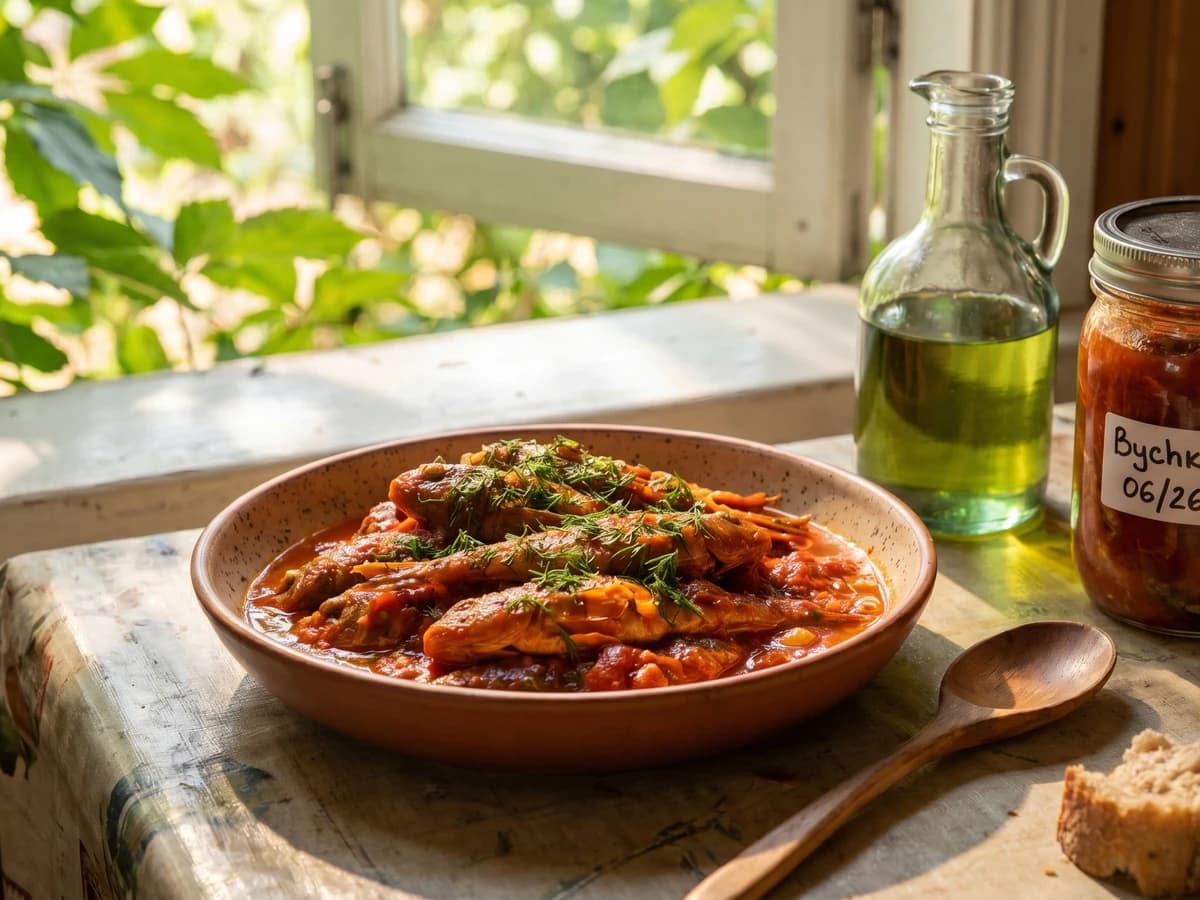
Small Azov gobies go into tomato bright as market cloth and come out soft enough that the bones give up. This is Mariupol food: cheap, red, generous, and better tomorrow.

Chef Lesia
The first sound is the meat against the board: flat, sharp, changing as the fibres loosen. Fry the cutlets fast, then let onion gravy do the soft finishing.

Chef Lesia
A heap of tiny silver fish becomes supper by the oldest Odesa trick: clean them, press them together, fry until the edges crackle, and let lemon and dill do the talking.