
Chef Isabel
Aguaillo de la Sierra de Cadiz
Aguaillo is from the Sierra de Cadiz: cold water, stale bread, garlic, oil and vinegar, closer to a field drink than a bowl of soup, and sharp enough to wake you in the heat.
A cooking platform built around craft, culture, and the stories behind what we eat.
Created by
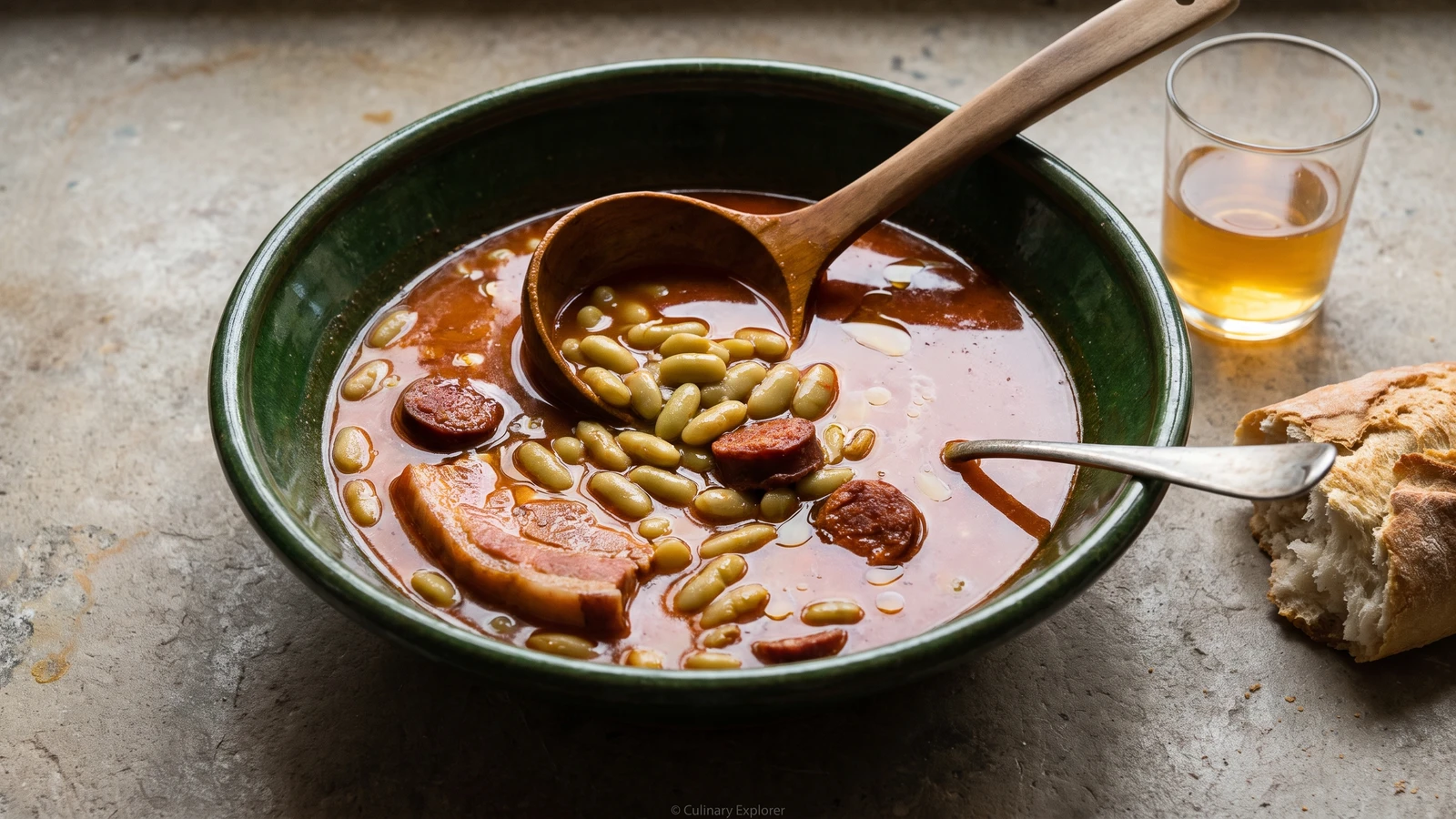
Verdinas con chorizo are Asturian cocina de cuchara: small green dried beans, chorizo, and a modest compango held at a bare tremble so the skins stay whole and the broth turns silky.
Verdinas con chorizo are Asturian, from the green, wet north, and the bean is the thing: fabes verdinas, small pale-green dried beans with a thin skin and a creamy inside. They are not the long green vegetable. This is cocina de cuchara, spoon food, gentler than a fabada and darker than the seafood verdinas of the coast: chorizo asturiano, a modest piece of compango, and a broth stained by pimentón.
The method that decides it is the simmer. Soak the verdinas, start them cold with the chorizo and pork, then bring the pot up slowly and hold it at a tremble. When the boil gets eager, add a little cold water, asustar las fabes, to settle it. The cold splash is not ceremony. It calms the heat so the skins stay whole and the broth turns silky instead of muddy.
If you can't find verdinas where you are, use alubia arrocina from León if you can, or a small navy bean or cannellini at a pinch. The colour will be paler and the skin a little thicker, but the pot will still eat well. Use dry-cured Spanish cooking chorizo if you can. A fresh crumbling sausage makes another stew, not this one.
Salt late, shake the pot by its handles, and leave it to rest before serving. In my Margin for this one I wrote: don't stir just because you're anxious. Nadie nace sabiendo, but this dish is kind if you are patient. Siempre sale, si lo sigues.
Verdinas belong to Asturias, especially the eastern coast around Llanes, where the small green faba is dried under cover so it keeps its pale colour and tender skin. Fabada carries the larger white fabe and the full weight of compango; verdinas are finer-skinned and often divided between two Asturian habits, seafood near the coast and chorizo or cured pork in inland home pots. The splash of cold water, asustar las fabes, is a bean-cook's practice across northern Spain, used to slow the boil and keep tender skins from splitting.
Quantity
500g
soaked overnight
Quantity
2 litres total, plus more if needed
1.8 litres to start, 200ml for asustar
Quantity
2 (about 200g)
left whole
Quantity
150g
in one piece
Quantity
1 small (about 100g)
Quantity
1 small (about 150g)
peeled and halved
Quantity
1 small (about 80g)
peeled and halved
Quantity
4 cloves
peeled
Quantity
1
Quantity
45ml
Quantity
1 teaspoon
Quantity
6g, plus more to taste
| Ingredient | Quantity |
|---|---|
| dried verdinas (fabes verdinas)soaked overnight | 500g |
| cold water1.8 litres to start, 200ml for asustar | 2 litres total, plus more if needed |
| chorizos asturianos or Spanish cooking chorizosleft whole | 2 (about 200g) |
| lacón, panceta curada, or unsmoked ham hockin one piece | 150g |
| morcilla asturiana (optional) | 1 small (about 100g) |
| onionpeeled and halved | 1 small (about 150g) |
| carrotpeeled and halved | 1 small (about 80g) |
| garlicpeeled | 4 cloves |
| bay leaf | 1 |
| olive oil | 45ml |
| sweet pimentón de la Vera (optional) | 1 teaspoon |
| fine sea salt | 6g, plus more to taste |
Rinse the verdinas and pick out any broken beans or little stones. Cover them with plenty of cold water and soak 10 to 12 hours, then drain. If your lacón or ham hock is very salty, soak it separately in cold water for the same time and drain it before cooking.
Put the drained verdinas in a wide heavy pot with 1.8 litres cold water, the chorizos, lacón or panceta, onion, carrot, garlic, bay leaf, and olive oil. The water should stand about 4cm above the beans. Bring it up slowly over medium-low heat, uncovered, and do not salt yet.
When the first steady bubbles appear, pour in 100ml cold water. Let the pot come back toward a simmer, then add the second 100ml cold water. This is asustar las fabes, startling the beans, and it keeps the heat from galloping. Skim off any grey foam and lower the heat until the surface barely trembles.
Cook with the lid slightly ajar for 1 hour 45 minutes to 2 hours 30 minutes, depending on the age of the beans. Shake the pot by its handles now and then instead of stirring with a spoon. If the beans peek above the liquid, add cold water in 50ml splashes. If using morcilla, lay it on top for the last 30 minutes so it warms through without bursting.
When the verdinas are tender all the way through, lift the onion, carrot, and garlic into a bowl. Add 3 tablespoons of beans and 120ml broth, mash smooth with a fork, and stir this back into the pot. If the chorizo has not given the broth much colour, mix the optional pimentón with 1 tablespoon of warm oil from the surface, then stir it in. Simmer 10 minutes more.
Turn off the heat and add 6g salt. Wait 5 minutes, taste, and add more only if the cured meats have not done their work. Lift out the chorizo, lacón, and morcilla if using, slice them thickly, and return them to the pot. Rest the stew 20 minutes before serving. The broth should coat the spoon lightly, not stand thick like paste.
1 serving (about 390g)
Culinary guides, cultural storytelling, and the editorial depth that makes cooking meaningful.
Discover Culinary ExplorerChef Isabel
Aguaillo is from the Sierra de Cadiz: cold water, stale bread, garlic, oil and vinegar, closer to a field drink than a bowl of soup, and sharp enough to wake you in the heat.

Chef Isabel
Ajilimojili is Jaen's tomato-free cold soup: potato, roasted red pepper, garlic, olive oil, and vinegar pounded into a cool, silky spoonful.

Chef Isabel
Ajo carretero is Soriano, from the pine country of Soria: lamb cooked in a plain garlicky broth, then served the old way, meat first and bread-soaked soup after.

Chef Isabel
Ajoblanco Extremeño is the poor-kitchen cold soup of Extremadura: bread, garlic, oil, egg yolk, vinegar, and icy water, with no almonds. Whisk it slowly and serve it bien fresquito.