Culinary Explorer

A cooking platform built around craft, culture, and the stories behind what we eat.
Discover Culinary Explorer
Fabes con Almejas

Fabes con Almejas

Created by

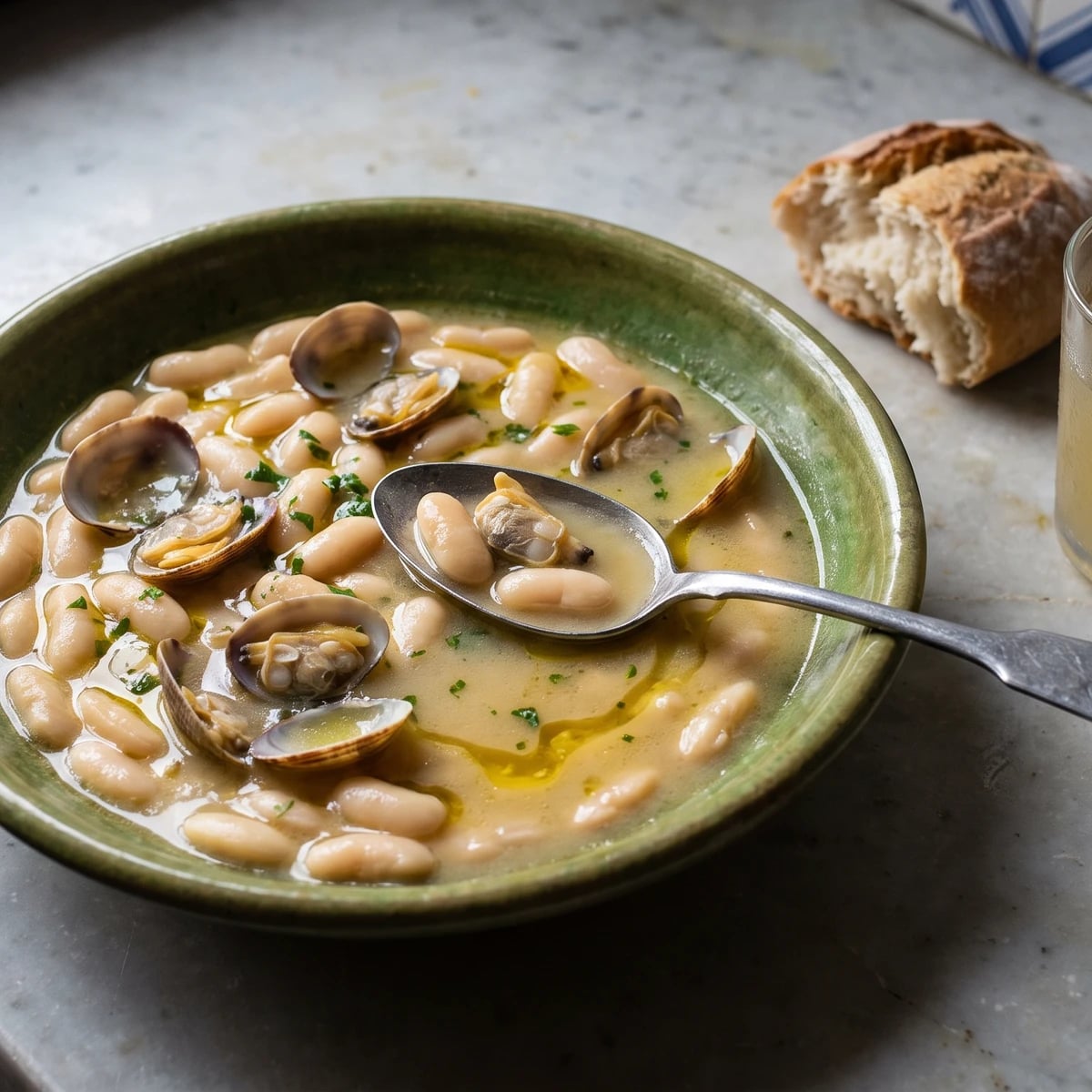
Fabes con almejas is Asturian spoon food where the bean pot meets the Cantabrian coast: creamy fabes first, clams last, so the broth turns silky and the shellfish stay tender.

Soups & Stews
Spanish
Comfort Food
Dinner Party
One Pot
30 min
Active Time
2 hr 30 min cook15 hr total
Yield6 servings

Fabes con almejas is Asturian, and Asturias knows how to put mountain and sea in the same pot without making a fuss of it. The fabes, fat white beans cooked until creamy, give the dish its body. The almejas, clams, go in at the end with garlic, parsley, white wine, and a little pimentón, just long enough to open. That is what makes it this dish and not a fabada with the pork taken out.

The method that decides it is the timing. Cook the beans first, low and quiet, until they are tender all the way through and the broth has turned silky. Then add the clams only at the finish. If they boil along with the beans, they go tight and sulky. If they open in the hot bean broth, they give you their liquor and stay sweet. Simple, but not casual.

No hace falta haber pisado España. You do need the best beans and clams you can get. Fabes de la granja are right if you can find them; large dried cannellini work if you cannot, though the broth will be a little less buttery. For clams, buy small live hard-shell clams or littlenecks, scrub them well, and purge them. Pésalo, no lo adivines. Siempre sale, si lo sigues.

In the Margin beside this one I keep only two warnings: do not boil the beans hard, and do not make the clams wait. That is enough.

Fabes con almejas belongs to Asturias, where the same cooking tradition that made rich inland bean stews also had the Cantabrian coast close at hand. It is part of cocina de cuchara, spoon food, but lighter than fabada because the flavor comes from shellfish liquor, garlic, parsley, and olive oil rather than compango. The dish shows an Asturian habit of joining land and sea plainly, with the bean still treated as the main thing and the clam as the bright finish.

The technique, the tradition, and the story behind every dish.

Discover Culinary Explorer

Ingredients

dried fabes de la granja or large dried cannellini beans

Quantity

500g

soaked overnight

small live clams

Quantity

1.2kg

scrubbed

sea salt, for purging the clams

Quantity

35g

cold water

Quantity

1.5 litres, plus more for soaking

onion for the bean pot

Quantity

1 medium

peeled and halved

small leek

Quantity

1

cleaned and halved

bay leaf

Quantity

1

garlic cloves

Quantity

4

2 whole, 2 finely chopped

extra virgin olive oil

Quantity

80ml

onion for the sofrito

Quantity

120g

finely chopped

sweet pimentón de la Vera

Quantity

1 teaspoon

dry white wine or Asturian cider

Quantity

150ml

saffron threads (optional)

Quantity

1 small pinch

lightly crushed

fresh flat-leaf parsley

Quantity

15g

finely chopped

salt

Quantity

to taste

Equipment Needed

  • Large bowl for soaking beans
  • Wide heavy pot or olla, 5 to 6 litre capacity
  • Skimming spoon
  • Large bowl for purging clams
  • Frying pan for sofrito

Instructions

  1. 1

    Soak the fabes

    Put the fabes in a large bowl and cover them with plenty of cold water. Leave them overnight, 12 to 14 hours. They swell more than you think, so give them room. Drain them before cooking and discard any split beans or stones.

  2. 2

    Purge the clams

    About 2 hours before cooking the clams, stir 35g sea salt into 1 litre cold water until dissolved. Add the scrubbed clams and leave them in a cool place for 1 to 2 hours so they spit out sand. Lift them out with your hands instead of pouring the sandy water back over them. Discard any cracked clams or any that stay open when tapped.

    If your clams are already very clean from a good fishmonger, still give them at least 30 minutes in salted water. Sand in a bean stew is a hard lesson and not a useful one.
  3. 3

    Start the beans

    Put the drained fabes in a wide heavy pot with 1.5 litres cold water, the halved onion, leek, bay leaf, 2 whole garlic cloves, and 40ml of the olive oil. Bring it up slowly over medium heat. When the first foam rises, skim it off. Starting cold and climbing slowly helps the skins stay whole.

  4. 4

    Simmer low

    Lower the heat until the pot barely trembles. Cook the fabes gently for 1 hour 45 minutes to 2 hours 15 minutes, depending on their age, until they are tender and creamy inside. Do not boil them hard and do not stir with a spoon. Shake the pot by the handles now and then. If the surface looks dry, add a small splash of cold water. Salt only when the beans are almost tender.

  5. 5

    Make the sofrito

    While the beans finish, warm the remaining 40ml olive oil in a frying pan. Add the finely chopped onion with a pinch of salt and cook it low for 12 to 15 minutes, until soft, dark gold, and sweet. Add the chopped garlic and cook 1 minute more. Pull the pan off the heat, stir in the pimentón so it blooms without burning, then return it to the heat with the wine and saffron. Let it bubble for 2 minutes.

  6. 6

    Join the pot

    Lift the cooked onion, leek, bay leaf, and whole garlic from the bean pot. Stir the sofrito into the fabes by shaking the pot, not by digging through it. Simmer 10 minutes so the broth takes the garlic, pimentón, and wine. Taste for salt now; the clams will add their own briny liquor.

  7. 7

    Open the clams

    Raise the heat just enough for a lively simmer. Add the drained clams, cover the pot, and cook 3 to 5 minutes, shaking the pot once or twice, until the shells open. Take the pot off the heat as soon as they open. Throw away any clams that remain shut. This is the step that decides the dish: clams opened at the end are tender and sweet; clams boiled with the beans are little rubber buttons, and nobody asked for that.

  8. 8

    Rest and serve

    Stir in the parsley, cover the pot, and let it rest 5 minutes. The broth should be pale gold, glossy with olive oil, and thick enough to coat the beans without turning heavy. Serve in deep bowls with bread for the broth. Tal como se hace allí, plainly and hot.

Chef Tips

  • Fabes de la granja give the creamiest result. If you cannot find them, use large dried cannellini or judión beans. The flavor will still be good, but the texture will be a little less buttery and the skins may show more.
  • Buy live clams from a shop with good turnover. Small hard-shell clams or littlenecks are the best substitute far from Asturias. Avoid large chowder clams here; they take too long to open and toughen before the beans are ready for them.
  • Do not add flour unless your beans are thin and stubborn. Proper fabes thicken their own broth when cooked low and rested. If you need help, mash 3 tablespoons of cooked beans with a little broth and shake that back into the pot.
  • Dry white wine is fine, but natural Asturian cider is very good here if you have it. It gives a sharper edge against the sweet beans and clam liquor.
  • Serve it with a crisp dry cider or a young white wine from the Atlantic side of Spain. Nothing heavy. The dish is rich from beans, not from fat.

Advance Preparation

  • Soak the beans the night before in plenty of cold water. This is not a place to be clever; unsoaked large beans cook unevenly and split before the centers soften.
  • The beans can be cooked up to 1 day ahead without the clams. Chill them in their broth, then reheat gently and add the clams just before serving.
  • Purge the clams the day you serve the dish. Do not leave live clams sitting in fresh water overnight; they will die and spoil the pot.

Frequently Asked Questions

Nutrition Information

1 serving (about 400g)

Calories
485 calories
Total Fat
14 g
Saturated Fat
2 g
Trans Fat
0 g
Unsaturated Fat
11 g
Cholesterol
30 mg
Sodium
950 mg
Total Carbohydrates
60 g
Dietary Fiber
14 g
Sugars
3 g
Protein
31 g

Note: Chef personas and recipes are created with AI assistance. Cook with care: follow safe food-handling practices, check doneness with a thermometer when needed, and adapt for allergies and your kitchen.

Where cooking meets culture.

Culinary guides, cultural storytelling, and the editorial depth that makes cooking meaningful.

Discover Culinary Explorer

More from Fabes Asturianas

Browse the full collection