
Chef Lupita
Arroz a la Oaxaqueña
Oaxaca's red rice, stained with tomato and fried in lard, steamed with carrots, ejotes, black beans, and epazote. The side that anchors a Oaxacan family meal and earns its place beside the main.
A cooking platform built around craft, culture, and the stories behind what we eat.
Created by
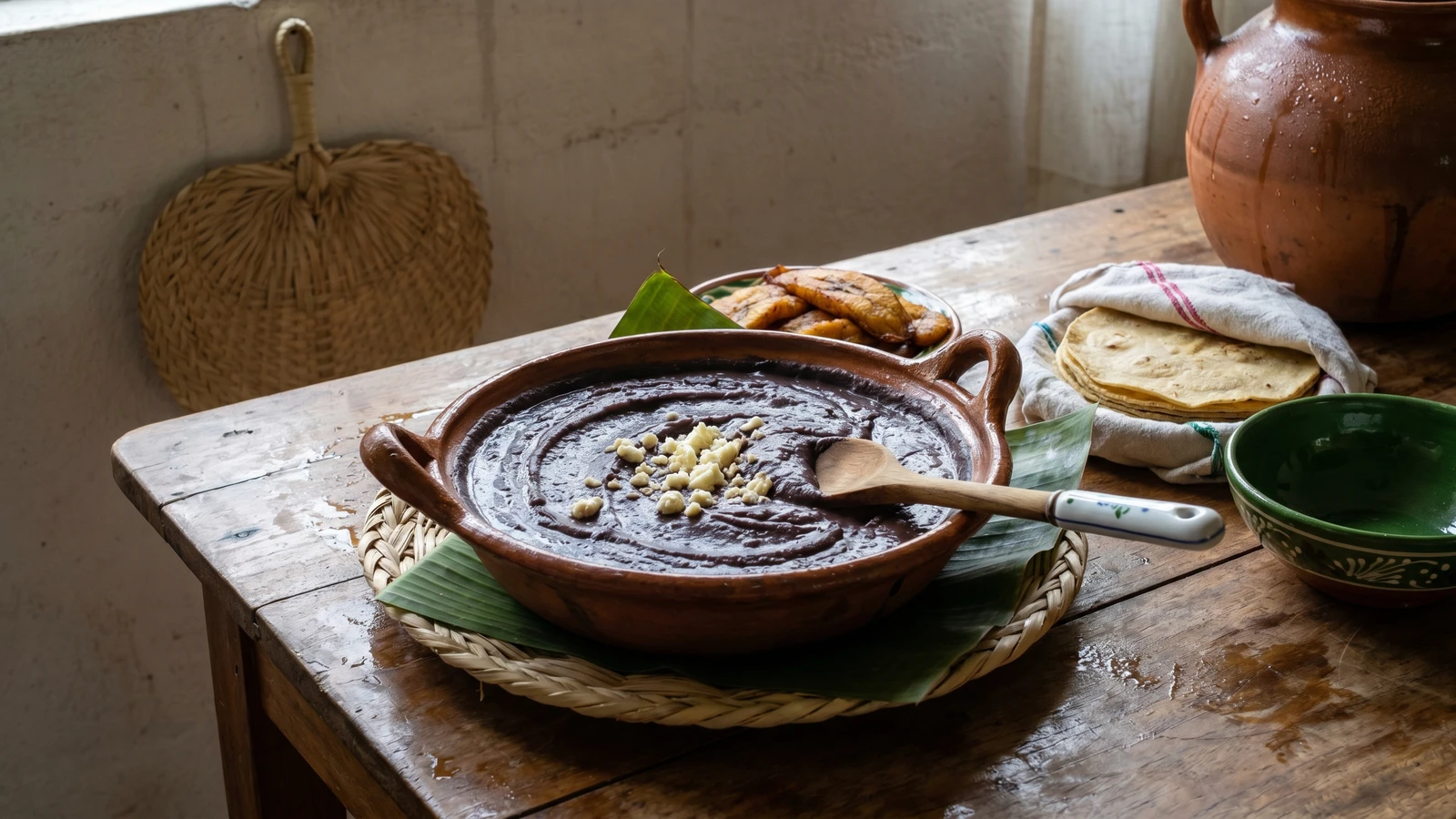
Veracruz black beans cooked with epazote and chile jalapeno, then mashed into pork lard until thick and glossy, the Gulf lowland side that belongs beside huevos tirados and platanos fritos.
Veracruz, especially the Gulf lowlands from the port down through Sotavento and Los Tuxtlas, belongs to the black bean. Not pinto. Pinto is a northern habit. Here the bean in the olla is black, dark as wet clay after rain, and it sits beside huevos tirados in the morning and platanos fritos when the day is ending.
The flavor is not built on heat. Remember that. Not all Mexican food is trying to burn your mouth. These beans take epazote, white onion, garlic, a whole chile jalapeno for perfume, and manteca de cerdo for the frying. The jalapeno gives a green edge, the epazote gives that sharp herbal note every Veracruz cook recognizes, and the lard turns boiled beans into refritos with body. No me vengas con atajos. If you fry them in a dry nonstick pan, you made mashed beans, not frijoles refritos.
I learned a version like this from a woman near Tlacotalpan who served the beans from a small cazuela de barro with fried plantains on a banana leaf. Her spoon was old wood with a porcelain handle, and she used it like a tool, not decoration. She told me the beans should move slowly when pushed, like mud at the edge of the river. That is the texture. Cada estado, su propia cocina.
My mother was from Jalisco, so her table leaned red chile and pozole. But in her notebook, under a Veracruz page copied from a market woman at La Merced, she wrote: black beans, epazote, lard, patience. Four words. Enough instruction if you already know how to listen.
Black beans have been cultivated in Mesoamerica for thousands of years, and along Veracruz's Gulf coast they remained central because they matched the humid lowland kitchen and the Indigenous foodways of Totonac, Huastec, and Nahua communities. The Spanish introduction of pork made manteca de cerdo the frying fat for refritos, while the African line in Sotavento and Los Tuxtlas reinforced the pairing of black beans with plantain, yuca, and other tropical starches. Huevos tirados, the Veracruz breakfast of eggs scrambled into refried black beans, became a regional marker in the 20th century through fondas and home kitchens from the port to Xalapa.
Quantity
1 pound
picked over and rinsed
Quantity
8 cups, plus more as needed
Quantity
1/2 medium
for cooking the beans
Quantity
3
peeled and lightly crushed
Quantity
1
slit lengthwise but left whole
Quantity
2 large sprigs
Quantity
2 teaspoons, plus more to taste
Quantity
4 tablespoons
Quantity
1/2 medium
finely chopped, for frying
Quantity
1/2 cup, plus more as needed
Quantity
for serving
crumbled
Quantity
for serving
Quantity
for serving
warmed
| Ingredient | Quantity |
|---|---|
| dried black beanspicked over and rinsed | 1 pound |
| water | 8 cups, plus more as needed |
| white onionfor cooking the beans | 1/2 medium |
| garlic clovespeeled and lightly crushed | 3 |
| fresh chile jalapenoslit lengthwise but left whole | 1 |
| fresh epazote | 2 large sprigs |
| kosher salt | 2 teaspoons, plus more to taste |
| pork lard (manteca de cerdo) | 4 tablespoons |
| white onionfinely chopped, for frying | 1/2 medium |
| bean cooking liquid | 1/2 cup, plus more as needed |
| queso fresco (optional)crumbled | for serving |
| platanos fritos (optional) | for serving |
| hand-pressed corn tortillas (optional)warmed | for serving |
Place the black beans in a heavy olla or Dutch oven with the water, onion, garlic, and whole slit chile jalapeno. Bring to a steady simmer over medium heat, then lower the heat so the beans bubble gently. Do not add salt yet. The skins need time to soften first. Veracruz cooks black beans until they are tender enough to collapse under a spoon, not until they look polite.
After about 1 hour and 30 minutes, when the beans are mostly tender, add the epazote and salt. Continue simmering 20 to 40 minutes more, adding hot water if the liquid drops below the beans. The broth should turn dark, savory, and almost purple-black. Remove and discard the onion, garlic, chile jalapeno, and epazote stems. Taste for salt now. Beans without enough salt taste unfinished, and no amount of lard will save them.
Set a wide clay cazuela, cast iron skillet, or heavy pan over medium heat. Add the manteca de cerdo and let it melt until glossy. Add the finely chopped white onion and cook, stirring often, until the onion softens and turns pale gold at the edges, about 5 minutes. La manteca es el sabor. Vegetable oil will fry the beans, yes, but it will not give you the Veracruz taste.
Spoon the cooked beans into the hot lard with about 1/2 cup of their cooking liquid. They will sputter, so stand back and then get to work. Mash with a wooden spoon or potato masher, dragging the beans across the bottom of the pan so they fry, break down, and thicken. Keep stirring for 10 to 12 minutes, adding small splashes of bean broth when the pan looks dry. You want a thick, creamy mass with a glossy surface, not a loose soup.
Lower the heat and cook 3 to 5 minutes more, stirring slowly, until the beans hold soft ridges when you pull the spoon through them. Taste again for salt. If they taste flat, they need salt, not more garnish. If they get too stiff, loosen with a spoonful of hot bean broth. Así se hace y punto.
Spoon the refried black beans into a warm clay bowl or small cazuela. Serve beside huevos tirados in the morning, platanos fritos in the evening, or warm corn tortillas whenever the table needs feeding. A little queso fresco can go on top if you use it at home, but do not bury the beans. The black bean is the point.
1 serving (about 275g)
Culinary guides, cultural storytelling, and the editorial depth that makes cooking meaningful.
Discover Culinary ExplorerChef Lupita
Oaxaca's red rice, stained with tomato and fried in lard, steamed with carrots, ejotes, black beans, and epazote. The side that anchors a Oaxacan family meal and earns its place beside the main.
Chef Lupita
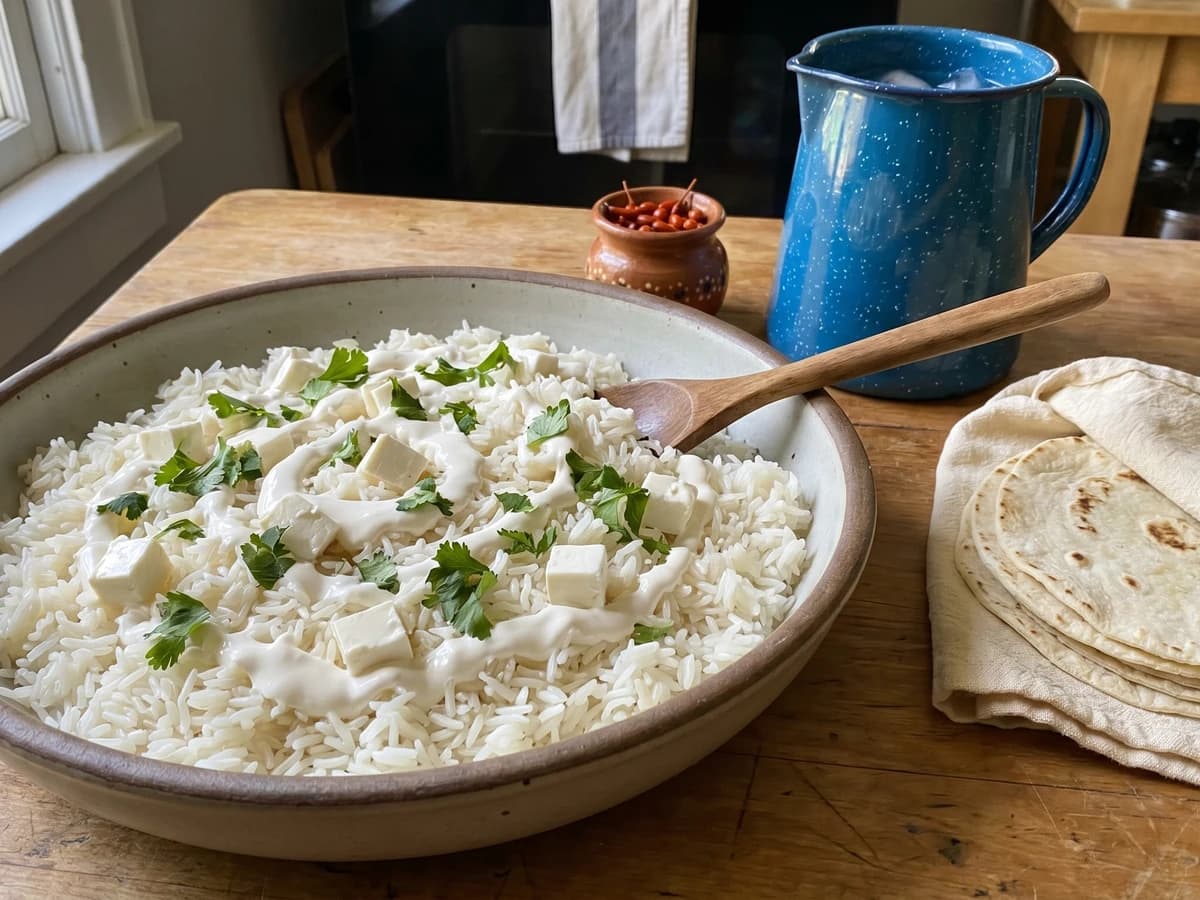
Sinaloa's home-cook white rice topped with cold cubes of cream cheese that soften into the warm grain, finished with crema and a sprinkle of chiltepin at the table. The trick that makes a side dish feel like a small luxury.
Chef Lupita
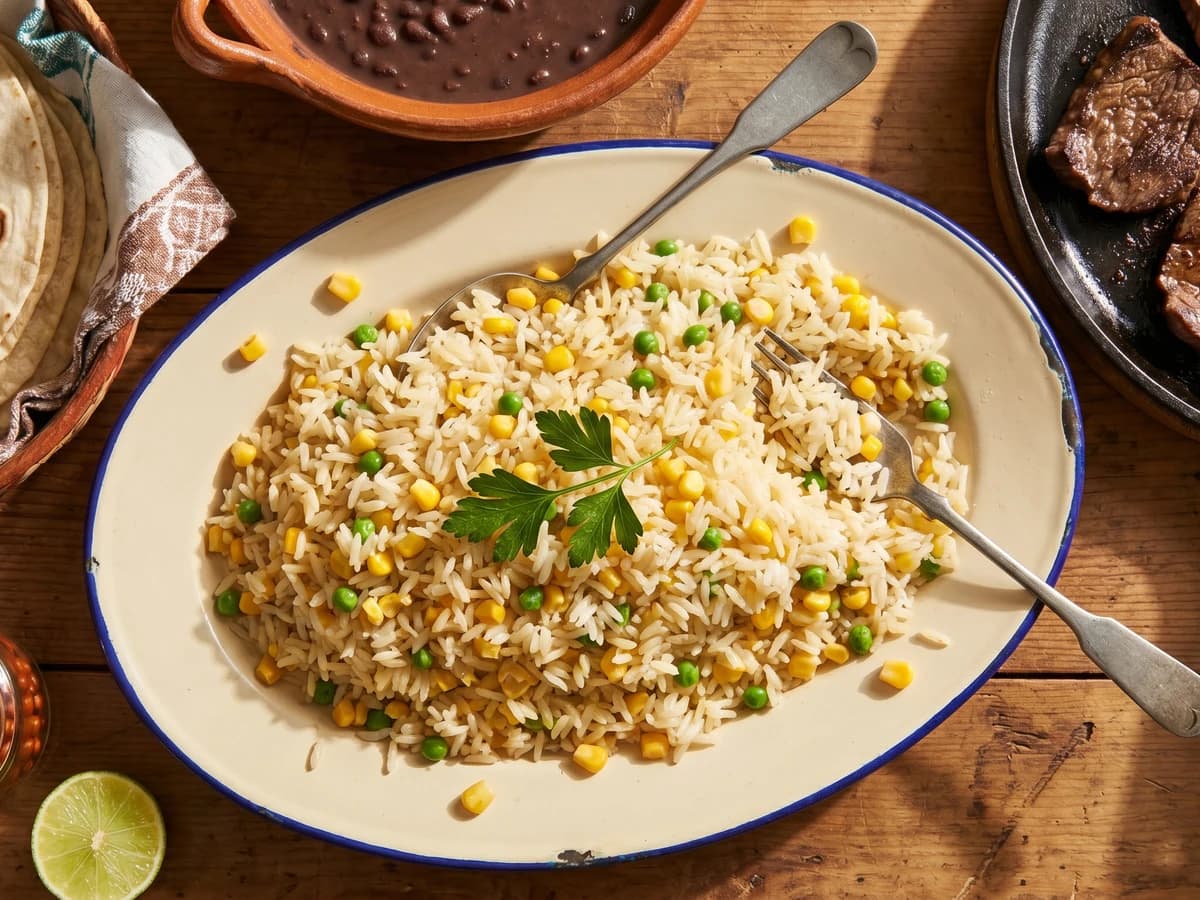
Sonora's white rice, toasted in butter and steamed with sweet corn and tender peas. The clean, quiet partner to a plate of carne asada, not the red rice of central Mexico.

Chef Lupita
Yucatán's white rice with sweet corn kernels, toasted in lard with garlic and onion. The quiet base that holds up against the peninsula's bold achiote-stained stews.