
Chef Makoa
ʻAva (Sāmoan Kava Ceremony Drink)
Sāmoa's ʻava is kava root worked in cool water, strained clear-brown into the tānoa, and passed in chiefly order. This is welcome, rank, and quiet, not a party drink.
A cooking platform built around craft, culture, and the stories behind what we eat.
Created by
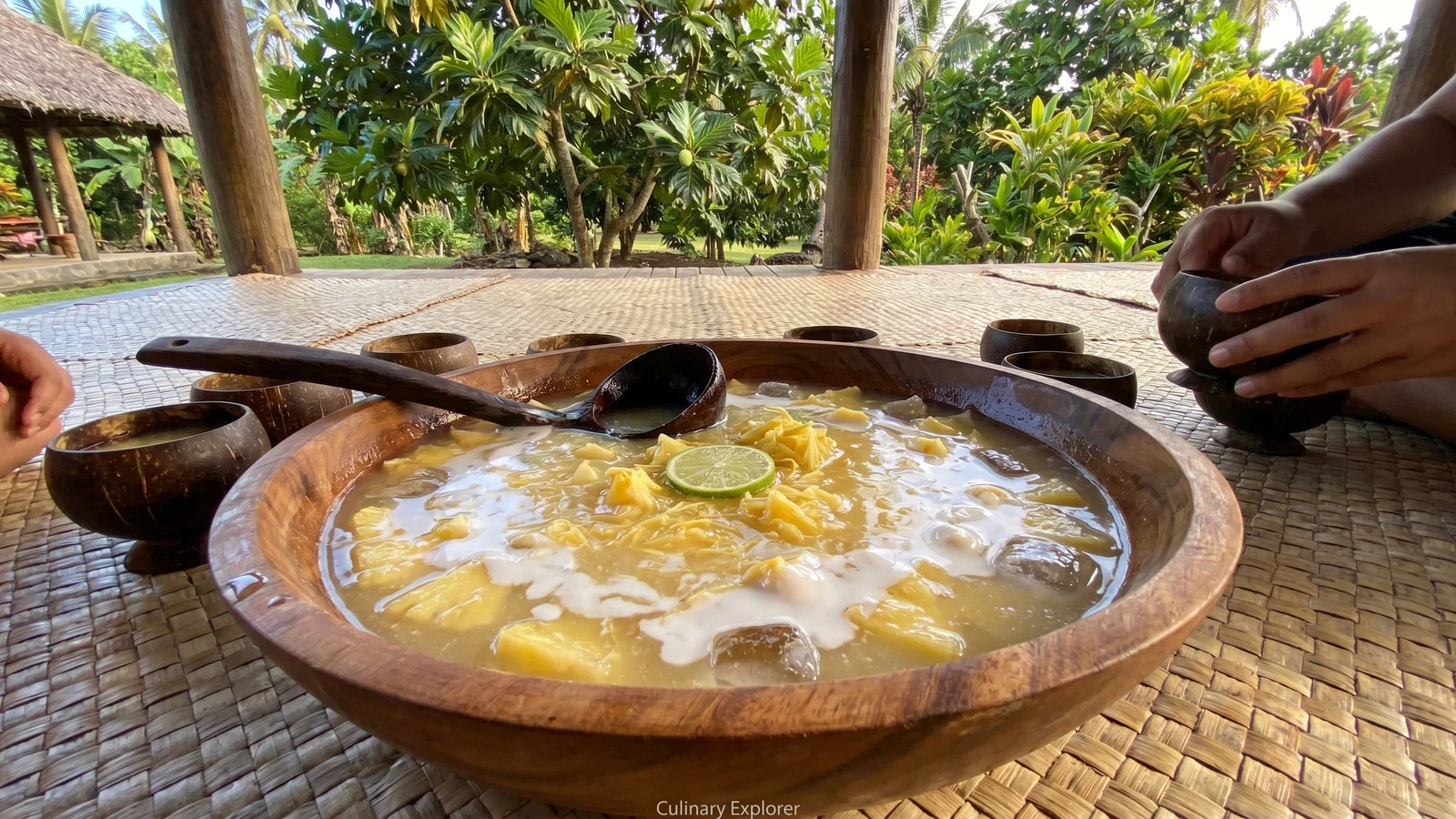
Grated pineapple, cold water, sugar, and fresh coconut cream stirred into Sāmoa's everyday vaifala, bright over ice and close to Tonga's ʻotai, but carrying its own Sāmoan hand.
At a Sāmoan table, not every drink is ceremony. ʻAva, the kava-root drink, has its chiefly protocol and its own elders to teach it. Vaifala sits on the everyday side: cold, sweet, full of grated pineapple, passed around when the ʻaiga (family) is eating outside and the fanua (land) has everyone shining from the heat.
This is Sāmoa's vaifala, from vai fala in gagana Sāmoa (the Sāmoan language): pineapple water. Tonga has its close cousin, ʻotai, often grated watermelon or mango or pineapple with coconut and milk, and that cousin deserves its own name too. Same ocean family, different bowl. We don't smear them together and call it one nameless drink.
The coconut is the old canoe memory here. The pineapple came later, and that's alright. The islands know how to welcome what arrives and make it feed people, the same table that holds palusami, sapasui, corned beef and rice, grilled fish, and a cold cup for the child who just ran in from the yard.
So grate the fruit, catch the juice, stir the sugar until it disappears, and pour the coconut cream in close to drinking. Eat what you have. If the pineapple is sweet, use less sugar. If the coconut is fresh, let it speak. The drink should feel generous and cold, like somebody made enough because they already knew one more cousin was coming.
The name says it plain in gagana Sāmoa: vai is water and fala is pineapple, a direct name for a drink built from grated fruit, water, sugar, and coconut cream. Pineapple was not one of the ancient canoe plants like kalo or talo, ʻulu (breadfruit), coconut, or banana; it reached Pacific kitchens after European contact and became part of the everyday Sāmoan table, from church gatherings to picnics. Its closest named cousin is Tonga's ʻotai, while ceremonial ʻava belongs to a separate chiefly protocol learned from Sāmoan matai and elders.
Quantity
1 large, about 3 pounds
peeled, cored, grated, and juices saved
Quantity
4 cups
plus more to taste
Quantity
1 cup
or unsweetened canned coconut cream stirred smooth
Quantity
1/2 cup
plus more to taste
Quantity
1 tablespoon
Quantity
1/4 teaspoon
Quantity
as needed
for serving
| Ingredient | Quantity |
|---|---|
| ripe pineapplepeeled, cored, grated, and juices saved | 1 large, about 3 pounds |
| cold waterplus more to taste | 4 cups |
| fresh coconut cream (peʻepeʻe)or unsweetened canned coconut cream stirred smooth | 1 cup |
| superfine sugarplus more to taste | 1/2 cup |
| fresh lime or lemon juice (optional) | 1 tablespoon |
| fine sea salt | 1/4 teaspoon |
| icefor serving | as needed |
Set the water, coconut cream, and serving bowl or pitcher in the fridge before you start. Vaifala drinks best cold from the first pour, before the ice has time to thin it out. This is everyday Sāmoan food sense: make the simple thing properly, no need make it precious.
Grate the pineapple on the large holes of a box grater over a wide bowl so every bit of juice is caught. You want ragged golden threads and small soft pieces, not a smooth puree. The pulp is part of the drink, so keep it honest and a little chewy.
In a 2-quart pitcher or carved serving bowl, stir the sugar and salt into the cold water until the bottom no longer feels gritty under the spoon. Taste your pineapple first, yeah? If the fruit is very sweet, hold back a little sugar. If it came in sharp, give it what it needs.
Stir in the grated pineapple and all its juice, then pour in the coconut cream and fold until the drink turns pale gold and milky. Add the lime or lemon if you want a little lift, but don't let citrus take over. Vaifala should taste like pineapple loosened with coconut, not like lemonade wearing another shirt.
Add ice to cups or to the bowl right before serving, stir from the bottom, and ladle it out while the pineapple threads are still floating through the coconut. The pulp will settle as it sits. That's no problem. Stir again and keep passing it around.
1 serving (about 260g)
Culinary guides, cultural storytelling, and the editorial depth that makes cooking meaningful.
Discover Culinary ExplorerChef Makoa
Sāmoa's ʻava is kava root worked in cool water, strained clear-brown into the tānoa, and passed in chiefly order. This is welcome, rank, and quiet, not a party drink.
Chef Makoa
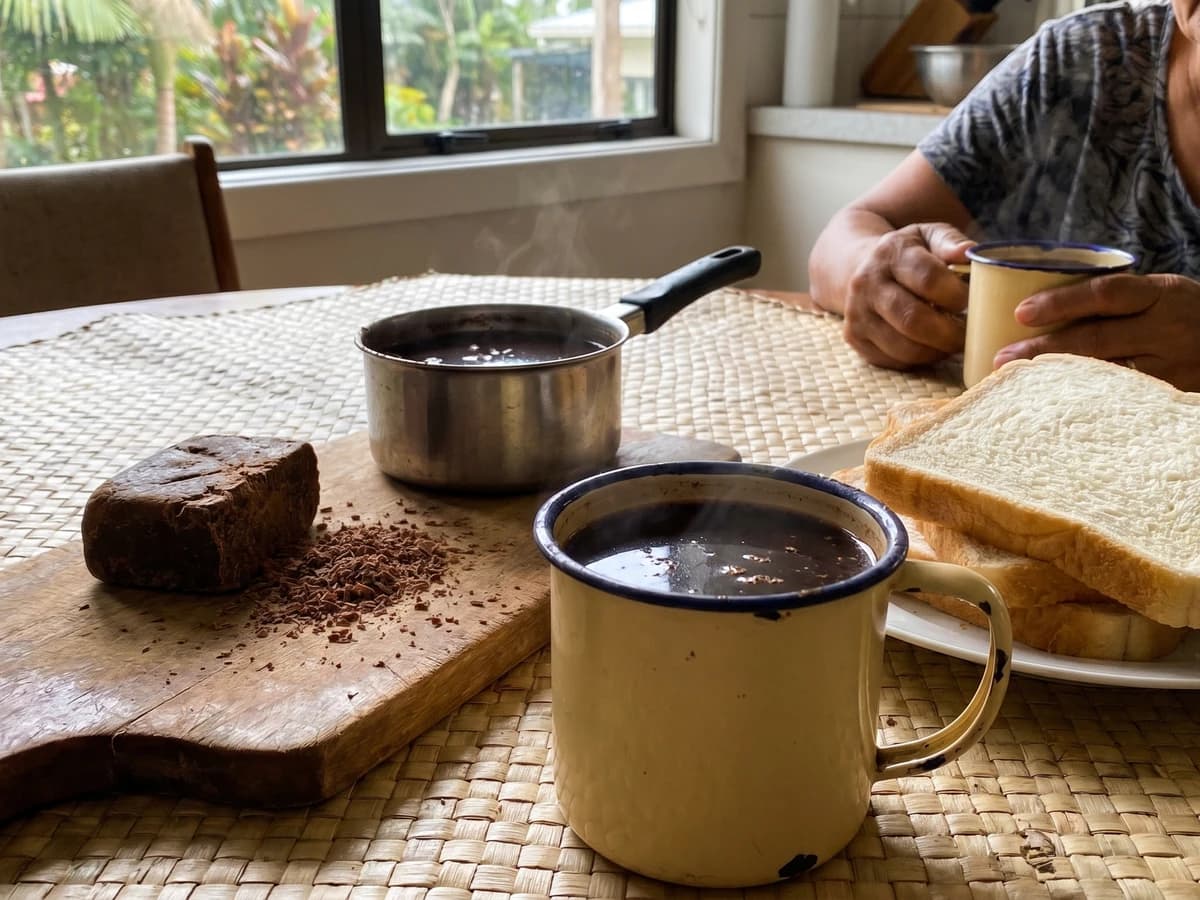
Sāmoa's morning koko, brewed from roasted island cacao until dark and glossy, sweetened only as much as your cup asks, and poured beside white bread for the aiga.
Chef Makoa
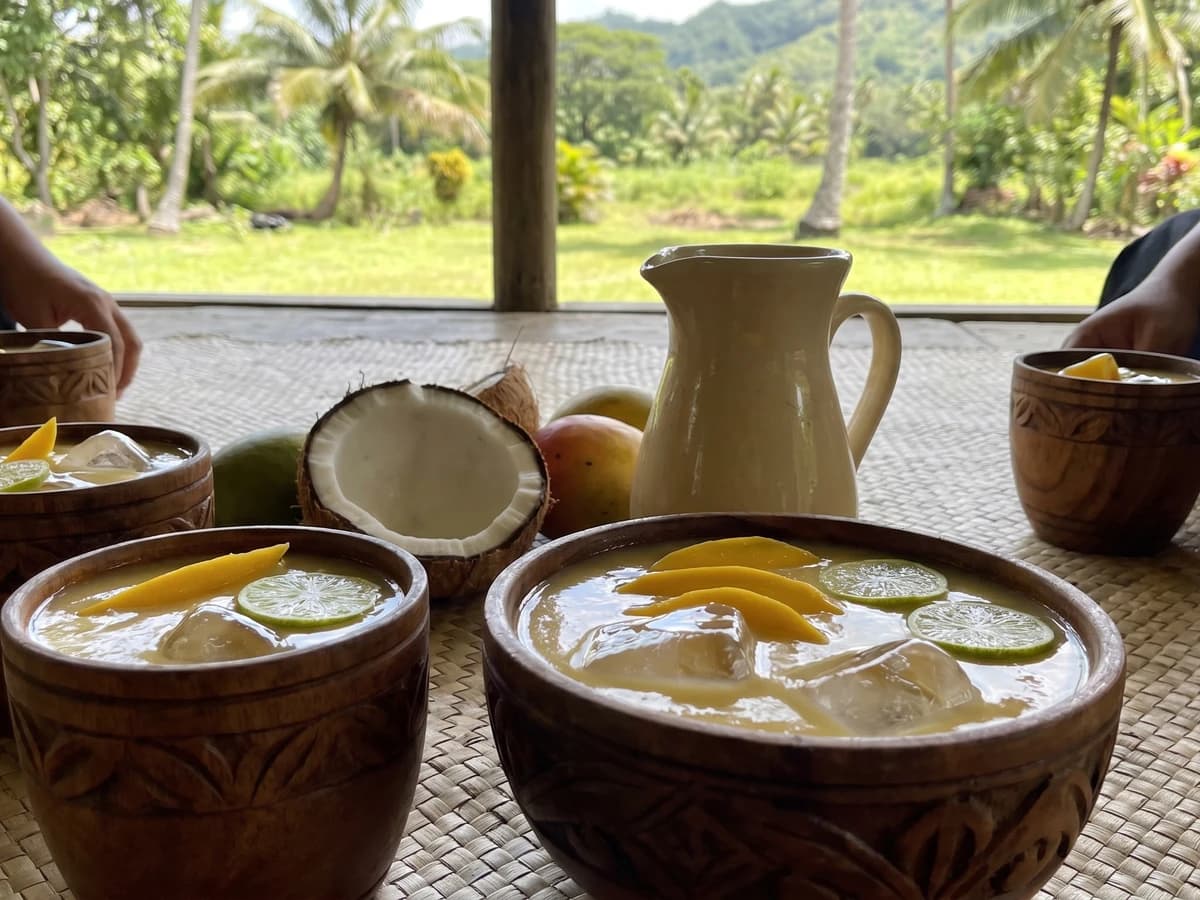
Sāmoa's vai mago is a cold mango drink, thick with ripe fruit and coconut cream, poured for the whole aiga beside its pineapple cousin, vaifala.
Chef Makoa
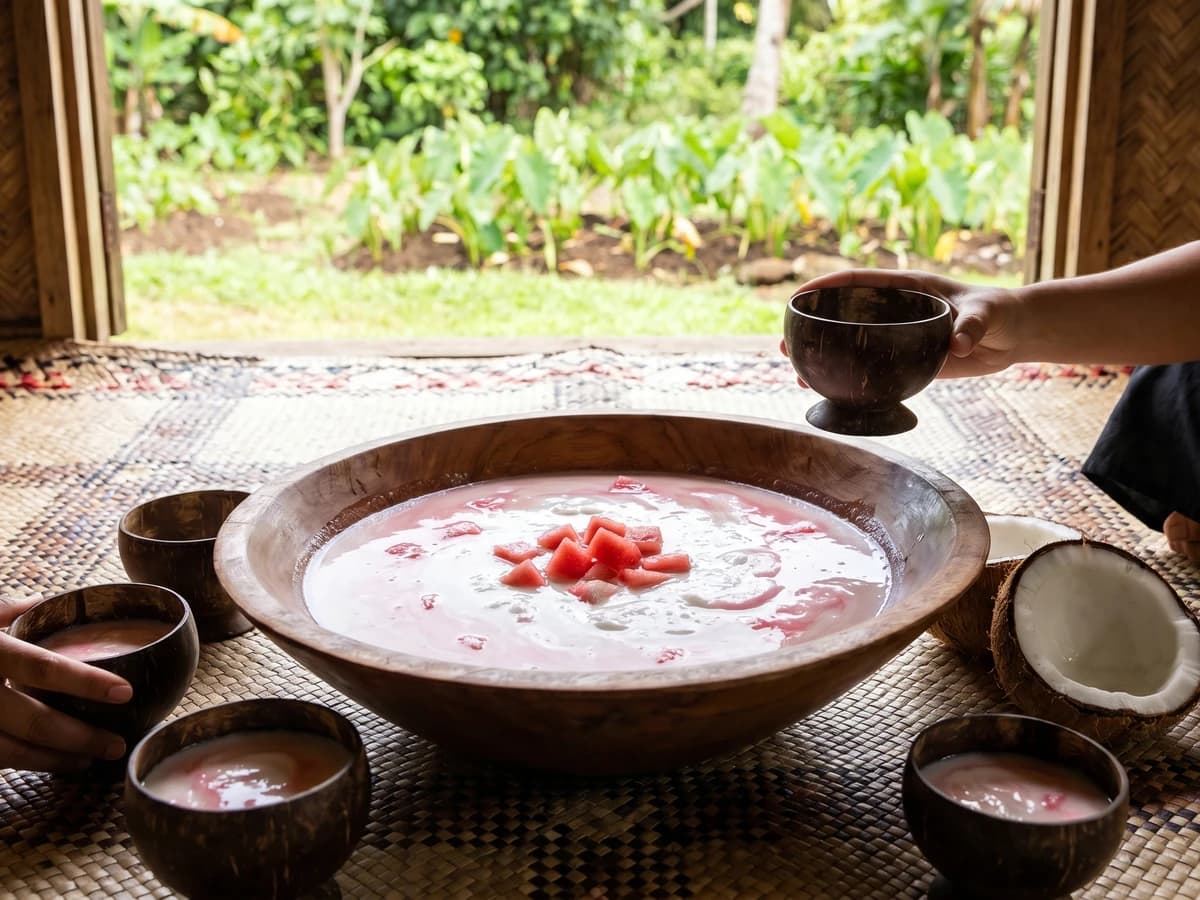
Cold Sāmoan vai meleni, grated watermelon stirred with fresh coconut cream, sugar, and lime, the everyday fruit water you pour beside sapasui, grilled fish, or a toʻonaʻi spread.