
Chef Makoa
ʻAva (Sāmoan Kava Ceremony Drink)
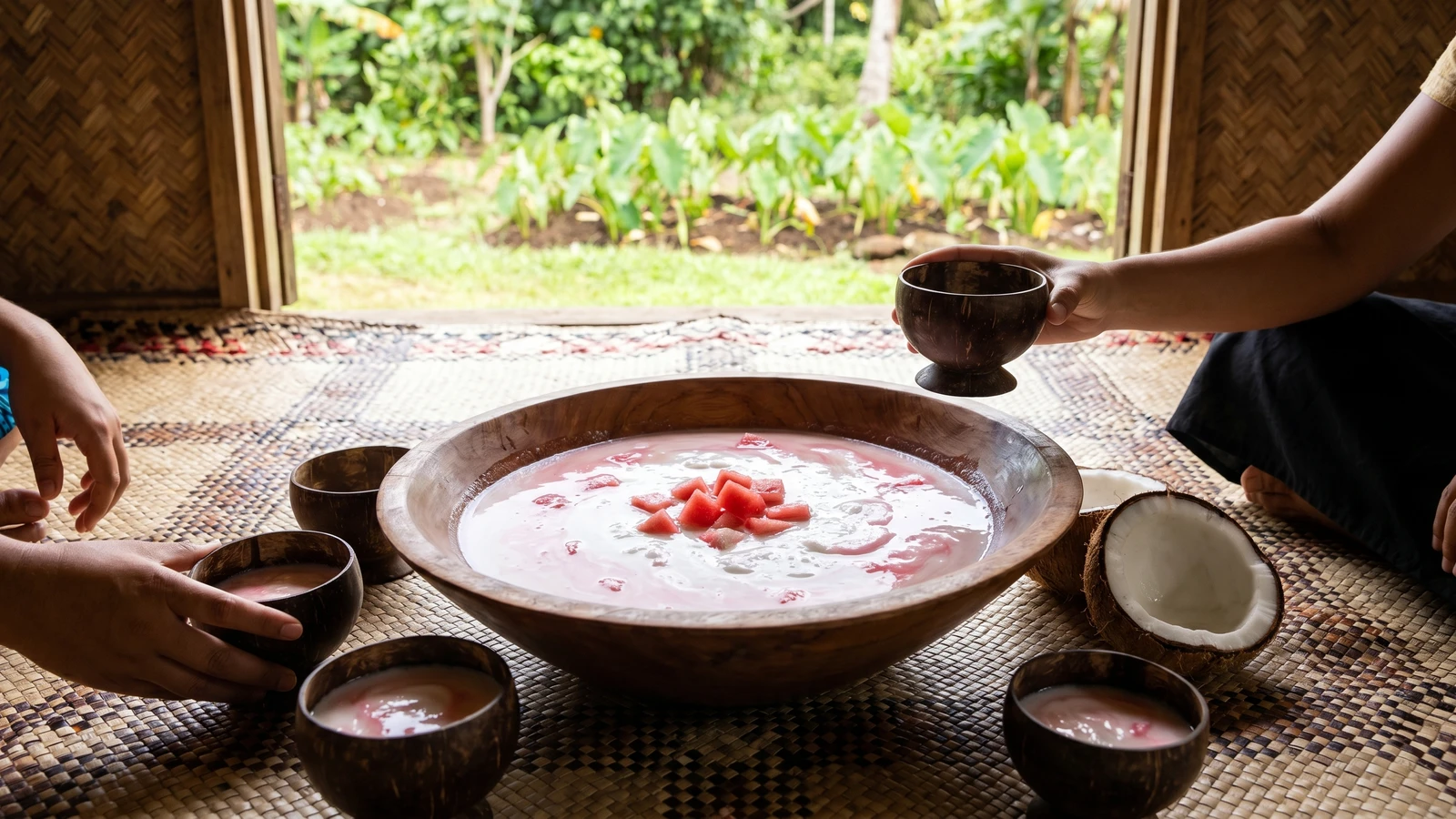
Sāmoa's ʻava is kava root worked in cool water, strained clear-brown into the tānoa, and passed in chiefly order. This is welcome, rank, and quiet, not a party drink.
A cooking platform built around craft, culture, and the stories behind what we eat.
Created by
Cold Sāmoan vai meleni, grated watermelon stirred with fresh coconut cream, sugar, and lime, the everyday fruit water you pour beside sapasui, grilled fish, or a toʻonaʻi spread.
Acold cup passed across a Sāmoan table is kinship too. Not every food has to carry the full weight of the umu or the chiefly line to matter. Sometimes the care is simple: a bowl of vai meleni, watermelon drink, set down in a fale, the open house, while the aiga, the family, comes in from church, the yard, the sea, the road.
This belongs to Sāmoa. Vai means water or drink in gagana Sāmoa, the Sāmoan language, and meleni is watermelon, grated so the juice and the flesh stay together. You don't blend it smooth and make it forget itself. You grate it by hand, fold in peʻepeʻe, fresh coconut cream, sweeten only as much as the fruit asks, and serve it cold enough to settle everybody down.
It sits with the Sāmoan vai family, beside vai fala, pineapple drink, and it has cousins across the Triangle too. Tonga has ʻotai, a grated fruit cooler often made with watermelon, pineapple, coconut, and milk. Same thirst, different cup. No plain Polynesian drink here, yeah? This is Sāmoa's hand, and the cousins keep their own.
So bring it into the kitchen you actually have. A box grater is enough. A good can of coconut cream will do when no fresh niu, mature coconut, is around. Eat what you have, but serve it close to drinking, cold and generous, because the everyday table still teaches the same old lesson: food is how people remember they belong to each other.
Vai meleni belongs to Sāmoa's everyday vai, fruit drinks served cold at homes, church lunches, picnics, and toʻonaʻi, the Sunday midday meal, separate from ʻava, the ceremonial kava root drink whose protocol belongs to matai and elders. Watermelon was not a canoe crop like talo, niu, breadfruit, or banana; it came later through the contact-era trade and mission world, then Sāmoan hands folded it into an older habit of feeding the aiga from what the land was giving. Its nearest cousin in the Triangle is Tonga's ʻotai, another grated fruit cooler, while Sāmoa keeps its own hand in the coconut cream and the thick, spoonable pulp.
Quantity
1 small (5 to 6 pounds)
chilled, rind removed, flesh coarsely grated
Quantity
1 cup
first squeeze from grated mature coconut, or thick canned coconut cream
Quantity
2 to 4 tablespoons
to taste
Quantity
1/8 teaspoon
Quantity
1 to 2 cups
to loosen
Quantity
1 tablespoon
Quantity
1 cup
| Ingredient | Quantity |
|---|---|
| seedless watermelon (meleni)chilled, rind removed, flesh coarsely grated | 1 small (5 to 6 pounds) |
| fresh coconut cream (peʻepeʻe)first squeeze from grated mature coconut, or thick canned coconut cream | 1 cup |
| sugarto taste | 2 to 4 tablespoons |
| fine sea salt | 1/8 teaspoon |
| cold water or clear iceto loosen | 1 to 2 cups |
| fresh lime or lemon juice (optional) | 1 tablespoon |
| small chilled watermelon cubes (optional) | 1 cup |
Set the watermelon, coconut cream, and serving bowl in the refrigerator before you start. Vai meleni tastes cleanest when the cold comes from the fruit itself, not from so much ice that the drink goes thin. A chilled bowl buys you time at the picnic table.
Cut away the rind, remove any hard seeds, and grate the watermelon on the large holes of a box grater into a wide bowl, catching every drop of juice. You want soft red pulp swimming in its own sweet water, not a smooth purée. That hand-grated texture is the drink.
Whisk the peʻepeʻe until it is smooth and pourable. If you squeezed it fresh from grated niu, strain out any rough bits and chill it. If you're using canned coconut cream, stir the thick cap and liquid back together until no lumps remain.
Sprinkle 2 tablespoons sugar and the salt over the grated watermelon, then stir until the grains disappear into the juice. Taste before adding more. If the meleni is heavy, ripe, and sweet, no need make it candy. Eat what you have, and listen to the fruit.
Pour in the coconut cream and fold gently until the drink turns pale rose, creamy but still bright. Add the lime or lemon if you want a small sharp edge, then loosen with cold water or clear ice until it pours easily but still carries spoonfuls of watermelon pulp.
Chill 10 to 15 minutes, stir again because the pulp will settle, then ladle into cups with a few small watermelon cubes if you're using them. Serve cold and close to drinking. At a picnic, keep the bowl in a cooler and stir before every round.
1 serving (about 265g)
Culinary guides, cultural storytelling, and the editorial depth that makes cooking meaningful.
Discover Culinary ExplorerChef Makoa
Sāmoa's ʻava is kava root worked in cool water, strained clear-brown into the tānoa, and passed in chiefly order. This is welcome, rank, and quiet, not a party drink.
Chef Makoa
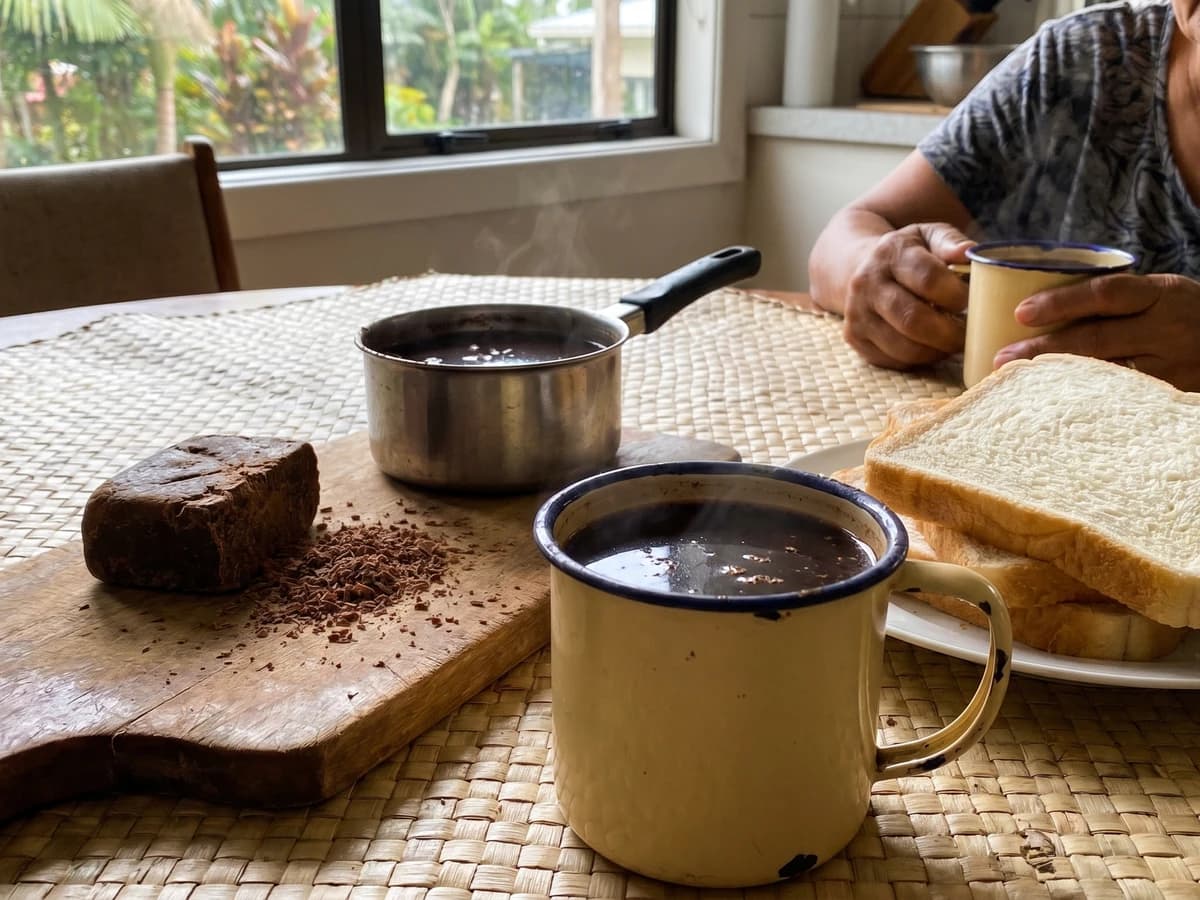
Sāmoa's morning koko, brewed from roasted island cacao until dark and glossy, sweetened only as much as your cup asks, and poured beside white bread for the aiga.
Chef Makoa
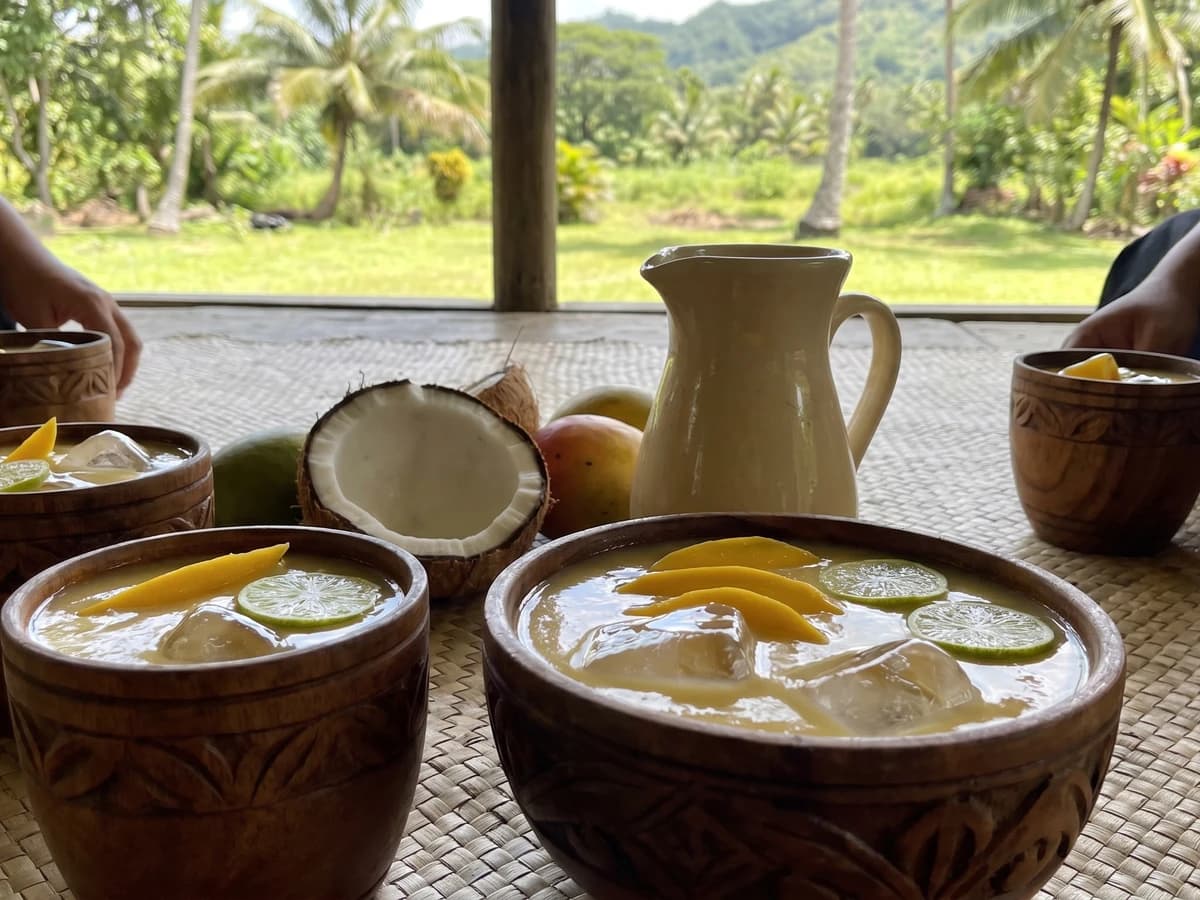
Sāmoa's vai mago is a cold mango drink, thick with ripe fruit and coconut cream, poured for the whole aiga beside its pineapple cousin, vaifala.

Chef Makoa
Grated pineapple, cold water, sugar, and fresh coconut cream stirred into Sāmoa's everyday vaifala, bright over ice and close to Tonga's ʻotai, but carrying its own Sāmoan hand.