
Chef Jeong-sun
Aehobak-guk (애호박국, Korean Zucchini Soup)
A clean summer soup of Korean zucchini and salted shrimp, built on quick anchovy-kelp broth and finished before the half-moons lose their shape on a weeknight table.
A cooking platform built around craft, culture, and the stories behind what we eat.

Created by
A countryside soybean paste stew built on chewy river snails, tofu, zucchini, and a clean anchovy-kelp broth, with the snails added late so they stay tender, not rubbery.
Ureong-doenjang-jjigae lives or dies by timing. The river snails go in late, after the paste has opened and the potato has softened, because ureong has a good chew only until you punish it. Boil it like beef and it turns stubborn. My teacher would have looked at that pot once and said nothing, which was worse than scolding.
Ureong, the freshwater snail used in this stew, belongs to the rice-field and stream cooking of Korea's inland farming regions, especially the Chungcheong area where ureong ssambap and ureong gang-doenjang became familiar country-table dishes. Older cooks gathered snails from paddies and irrigation ditches, but modern pesticide use changed that habit; today most home cooks buy cleaned, parboiled ureong-sal from markets or frozen sections. The dish is not palace food and does not need to be dressed up as one: it is field food, preserved by repetition at ordinary tables.
Quantity
2 1/2 cups
Quantity
1 piece, about 4 inches square
Quantity
8
heads and guts removed
Quantity
3 tablespoons
Quantity
1 teaspoon
Quantity
1 teaspoon
minced
Quantity
1/2 small
cut into 1/2-inch pieces
Quantity
1/2 small
cut into thick half-moons
Quantity
1 small
peeled and cut into 1/2-inch cubes
Quantity
150g
rinsed and drained
Quantity
200g
cut into bite-size cubes
Quantity
1
sliced on the diagonal
Quantity
1
sliced on the diagonal
Quantity
1
cut into 1-inch lengths
Quantity
1/2 teaspoon
| Ingredient | Quantity |
|---|---|
| rice-rinse water or water | 2 1/2 cups |
| dried kelp (dasima) | 1 piece, about 4 inches square |
| large dried anchovies (myeolchi)heads and guts removed | 8 |
| doenjang (Korean fermented soybean paste) | 3 tablespoons |
| gochugaru (Korean chili flakes) (optional) | 1 teaspoon |
| garlicminced | 1 teaspoon |
| onioncut into 1/2-inch pieces | 1/2 small |
| zucchini (aehobak)cut into thick half-moons | 1/2 small |
| potatopeeled and cut into 1/2-inch cubes | 1 small |
| cleaned parboiled river snail meat (ureong-sal)rinsed and drained | 150g |
| medium-firm tofucut into bite-size cubes | 200g |
| green chilisliced on the diagonal | 1 |
| red chili (optional)sliced on the diagonal | 1 |
| scallioncut into 1-inch lengths | 1 |
| toasted sesame oil (optional) | 1/2 teaspoon |
Rinse the cleaned parboiled ureong-sal under cold running water, then drain it well. If it smells muddy rather than clean and briny, soak it for 5 minutes in cold water with 1 teaspoon salt, rinse again, and drain. Do not boil it now. The snail has already been cooked once, and a second long cooking makes it tough.
Put the rice-rinse water, kelp, and anchovies in a ttukbaegi or small heavy pot over medium heat. When the liquid reaches a gentle simmer, pull out the kelp before it turns the broth slick and bitter. Simmer the anchovies 8 minutes more, then lift them out. Rice-rinse water gives the stew body, but plain water is honest if that is what you have.
Lower the heat and whisk in the doenjang until no lumps remain. Add the gochugaru if you want a little warmth, not a red stew. Taste the broth before anything else goes in. It should be savory and a little salty, because the vegetables and tofu will soften it, but it should not taste like paste alone.
Add the garlic, onion, potato, and zucchini. Simmer 7 to 8 minutes, until the potato is just tender at the center and the zucchini still holds its shape. Cut the potato small, 1/2 inch, so it cooks in time without forcing the snails to wait in the pot later. This is one of the corners you do not cut.
Slide in the tofu and the drained ureong-sal. Simmer gently for 3 minutes, no longer. The snail should be chewy and tender, with a clean bite. If it tightens like rubber, it stayed in too long. 손맛 is real; I measure it anyway. Three minutes is the number in my notebook because it protects the ingredient.
Scatter in the green chili, red chili if using, and scallion. Simmer 30 seconds, then turn off the heat. Stir in the sesame oil only if your doenjang is very sharp and needs rounding. Carry the ttukbaegi straight to the table with rice and one or two plain banchan. This stew is already doing enough.
1 serving (about 260g)
Culinary guides, cultural storytelling, and the editorial depth that makes cooking meaningful.
Discover Culinary ExplorerChef Jeong-sun
A clean summer soup of Korean zucchini and salted shrimp, built on quick anchovy-kelp broth and finished before the half-moons lose their shape on a weeknight table.
Chef Jeong-sun
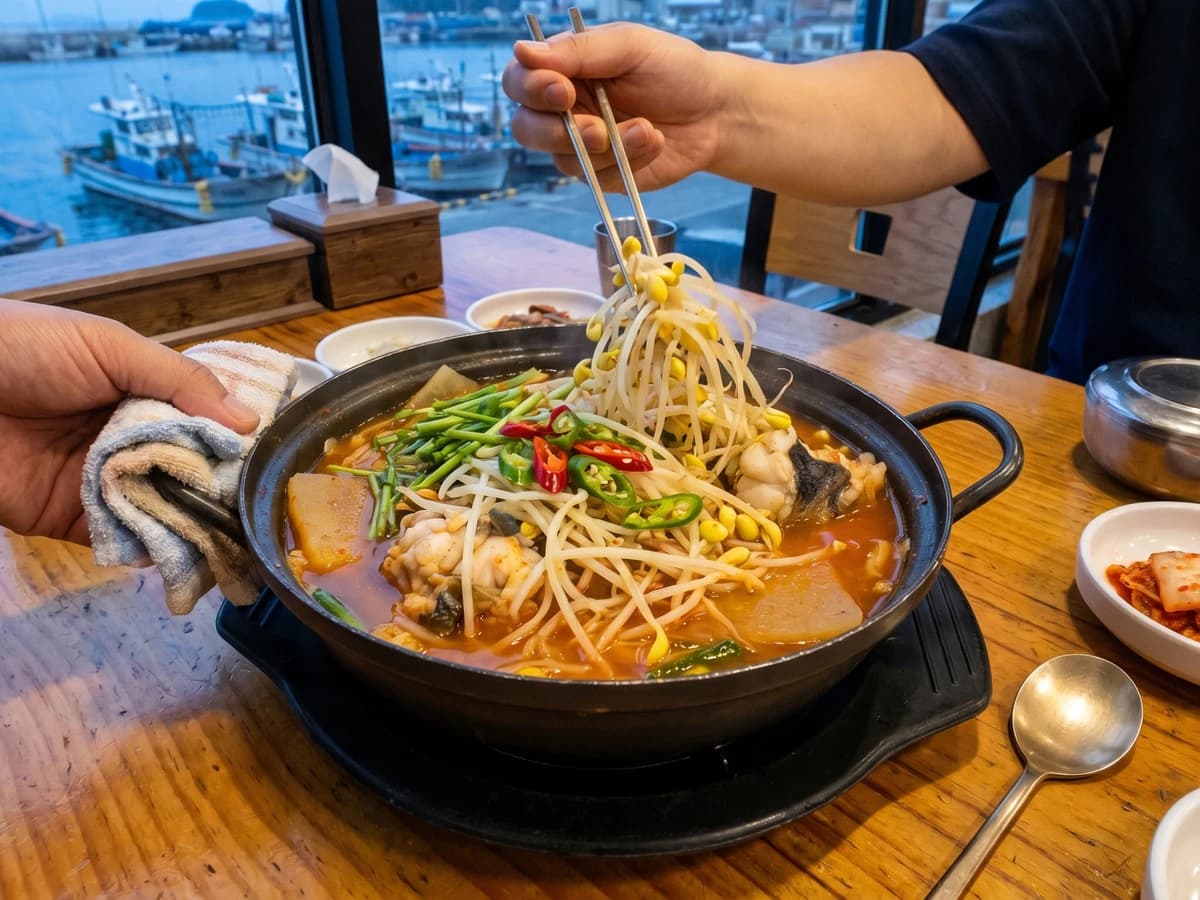
A Masan coast monkfish stew with firm white meat, gelatin at the bones, soybean sprouts for crunch, and a red broth seasoned to carry the fish, not bury it.

Chef Jeong-sun
A weeknight fish roe stew with radish and crown daisy in a clean spicy broth, where the whole success depends on adding the roe late enough that it sets tender, not chalky.

Chef Jeong-sun
Late-summer mallow leaves rubbed with salt until the bitter green water runs off, then simmered in a clean doenjang broth with dried shrimp, the quiet soup a Korean weeknight deserves.