
Chef Jeong-sun
Agwi-jjigae (Monkfish Stew)
A Masan coast monkfish stew with firm white meat, gelatin at the bones, soybean sprouts for crunch, and a red broth seasoned to carry the fish, not bury it.
A cooking platform built around craft, culture, and the stories behind what we eat.
Created by
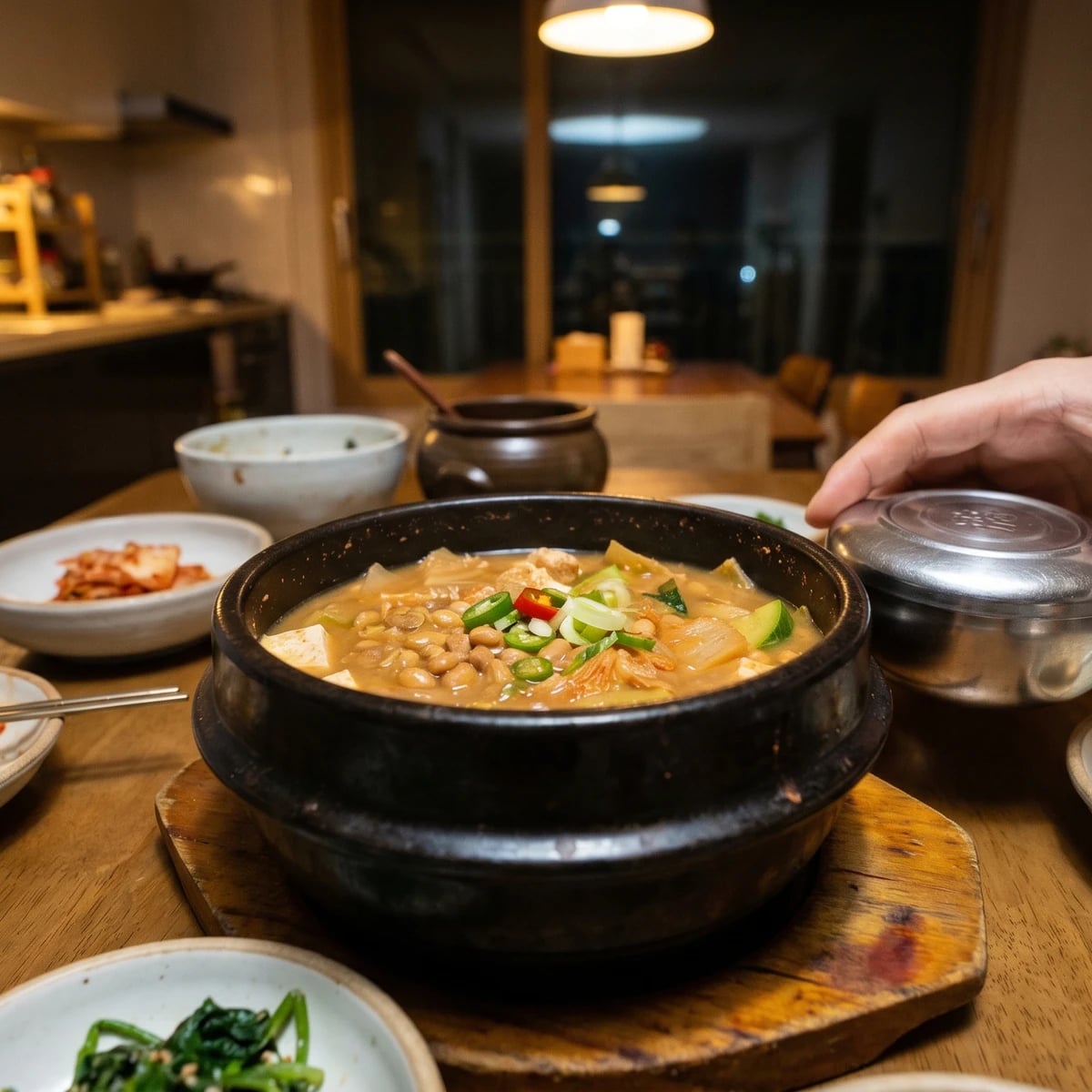
A loud, nutty soybean stew for weeknights, built on anchovy-kelp broth, sour kimchi, tofu, and cheonggukjang stirred in off the boil so its fast-fermented character stays clear.
Cheonggukjang-jjigae lives or dies in the last five minutes. People boil it like doenjang and then complain that it smells rough. Of course it does. Cheonggukjang is fast-fermented soybean, alive in its nuttiness and its stubborn smell, and it wants to be stirred in after the pot has done its hard work.
Notebook 42 says Master Seong-nyeo made this with sour kimchi, a little pork, tofu cut small enough for the spoon, and rice water when rice was already being washed. She didn't apologize for the smell. A winter table with cheonggukjang announces itself before anyone sits down, and that is part of the comfort. The rice pot empties faster when the stew is right.
Tonight it asks for restraint. Make a clean anchovy-kelp broth or use second-rinse rice water, cook the kimchi and vegetables first, then turn the boil down before the paste goes in. Measure 170 grams, not a vague lump. 손맛 is real; I measure it anyway, so the next person can make the same bowl after you.
Cheonggukjang is one of Korea's fastest jang (fermented soybean seasonings): boiled soybeans are kept warm until Bacillus subtilis turns them sticky, pungent, and ready in two or three days, while doenjang takes months. The name is often explained by popular stories tied to the seventeenth-century Manchu invasions and Qing China, or by jeongukjang, a quick wartime paste; the evidence is not tidy enough to choose one with confidence. What is clear is its place in ordinary winter kitchens, where a small block of fast-fermented beans made a protein-rich stew with kimchi, tofu, and rice.
Quantity
4 cups
Quantity
1 piece, about 4 inches square
Quantity
8
heads and guts removed
Quantity
2 teaspoons
Quantity
120g
cut into 1/2-inch pieces
Quantity
1 cup (about 160g)
lightly squeezed and chopped
Quantity
2 tablespoons
Quantity
100g
cut into thin quarter-moons
Quantity
1/2 small (about 80g)
cut into 1/2-inch squares
Quantity
1 tablespoon
Quantity
1 teaspoon
Quantity
1/2 small (about 100g)
cut into thick half-moons
Quantity
200g
cut into 3/4-inch cubes
Quantity
2 cloves
minced
Quantity
170g (about 2/3 cup)
Quantity
1
sliced on the diagonal
Quantity
1
sliced on the diagonal
Quantity
2
sliced on the diagonal
Quantity
1/4 teaspoon
Quantity
to serve
| Ingredient | Quantity |
|---|---|
| second-rinse rice water (ssalddeumul) or water | 4 cups |
| dried kelp (dasima) | 1 piece, about 4 inches square |
| large dried anchovies (myeolchi)heads and guts removed | 8 |
| neutral oil | 2 teaspoons |
| pork belly or pork shouldercut into 1/2-inch pieces | 120g |
| well-fermented napa cabbage kimchilightly squeezed and chopped | 1 cup (about 160g) |
| kimchi brine | 2 tablespoons |
| Korean radishcut into thin quarter-moons | 100g |
| onioncut into 1/2-inch squares | 1/2 small (about 80g) |
| doenjang (fermented soybean paste) | 1 tablespoon |
| gochugaru (Korean chili flakes) (optional) | 1 teaspoon |
| zucchinicut into thick half-moons | 1/2 small (about 100g) |
| medium-firm tofucut into 3/4-inch cubes | 200g |
| garlicminced | 2 cloves |
| cheonggukjang (fast-fermented soybean paste) | 170g (about 2/3 cup) |
| green chilisliced on the diagonal | 1 |
| red chili (optional)sliced on the diagonal | 1 |
| scallionssliced on the diagonal | 2 |
| fine sea salt (optional) | 1/4 teaspoon |
| cooked short-grain rice (optional) | to serve |
Put the rice water, kelp, and anchovies in a small pot over medium heat. Pull the kelp out as soon as the water reaches a simmer, before it turns the broth slick and bitter. Simmer the anchovies 8 minutes more, then strain. Measure 3 1/2 cups broth for the stew and add a little water if you are short.
Cut the radish thin, the zucchini thick, and the tofu into spoon-size cubes. Keep the cheonggukjang separate from the other seasonings. Measure 170 grams now. If the beans are very whole, press them lightly with a spoon, but leave some texture because those beans are part of the dish.
Heat the oil in a ttukbaegi or heavy 2-quart pot over medium heat. Add the pork and cook 2 to 3 minutes, just until the edges lose their raw color and a little fat renders. Add the chopped kimchi and kimchi brine and stir 3 minutes, until the kimchi looks glossy and deepened. Frying sour kimchi first rounds its sharpness and lets the pork fat carry it through the stew.
Pour in the strained broth, then add the radish and onion. Dissolve the doenjang into the liquid and add the gochugaru if you are using it. Simmer 7 to 8 minutes, until the radish edges turn translucent. The doenjang goes in early because it can handle the simmer and gives salt without forcing you to overcook the cheonggukjang.
Add the zucchini, tofu, and minced garlic. Simmer 4 to 5 minutes, just until the zucchini is tender but still green and the tofu is warmed through. Taste the broth now. It should be slightly underseasoned, because the cheonggukjang still has to enter the pot.
Turn off the heat. Scoop 1/2 cup hot broth into a small bowl and mash the cheonggukjang into it until loose, then stir it back into the pot. Return the pot to low heat only until the edge trembles and a few bubbles appear, 1 to 2 minutes. Do not let it roll into a hard boil. Cheonggukjang is not doenjang; long boiling drives its nutty smell into harshness.
Scatter in the green chili, red chili if using, and scallions. Taste once more and add up to 1/4 teaspoon salt only if the broth tastes flat. Let the stew sit 2 minutes off the heat, then carry the pot to the table with hot rice. If the flavor feels strong, rice is the answer, not sugar.
1 serving (about 600g)
Culinary guides, cultural storytelling, and the editorial depth that makes cooking meaningful.
Discover Culinary Explorer
Chef Jeong-sun
A Masan coast monkfish stew with firm white meat, gelatin at the bones, soybean sprouts for crunch, and a red broth seasoned to carry the fish, not bury it.

Chef Jeong-sun
A Uijeongbu-born pot of sour kimchi, Spam, sausage, tofu, beans, and ramen, held together by anchovy-kelp broth and a measured seasoning paste so the stew tastes like more than salt.

Chef Jeong-sun
Thin brisket seared until the edges brown, then simmered with doenjang, tofu, zucchini, and chilies; a weeknight soybean paste stew made richer by beef fat, not heavier.

Chef Jeong-sun
Fresh cod simmered briefly in a clear anchovy-kelp broth with Korean radish, chilies, and scallion, a winter stew that depends on restraint more than strength.