
Chef Jeong-sun
Aehobak-guk (애호박국, Korean Zucchini Soup)
A clean summer soup of Korean zucchini and salted shrimp, built on quick anchovy-kelp broth and finished before the half-moons lose their shape on a weeknight table.
A cooking platform built around craft, culture, and the stories behind what we eat.
Created by
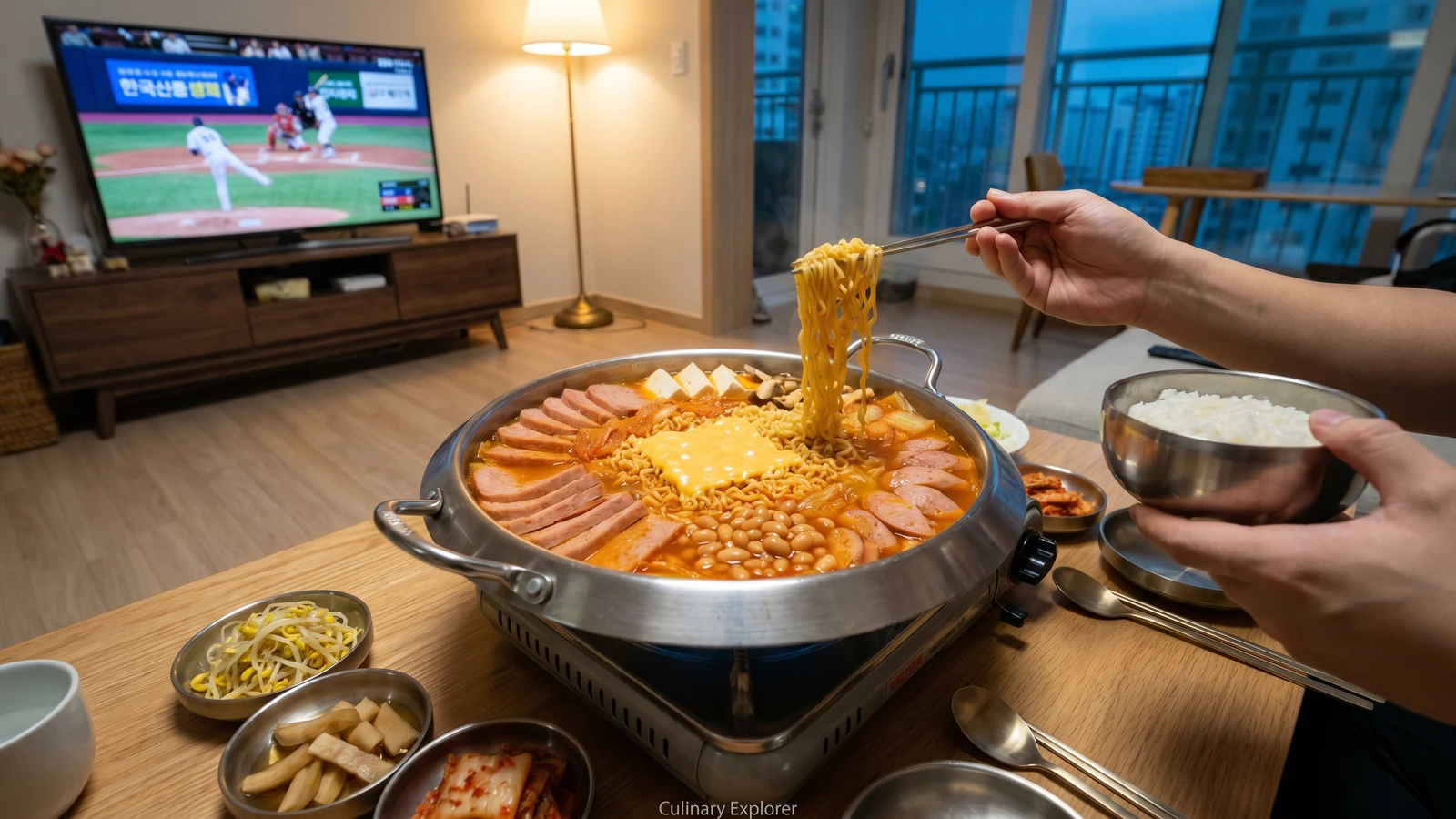
A Uijeongbu-born pot of sour kimchi, Spam, sausage, tofu, beans, and ramen, held together by anchovy-kelp broth and a measured seasoning paste so the stew tastes like more than salt.
Budae-jjigae is often treated like a joke because there is Spam in the pot. That is lazy. A hungry country near U.S. bases took tins, sausage, beans, and later ramen, then made them answer to kimchi, garlic, gochugaru, and broth. If you throw everything in without measure, it tastes like salt and convenience. If you build the base properly, it tastes like Korea feeding people with what the market had.
Notebook 41 says 300 grams kimchi to 5 1/2 cups broth for four hungry people, and I still hold to it. Sour kimchi gives the stew its spine; fresh kimchi only makes red soup. Rinse nothing. Cut the processed meats thin enough to season the broth quickly, and keep the gochujang modest. The kimchi must remain the sour center.
This is one of the rare Korean stews that wants to be crowded. Put the pot on a burner in the middle of the table, arrange the ingredients cleanly, and cook it where everyone can watch. The safe corner to cut is the broth if you use unsalted stock on a busy night. The corner you do not cut is tasting before the ramen goes in, because noodles drink salt and leave you with a pot you cannot fix. Write it down. Memory is a borrowed bowl.
Budae means military unit or army base, and budae-jjigae took shape in the years after the 1950-1953 Korean War in neighborhoods around U.S. military installations, especially Uijeongbu north of Seoul. Cooks used surplus or black-market canned ham, sausage, baked beans, and cheese with kimchi and gochugaru, turning relief food and scarcity into a communal stew. Uijeongbu later became so associated with the dish that its Budae-jjigae Street is still a destination, proof that a pot born from hardship earned its own place at the table.
Quantity
6 1/2 cups
Quantity
1 piece, about 4 inches square
Quantity
12
heads and guts removed
Quantity
2 tablespoons
Quantity
1 tablespoon
Quantity
1 tablespoon
minced
Quantity
2 teaspoons
Quantity
1 teaspoon
Quantity
1 teaspoon
Quantity
1/4 teaspoon
freshly ground
Quantity
300g
cut into bite-size pieces
Quantity
1/2 cup
Quantity
200g
sliced 1/4 inch thick
Quantity
200g
sliced on the diagonal
Quantity
200g
cut into 1/2-inch slabs
Quantity
1/2 medium
sliced
Quantity
100g
trimmed or sliced
Quantity
100g
soaked 10 minutes if firm
Quantity
1/2 cup
Quantity
1 package, about 110g
seasoning packet discarded
Quantity
1 slice
Quantity
2
sliced on the diagonal
| Ingredient | Quantity |
|---|---|
| water | 6 1/2 cups |
| dried kelp (dasima) | 1 piece, about 4 inches square |
| large dried anchovies (myeolchi)heads and guts removed | 12 |
| gochugaru (Korean chili flakes) | 2 tablespoons |
| gochujang (Korean chili paste) | 1 tablespoon |
| garlicminced | 1 tablespoon |
| soup soy sauce (guk-ganjang) or regular soy sauce | 2 teaspoons |
| doenjang (fermented soybean paste) | 1 teaspoon |
| sugar | 1 teaspoon |
| black pepperfreshly ground | 1/4 teaspoon |
| well-fermented napa cabbage kimchicut into bite-size pieces | 300g |
| kimchi brine | 1/2 cup |
| Spam or Korean luncheon meatsliced 1/4 inch thick | 200g |
| fully cooked smoked sausage or Korean hot dogssliced on the diagonal | 200g |
| firm tofucut into 1/2-inch slabs | 200g |
| onionsliced | 1/2 medium |
| enoki, oyster, or king oyster mushroomstrimmed or sliced | 100g |
| garaetteok rice cakes (optional)soaked 10 minutes if firm | 100g |
| canned baked beans | 1/2 cup |
| instant ramen noodlesseasoning packet discarded | 1 package, about 110g |
| American cheese (optional) | 1 slice |
| scallionssliced on the diagonal | 2 |
Put the water, kelp, and anchovies in a pot over medium heat. When the first steady bubbles appear, lift out the kelp so it does not turn the broth slick or bitter. Simmer the anchovies 8 minutes more, then strain. Measure 5 1/2 cups broth; if you are short, add water. This stew already carries salt from kimchi and processed meat, so the broth must start clean.
In a small bowl, stir together the gochugaru, gochujang, garlic, soy sauce, doenjang, sugar, black pepper, and 2 tablespoons of the broth until loose. This is a measured paste, not a red handful. Gochugaru gives clean heat, gochujang gives body and sweetness, and too much gochujang makes the whole pot taste the same.
Set the chopped kimchi and onion in the bottom of a wide shallow pot. Arrange the Spam, sausage, tofu, mushrooms, rice cakes if using, and baked beans in separate sections around the pot, with the seasoning paste in the center. Keep the ramen, cheese, and scallions aside for now. Arrangement is not decoration here; it lets every ingredient cook at its own pace and makes the table easy to serve from.
Pour in the 5 1/2 cups broth and the kimchi brine. Bring to a lively simmer over medium-high heat, then stir the paste gently into the broth without breaking up the tofu. Simmer 8 to 10 minutes, until the kimchi softens and the sausage seasons the broth. Taste before the ramen goes in. It should be savory, sour, and lightly hot. If it tastes flat, add 1 tablespoon more kimchi brine. If it lacks salt, add 1/2 teaspoon soup soy sauce. If it is already too salty, add 1/2 cup water now, before the noodles drink the pot dry.
Set the ramen noodles in the center and press them halfway under the broth. Simmer 3 to 4 minutes, turning once, until the noodles loosen but still spring under the chopsticks. Add the cheese slice for the last 30 seconds if you are using it. Do not add the ramen seasoning packet. The pot has its own broth already.
Scatter the scallions over the top and lower the heat to a gentle simmer if the pot is on a tabletop burner. Eat from the pot with rice beside it. When the broth thickens, add hot water or unsalted broth 1/2 cup at a time. Budae-jjigae is meant to be crowded and shared; 음식을 나누면서 정도 나눕니다, when we share food, we share affection.
1 serving (about 640g)
Culinary guides, cultural storytelling, and the editorial depth that makes cooking meaningful.
Discover Culinary ExplorerChef Jeong-sun
A clean summer soup of Korean zucchini and salted shrimp, built on quick anchovy-kelp broth and finished before the half-moons lose their shape on a weeknight table.
Chef Jeong-sun
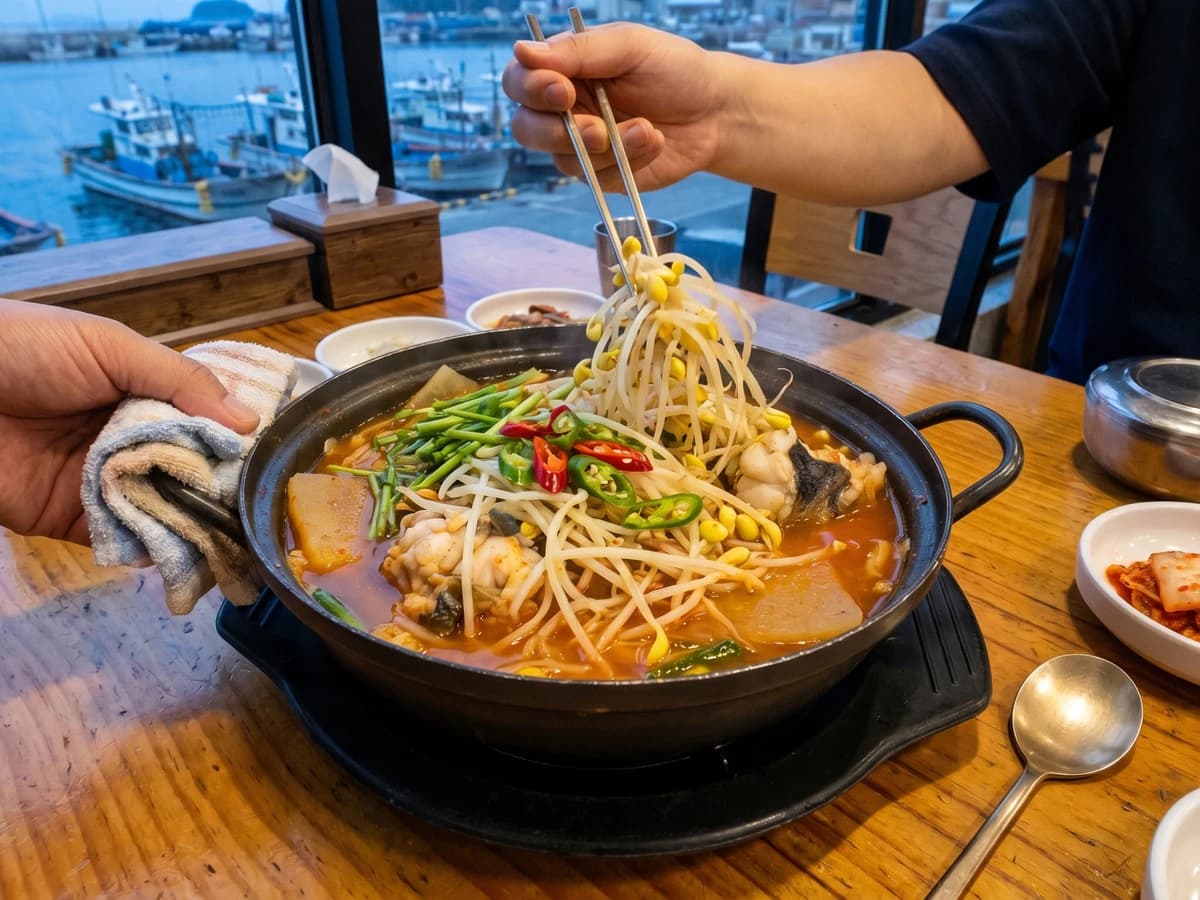
A Masan coast monkfish stew with firm white meat, gelatin at the bones, soybean sprouts for crunch, and a red broth seasoned to carry the fish, not bury it.

Chef Jeong-sun
A weeknight fish roe stew with radish and crown daisy in a clean spicy broth, where the whole success depends on adding the roe late enough that it sets tender, not chalky.

Chef Jeong-sun
Late-summer mallow leaves rubbed with salt until the bitter green water runs off, then simmered in a clean doenjang broth with dried shrimp, the quiet soup a Korean weeknight deserves.