
Chef Makoa
Carpaccio de Atún Kahi (Rapa Nui Tuna Carpaccio)
Rapa Nui's kahi, tuna from the far eastern corner of the Triangle, sliced thin and dressed with lemon, olive oil, and capers. Same ocean fish, this island's modern bowl.
A cooking platform built around craft, culture, and the stories behind what we eat.
Created by
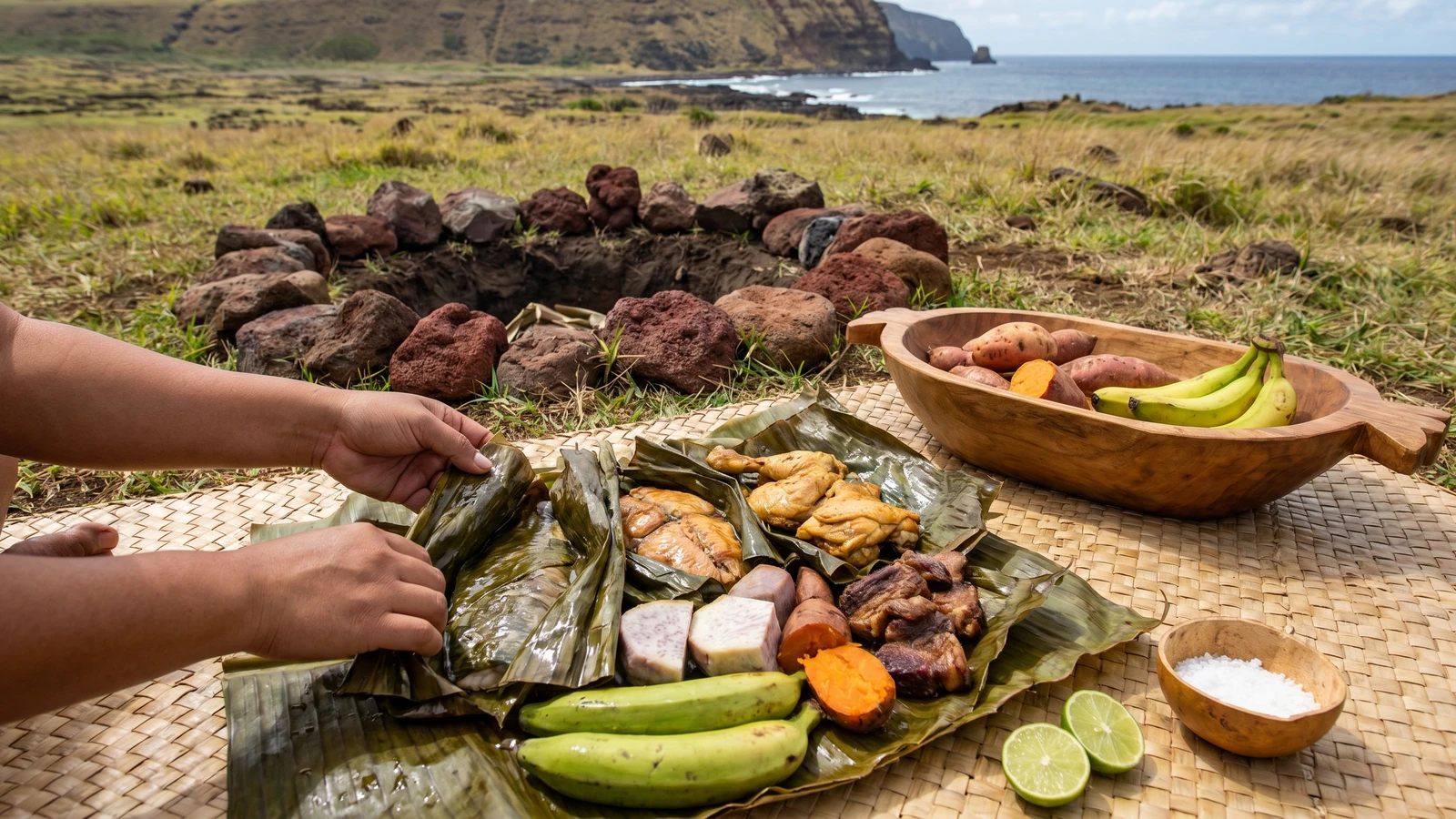
At the far corner of the Triangle, Rapa Nui cooks fish, pork, chicken, kumara, taro, and green banana under red volcanic stones. The umu by any name is one oven.
The canoe that reaches Rapa Nui has nowhere else to go but home, because that island sits at the far eastern corner of our Triangle, alone in a wide blue silence. I say that with respect, because this is Rapa Nui's food, not mine from windward Oʻahu. Umu pae, the stone earth oven, belongs to the Rapa Nui people and their volcanic ground, their ika, fish from that hard ocean edge, and their kumara and taro, the canoe crops still feeding the table.
When I learned the oven across the ocean by its many names, my kumu's voice came with me: no rush the fire, no blame the taro. Back home we say imu; Sāmoa and Tonga say umu; Tahiti has ahimaʻa; the Cooks have umukai; Aotearoa has hāngī. Rapa Nui keeps umu pae, red volcanic stones, banana leaf, earth, time. The umu by any name is one oven, but each island's hand is its own.
For a true Rapa Nui ceremony, go sit with Rapa Nui elders and cooks. They should tell the sacred parts. Here I bring the food forward for a yard or a home oven: salt the fish, chicken, and pork simply, wrap the tubers and green bananas in leaf, build the heat slow, then let the stones or the covered pan do the quiet work. Deep food is not fancy. It's patient. It's enough for one more.
Rapa Nui was settled by Eastern Polynesian voyagers around the 12th to 13th centuries, and umu pae, a stone-lined earth oven, belongs to the same oven family as the Hawaiian imu, Sāmoan and Tongan umu, Tahitian ahimaʻa, Cook Islands umukai, and Māori hāngī. The name curanto pascuense is later Chilean Spanish, especially visible after Chile annexed Rapa Nui in 1888; the Rapa Nui practice underneath is older, cooking ika, fish, and canoe crops under hot stone and leaf, with pork, chicken, and introduced potatoes sitting comfortably on today's feast table. The surprise is the far-corner continuity: one ocean, one canoe, one root, still feeding people on a volcanic island more than two thousand miles from the next big cousin.
Quantity
2 pounds
thick fillets or cleaned whole small fish
Quantity
2 pounds
Quantity
2 pounds
cut into large pieces
Quantity
2 pounds
peeled and cut into large wedges
Quantity
2 pounds
scrubbed and halved if large
Quantity
1
peeled, cored, and cut into wedges
Quantity
6
unpeeled and slit lengthwise
Quantity
2 large
thickly sliced
Quantity
8
crushed
Quantity
3 tablespoons
plus more to taste
Quantity
2 tablespoons
Quantity
4
halved
Quantity
24 large
thawed if frozen
Quantity
1 to 2 cups
for the home oven method
| Ingredient | Quantity |
|---|---|
| firm fresh fish (ika)thick fillets or cleaned whole small fish | 2 pounds |
| bone-in chicken thighs or drumsticks | 2 pounds |
| pork shoulder, pork belly, or country-style ribscut into large pieces | 2 pounds |
| taropeeled and cut into large wedges | 2 pounds |
| kumara (sweet potato)scrubbed and halved if large | 2 pounds |
| breadfruit (optional)peeled, cored, and cut into wedges | 1 |
| green bananas (maika) or green plantainsunpeeled and slit lengthwise | 6 |
| onionsthickly sliced | 2 large |
| garlic clovescrushed | 8 |
| coarse sea saltplus more to taste | 3 tablespoons |
| coconut oil or neutral oil | 2 tablespoons |
| limeshalved | 4 |
| banana leaves or frozen banana-leaf sheetsthawed if frozen | 24 large |
| waterfor the home oven method | 1 to 2 cups |
For an outdoor umu pae, dig a clean pit about 3 feet wide and 18 inches deep, then set dry, dense basalt or lava stones inside and burn hardwood over them for 90 minutes to 2 hours, until the stones hold fierce heat and the fire has settled into coals. For a home kitchen, set the oven to 325F and line two heavy covered roasting pans with banana leaves.
Salt the pork and chicken with most of the sea salt, rub with the oil, garlic, and onion, and let them sit while the stones heat. Salt the fish lightly and keep it cold until the oven is ready. Toss the taro, kumara, breadfruit if using, and green bananas with the remaining salt. Eat what you have: if breadfruit is not near you, more kumara or taro does the work.
Rinse the banana leaves and pass them briefly over a flame or hot dry pan until they darken and bend without tearing. Cut away thick ribs where they fight you. The leaf is not decoration here. It protects the food, perfumes it, and gives the oven something living to work through.
Wrap the pork and chicken in separate banana-leaf packets, broad and tight but not precious. Wrap the fish separately with a few onion slices and a squeeze of lime. Wrap the tubers and green bananas in another packet, or leave the largest pieces loose on a thick bed of leaves if you're working outdoors. Same law as every earth oven: the sturdy food takes the deep heat, the fish rides higher and gentler.
When the stones are hot, rake away loose coals, lay down a thick bed of banana leaves, and set the pork, chicken, and tubers close to the stones. Set the fish packet above them, buffered by more leaf. Cover with another heavy layer of banana leaves, then clean damp burlap or more leaves, then earth or sand to seal the heat. Seal it once and leave it alone.
Let the outdoor umu pae cook 2 1/2 to 3 hours without opening. In the home oven, cook the covered pans for 2 hours, then lay the fish packet on top, cover again, and cook 30 to 40 minutes more. The pork should soften into its own fat, the chicken should pull clean from the bone, the tubers should give under a knife, and the fish should flake in big moist pieces.
Open the earth oven carefully, pulling back earth, cloth, and leaves in order. Check the chicken at 165F or hotter at the bone, and let pork shoulder go higher if you want it soft enough to pull, around 190F. If anything is short, no shame. Move that packet to a covered pan in a 325F oven or onto a covered grill until it finishes. No blame the taro, no blame the cook. Finish the food pono.
Lay the banana leaves open on a woven mat or a wide wooden platter and bring the fish, chicken, pork, taro, kumara, breadfruit, and green bananas together for the table. Squeeze lime over the fish, pass a little salt, and give the first good share to the elders and the ones who fed the fire. This is celebration food, but not fussy. The people are the point.
1 serving (about 480g)
Culinary guides, cultural storytelling, and the editorial depth that makes cooking meaningful.
Discover Culinary ExplorerChef Makoa
Rapa Nui's kahi, tuna from the far eastern corner of the Triangle, sliced thin and dressed with lemon, olive oil, and capers. Same ocean fish, this island's modern bowl.
Chef Makoa
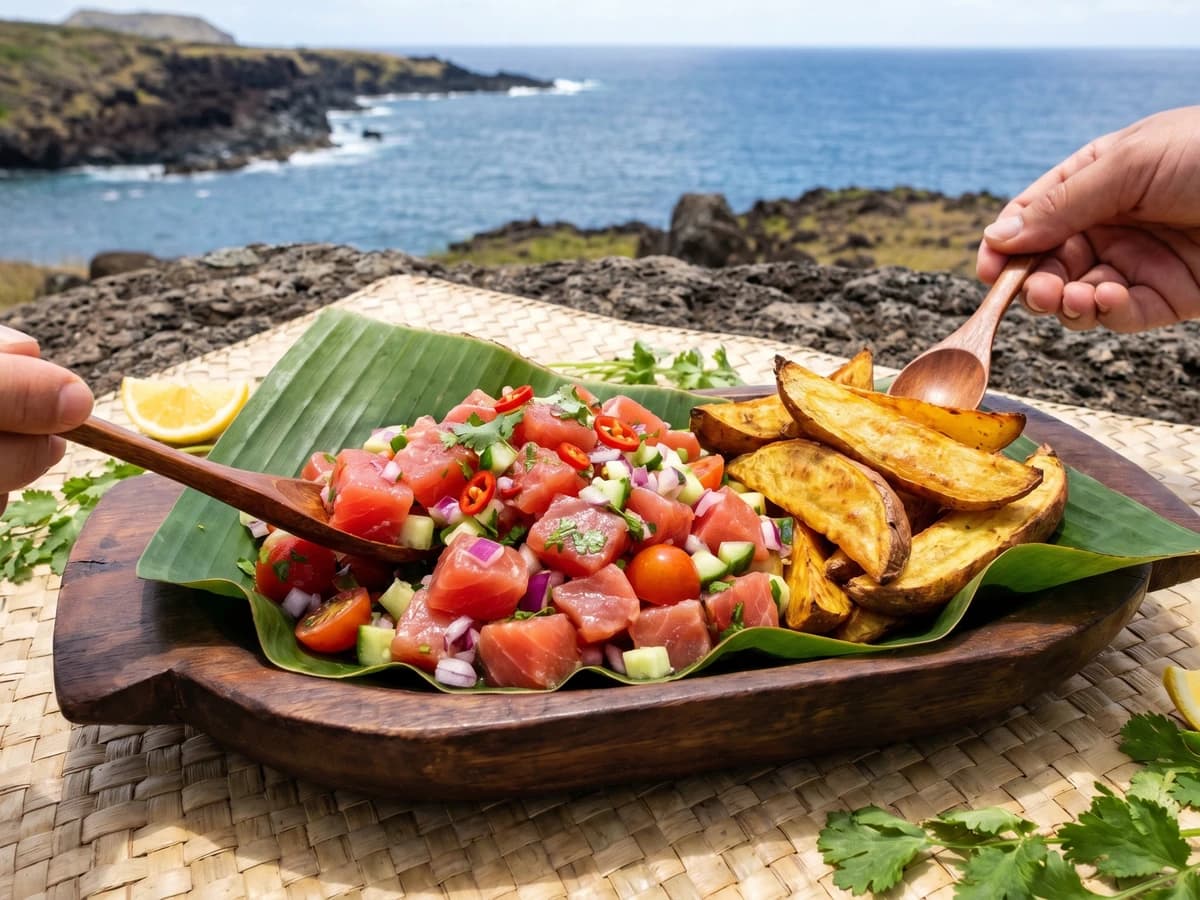
Fresh kahi from Rapa Nui, turned bright in lemon with onion, chili, and cilantro, then served with sweet kumara. A Chilean overlay, yes, but eaten in the island's own hand.
Chef Makoa
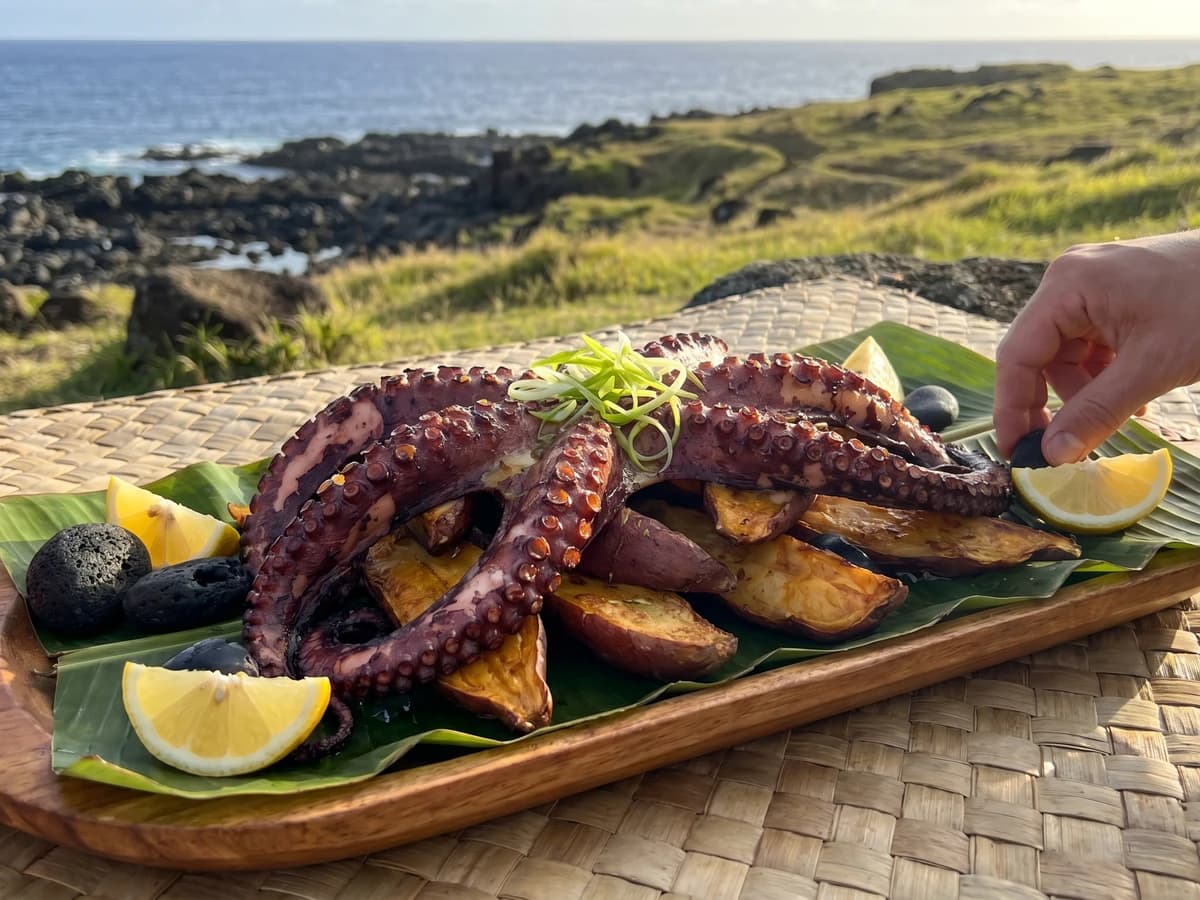
At Rapa Nui's far ocean edge, heke, reef octopus, is simmered tender, grilled until glossy and charred, then served with kumara and lemon, the cousin of Hawaiian heʻe and Māori wheke.

Chef Makoa
Rapa Nui's kana kana, the long sierra fish of the cold current, grilled simple over coals with boiled kumara. The far corner's weeknight plate, plain, good, and close to the sea.