
Chef Makoa
Carpaccio de Atún Kahi (Rapa Nui Tuna Carpaccio)
Rapa Nui's kahi, tuna from the far eastern corner of the Triangle, sliced thin and dressed with lemon, olive oil, and capers. Same ocean fish, this island's modern bowl.
A cooking platform built around craft, culture, and the stories behind what we eat.
Created by
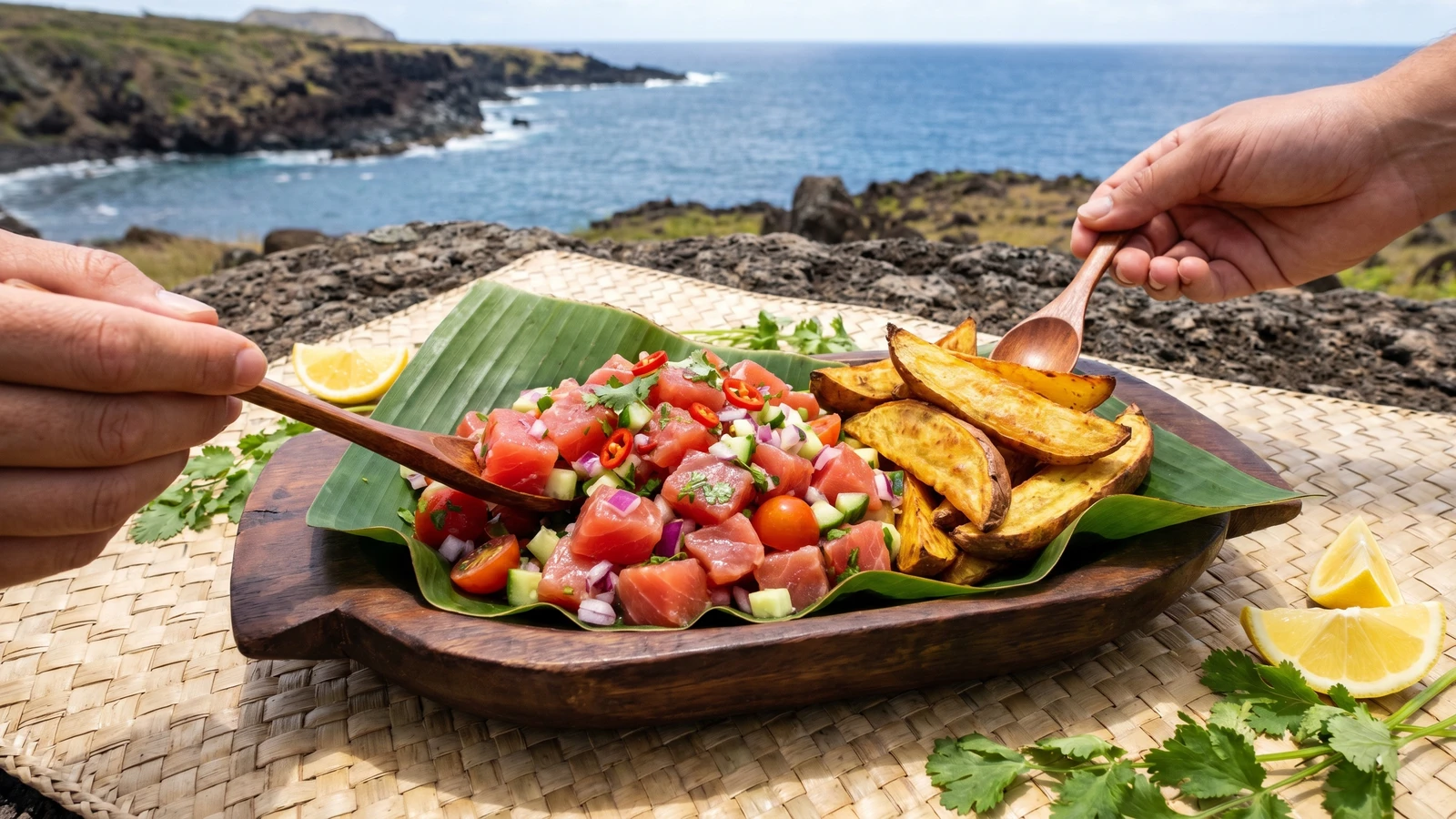
Fresh kahi from Rapa Nui, turned bright in lemon with onion, chili, and cilantro, then served with sweet kumara. A Chilean overlay, yes, but eaten in the island's own hand.
The far corner of our canoe is Rapa Nui, that volcanic island standing alone in the eastern sea, where the people held their language and their food through a hard history. This ceviche de atún is Rapa Nui's table speaking with two voices at once: the old ocean of the Polynesian people, and the Chilean overlay that came later and became part of everyday eating there.
I won't pretend this is an ancient dish carried whole in the first canoes. That's not honest. But the fish is old, the kumara is old, and the hand that knows how to eat from that ocean is old. Kahi, fresh tuna, gets cut clean and turned in lemon with onion and chili, then brought to the table with kumara, the sweet potato that traveled the Pacific story in ways scholars still argue over and island people have long kept in their bowls.
Same fish, different bowl. Sāmoa has oka iʻa with coconut cream, Tonga has ʻota ʻika, Tahiti has ʻia ota, the Cooks have ika mata, and back home in Hawaiʻi we'd make poke with limu and ʻinamona. Rapa Nui's ceviche sits beside those cousins, not blended into them. One ocean, one canoe, one root, but every island gets to keep its own name.
So keep this unfussy. Buy fish you trust, cut it close to serving, let the lemon tighten the outside while the middle stays tender, and eat it with the kumara while everything is still bright. No need make it precious. Just don't blur whose table you're at.
Rapa Nui was settled by Polynesian voyagers, and its food memory holds canoe crops like kumara alongside fish from one of the most isolated inhabited islands on earth. After Chile annexed Rapa Nui in 1888, mainland Chilean foods and Spanish names entered the island table, and ceviche became one of those overlay dishes eaten through a Rapa Nui lens. The surprising thing is not that ceviche came later, but that it now sits beside older Polynesian raw-fish cousins like Sāmoan oka, Tongan ʻota ʻika, Tahitian ʻia ota, Cook Islands ika mata, and Hawaiian poke without becoming the same dish.
Quantity
1 pound
skin and bloodline removed, cut into 3/4-inch cubes
Quantity
1/2 cup
plus more to taste
Quantity
1 small
thinly sliced
Quantity
1
seeded if desired and finely sliced
Quantity
1/2 cup
chopped
Quantity
1 small
seeded and diced
Quantity
1 medium
seeded and diced
Quantity
1 1/2 teaspoons
plus more to taste
Quantity
1 tablespoon
Quantity
2 medium
scrubbed
Quantity
for serving
| Ingredient | Quantity |
|---|---|
| very fresh tuna (kahi or ʻahi)skin and bloodline removed, cut into 3/4-inch cubes | 1 pound |
| fresh lemon juiceplus more to taste | 1/2 cup |
| red onionthinly sliced | 1 small |
| fresh red chiliseeded if desired and finely sliced | 1 |
| cilantro leaves and tender stemschopped | 1/2 cup |
| cucumberseeded and diced | 1 small |
| tomatoseeded and diced | 1 medium |
| sea saltplus more to taste | 1 1/2 teaspoons |
| neutral oil or mild olive oil | 1 tablespoon |
| kumara or sweet potatoesscrubbed | 2 medium |
| lemon wedges (optional) | for serving |
Put the kumara in a pot, cover with cool water, salt the water, and simmer until a knife slides through without forcing, about 18 to 22 minutes depending on size. Drain and let them cool just enough to handle, then peel if you like and cut into thick rounds or wedges. The sweet root is not decoration here. It steadies the bright fish and brings the canoe-crop memory back to the plate.
Put the sliced red onion in a small bowl with a pinch of salt and a spoonful of the lemon juice. Rub it lightly with your fingers and let it sit while you cut the fish. That little rest takes the sharp bite down but leaves the onion crisp.
Cut the tuna into clean three-quarter-inch cubes with a sharp knife, keeping the pieces cold and tidy. Fresh fish for raw eating should smell like the ocean and almost nothing else. If it smells tired, no make it raw. Cook it instead, and no shame in that.
Toss the tuna with the remaining lemon juice and the sea salt. Let it sit 5 to 8 minutes, just until the outside turns pale and glossy while the center stays soft and rosy. The lemon is tightening the fish, not fixing bad fish and not cooking it all the way through. Leave it too long and it goes firm and dry.
Drain off a spoonful or two of the sharp lemon if the bowl looks flooded, then fold in the onion, chili, cilantro, cucumber, tomato, and oil. Taste for salt and lemon. It should be clean, bright, and alive, with the tuna still tender and the vegetables still crisp.
Lay the kumara on a wooden platter or banana leaf and spoon the ceviche beside it, not piled so high the fish warms up. Serve right away with lemon wedges. This is quick food, but not careless food. Same fish, different bowl, and this bowl belongs to Rapa Nui.
1 serving (about 310g)
Culinary guides, cultural storytelling, and the editorial depth that makes cooking meaningful.
Discover Culinary ExplorerChef Makoa
Rapa Nui's kahi, tuna from the far eastern corner of the Triangle, sliced thin and dressed with lemon, olive oil, and capers. Same ocean fish, this island's modern bowl.
Chef Makoa
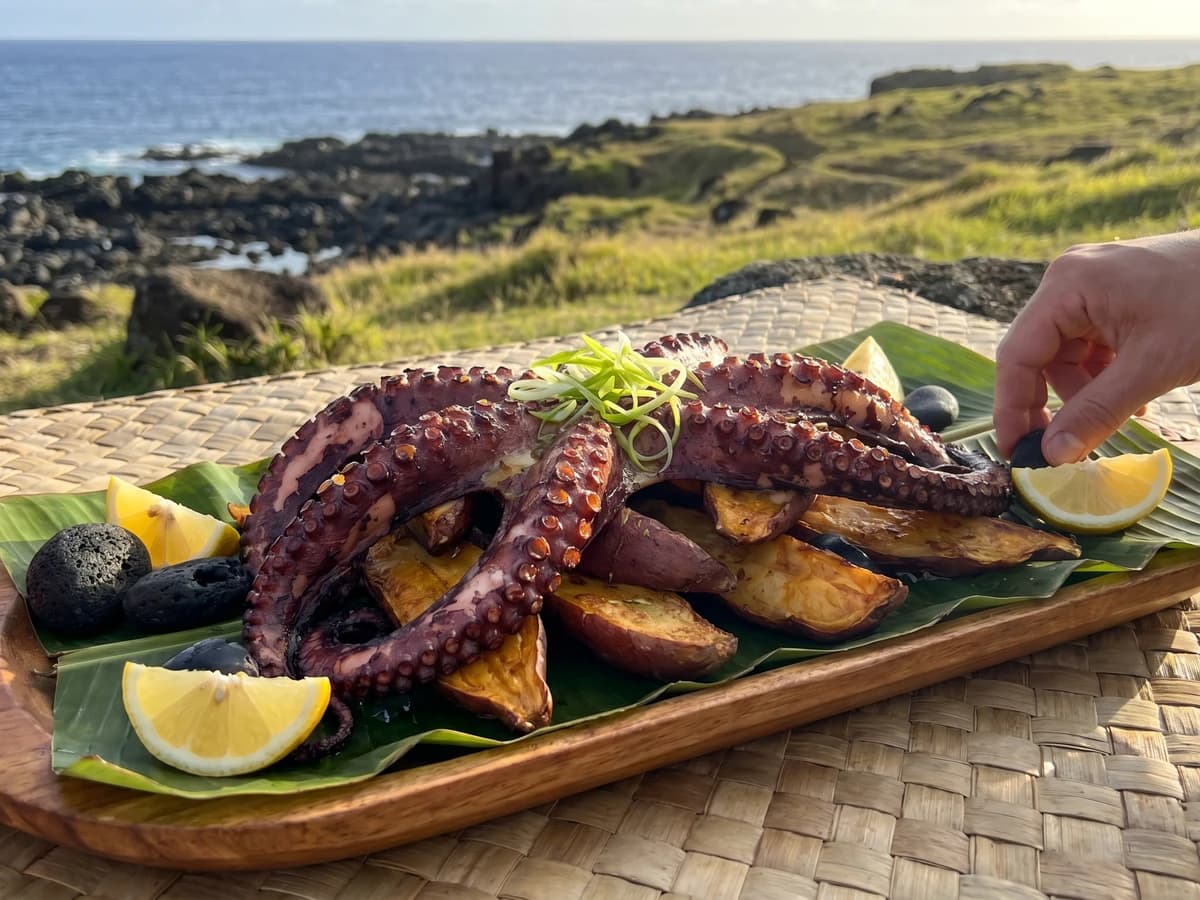
At Rapa Nui's far ocean edge, heke, reef octopus, is simmered tender, grilled until glossy and charred, then served with kumara and lemon, the cousin of Hawaiian heʻe and Māori wheke.

Chef Makoa
Rapa Nui's kana kana, the long sierra fish of the cold current, grilled simple over coals with boiled kumara. The far corner's weeknight plate, plain, good, and close to the sea.

Chef Makoa
Rapa Nui koreha, reef eel salted and grilled over hot stone heat until the skin crisps and the rich flesh turns glossy, served simply with kumara and a squeeze of modern citrus.