
Chef Makoa
Carpaccio de Atún Kahi (Rapa Nui Tuna Carpaccio)
Rapa Nui's kahi, tuna from the far eastern corner of the Triangle, sliced thin and dressed with lemon, olive oil, and capers. Same ocean fish, this island's modern bowl.
A cooking platform built around craft, culture, and the stories behind what we eat.
Created by
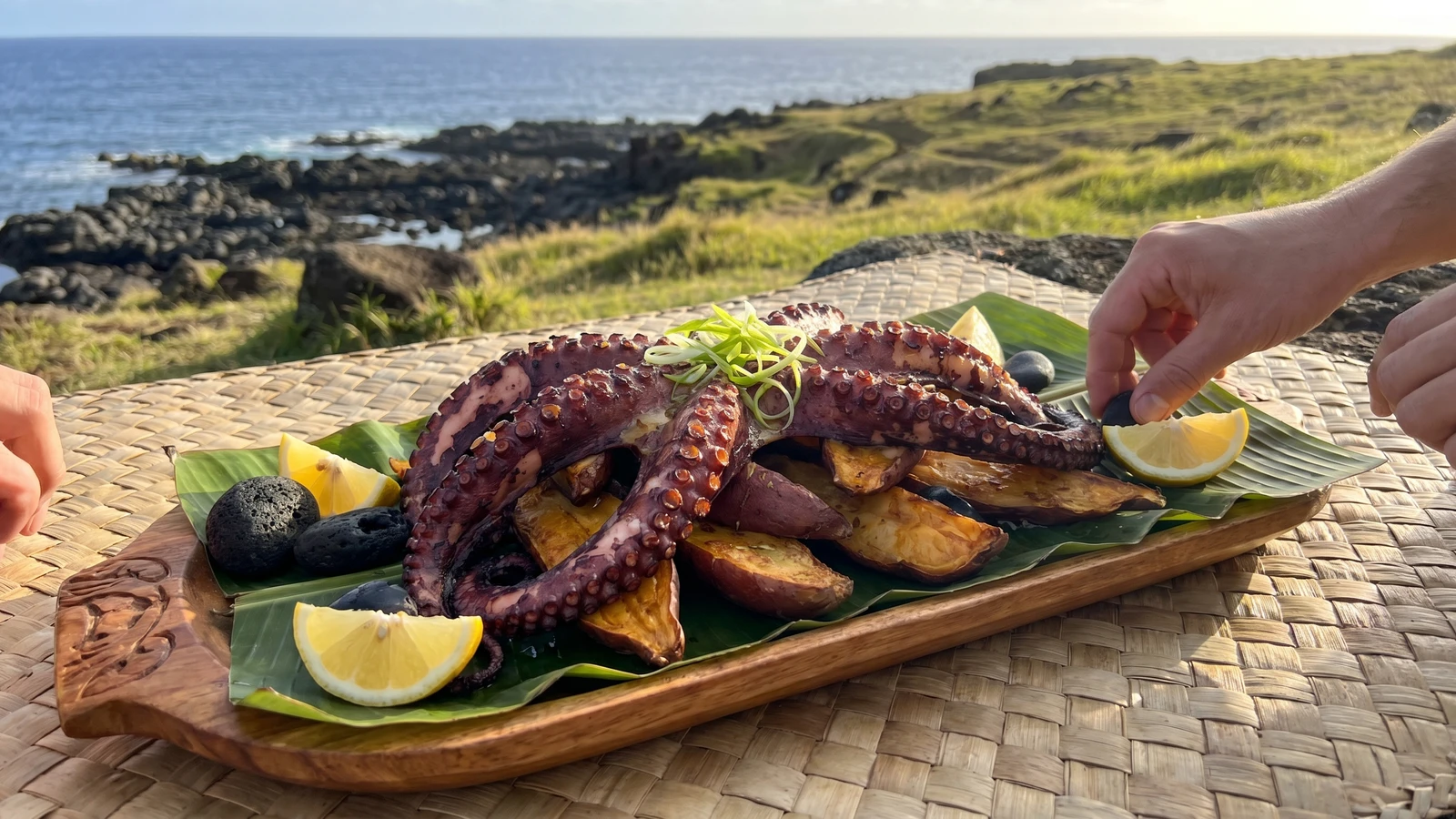
At Rapa Nui's far ocean edge, heke, reef octopus, is simmered tender, grilled until glossy and charred, then served with kumara and lemon, the cousin of Hawaiian heʻe and Māori wheke.
At the far corner of our Triangle, Rapa Nui sits with the long sea around her, and the heke, the octopus, belongs to that reef, that rock, that hard-working island. This is Rapa Nui's hand, not mine, and I hold it open-handed. Back home I know heʻe, the Hawaiian octopus. Down south the Māori say wheke, in Tonga you hear feke, in Sāmoa feʻe. Same creature, different shore, each island calling it by its own name.
The old way begins with knowing the ocean. A reef octopus is not just meat from a market tray. It is a clever one, strong in the arm, hiding in stone, feeding families where the land could be thin and the sea had to carry more of the table. You don't bully it soft. You give it time. In the kitchen that means a gentle simmer first, the water barely moving, until a skewer slides through the thick arm without that rubbery fight.
Then the fire comes. On Rapa Nui the umu pae, the stone earth oven, carries the feast work, and for the deep meaning of that oven you go to Rapanui elders. Here, in a home kitchen, we bring the heke to the grill after the simmer, just enough char to wake the edges and give the skin that purple-brown gloss. Lemon, garlic, salt. Kumara beside it. Eat what you have, but name whose table you're eating from.
Rapa Nui is the far eastern point of the Polynesian Triangle, settled by Polynesian voyagers roughly between the 12th and 13th centuries, who carried canoe crops like kumara, taro, banana, and chicken into a small volcanic island with limited soil and water. Marine foods such as heke remained central because the reef and open ocean fed the people when the land could not carry the whole burden. From the late 1800s into the 20th century, colonial control and sheep ranching changed Rapanui access to land, but the sea, the umu pae, and the old food names kept speaking.
Quantity
1 (2 1/2 to 3 pounds)
thawed if frozen
Quantity
2 tablespoons
divided
Quantity
1 small
halved
Quantity
4
2 smashed and 2 finely grated
Quantity
2
1 halved for the pot and 1 juiced
Quantity
3 tablespoons
plus more for the grill
Quantity
2 pounds
scrubbed and cut into wedges
Quantity
1/2 teaspoon
Quantity
2 green onions or a small handful
thinly sliced
Quantity
for lining the platter
| Ingredient | Quantity |
|---|---|
| cleaned octopus (heke)thawed if frozen | 1 (2 1/2 to 3 pounds) |
| coarse sea saltdivided | 2 tablespoons |
| onionhalved | 1 small |
| garlic cloves2 smashed and 2 finely grated | 4 |
| lemons1 halved for the pot and 1 juiced | 2 |
| neutral oil or mild olive oilplus more for the grill | 3 tablespoons |
| sweet potatoes (kumara)scrubbed and cut into wedges | 2 pounds |
| freshly ground black pepper | 1/2 teaspoon |
| green onions or parsley (optional)thinly sliced | 2 green onions or a small handful |
| banana leaf (optional) | for lining the platter |
If the heke is fresh, freeze it overnight and thaw it, or ask the fishmonger to tenderize it. That freeze and thaw is a modern kitchen kindness, no shame in it. Rub the octopus with 1 tablespoon of the salt for a minute or two, feeling the slick skin tighten under your hands, then rinse it clean.
Set the heke in a heavy pot with the onion, smashed garlic, halved lemon, and enough water to cover by an inch. Bring it just to a simmer, then lower the heat so the water trembles instead of boils hard. Cook 45 to 60 minutes, until a skewer slides into the thickest arm with only a little give.
While the heke simmers, heat the oven to 425F. Toss the kumara wedges with 1 tablespoon of the oil and a good pinch of salt, then roast on a sheet pan for 30 to 40 minutes, turning once, until the edges brown and the centers go sweet and soft.
Turn off the heat and let the heke rest in its own broth for 15 minutes. This keeps the arms juicy and lets the skin settle instead of tearing away. Lift it out, pat it dry, and cut the arms into long pieces for the grill.
Stir the grated garlic, lemon juice, remaining 2 tablespoons oil, remaining salt to taste, and black pepper into a simple dressing. Toss the heke through it lightly. You want it slick and seasoned, not drowned.
Heat a charcoal grill, gas grill, or cast-iron grill pan to medium-high and oil the grates. Grill the heke 2 to 3 minutes per side, just until the edges char, the suckers crisp in spots, and the skin shines purple-brown and glossy. It is already tender. The grill is for the outside.
Line a wooden platter with banana leaf if you have it, pile the kumara on one side, and lay the grilled heke across the middle. Spoon any lemon-garlic dressing over the top and scatter green onion or parsley if you're using it. Put lemon wedges nearby and serve family-style, enough for one more.
1 serving (about 365g)
Culinary guides, cultural storytelling, and the editorial depth that makes cooking meaningful.
Discover Culinary ExplorerChef Makoa
Rapa Nui's kahi, tuna from the far eastern corner of the Triangle, sliced thin and dressed with lemon, olive oil, and capers. Same ocean fish, this island's modern bowl.
Chef Makoa
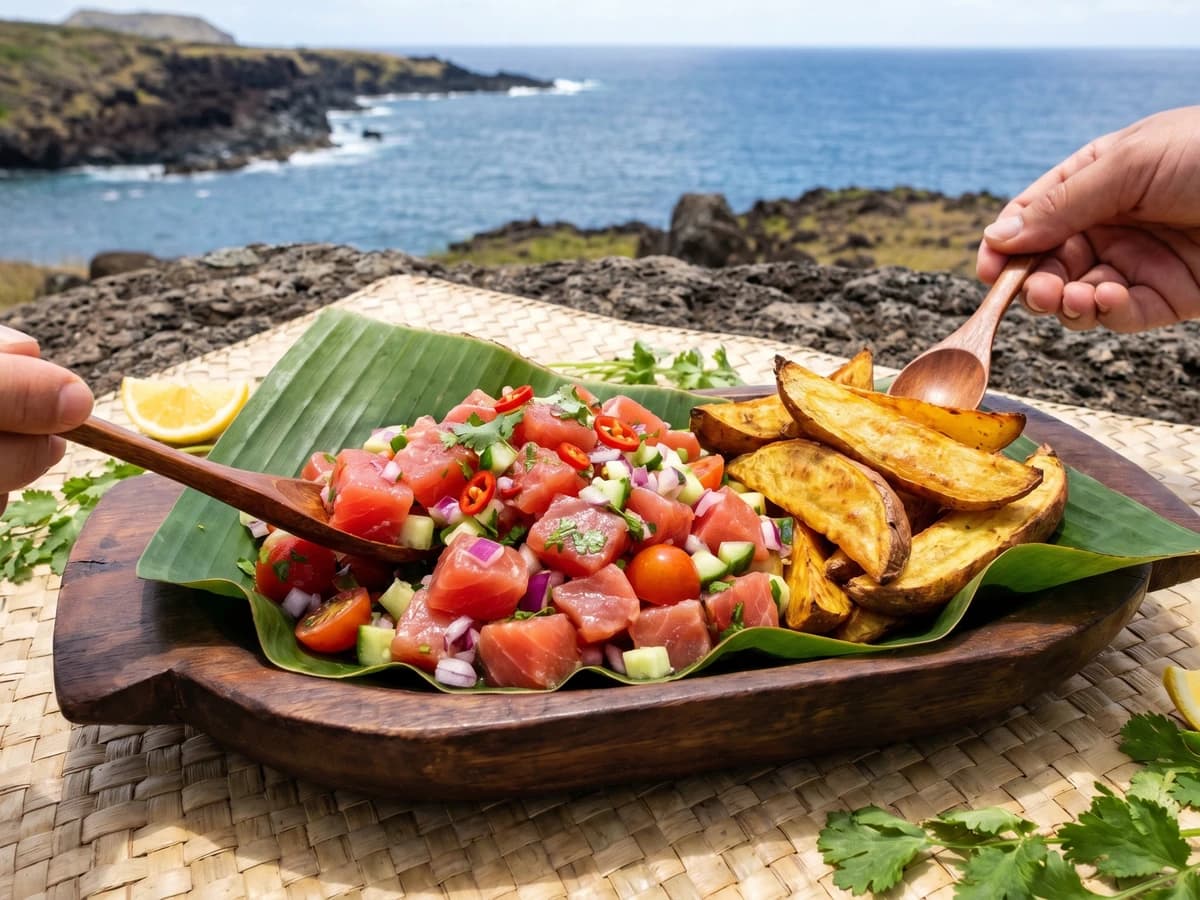
Fresh kahi from Rapa Nui, turned bright in lemon with onion, chili, and cilantro, then served with sweet kumara. A Chilean overlay, yes, but eaten in the island's own hand.

Chef Makoa
Rapa Nui's kana kana, the long sierra fish of the cold current, grilled simple over coals with boiled kumara. The far corner's weeknight plate, plain, good, and close to the sea.

Chef Makoa
Rapa Nui koreha, reef eel salted and grilled over hot stone heat until the skin crisps and the rich flesh turns glossy, served simply with kumara and a squeeze of modern citrus.