
Chef Makoa
Carpaccio de Atún Kahi (Rapa Nui Tuna Carpaccio)
Rapa Nui's kahi, tuna from the far eastern corner of the Triangle, sliced thin and dressed with lemon, olive oil, and capers. Same ocean fish, this island's modern bowl.
A cooking platform built around craft, culture, and the stories behind what we eat.
Created by
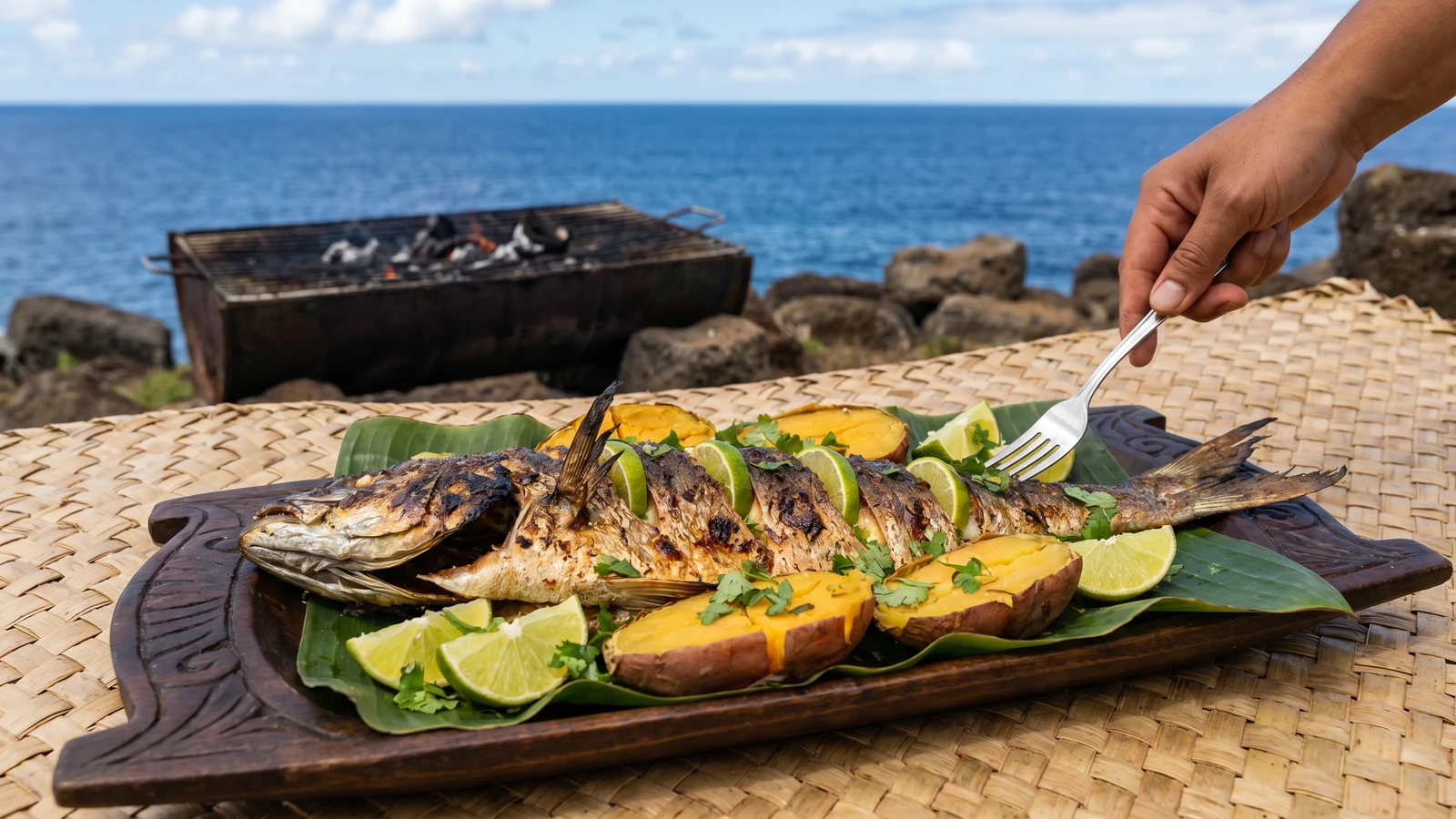
Rapa Nui's kana kana, the long sierra fish of the cold current, grilled simple over coals with boiled kumara. The far corner's weeknight plate, plain, good, and close to the sea.
At the far corner of the Triangle, Rapa Nui sits by itself in the big water, but not alone. One ocean, one canoe, one root. The fish changes with the current and the island, but the law stays the same: take what the sea gives fresh, cook it clean, and feed the table without making noise about yourself.
Kana kana, the sierra fish, belongs to Rapa Nui hands here. This is not my home dish from Oʻahu, so I cook it open-handed and point you back to Rapa Nui families for the deeper stories. But I know the feeling of it: fish from the morning, salt, lime, fire, and kumara, the sweet potato that traveled the ocean and keeps showing up like a cousin at every table.
The grill is everyday food, not the umu pae, the Rapa Nui earth oven of ceremony. That matters. The umu by any name is one oven, imu in Hawaiʻi, umu in Sāmoa and Tonga, hāngī in Aotearoa, and on Rapa Nui the umu pae has its own old weight. This plate is easier than that, weeknight and outside, fish skin crisping over coals while the kumara boils soft.
No need make it precious. Buy the freshest firm fish you can, salt it like you mean it, oil the skin so it doesn't tear, and don't walk away from the fire. Eat what you have. If kana kana isn't at your market, a fresh Spanish mackerel, Pacific sierra, or firm local fish can carry the method.
Rapa Nui is the eastern point of the Polynesian Triangle, and its food sits at the meeting of old Polynesian crops, reef and open-ocean fishing, and later Chilean presence after annexation in 1888. The Spanish phrase a la parrilla simply means grilled, and on the island it can sit beside older Rapa Nui foods like kumara and the umu pae without turning them into something else. Kumara is one of the great food stories of the Pacific, a sweet potato that moved through Polynesian voyaging networks long before European ships mapped the ocean.
Quantity
4 (10 to 12 ounces each)
cleaned and scaled
Quantity
2 tablespoons
plus more for the grill
Quantity
1 1/2 teaspoons
plus more to taste
Quantity
1/2 teaspoon
Quantity
2
1 juiced and 1 cut into wedges
Quantity
2
finely grated
Quantity
1 small handful
chopped
Quantity
2 pounds
scrubbed
Quantity
1 tablespoon
Quantity
for lining the platter
| Ingredient | Quantity |
|---|---|
| whole kana kana or sierra fishcleaned and scaled | 4 (10 to 12 ounces each) |
| neutral oilplus more for the grill | 2 tablespoons |
| coarse sea saltplus more to taste | 1 1/2 teaspoons |
| freshly ground black pepper | 1/2 teaspoon |
| limes1 juiced and 1 cut into wedges | 2 |
| garlic clovesfinely grated | 2 |
| fresh cilantro or parsley (optional)chopped | 1 small handful |
| kumara or sweet potatoesscrubbed | 2 pounds |
| butter or coconut oil (optional) | 1 tablespoon |
| banana leaves (optional) | for lining the platter |
Put the kumara in a pot, cover with cool salted water, and bring to a steady boil. Cook until a knife slides through without force, 18 to 25 minutes depending on size. Drain, split, and dress with a little butter or coconut oil if you like. The sweet potato should be soft and quiet, not mashed into a show.
Pat the kana kana very dry, inside and out, because wet skin sticks and tears. Cut two or three shallow slashes on each side so the salt and heat can get in. Rub with oil, salt, pepper, lime juice, and grated garlic, working a little into the cuts and the belly.
Build a medium-hot charcoal fire or heat a gas grill to medium-high, then clean and oil the grate well. You want steady heat, not flames licking at the fish. Hold your hand a few inches over the grate: three or four seconds tells you the fire is ready.
Lay the fish on the oiled grate and leave it alone until the skin releases, about 4 to 5 minutes. Turn gently with a wide spatula and grill the second side another 3 to 5 minutes, until the flesh flakes at the thickest part and the skin is browned and glossy from the oil. No poke it ten times. Let the fire do its work.
Move the fish to a banana-leaf-lined platter if you have one, scatter over the herbs if using, and set lime wedges alongside. Serve with the boiled kumara while the fish is still juicy and the skin has its crisp edge. This is simple food, and simple doesn't mean careless. It means every part has to be right.
1 serving (about 395g)
Culinary guides, cultural storytelling, and the editorial depth that makes cooking meaningful.
Discover Culinary ExplorerChef Makoa
Rapa Nui's kahi, tuna from the far eastern corner of the Triangle, sliced thin and dressed with lemon, olive oil, and capers. Same ocean fish, this island's modern bowl.
Chef Makoa
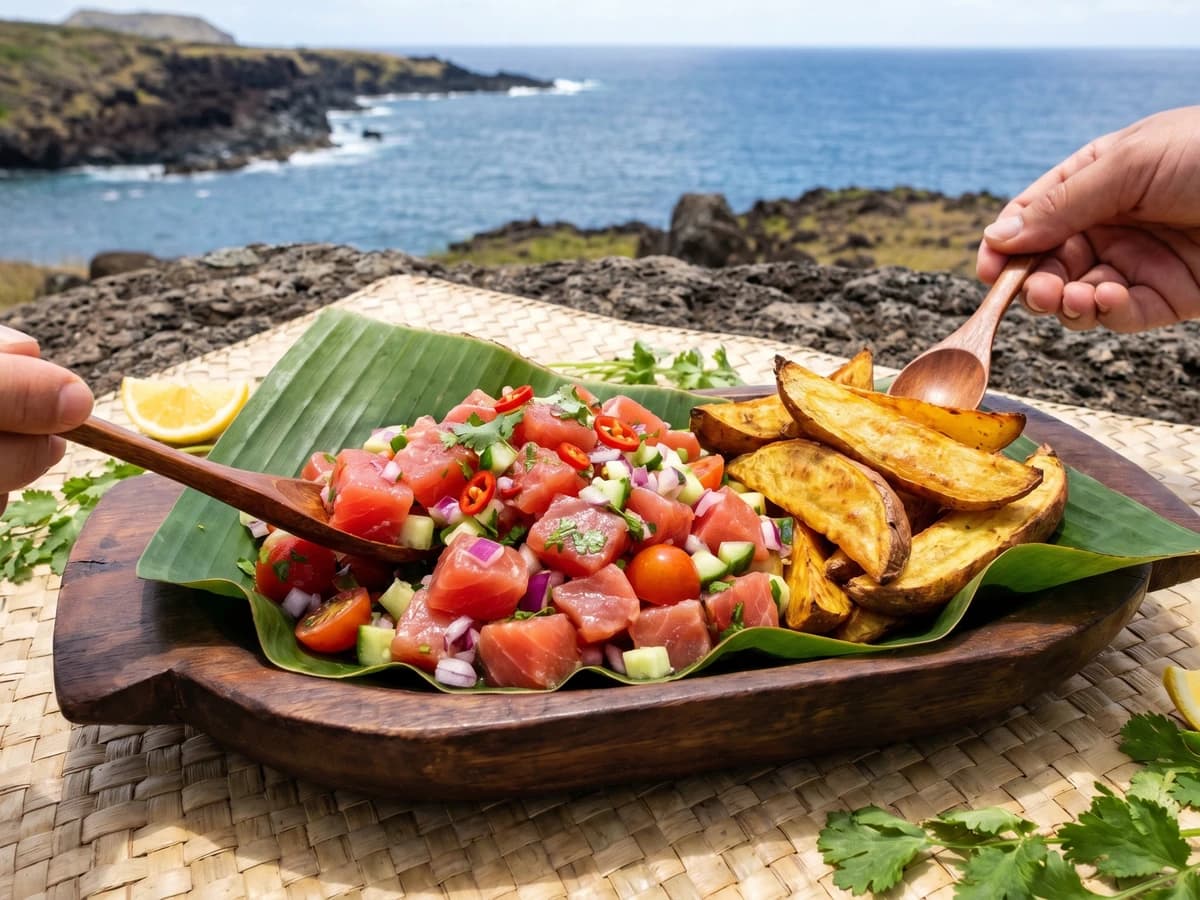
Fresh kahi from Rapa Nui, turned bright in lemon with onion, chili, and cilantro, then served with sweet kumara. A Chilean overlay, yes, but eaten in the island's own hand.
Chef Makoa
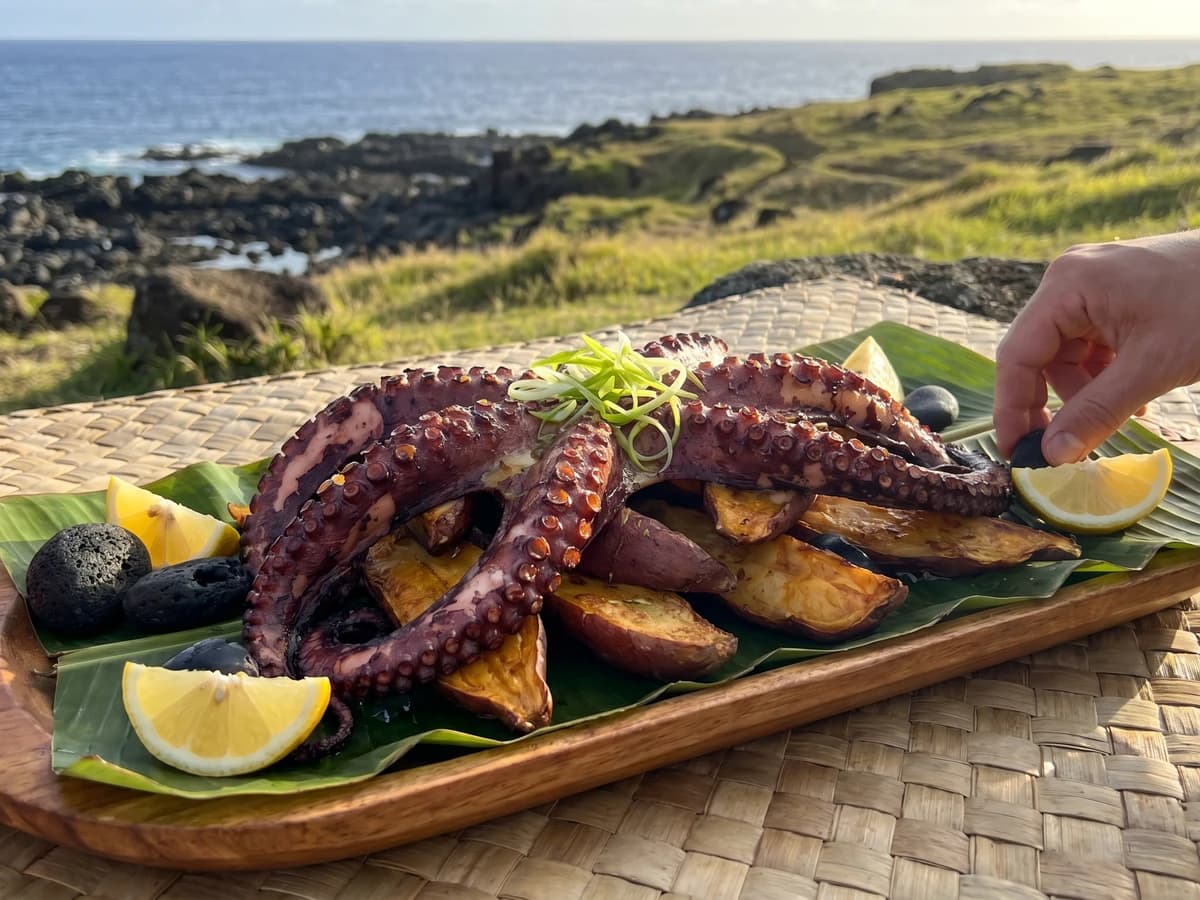
At Rapa Nui's far ocean edge, heke, reef octopus, is simmered tender, grilled until glossy and charred, then served with kumara and lemon, the cousin of Hawaiian heʻe and Māori wheke.

Chef Makoa
Rapa Nui koreha, reef eel salted and grilled over hot stone heat until the skin crisps and the rich flesh turns glossy, served simply with kumara and a squeeze of modern citrus.