Chef Makoa
Eke Takare (Cook Islands Curried Octopus)
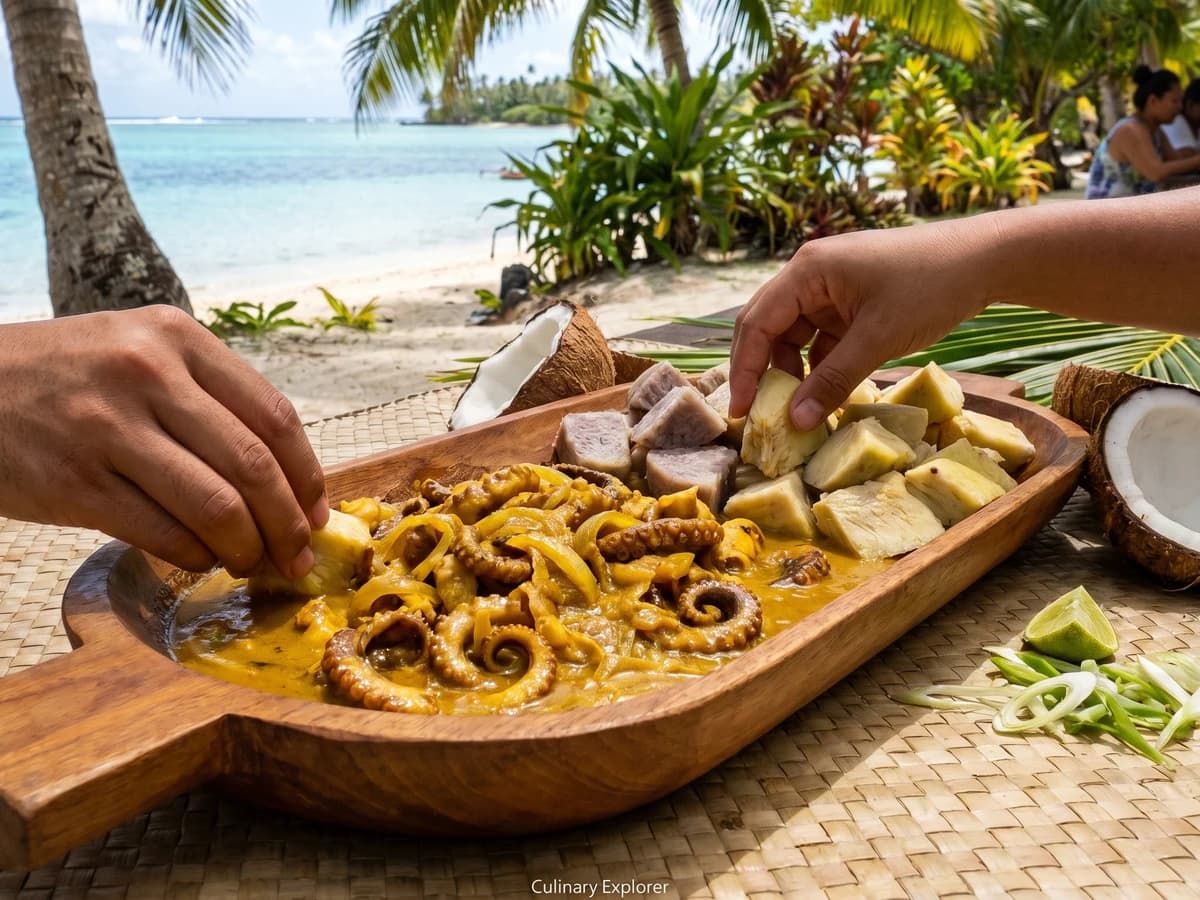
Rarotonga's reef catch brought home to the pot: tender eke simmered with onion, garlic, turmeric, curry powder, and coconut cream until the sauce turns gold and rich.
A cooking platform built around craft, culture, and the stories behind what we eat.
Created by
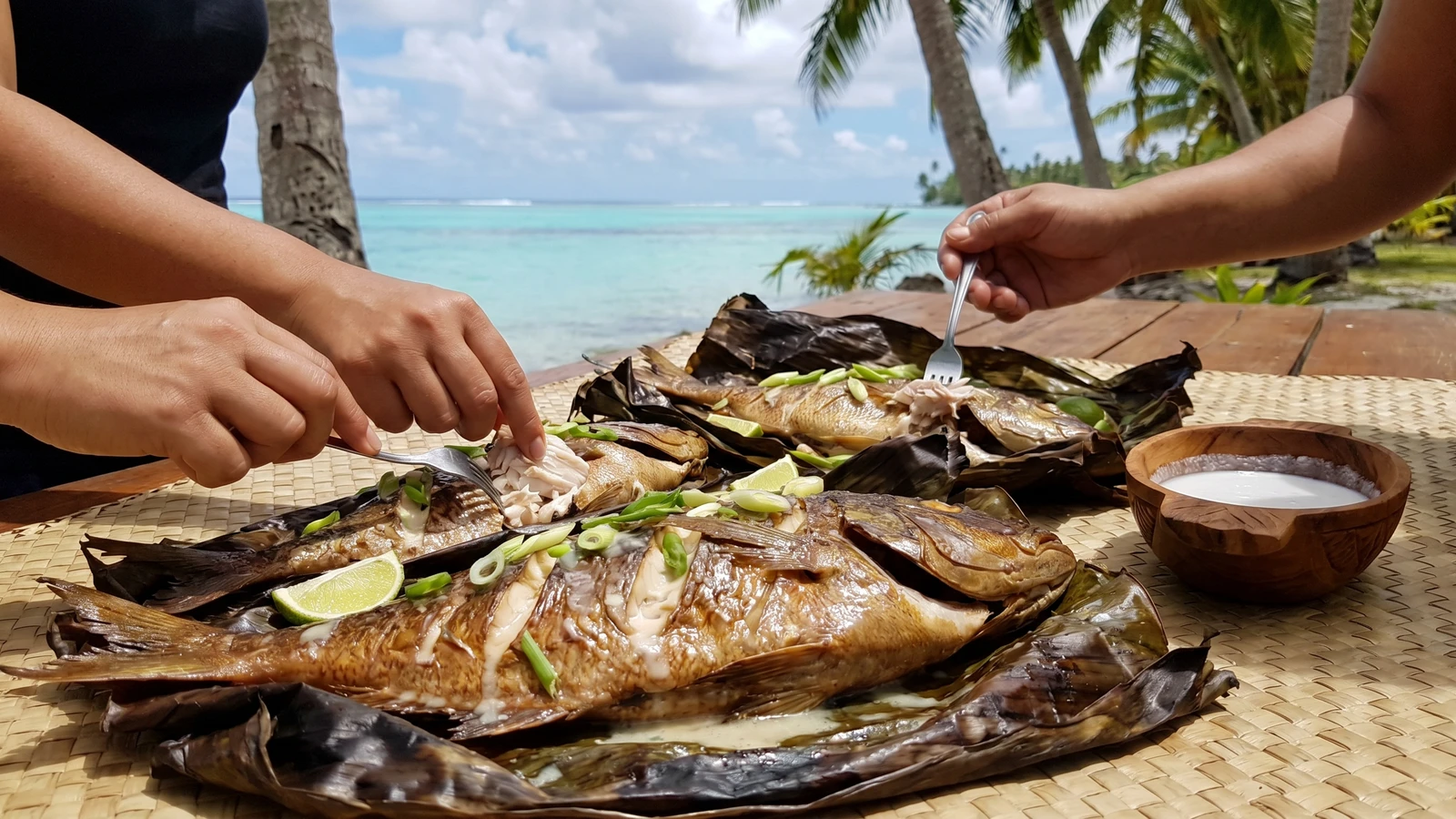
A whole Cook Islands reef fish wrapped in banana leaf, kissed with coconut and lime, and cooked slow the umukai way until the flesh lifts clean from the bone.
The first thing is the lagoon. Before the leaf, before the fire, before anybody talks about seasoning, this Cook Islands dish begins with the reef and the hands that know when to take and when to leave it alone. Umu ika means fish cooked in the umu, and in the Cooks the bigger feast is the umukai, the earth-oven meal where the hot stones, the leaves, and the people all do their part.
The Cook Islands umukai belongs to the same earth-oven family carried across the Triangle: imu in Hawaiʻi, umu in Sāmoa and Tonga, ahimaʻa in Tahiti, hāngī in Aotearoa, and umu pae on Rapa Nui. Reef fish like ika were everyday abundance when the lagoon was cared for well, while earth-oven cooking marked larger family gatherings, chiefly sharing, and celebration. Mission, plantation, and imported foods changed island tables, but the old oven still teaches the older grammar: land, sea, fire, leaf, and everybody fed.
Quantity
1 (2 1/2 to 3 pounds)
cleaned and scaled
Quantity
1 1/2 teaspoons
plus more to taste
Quantity
1 cup
or thick canned coconut cream
Quantity
2 tablespoons
Quantity
1 small
thinly sliced
Quantity
2
sliced
Quantity
1 small
seeded and diced
Quantity
1 small handful
Quantity
4 to 6
thawed if frozen and wiped clean
Quantity
1
cut into wedges for serving
| Ingredient | Quantity |
|---|---|
| whole reef fishcleaned and scaled | 1 (2 1/2 to 3 pounds) |
| sea saltplus more to taste | 1 1/2 teaspoons |
| fresh coconut creamor thick canned coconut cream | 1 cup |
| lime juice | 2 tablespoons |
| onionthinly sliced | 1 small |
| green onionssliced | 2 |
| tomato (optional)seeded and diced | 1 small |
| fresh cilantro or parsley (optional) | 1 small handful |
| banana leavesthawed if frozen and wiped clean | 4 to 6 |
| limecut into wedges for serving | 1 |
Pat the ika, the fish, dry inside and out, then make three shallow slashes on each side so the salt and coconut can reach the flesh. Salt the belly and the skin. Buy from someone who can tell you when it came out of the water. If the fish smells tired, no make this one. Cook something else and no waste it.
Stir the coconut cream with the lime juice, onion, green onion, tomato if using, and a pinch more salt. Spoon some into the belly and over the slashes. Keep the rest for finishing. The fish should look glossy and lightly coated, not drowned.
Pass the banana leaves briefly over a flame or warm pan until they bend without cracking, then lay them in a cross. Set the fish in the middle, fold the leaves over tight, and tie the bundle. The leaf protects the flesh and gives back a green, earthy smell, the way the umukai does.
For a home kitchen, set the bundle in a covered roasting pan with 1/2 cup water around, not over, the fish. Bake at 325F for 60 to 75 minutes, until the thickest flesh lifts from the bone in moist flakes. For a true Cook Islands umukai, learn the stone work and order of the oven from Cook Islands elders. That's their ceremony to teach.
Let the bundle rest 10 minutes before opening. Fold the leaves back at the table and spoon the reserved coconut-lime cream over the fish while the surface is still glossy. Taste the juices and add salt or lime only if the fish asks for it.
Lift big pieces from the bone and serve with boiled taro, breadfruit, rukau, or plain rice if that's what the table has today. Eat what you have. The deep food and the everyday plate can sit side by side, no shame.
1 serving (about 200g)
Culinary guides, cultural storytelling, and the editorial depth that makes cooking meaningful.
Discover Culinary ExplorerChef Makoa
Rarotonga's reef catch brought home to the pot: tender eke simmered with onion, garlic, turmeric, curry powder, and coconut cream until the sauce turns gold and rich.

Chef Makoa
The Cook Islands bowl: fresh fish just turned in lime, softened with thick coconut cream, and kept crisp with cucumber, onion, and tomato. Same fish, different bowl.
Chef Makoa
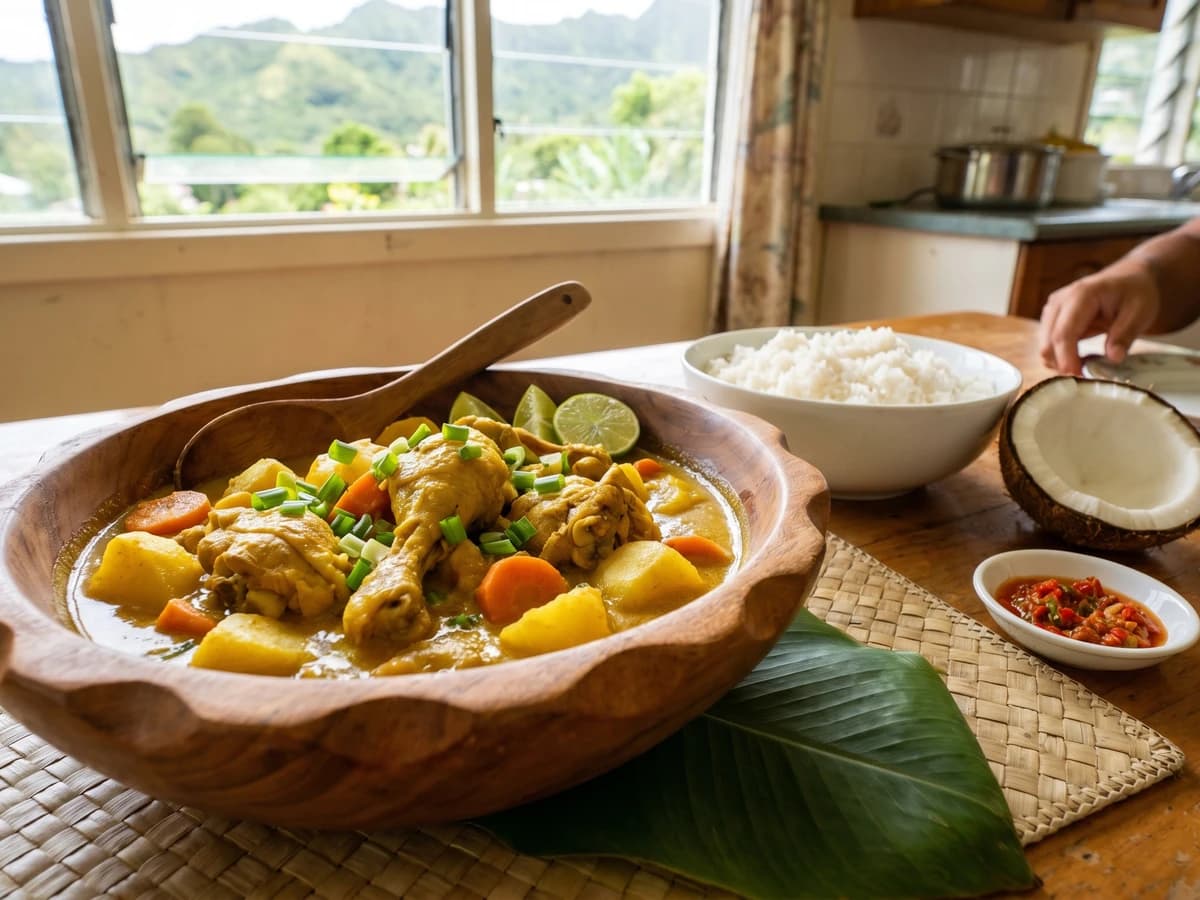
Cook Islands kare moa, chicken curry softened in coconut milk with turmeric, ginger, garlic, potato, and carrot, the kind of weeknight pot that feeds the family twice.
Chef Makoa
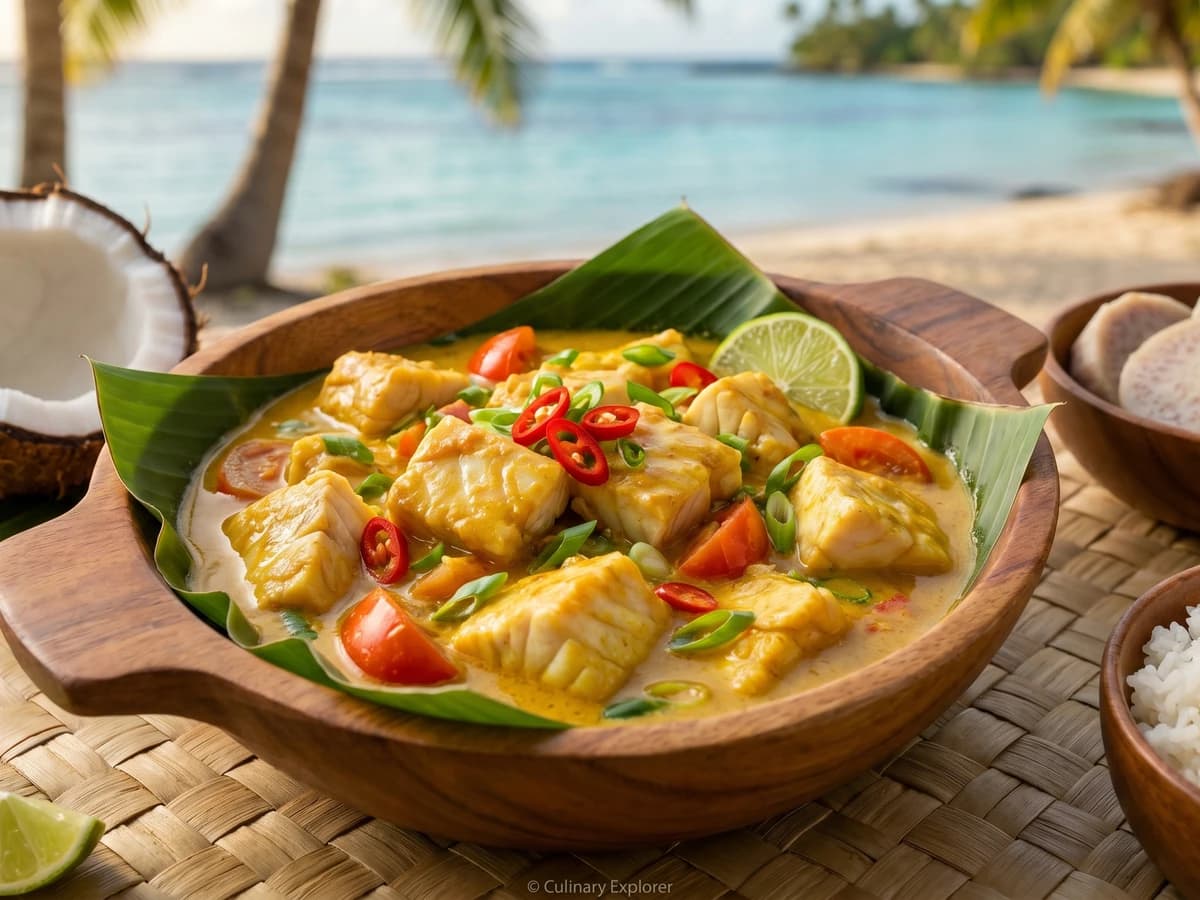
Firm white fish simmered gently in coconut milk, curry, chilli, onion, and tomato. The Cook Islands call this kari ika, British curry made local by the lagoon.