Chef Makoa
Eke Takare (Cook Islands Curried Octopus)
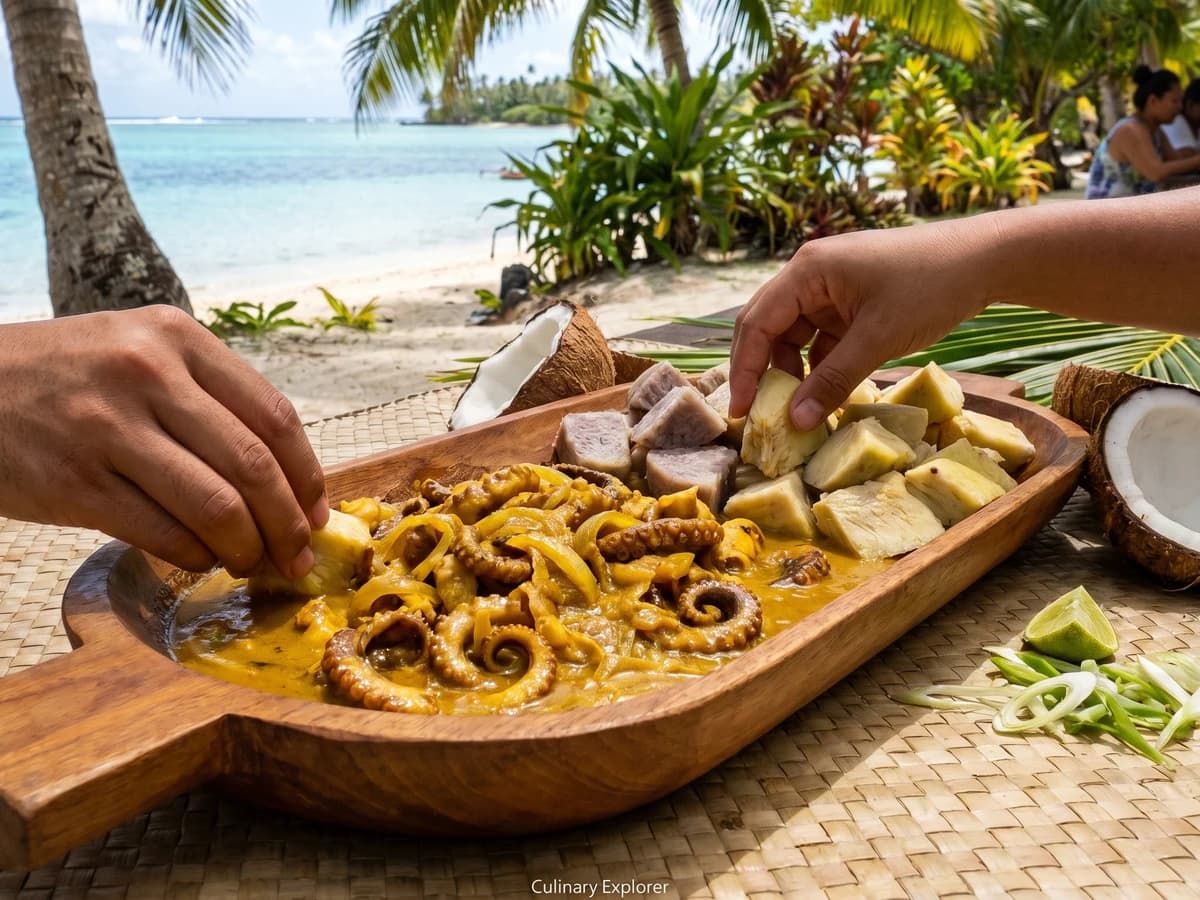
Rarotonga's reef catch brought home to the pot: tender eke simmered with onion, garlic, turmeric, curry powder, and coconut cream until the sauce turns gold and rich.
A cooking platform built around craft, culture, and the stories behind what we eat.

Created by
Cook Islands kare moa, chicken curry softened in coconut milk with turmeric, ginger, garlic, potato, and carrot, the kind of weeknight pot that feeds the family twice.
The canoe carried kalo and ʻulu first, the deep foods, one ocean, one canoe, one root. But the table kept growing after that. In the Cook Islands, in Rarotonga kitchens and family halls, kare moa, chicken curry, sits beside ika mata, rukau, taro, rice, and whatever the aunties made enough of. That's how people actually eat. Old roots, new roads, one hungry family.
This is Cook Islands food by the hand that made it local: curry powder and masala from the trade routes, chicken in the pot, coconut milk from the tree, potato and carrot stretching the meal so nobody leaves light. I don't call this ancestral like taro from the canoe. I call it living food, the kind that comes through colonial pressure and migration and still gets taken into the home kitchen until it tastes like someone's Sunday, someone's work lunch, someone's second bowl.
Cook it easy. Brown the chicken so it has some backbone, bloom the turmeric and garam masala until the pot smells warm, then let the coconut milk do its quiet work. Same kindness you see across the Triangle when coconut softens the leaf parcel, Sāmoan palusami, Tongan lū, Cook Islands rukau, Hawaiian laulau. Different dish. Same patience. Eat what you have, and feed the table wide.
Cook Islands chicken curry belongs to the post-contact table, shaped by British and New Zealand colonial routes, imported spices, and the wider Indian indenture-era movement of curry through the Pacific, especially through Fiji and trade networks. It is not a canoe-plant dish like taro, breadfruit, or coconut, but it became local in Cook Islands kitchens by meeting coconut milk, rice, chicken, and the practical habit of feeding a crowd from one pot. That everyday adoption matters too: deep food and mission-era food sit on the same table now, and the people decide what keeps feeding them.
Quantity
2 1/2 pounds
skin removed if you like
Quantity
1 1/2 teaspoons
plus more to taste
Quantity
1/2 teaspoon
Quantity
2 tablespoons
Quantity
1 large
diced
Quantity
4
minced
Quantity
1 tablespoon
grated
Quantity
2 tablespoons
Quantity
1 teaspoon
Quantity
1 teaspoon
Quantity
1/2 teaspoon
Quantity
1/4 teaspoon
Quantity
2 medium
peeled and cut into 1-inch chunks
Quantity
2
cut into thick coins
Quantity
1 1/2 cups
Quantity
1 can (13.5 ounces)
Quantity
1 tablespoon
Quantity
1 tablespoon
or to taste
Quantity
3
thinly sliced
Quantity
for serving
| Ingredient | Quantity |
|---|---|
| bone-in chicken thighs and drumsticksskin removed if you like | 2 1/2 pounds |
| sea saltplus more to taste | 1 1/2 teaspoons |
| black pepper | 1/2 teaspoon |
| neutral oil | 2 tablespoons |
| oniondiced | 1 large |
| garlic clovesminced | 4 |
| fresh gingergrated | 1 tablespoon |
| curry powder | 2 tablespoons |
| ground turmeric | 1 teaspoon |
| garam masala | 1 teaspoon |
| ground cumin | 1/2 teaspoon |
| chili flakes (optional) | 1/4 teaspoon |
| potatoespeeled and cut into 1-inch chunks | 2 medium |
| carrotscut into thick coins | 2 |
| chicken stock or water | 1 1/2 cups |
| coconut milk | 1 can (13.5 ounces) |
| tomato paste (optional) | 1 tablespoon |
| lime juiceor to taste | 1 tablespoon |
| green onionsthinly sliced | 3 |
| cooked white rice | for serving |
Pat the chicken dry and season it with the salt and black pepper. Let it sit while you cut the onion, potato, and carrot. That little rest gives the seasoning time to wake up the meat before it meets the pot.
Heat the oil in a heavy pot over medium-high heat. Brown the chicken in batches until the outside takes on a golden color, 3 to 4 minutes per side. It doesn't need to cook through yet. You just want the pot to remember the chicken.
Lower the heat to medium and add the onion to the same pot. Cook until it softens and turns sweet at the edges, about 6 minutes, scraping up the browned bits as it goes. Add the garlic and ginger and stir until the smell lifts clean from the pot.
Add the curry powder, turmeric, garam masala, cumin, and chili flakes if you're using them. Stir for about 1 minute, just until the spices darken a shade and smell warm. Don't burn them. Toasted spice feeds the whole pot; scorched spice takes over like one loud uncle.
Stir in the tomato paste if using, then add the potatoes, carrots, chicken stock or water, and coconut milk. Return the chicken and its juices to the pot. The liquid should come about halfway up the chicken, not drown it. Bring it to a gentle simmer.
Cover the pot partly and simmer gently for 35 to 45 minutes, turning the chicken once or twice, until the meat is tender and the potatoes give easily to a fork. Keep the heat low enough that the coconut milk stays smooth and glossy, not harsh and split.
Taste the sauce. Add more salt if it needs strength, lime juice if it wants brightness, or a splash of water if it has tightened too much. The curry should coat the spoon in a golden coconut sheen and smell of ginger, garlic, and warm spice.
Spoon the chicken, potato, carrot, and sauce over cooked white rice and scatter green onion over the top. Put the pot on the table if that's the easier way. Cook Islands kare moa is comfort food, not a precious little plate, and there should be enough for one more.
1 serving (about 460g)
Culinary guides, cultural storytelling, and the editorial depth that makes cooking meaningful.
Discover Culinary ExplorerChef Makoa
Rarotonga's reef catch brought home to the pot: tender eke simmered with onion, garlic, turmeric, curry powder, and coconut cream until the sauce turns gold and rich.

Chef Makoa
The Cook Islands bowl: fresh fish just turned in lime, softened with thick coconut cream, and kept crisp with cucumber, onion, and tomato. Same fish, different bowl.
Chef Makoa
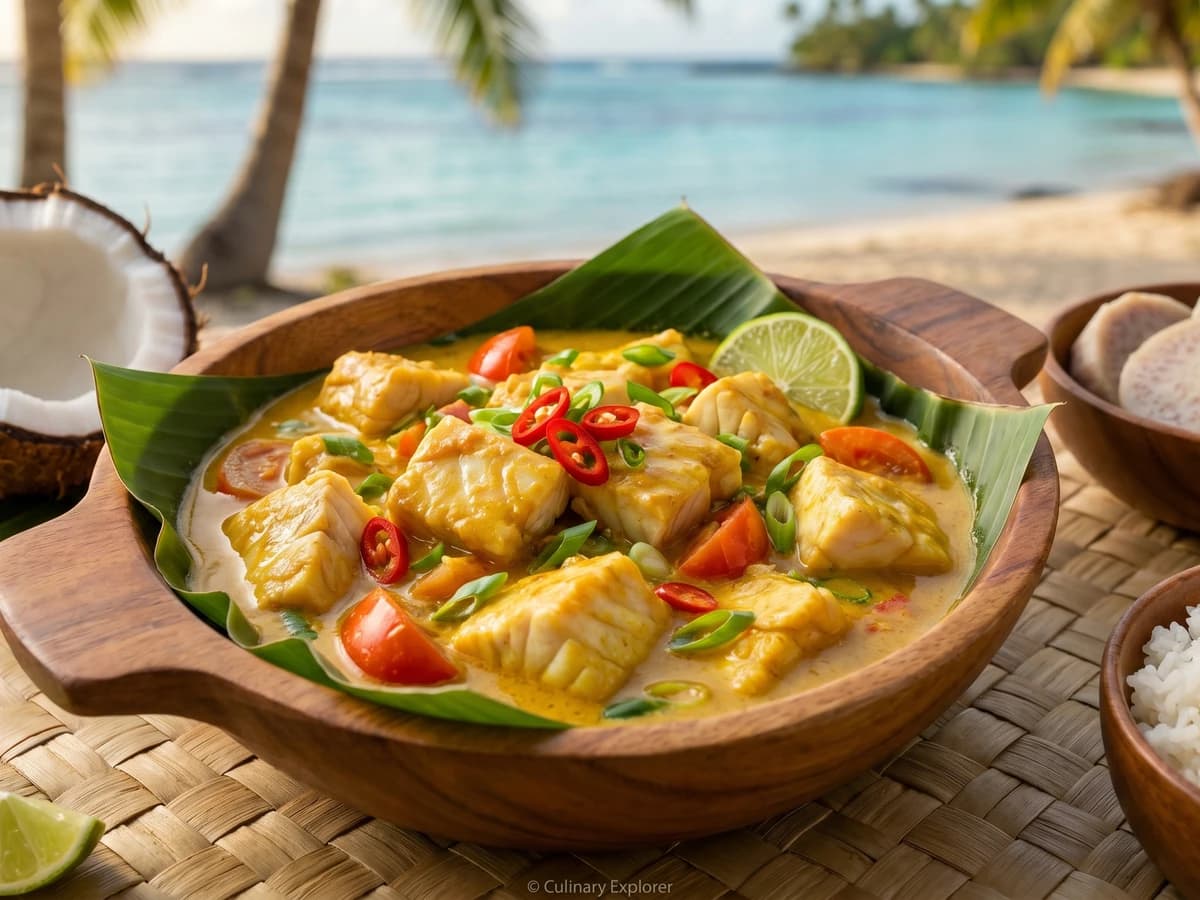
Firm white fish simmered gently in coconut milk, curry, chilli, onion, and tomato. The Cook Islands call this kari ika, British curry made local by the lagoon.
Chef Makoa
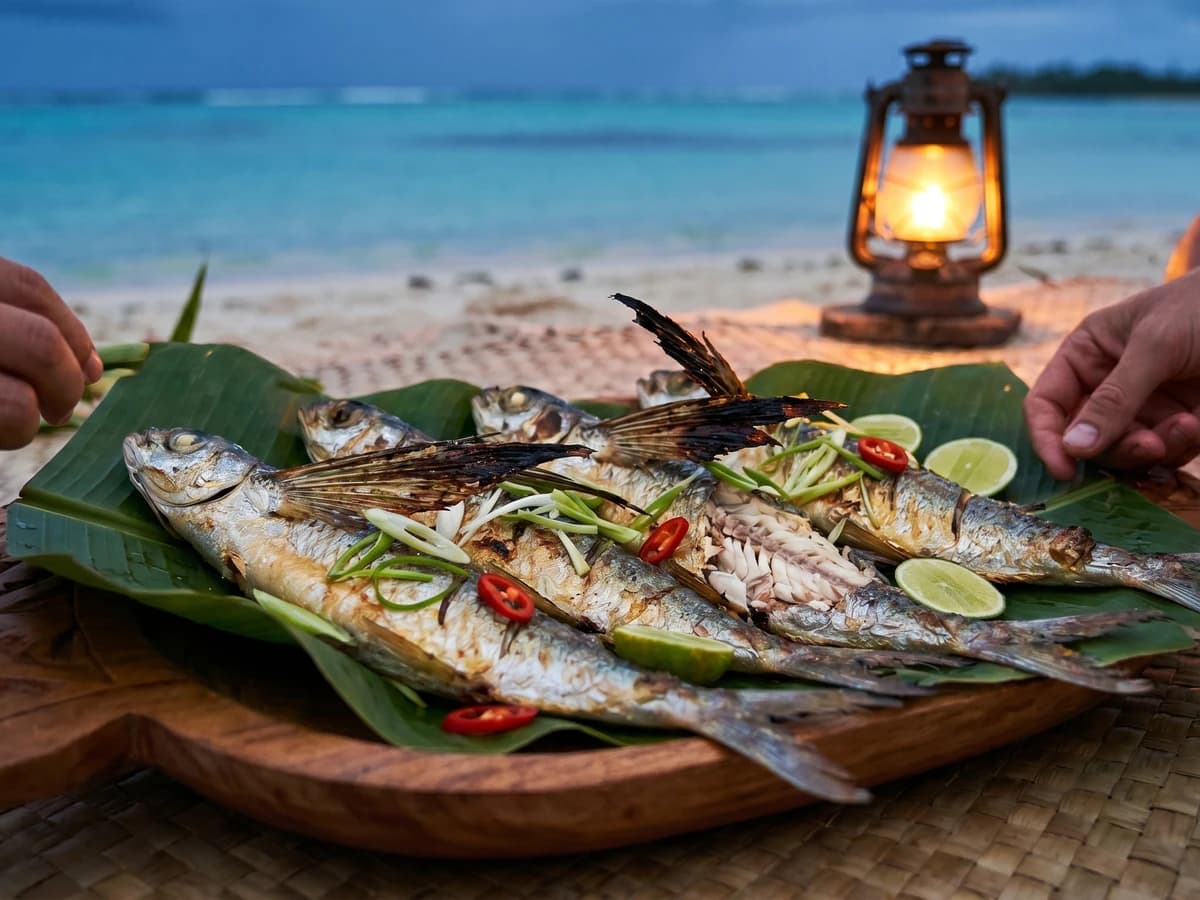
Night-caught Cook Islands maroro, the flying fish of the lagoon, grilled quick over fire until the skin crisps at the edges and the flesh stays sweet.