Culinary Explorer

A cooking platform built around craft, culture, and the stories behind what we eat.
Discover Culinary Explorer
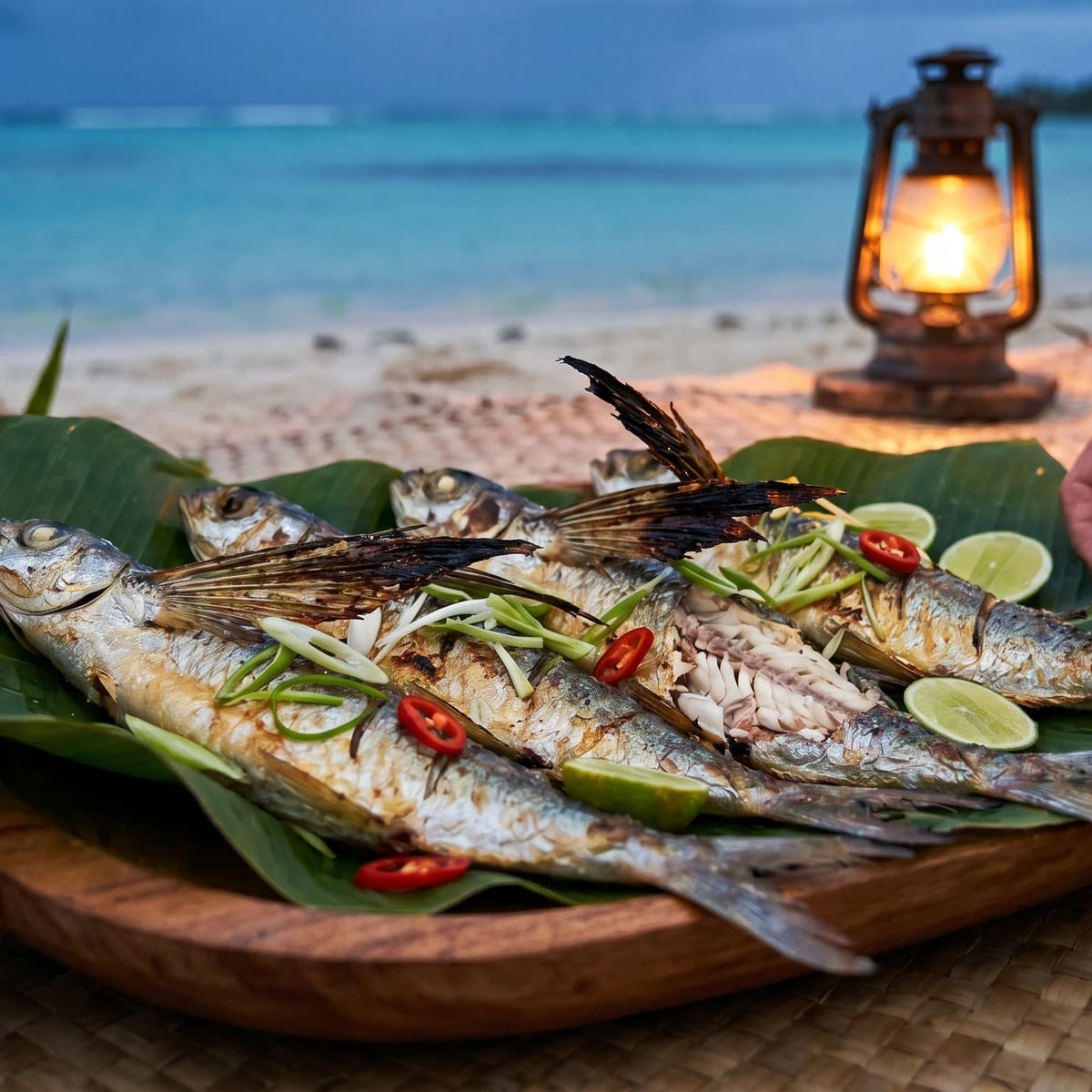
Maroro Tunu (Cook Islands Grilled Flying Fish)

Maroro Tunu (Cook Islands Grilled Flying Fish)

Created by

Night-caught Cook Islands maroro, the flying fish of the lagoon, grilled quick over fire until the skin crisps at the edges and the flesh stays sweet.

Main Dishes
Polynesian, Cook Islands
Weeknight
Outdoor Dining
Budget Friendly
15 min
Active Time
10 min cook25 min total
Yield4 servings

The ocean feeds you different when you meet it at night. In the Cook Islands, maroro, the flying fish, is more than a cheap supper. It is kai, food, pulled from the dark water under bright lights while the fish skim and lift over the lagoon like they don't quite belong to sea or sky.

This is the Cooks' hand, not mine, and I cook it open-handed. My own home seat is Hawaiʻi, where we'd talk story over akule or ʻopelu on the grill, but the lesson is the same across the Triangle: respect the fish, keep it fresh, cook it clean. Same ocean, different net. Same fire, different shore.

You don't bury maroro under heavy sauce. Score it, salt it, rub it with lime and a little coconut oil, then put it over a hot grate until the skin tightens and the edges go crisp. Eat what you have. If your market has sardines, small mackerel, or butterflied snapper instead, cook those with the same care and no shame.

Set it down with taro, ʻuru, or plain rice, some rukau, the Cook Islands taro leaves cooked with coconut cream, and lime for the table. Weeknight food can still carry old knowledge. ʻĀina, kānaka, meaʻai, land, people, food. The cousins keep it too.

Maroro is one of the iconic fish of the Cook Islands, especially around Rarotonga and Aitutaki, where night fishing with bright lamps draws flying fish close enough to net or scoop as they skim the lagoon surface. The dish sits with the everyday side of Cook Islands kai, not chiefly ceremony, and shows how the old ocean skill still lives beside modern grills, markets, and takeaway counters. Across Polynesia, small reef and pelagic fish are cooked simply over flame from Hawaiʻi to Tahiti to the Cooks, each island naming its own catch and keeping its own hand.

The technique, the tradition, and the story behind every dish.

Discover Culinary Explorer

Ingredients

whole maroro (flying fish)

Quantity

4

scaled and gutted, about 8 to 10 ounces each

sea salt

Quantity

1 1/2 teaspoons

plus more to finish

coconut oil

Quantity

2 tablespoons

limes

Quantity

2

juiced, plus wedges for serving

garlic

Quantity

2 cloves

finely grated

fresh chile (optional)

Quantity

1 small

finely chopped

green onions

Quantity

2

thinly sliced

banana leaf (optional)

Quantity

1 piece

for lining the platter

Equipment Needed

  • Charcoal or gas grill with clean medium-high grate
  • Fish grilling basket, optional but useful
  • Long fish spatula or wide metal turner

Instructions

  1. 1

    Clean the fish

    Pat the maroro very dry inside and out. Fresh fish should smell like clean ocean and almost nothing else. If it smells tired, no make it the star of the grill. Cook another fish, make soup, no waste, but don't pretend.

  2. 2

    Score and season

    Cut three shallow slashes into each side of every fish, just deep enough for the salt and lime to get in. Rub with sea salt, coconut oil, lime juice, garlic, and chile if you're using it. Let it sit 10 minutes while the grill heats, not much longer, so the lime doesn't make the flesh chalky.

    Small fish cook fast. The scoring helps the seasoning reach the bone line before the outside overcooks.
  3. 3

    Heat the grill

    Heat a clean grill to medium-high and oil the grate well. You want a quick, confident fire, not a slow punishment. The fish should hiss when it lands and release when the skin has tightened.

  4. 4

    Grill the maroro

    Lay the fish on the grate and cook 3 to 4 minutes per side, turning once, until the skin is browned at the edges, the fins are crisp, and the flesh flakes clean at the thickest part. Don't keep moving it. Let the fire do its work.

  5. 5

    Finish and share

    Move the maroro to a banana-leaf-lined platter, scatter over green onion, and squeeze fresh lime across the top while the surface is still glossy. Serve right away with taro, breadfruit, rice, or rukau. This is everyday Cook Islands kai, enough for the table, easy in the hand.

Chef Tips

  • Ask when the fish came out of the water. With maroro and any small whole fish, freshness matters more than any seasoning you put on it.
  • No maroro in your market? Use small mackerel, sardines, butterflied snapper, or another fresh whole fish that fits the grate. Name the swap honestly and cook what you have.
  • A fish basket helps, but a clean hot grate works. Oil the grate, dry the fish, then leave it alone until it releases.
  • For a fuller Cook Islands plate, serve with boiled taro, roasted ʻuru, plain rice, or rukau, taro leaves cooked down with coconut cream.

Advance Preparation

  • Clean and dry the fish up to 4 hours ahead, then keep it covered and cold until cooking.
  • Mix the coconut oil, lime, garlic, and chile up to 1 day ahead, but salt and dress the fish only 10 minutes before grilling.

Frequently Asked Questions

Nutrition Information

1 serving (about 145g)

Calories
240 calories
Total Fat
11 g
Saturated Fat
7 g
Trans Fat
0 g
Unsaturated Fat
3 g
Cholesterol
85 mg
Sodium
950 mg
Total Carbohydrates
3 g
Dietary Fiber
1 g
Sugars
1 g
Protein
32 g

Note: Chef personas and recipes are created with AI assistance. Cook with care: follow safe food-handling practices, check doneness with a thermometer when needed, and adapt for allergies and your kitchen.

Where cooking meets culture.

Culinary guides, cultural storytelling, and the editorial depth that makes cooking meaningful.

Discover Culinary Explorer

More from The Cook Islands Savory Table

Browse the full collection