Chef Makoa
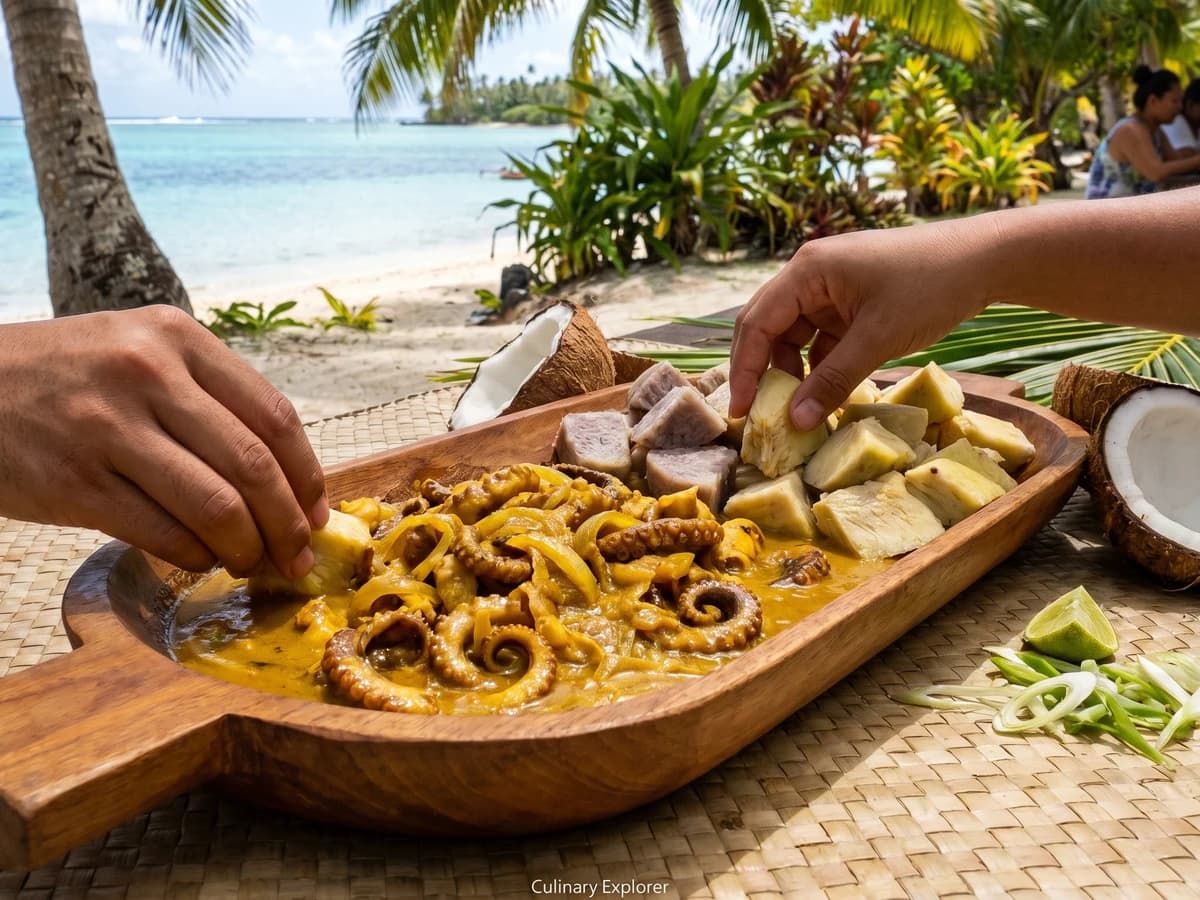
Eke Takare (Cook Islands Curried Octopus)
Rarotonga's reef catch brought home to the pot: tender eke simmered with onion, garlic, turmeric, curry powder, and coconut cream until the sauce turns gold and rich.
A cooking platform built around craft, culture, and the stories behind what we eat.
Created by
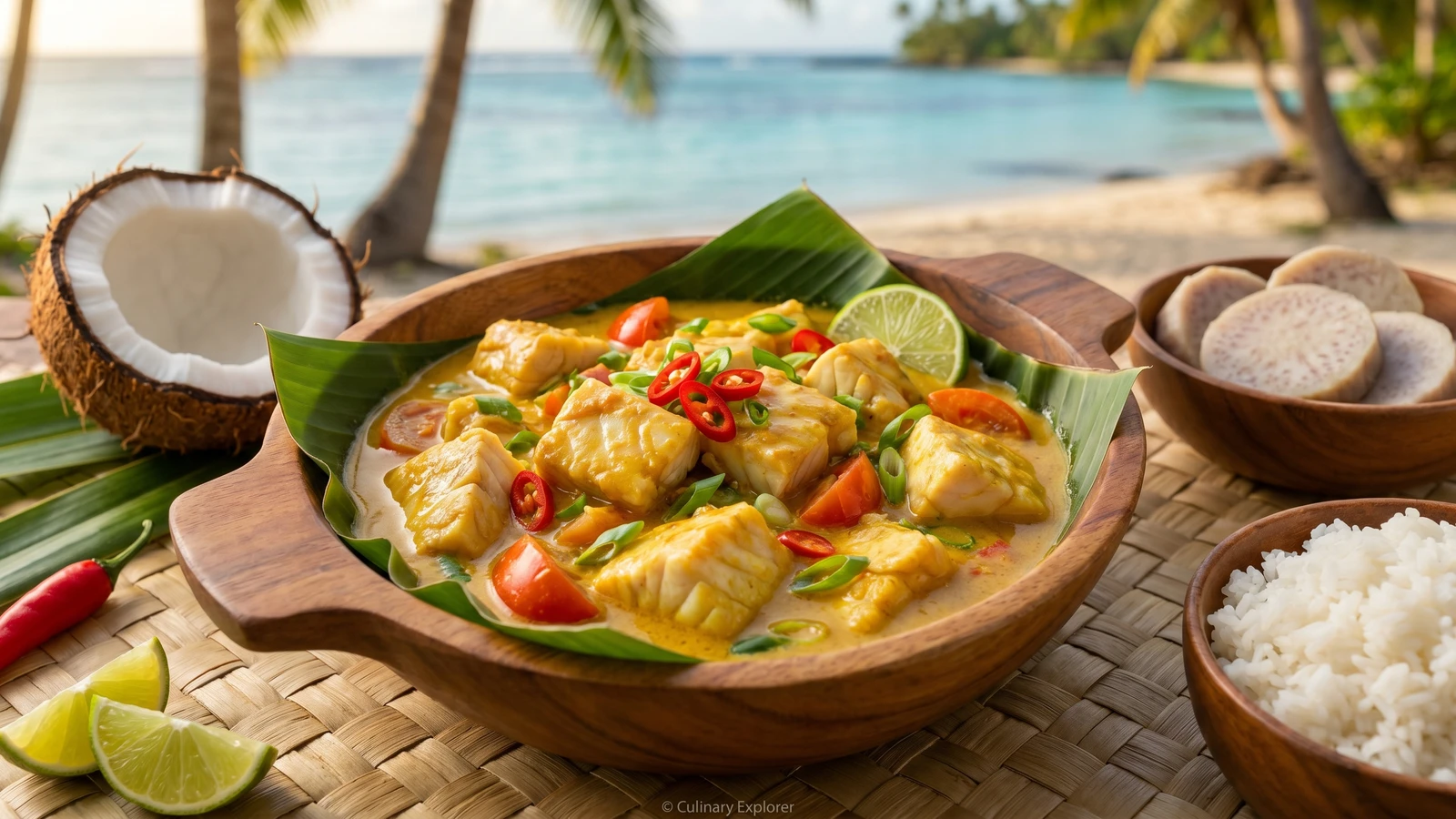
Firm white fish simmered gently in coconut milk, curry, chilli, onion, and tomato. The Cook Islands call this kari ika, British curry made local by the lagoon.
The canoe gave the Cook Islands the fish hook, the coconut, the taro, the ʻuru, and the habit of feeding whoever walks in. Kari ika means fish curry, and this one belongs to the Cook Islands table, especially the everyday kitchens of Rarotonga, Aitutaki, and the outer islands where the reef and the pot are never far apart.
This is not an old ceremonial food like the umukai, the Cook Islands earth oven, and I won't dress it up like it is. It is the food that happens when the old ocean pantry meets what the ships and traders brought: curry powder, onions, tinned goods, rice on the side. The Cooks took that British curry and made it speak their own kitchen language, coconut milk softening the spice, fresh ika, fish, staying tender, chilli waking the whole pot up.
Same fish, different bowl. Tahiti might turn that fish into ʻia ota, the Cooks make ika mata with coconut and lime, back home in Hawaiʻi we'd make poke with limu and ʻinamona, and here the Cook Islands simmer it warm in coconut curry. One ocean, one canoe, one root, but no blur the cousins together. This is the Cook Islands hand.
Keep it easy. Use the freshest firm fish you can get, add the coconut milk late so it doesn't split hard, and don't bully the fish around once it goes in. Eat what you have, yeah? Rice is fine. Taro is better when you have it. Breadfruit if the season gives it. No need make the weeknight precious.
Curry entered the Cook Islands through British colonial trade and mission contact in the nineteenth and early twentieth centuries, then settled into local kitchens beside coconut, reef fish, taro, breadfruit, and rice. That makes kari ika a living post-contact Cook Islands dish, not pre-contact deep food, and that matters: it shows how island people kept feeding themselves by taking outside goods and bending them back toward the lagoon and the family table. Its cousins are not a single plain Polynesian fish dish, but named bowls across the Triangle: Cook Islands ika mata, Tahitian ʻia ota, Tongan ʻota ʻika, Sāmoan oka iʻa, and Hawaiian poke.
Quantity
1 1/2 pounds
cut into 2-inch pieces
Quantity
1 tablespoon
Quantity
1 medium
thinly sliced
Quantity
3
finely chopped
Quantity
1 tablespoon
finely grated
Quantity
1 to 2
sliced
Quantity
2 tablespoons
Quantity
1/2 teaspoon
Quantity
2 medium
chopped, or 1 cup canned diced tomatoes
Quantity
1 cup
Quantity
1 1/2 cups
Quantity
1 tablespoon
plus wedges for serving
Quantity
1 teaspoon
plus more to taste
Quantity
2
thinly sliced
Quantity
1/2 cup
Quantity
for serving
| Ingredient | Quantity |
|---|---|
| firm white fish filletscut into 2-inch pieces | 1 1/2 pounds |
| neutral oil or coconut oil | 1 tablespoon |
| onionthinly sliced | 1 medium |
| garlic clovesfinely chopped | 3 |
| fresh gingerfinely grated | 1 tablespoon |
| fresh red chilliessliced | 1 to 2 |
| mild curry powder | 2 tablespoons |
| ground turmeric | 1/2 teaspoon |
| tomatoeschopped, or 1 cup canned diced tomatoes | 2 medium |
| fish stock or water | 1 cup |
| full-fat coconut milk or fresh coconut milk | 1 1/2 cups |
| fresh lime juiceplus wedges for serving | 1 tablespoon |
| sea saltplus more to taste | 1 teaspoon |
| green onionsthinly sliced | 2 |
| fresh cilantro or parsley leaves (optional) | 1/2 cup |
| cooked rice, boiled taro, or roasted breadfruit | for serving |
Pat the ika, the fish, dry and season it with a good pinch of the salt. Let it sit while you build the curry base. Fresh fish should smell like the ocean and almost nothing else; if it smells tired, no shame, cook it the same day and don't hold it.
Warm the oil in a wide pot over medium heat. Add the onion and cook 5 to 6 minutes, stirring, until it softens and turns glossy at the edges but does not brown hard. Stir in the garlic, ginger, and chilli until the smell comes up bright.
Add the curry powder and turmeric and stir for 30 to 45 seconds, just until the spice darkens a shade and smells warm. Don't scorch it. Burnt curry goes bitter fast, and then no amount of coconut can fix the pot.
Stir in the tomatoes and cook 3 minutes, until they slump and shine. Pour in the fish stock or water, scrape the bottom of the pot, and simmer 5 minutes so the onion, tomato, and spice become one sauce.
Lower the heat and stir in the coconut milk. Let it come only to a gentle simmer, with a soft shimmer around the edge of the pot. Coconut milk can split if you boil it rough, so keep your hand calm here.
Slide the fish pieces into the sauce in one layer where you can. Spoon a little sauce over the top, cover, and simmer gently 6 to 8 minutes, depending on thickness, until the fish turns opaque and flakes with a fork but still looks moist. Don't stir hard. Fish is not a stone.
Turn off the heat and season with lime juice and more salt if it wants it. Scatter green onion and cilantro or parsley if using. Serve warm with rice, boiled taro, or roasted breadfruit, enough sauce for the starch to drink. That's the comfort right there.
1 serving (about 560g)
Culinary guides, cultural storytelling, and the editorial depth that makes cooking meaningful.
Discover Culinary ExplorerChef Makoa
Rarotonga's reef catch brought home to the pot: tender eke simmered with onion, garlic, turmeric, curry powder, and coconut cream until the sauce turns gold and rich.

Chef Makoa
The Cook Islands bowl: fresh fish just turned in lime, softened with thick coconut cream, and kept crisp with cucumber, onion, and tomato. Same fish, different bowl.
Chef Makoa
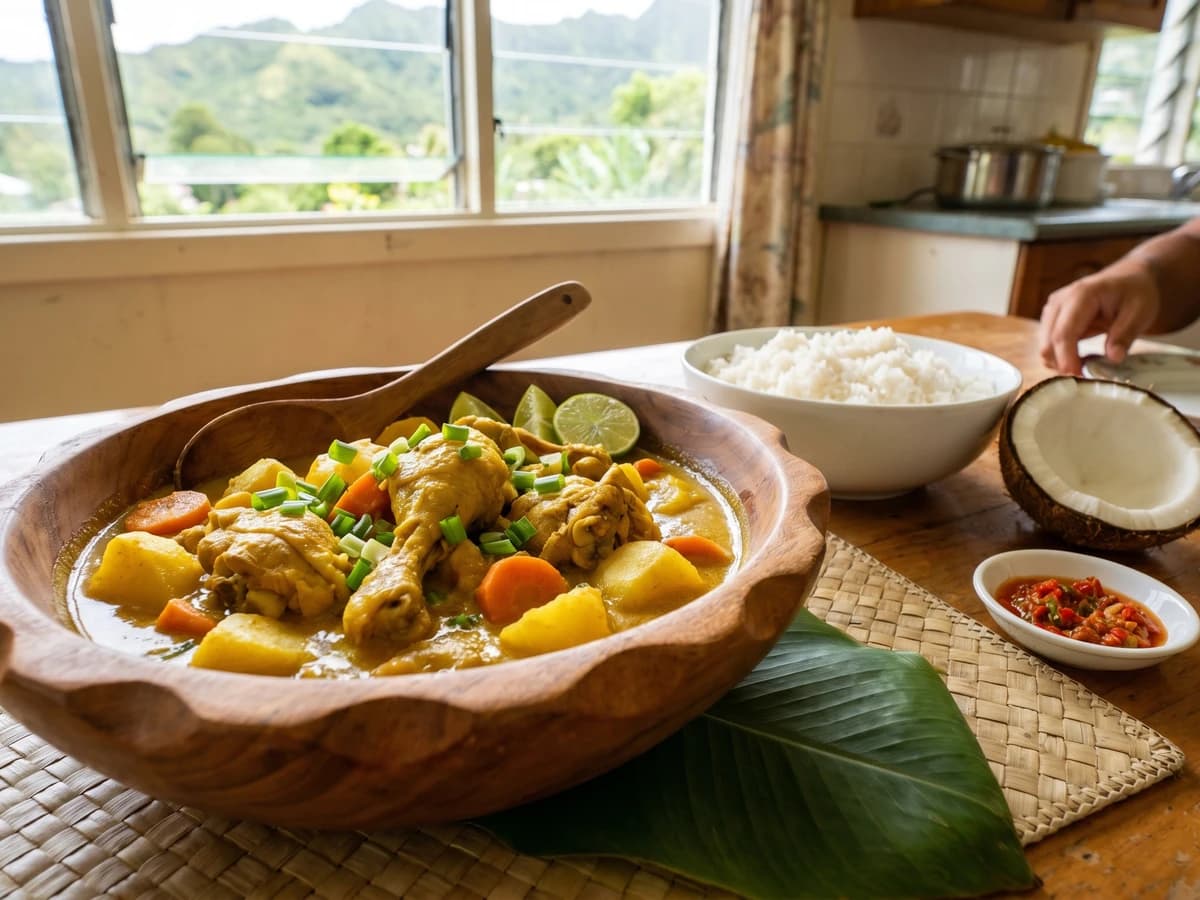
Cook Islands kare moa, chicken curry softened in coconut milk with turmeric, ginger, garlic, potato, and carrot, the kind of weeknight pot that feeds the family twice.
Chef Makoa
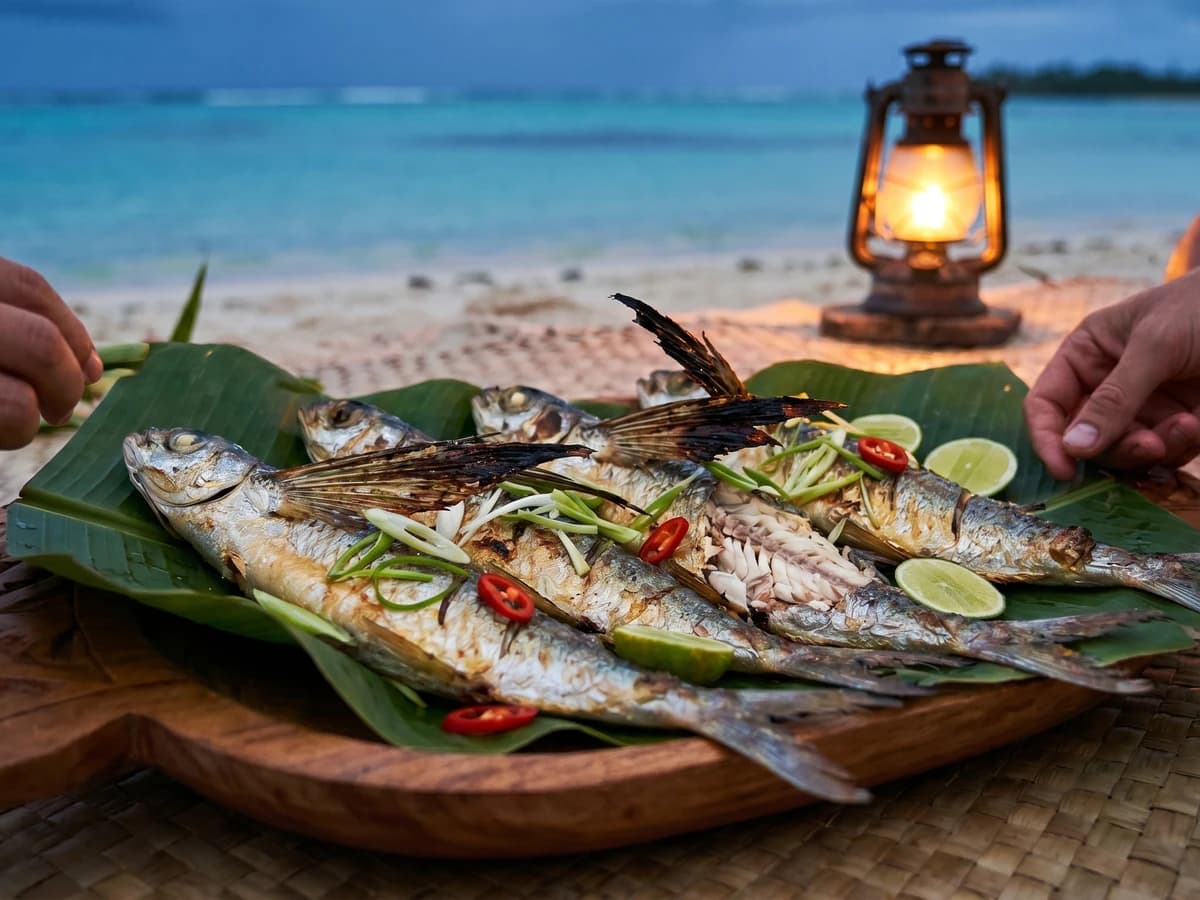
Night-caught Cook Islands maroro, the flying fish of the lagoon, grilled quick over fire until the skin crisps at the edges and the flesh stays sweet.