Chef Makoa
Kumara (Rapa Nui Sweet Potato)
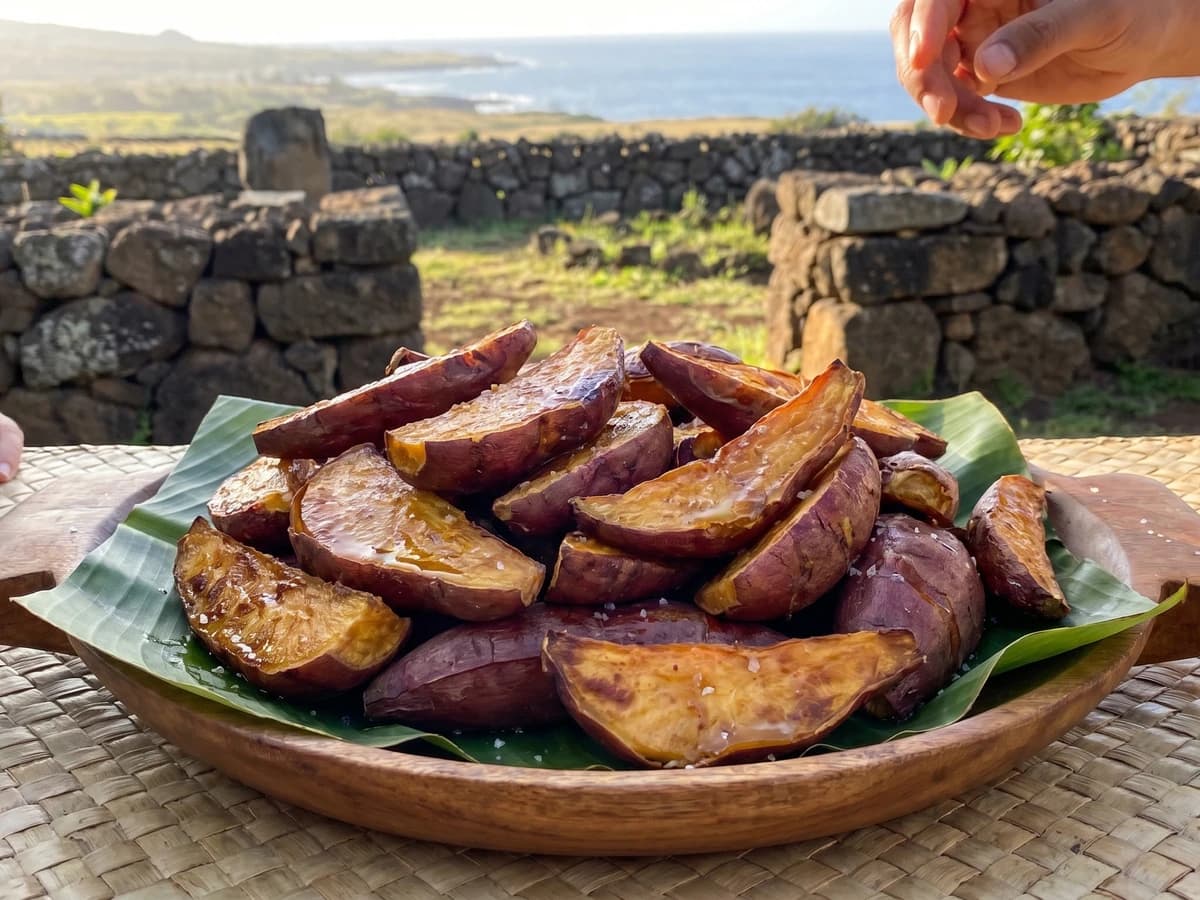
Rapa Nui kumara, the sweet potato of stone gardens and salt wind, roasted tender in a home oven or boiled for the weeknight table, the daily bread of the far corner.
A cooking platform built around craft, culture, and the stories behind what we eat.
Created by
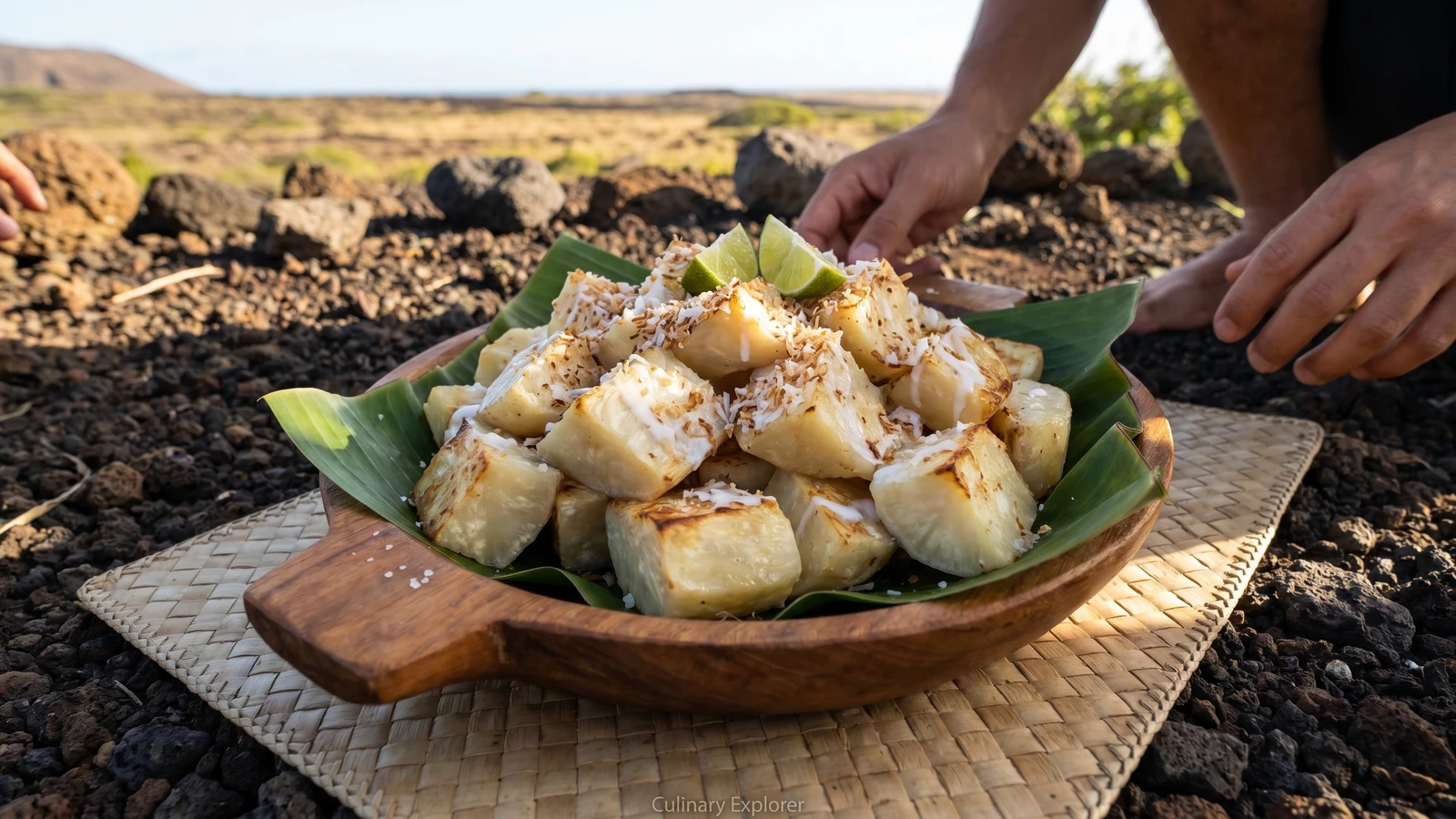
Rapa Nui uhi, the old white yam of the far eastern corner, boiled tender, roasted at the edges, and finished simply with coconut, salt, and lime.
At the far corner of the Triangle, Rapa Nui keeps its own old roots in hard volcanic ground. This uhi, the white-fleshed yam, belongs there, to the Rapa Nui people and their island, not to some blurred plate called Polynesian. One ocean, one canoe, one root, yes, but every cousin has their own hand.
I learned to listen for that first. Back home my hands know kalo, Hāloa, our elder brother. In Sāmoa and Tonga the talo sits deep in the family table, in the Cooks and Tahiti the taro and ʻuru carry the same old weight, and on Rapa Nui the uhi and kumara held people close to a small island with no extra land to waste. Different roots. Same kuleana, the responsibility to feed people from the ground that knows them.
This way is weeknight real: boil the uhi until it gives, then roast it hard enough to put color on the edges. No need make it precious. If you have coconut cream, let it shine over the top. If you only have salt and a lime, that's still a good bowl. The old foods were never about showing off. They were about enough.
For the deep Rapa Nui parts, the umu pae, the stone earth oven, the feasts, the old stories held by families there, I cook open-handed and send you to Rapa Nui elders. They should tell their own story. I can only keep the table wide and remind you to treat the uhi like a relative, not a side dish.
Rapa Nui sits at the eastern point of the Polynesian Triangle, where voyagers carried canoe crops into a small, isolated island ecology and made every root count. Uhi, a white-fleshed yam, stood beside kumara, sweet potato, as an old staple crop, grown in stone-protected gardens where wind, salt, and thin volcanic soil shaped the food system. The same deep-food pattern runs across the Triangle, from Hawaiian kalo and ʻulu to Sāmoan talo and Cook Islands taro, but Rapa Nui's far-corner table has its own names, pressures, and keepers.
Quantity
2 pounds
scrubbed and peeled
Quantity
1 tablespoon
for the cooking water
Quantity
2 tablespoons
Quantity
1/2 teaspoon
plus more to taste
Quantity
1/4 cup
Quantity
1
cut into wedges
Quantity
2 tablespoons
| Ingredient | Quantity |
|---|---|
| uhi (white yam), or firm white yam such as Dioscorea alatascrubbed and peeled | 2 pounds |
| sea saltfor the cooking water | 1 tablespoon |
| coconut oil, or neutral oil | 2 tablespoons |
| fine sea saltplus more to taste | 1/2 teaspoon |
| thick coconut cream (optional) | 1/4 cup |
| limecut into wedges | 1 |
| toasted grated coconut (optional) | 2 tablespoons |
Peel the uhi and cut it into big two-inch chunks, the kind that still feel like food from the ground and not little dice for a fancy plate. If your yam has any dry, woody ends, trim them away. Good uhi should feel firm and heavy, with white flesh that cooks creamy without falling apart.
Put the uhi in a pot, cover with cold water by an inch, and add the tablespoon of sea salt. Bring it up gently, then simmer 20 to 30 minutes, until a knife slides through the center without a fight. Don't boil it angry. Let the root soften slow, so the middle catches up with the outside.
Drain the uhi well and let it sit in the warm pot for five minutes so the surface dries. This little pause matters. Wet yam turns slick and tired in the pan; dry yam takes the coconut oil and browns at the edges.
Heat the oven to 425F. Toss the cooked uhi with coconut oil and the fine sea salt, then spread it on a sheet pan with space between the pieces. Roast 15 to 20 minutes, turning once, until the edges go golden and lightly crisp and the centers stay soft and white.
Pile the uhi into a wooden bowl or onto a banana leaf. Spoon over a little thick coconut cream if you're using it, scatter toasted coconut if that feels right for your table, and serve lime wedges alongside. The finish should be simple: salt, fat, a little brightness. Eat what you have, and leave room for one more hand at the bowl.
1 serving (about 180g)
Culinary guides, cultural storytelling, and the editorial depth that makes cooking meaningful.
Discover Culinary ExplorerChef Makoa
Rapa Nui kumara, the sweet potato of stone gardens and salt wind, roasted tender in a home oven or boiled for the weeknight table, the daily bread of the far corner.

Chef Makoa
Boiled potatoes under a warm, creamy shrimp sauce, the kind of Rapa Nui comfort plate that tells the truth: old canoe roots beside Chilean overlay, ocean food made weeknight-simple.

Chef Makoa
Rapa Nui's quiet taro, boiled whole or roasted after boiling until the edges crisp, served as the old canoe-crop starch beside fish, greens, or the food of the week.
Chef Juliette
Boulettes au suif, poached beside salt beef, turn equal weights of flour and finely chopped suet into tender, rich dumplings. Keep the beef liquor at a bare tremble and the old garnish works beautifully at home.