Chef Makoa
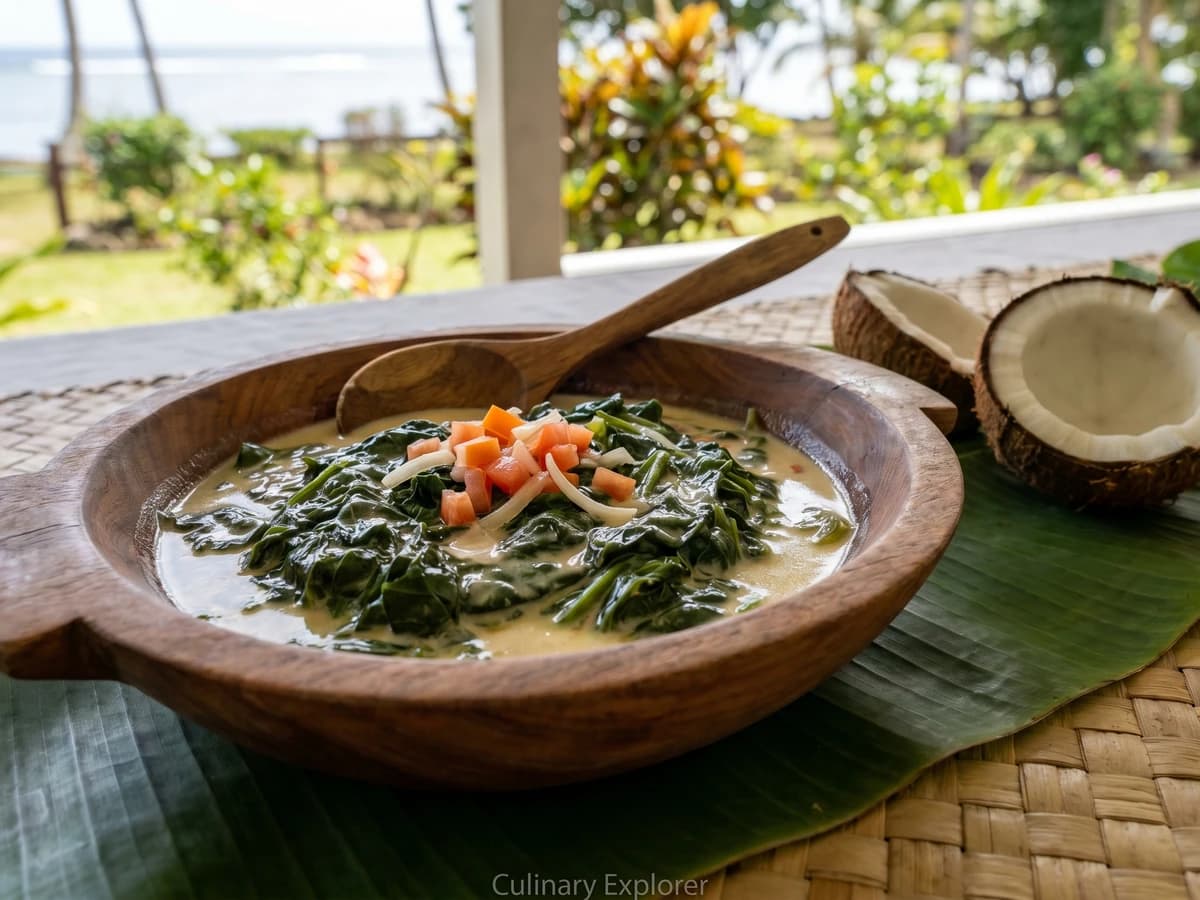
Lau Pele (Tongan Spinach in Coconut Cream)
Tonga's everyday green, lau pele, folds soft into coconut cream with onion and salt, a weeknight bowl that still remembers the umu, the garden, and the family table.
A cooking platform built around craft, culture, and the stories behind what we eat.
Created by
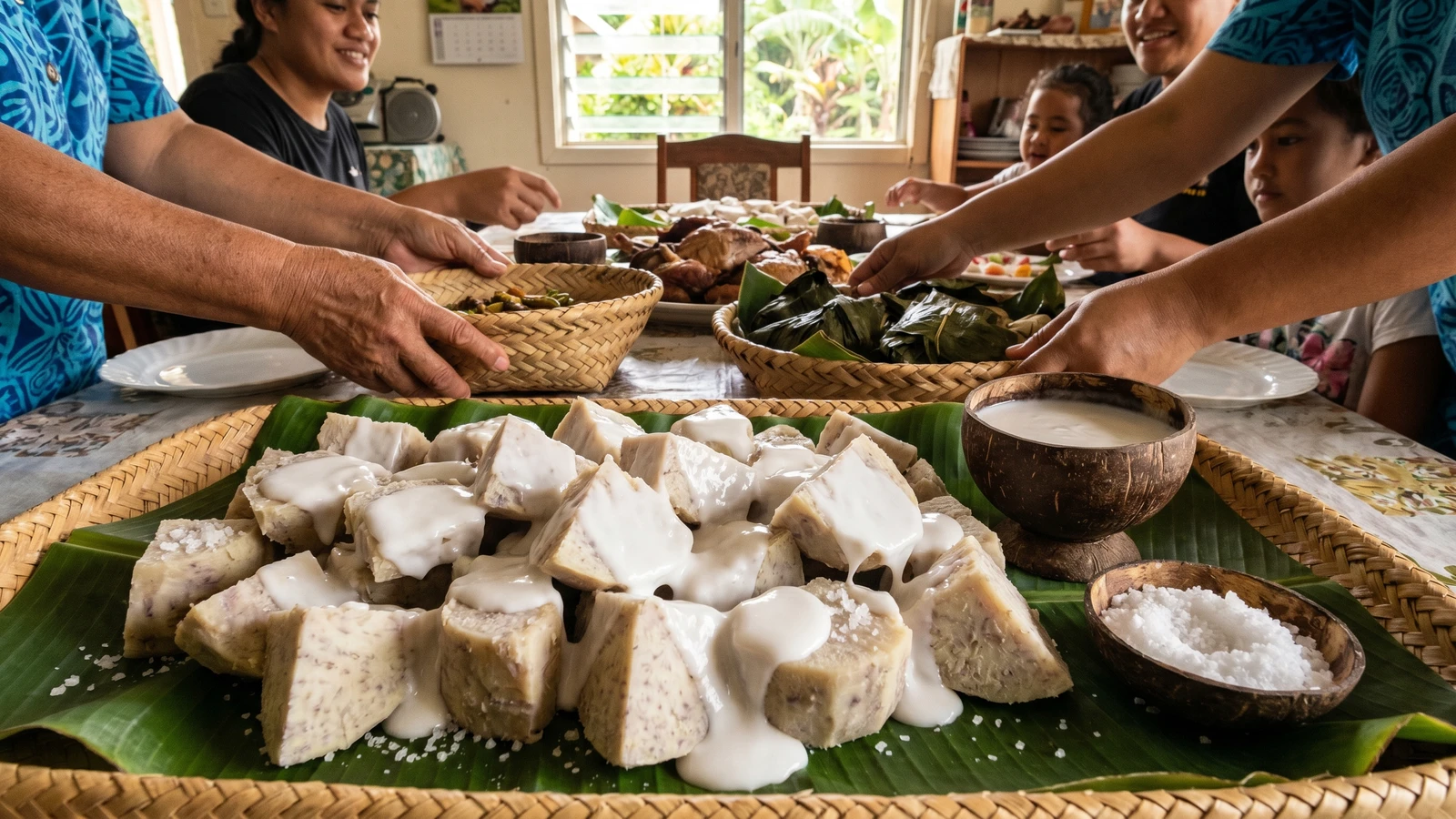
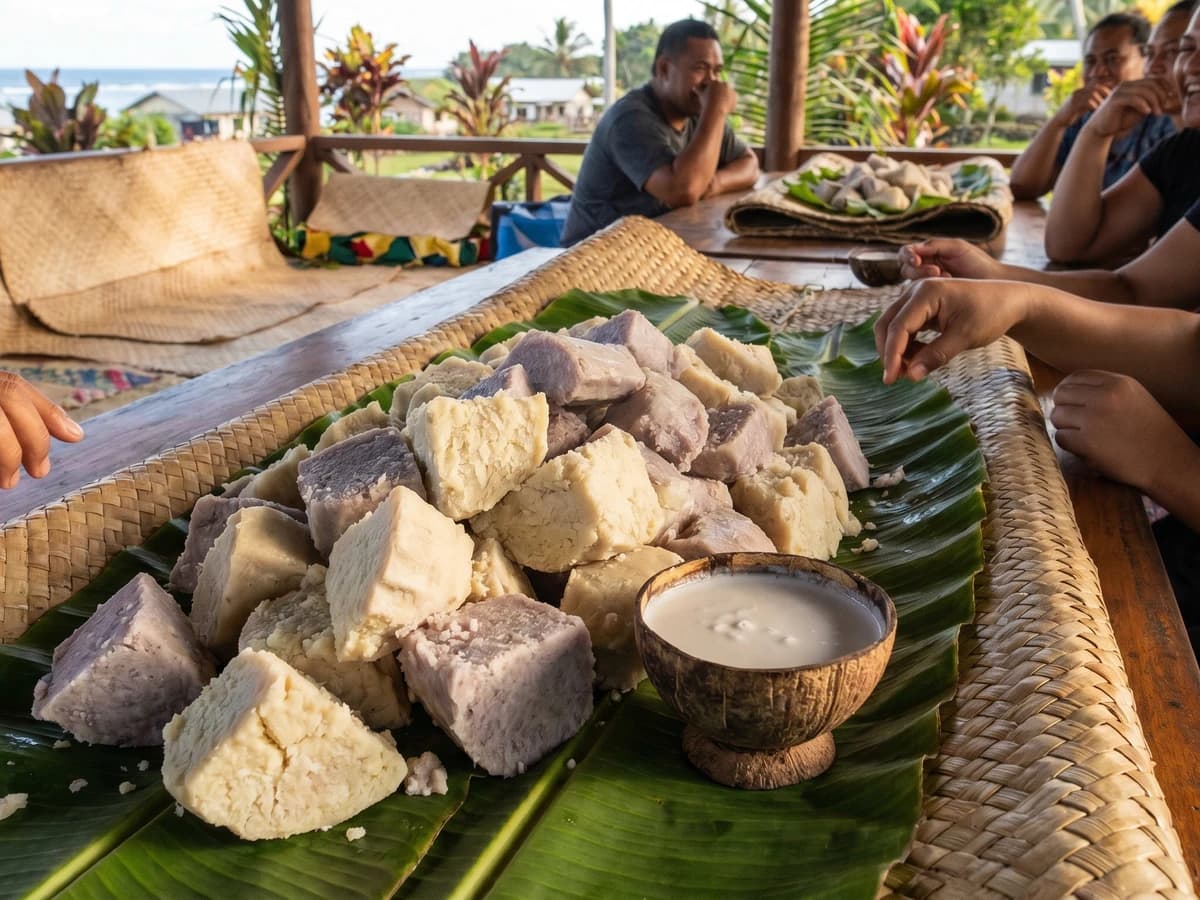
Tonga's prized garden yam, boiled in its own quiet time until dense and tender, then eaten with lolo niu, coconut cream, salt, and whatever the family table is carrying.
The canoe didn't carry side dishes. It carried relatives. In Tonga, ʻufi, the yam, is the prize of the ngoue, the garden, a root set aside for katoanga, feasts and big family days, and still humble enough to sit beside the everyday pot. This is Tonga's hand, not mine, and I cook it open-handed: for the deep giving and rank around ʻufi, go sit with Tongan elders, aunties, and the kāinga, the family and kin group, who carry that knowledge.
When a Tongan table is laid on woven pola, the ʻufi doesn't need much noise. Boil it clean, let the pieces dry after the water leaves, then give them lolo niu, coconut cream, and salt. The method is quiet because the yam is dense and noble in its own way. Rush it and the outside breaks while the center still argues with you. No blame the ʻufi. You hurried it.
Across the Triangle, the cousins keep their own root stories: Sāmoan talo in the umu, Māori kūmara, Hawaiian kalo and ʻuala, Cook Islands taro, Tahitian ʻuru and taro. One ocean, one canoe, one root, but not one nameless plate. Here you are cooking Tongan ʻufi, brought forward into a kitchen with a heavy pot and a little patience, easy enough for weeknight rice and corned beef, good enough for lū sipi and a celebration table. Eat what you have, and name whose table you're at.
Lapita ancestors reached Tonga around 900 BCE, and the food system they brought and built was a canoe-garden one: yam, taro, banana, coconut, and breadfruit where it took, with fishing and reef knowledge beside it. In Tonga, ʻufi became one of the high-status crops of the ngoue, prized for size, straightness, and abundance, and brought into katoanga, feasts, and exchanges where food showed relationship, rank, and fatongia, obligation. That is the deep-food line beside the mission and plantation table: today boiled ʻufi may sit with sapasui, corned beef, or rice, but its older role as a chiefly root has not disappeared.
Quantity
3 pounds
scrubbed
Quantity
2 teaspoons
plus more for serving
Quantity
enough to cover by 1 inch
Quantity
1 cup
squeezed from mature coconut, or thick canned coconut cream
Quantity
1 to 2 tablespoons
only if thinning the coconut cream
Quantity
1
rinsed, for serving
| Ingredient | Quantity |
|---|---|
| ʻufi (Tongan yam, Dioscorea alata)scrubbed | 3 pounds |
| sea saltplus more for serving | 2 teaspoons |
| cold water | enough to cover by 1 inch |
| fresh coconut cream (lolo niu)squeezed from mature coconut, or thick canned coconut cream | 1 cup |
| warm water (optional)only if thinning the coconut cream | 1 to 2 tablespoons |
| banana leaf (optional)rinsed, for serving | 1 |
Scrub the ʻufi, the Tongan yam, and trim away the rough ends. Peel the thick skin in sturdy strips, then cut the flesh into big 2 to 3-inch chunks so the pieces cook evenly and still hold their shape. Rinse until the water runs mostly clear.
Set the chunks in a heavy pot and add cold water to cover by about 1 inch. Add the sea salt. Some Tongan homes boil root crops plain and salt at the table, and that's fine too. The slow start helps the center and the outside arrive together.
Bring the pot to a boil over medium-high heat, then lower it to a steady simmer. Cook 25 to 35 minutes, depending on the yam, until a skewer slides through the center with only a little weight behind it. The cut faces should look floury and tender, not glassy, and the edges should just begin to feather. No blame the ʻufi if the outside breaks before the middle gives. You rushed it.
Lift the pieces into a colander, pour off the cooking water, then return the ʻufi to the warm empty pot. Cover with the lid slightly cracked and let it sit 5 to 10 minutes. That little rest is why it doesn't eat soggy: the last surface water leaves, and the yam sits dense, tender, and ready for coconut cream to cling.
Warm the lolo niu, coconut cream, with a small pinch of salt over low heat until it turns smooth and glossy. Don't boil it hard. Coconut cream splits when bullied. If it is too thick to pour, loosen it with 1 or 2 tablespoons warm water.
Lay the ʻufi family-style on banana leaf over a pola, the woven Tongan feast tray, or on a plain platter if that is what you have. Spoon lolo niu over the top or serve it in a coconut-shell cup alongside, with extra salt at the table. This belongs with lū sipi, fried fish, a pot of rice, sapasui, or corned beef. The old root and the everyday plate can sit together.
1 serving (about 230g)
Culinary guides, cultural storytelling, and the editorial depth that makes cooking meaningful.
Discover Culinary ExplorerChef Makoa
Tonga's everyday green, lau pele, folds soft into coconut cream with onion and salt, a weeknight bowl that still remembers the umu, the garden, and the family table.
Chef Makoa
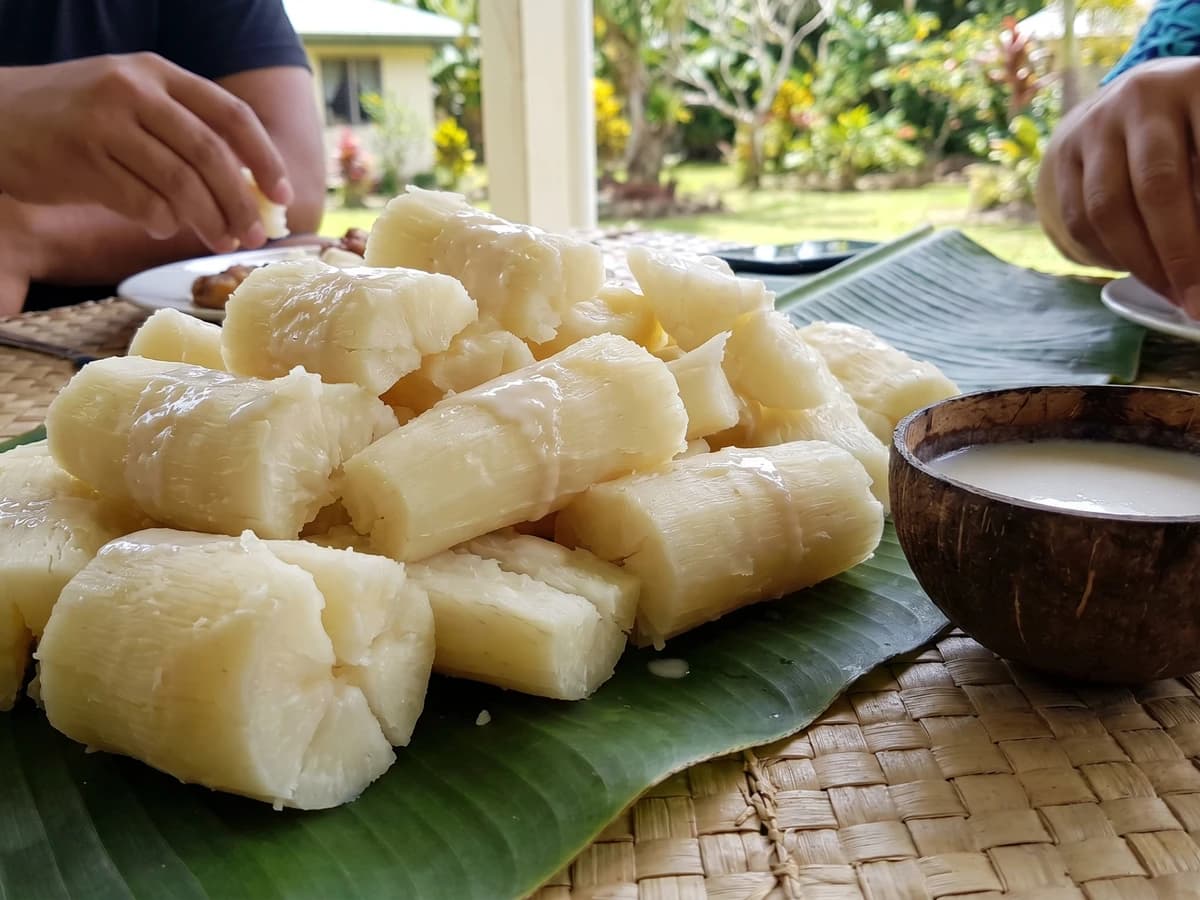
Tonga's weeknight root, boiled until dense, clean, and nutty, manioke feeds the table first. The sipi, feke, or corned beef is only the occasion on top.
Chef Makoa
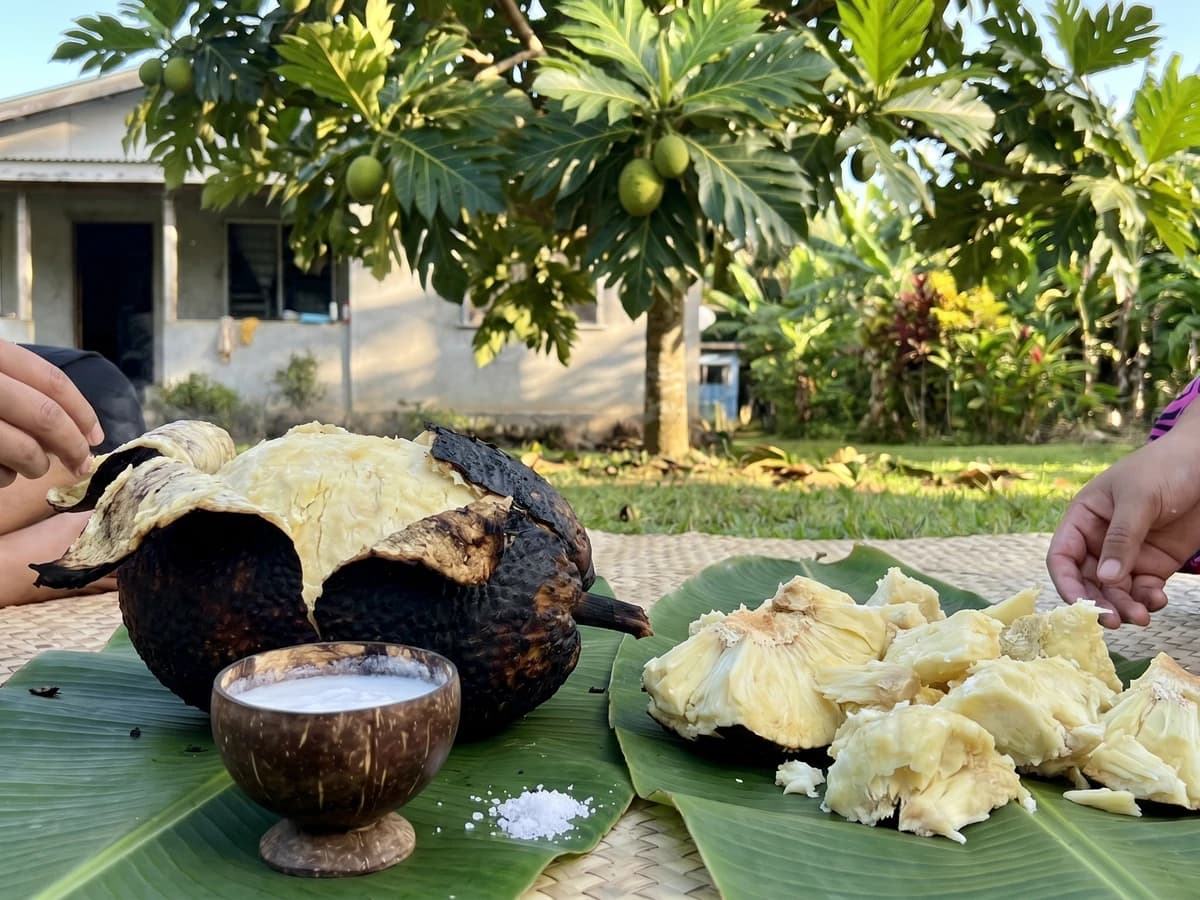
Tonga's mei, breadfruit, roasted whole until the skin goes black and the flesh inside turns creamy and smoky, ready for salted coconut cream and a family spread.
Chef Makoa
Tonga's talo, steamed slow until the corm turns dense, nutty, and softly lavender-grey, the quiet staple under the Tongan taro-leaf parcel lū pulu, fresh fish, or corned beef.