Chef Makoa
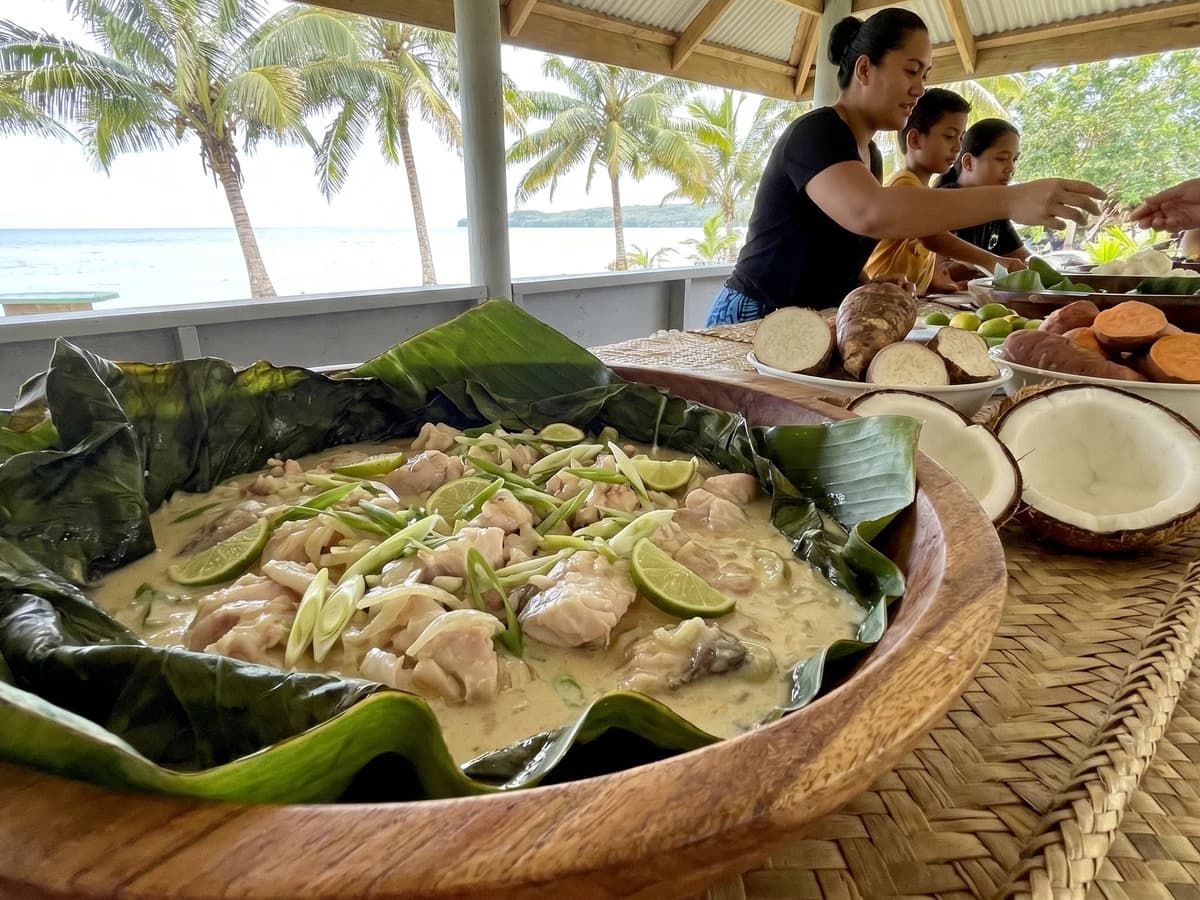
Ika Lolo (Tongan Fish Baked in Taro Leaves and Coconut Cream)
Tonga's ika lolo, fresh fish folded into taro leaves with ginger, garlic, and coconut cream, then baked until the leaf goes silky and the fish stays sweet under the coconut.
A cooking platform built around craft, culture, and the stories behind what we eat.

Created by
Tonga takes cabbage, tinned corned beef, tomato, onion, and coconut cream, then bakes them into generous parcels for Sunday tables. Cheap food, feast hand, everybody fed.
The Tongan table taught me something my own pride needed to learn: kinship doesn't only live in the old foods. It lives in what the aunties make stretch, what the uncles carry home, what the children reach for first when the pola, the woven feast tray, gets set down. Kapisi pulu belongs to Tonga, cabbage wrapped around pulu, tinned corned beef, with tomato, onion, and coconut cream baked down until the whole thing goes soft and rich.
This is cousin to lū pulu, Tonga's taro-leaf parcel with corned beef, and you can see the wider family right away: Sāmoan palusami, Cook Islands rukau, Hawaiian laulau and lūʻau leaf, all that same leaf-and-coconut-cream move our people carried across the ocean. One ocean, one canoe, one root. But kapisi is cabbage, not taro leaf, and that matters. It tells the truth about today's kitchen: imported tins, market vegetables, church Sundays, big families, small money, and still enough for one more.
So we don't get fancy with it. You soften the cabbage just enough to fold, mix the corned beef with tomato and onion, pour coconut cream like you mean it, then bake it covered until the leaves slump and shine. The salt from the beef seasons everything. The cream catches it. The tomato cuts through. That's the balance.
This is Tonga's hand, and I cook it open-handed. For the deeper feast ways, the seating, the shares, the order of who is served, go sit with Tongan elders. They should tell their own story. Me, I can show you how to make the parcel hold.
Kapisi pulu is a modern Tongan comfort and feast dish shaped by the same older leaf-and-coconut grammar as lū pulu, but built with cabbage and tinned corned beef from the trade and mission era pantry. Corned beef became common across many Pacific islands in the nineteenth and twentieth centuries because it traveled well by ship and fed large gatherings, and Tonga made it its own by folding it into coconut cream, leaf parcels, and Sunday spreads. The dish sits on the living side of the deep-food and mission-food doorway: not ancient canoe food, but a real part of how Tongan families eat now.
Quantity
1
whole leaves separated
Quantity
1 can (12 ounces)
broken up
Quantity
1 medium
finely diced
Quantity
2
diced, or 1 cup canned diced tomatoes, drained
Quantity
1 1/2 cups
Quantity
1/2 teaspoon
Quantity
to taste
Quantity
as needed
for lining and covering
| Ingredient | Quantity |
|---|---|
| large green cabbagewhole leaves separated | 1 |
| corned beefbroken up | 1 can (12 ounces) |
| onionfinely diced | 1 medium |
| ripe tomatoesdiced, or 1 cup canned diced tomatoes, drained | 2 |
| thick coconut cream | 1 1/2 cups |
| black pepper | 1/2 teaspoon |
| sea salt (optional) | to taste |
| banana leaf, parchment, or foilfor lining and covering | as needed |
Bring a wide pot of water to a boil, then lower in the cabbage leaves for 2 to 3 minutes, just until they bend without cracking. Drain and cool them on a towel. Cut out the thickest part of each rib so the leaves fold easy, but don't tear the whole spine away.
In a bowl, break up the corned beef with your hands or a fork, then fold in the onion, tomato, black pepper, and 1/2 cup of the coconut cream. Taste before you add salt, because the tin usually brings plenty. The filling should be loose and glossy, not dry.
Lay one cabbage leaf flat, cup it in your palm, and spoon in a generous mound of filling. Fold the sides over, then roll it closed like a soft parcel. If a leaf is small, double it up. No shame. The parcel just needs to hold the cream and the pulu together.
Line a deep baking dish with banana leaf if you have it, or parchment where you don't. Pack the cabbage parcels seam-side down, close enough that they support each other, then pour the remaining coconut cream over the top. The cream should settle around the rolls and shine in the cracks.
Cover the dish tight with banana leaf and foil, or just foil, and bake at 350F for 55 minutes. The cabbage should slump, the filling should smell sweet with onion and coconut, and the cream should thicken around the edges. Don't keep opening the oven. Let the leaf and the time do their work.
Uncover and bake 10 to 15 minutes more, until the top looks glossy and lightly bronzed in spots. Rest 10 minutes before serving so the cream settles back into the parcels. Spoon the coconut sauce from the pan over each one, and put the dish in the middle of the table.
1 serving (about 255g)
Culinary guides, cultural storytelling, and the editorial depth that makes cooking meaningful.
Discover Culinary ExplorerChef Makoa
Tonga's ika lolo, fresh fish folded into taro leaves with ginger, garlic, and coconut cream, then baked until the leaf goes silky and the fish stays sweet under the coconut.
Chef Makoa
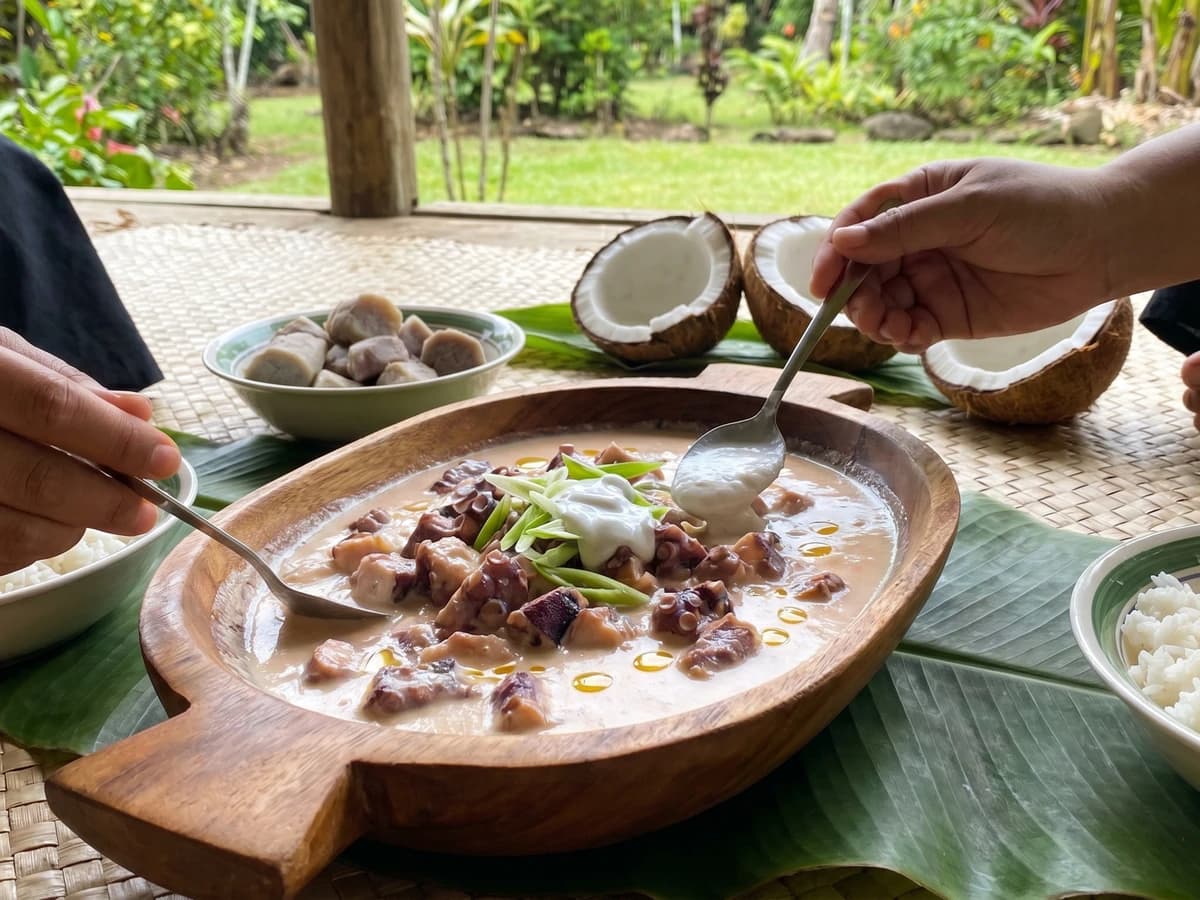
Tonga's loʻi feke takes reef octopus slow in coconut cream, onion, and tomato until the meat gives under the spoon and the sauce turns rich enough for rice, talo, or ʻulu.
Chef Makoa
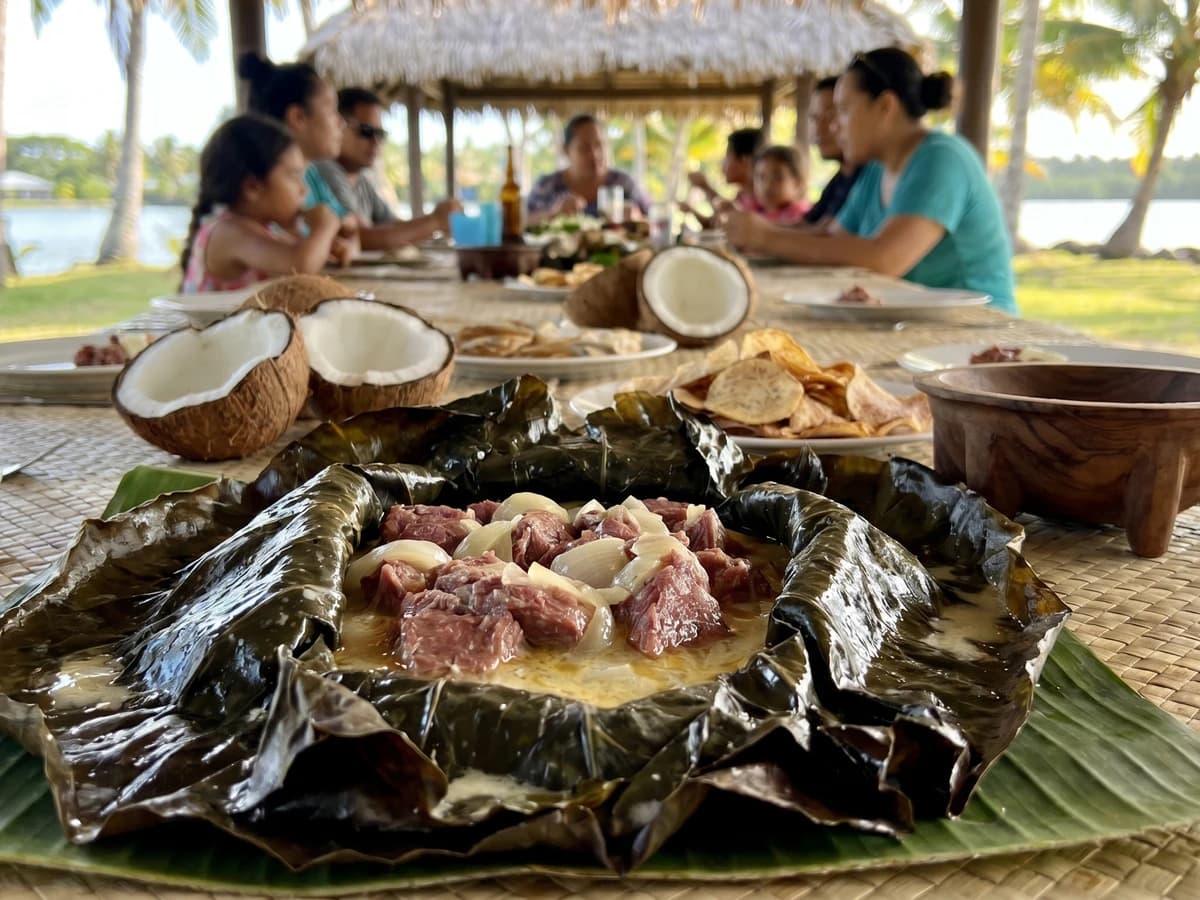
Tonga's lū pulu folds taro leaves around corned beef, onion, and lolo niu coconut cream, then bakes it slow until leaf and meat turn soft, dark, and rich.
Chef Makoa
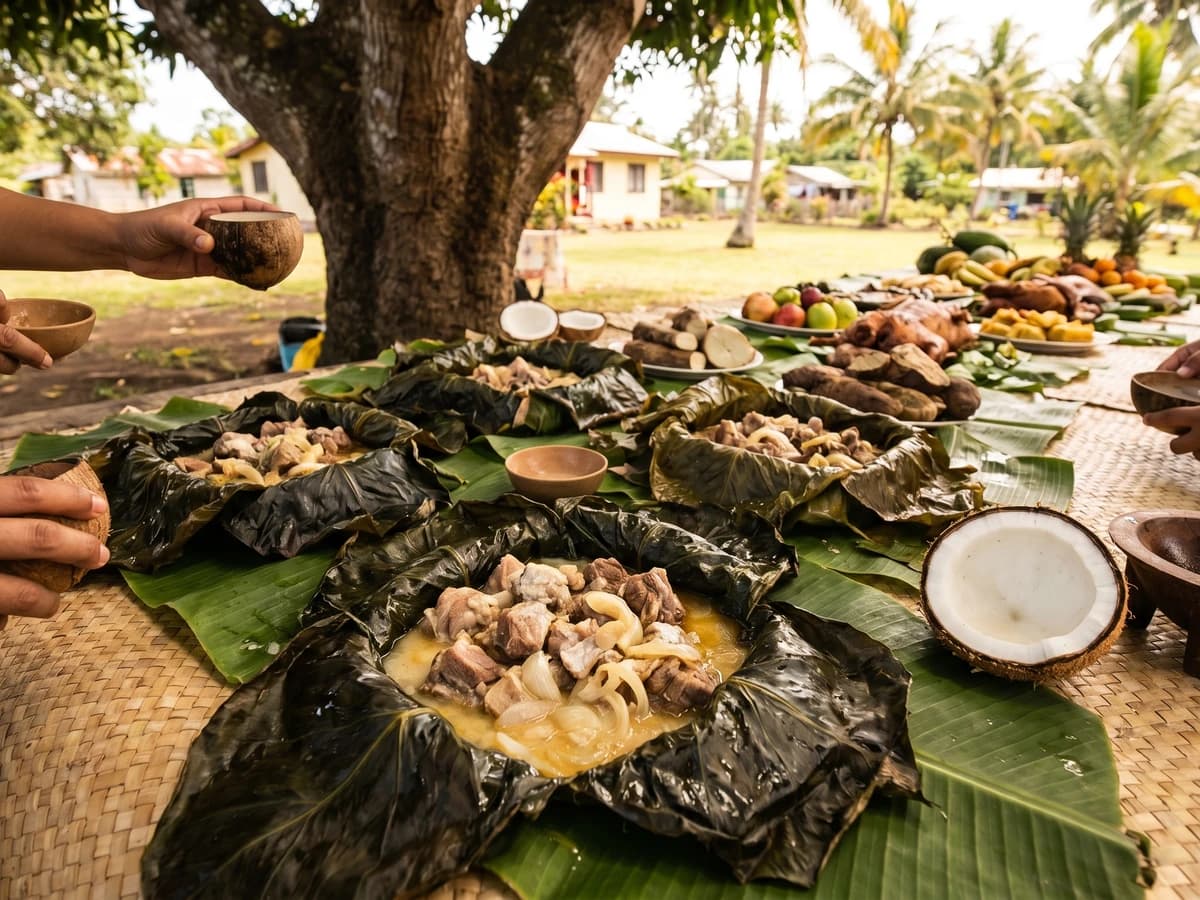
Tonga's lū sipi wraps young taro leaves around fatty mutton, onion, and coconut cream, then cooks it slow until the leaf goes dark and the meat gives up soft.