Chef Makoa
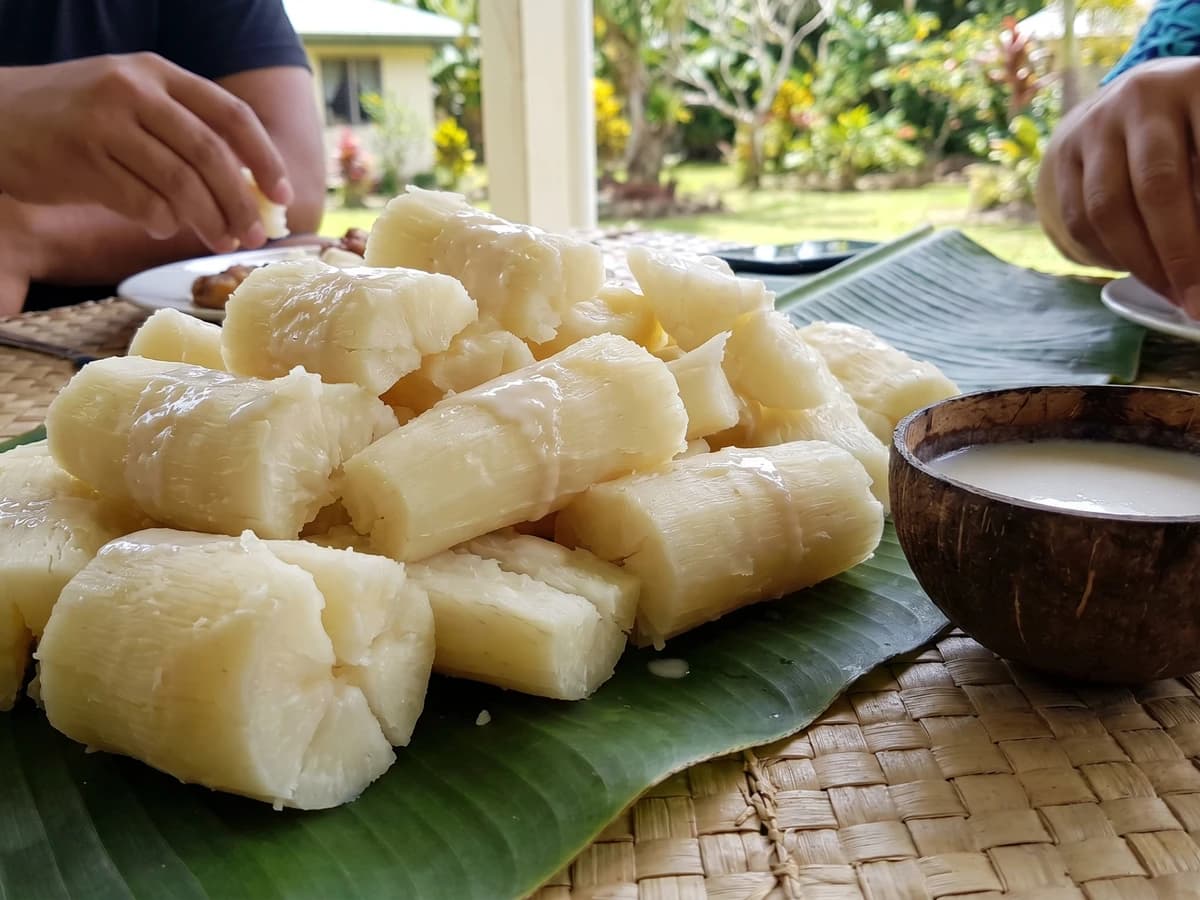
Manioke (Tongan Boiled Cassava)
Tonga's weeknight root, boiled until dense, clean, and nutty, manioke feeds the table first. The sipi, feke, or corned beef is only the occasion on top.
A cooking platform built around craft, culture, and the stories behind what we eat.

Created by
Tonga's everyday green, lau pele, folds soft into coconut cream with onion and salt, a weeknight bowl that still remembers the umu, the garden, and the family table.
The first time a Tongan auntie set lau pele in front of me, she didn't make it grand. Just rice, fish, this green shining with coconut cream, and everybody reaching in like the bowl already knew their names. Lau means leaf, and pele is the soft Tongan spinach, that edible hibiscus green many homes keep close because it feeds people without making noise about itself.
This is Tonga's hand, and I say that clear. It sits in the same family gesture as Sāmoan palusami, Cook Islands rukau, Tahitian fāfā, and back home in Hawaiʻi the lūʻau leaf and laulau. Leaf, coconut, heat, patience. One ocean, one canoe, one root, but never one plain dish. Each island has its own way of feeding the people.
For lau pele you don't need ceremony. You need a pot, a good handful of greens, coconut cream, onion, and enough time for the leaf to lose its raw edge and go soft. Fresh coconut cream carries the soul of the western islands' food, but a thick can on a weeknight is no shame. Eat what you have. No need make it precious.
Serve it beside rice, grilled fish, roast chicken, corned beef, or the Sunday meats when they come. The feast has its place, and the everyday bowl has its own dignity. ʻĀina, kānaka, meaʻai, land, people, food, all sitting close.
Pele, often called Tongan spinach or edible hibiscus, is part of the household green vocabulary of Tonga and the wider western Pacific, where coconut cream turns simple leaves into filling food. Across Polynesia, leaf-and-coconut dishes speak to the canoe-crop world: Sāmoan palusami, Tongan lū, Cook Islands rukau, Tahitian fāfā, and Hawaiian lūʻau all use the same deep grammar without becoming the same dish. Lau pele is everyday Tonga, the weeknight side that stands beside the chiefly feast foods without needing to pretend it is ceremony.
Quantity
1 pound
washed, thick stems removed, tender stems kept
Quantity
1 tablespoon
Quantity
1 medium
thinly sliced
Quantity
2 cloves
finely chopped
Quantity
1 1/2 cups
fresh if possible or canned
Quantity
3/4 teaspoon
plus more to taste
Quantity
1/4 teaspoon
Quantity
1 small
diced
| Ingredient | Quantity |
|---|---|
| fresh pele leaves (Tongan spinach or edible hibiscus)washed, thick stems removed, tender stems kept | 1 pound |
| neutral oil or coconut oil | 1 tablespoon |
| onionthinly sliced | 1 medium |
| garlic (optional)finely chopped | 2 cloves |
| thick coconut creamfresh if possible or canned | 1 1/2 cups |
| sea saltplus more to taste | 3/4 teaspoon |
| freshly cracked black pepper (optional) | 1/4 teaspoon |
| tomato (optional)diced | 1 small |
Wash the lau, the leaves, in a few changes of cool water until no grit sits in the bowl. Strip out any woody stems, but keep the tender young stems because they soften sweet in the coconut cream. Tear the big leaves once or twice with your hands. No need for perfect ribbons.
Warm the oil in a wide heavy pot over medium heat. Add the onion and cook 4 to 5 minutes, stirring, until it turns sweet and slack but not brown. Add the garlic if you're using it and let it smell warm, about 30 seconds.
Pile in the pele by handfuls, turning it through the onion as it collapses. It will look like too much, then all at once it gives. Cook 3 to 4 minutes, until the leaves are glossy, deep green, and soft enough to settle into the pot.
Pour in the coconut cream and season with the salt and pepper. Lower the heat so the cream only trembles at the edge, then cook 10 to 15 minutes, stirring now and then, until the greens are tender and the cream thickens enough to coat the spoon. Don't boil it hard. Coconut cream gets rough when you bully it.
Fold in the tomato if you want that little bright bite, then taste. Add salt only until the coconut tastes round and the leaf tastes like itself. The finished lau pele should be soft, creamy, and glossy, not watery.
Spoon the lau pele into a shared bowl and set it beside rice, fish, chicken, or whatever the house is eating. This is comfort food, budget food, family food. The kind that doesn't announce itself, then somehow everybody goes back for more.
1 serving (about 185g)
Culinary guides, cultural storytelling, and the editorial depth that makes cooking meaningful.
Discover Culinary ExplorerChef Makoa
Tonga's weeknight root, boiled until dense, clean, and nutty, manioke feeds the table first. The sipi, feke, or corned beef is only the occasion on top.
Chef Makoa
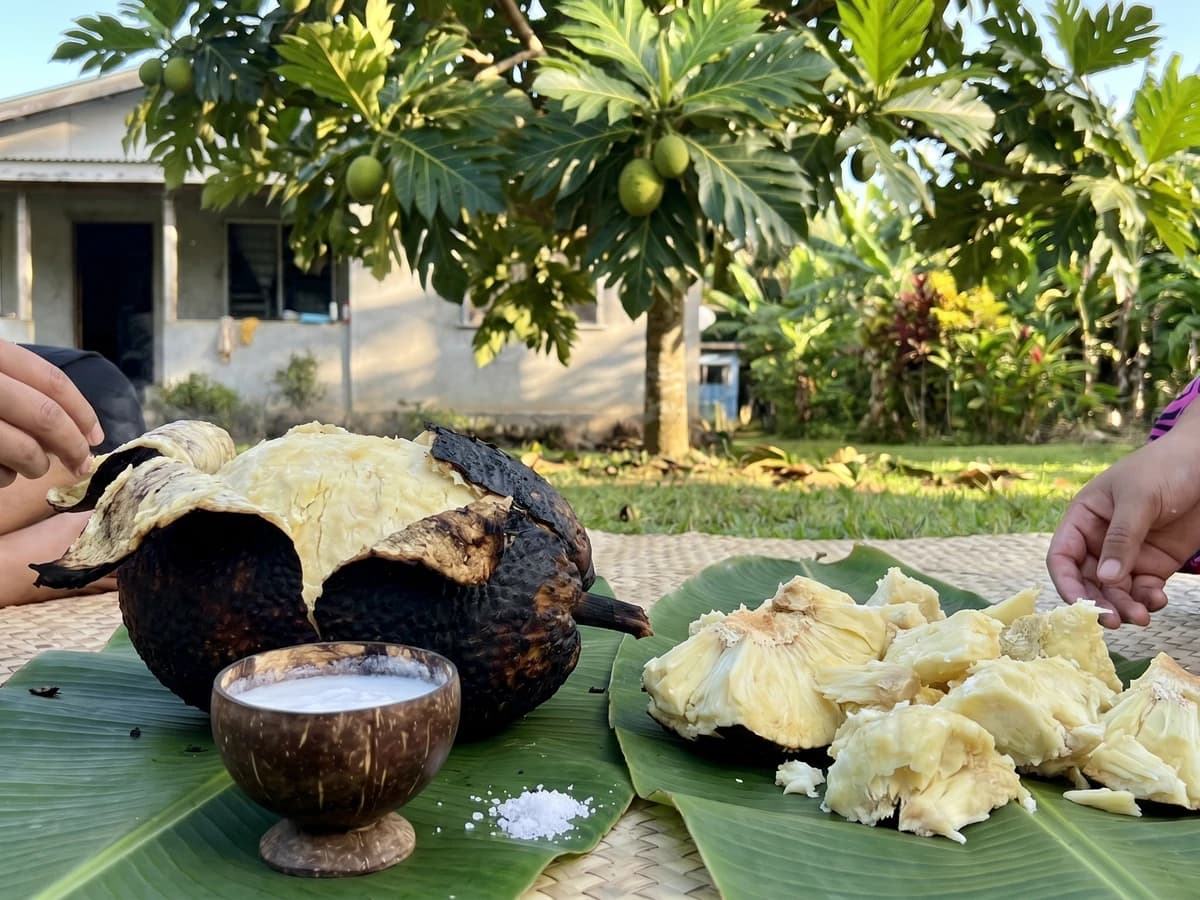
Tonga's mei, breadfruit, roasted whole until the skin goes black and the flesh inside turns creamy and smoky, ready for salted coconut cream and a family spread.
Chef Makoa
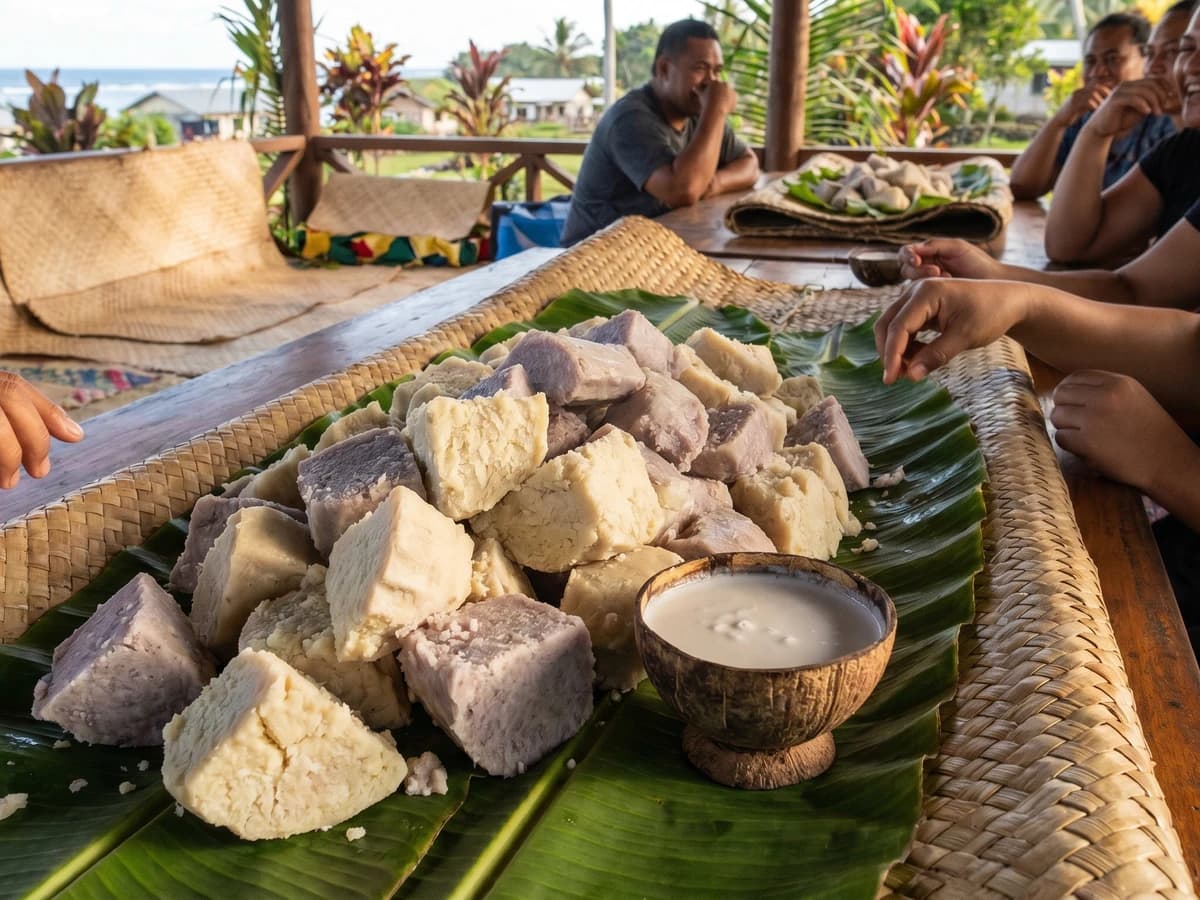
Tonga's talo, steamed slow until the corm turns dense, nutty, and softly lavender-grey, the quiet staple under the Tongan taro-leaf parcel lū pulu, fresh fish, or corned beef.
Chef Makoa
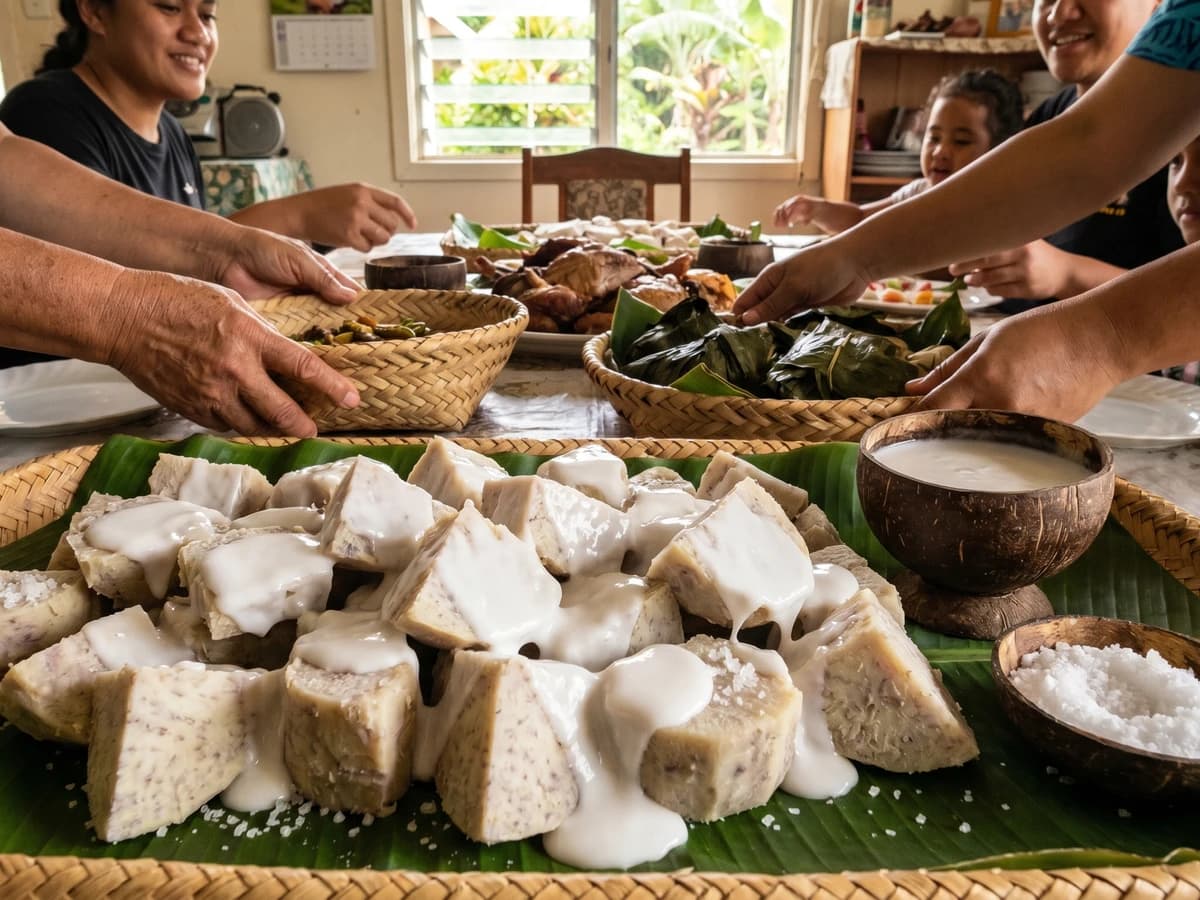
Tonga's prized garden yam, boiled in its own quiet time until dense and tender, then eaten with lolo niu, coconut cream, salt, and whatever the family table is carrying.