Chef Juliette
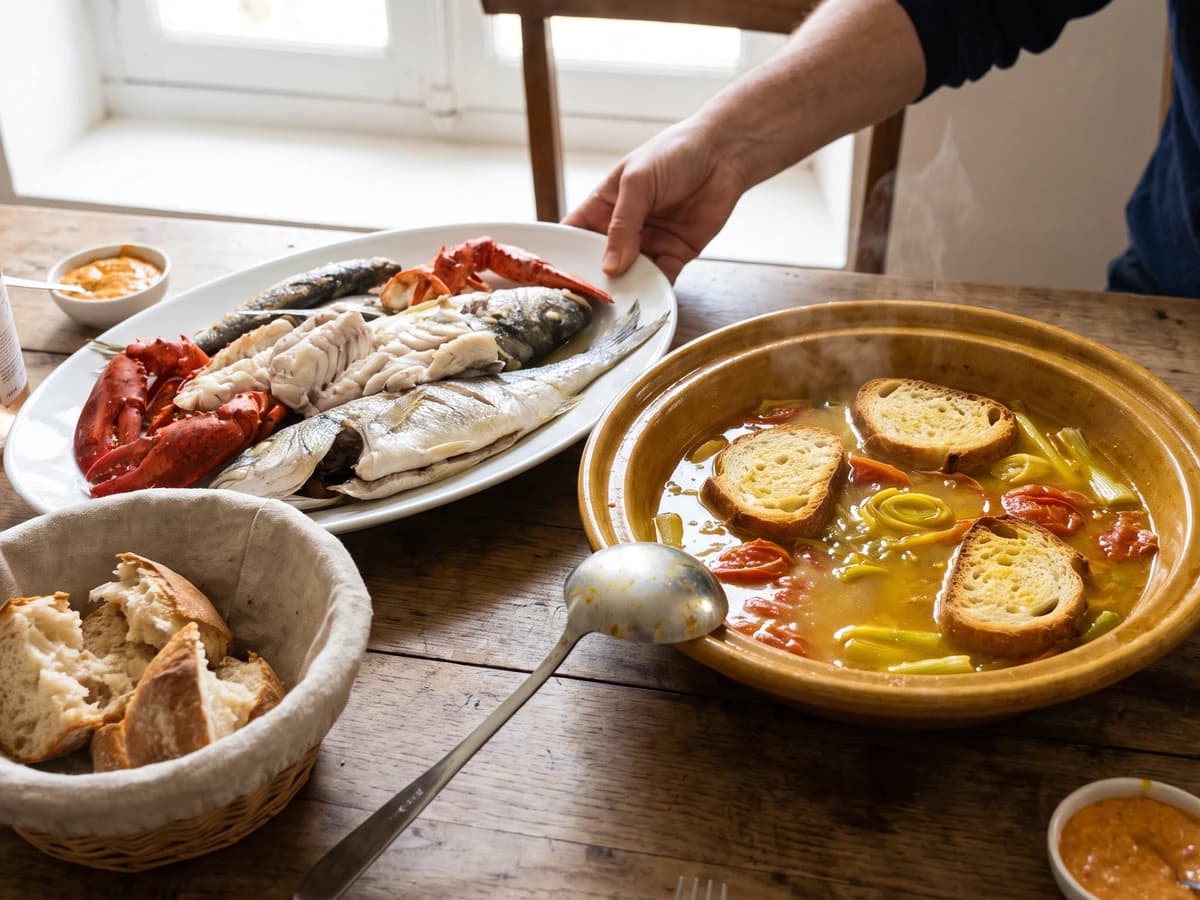
Bouillabaisse à la Marseillaise
Marseille's great fish stew, saffron-gold and garlic-scented, proves that a hard boil can be the careful choice: it binds olive oil into broth before the whole pot meets bread.
A cooking platform built around craft, culture, and the stories behind what we eat.
Created by
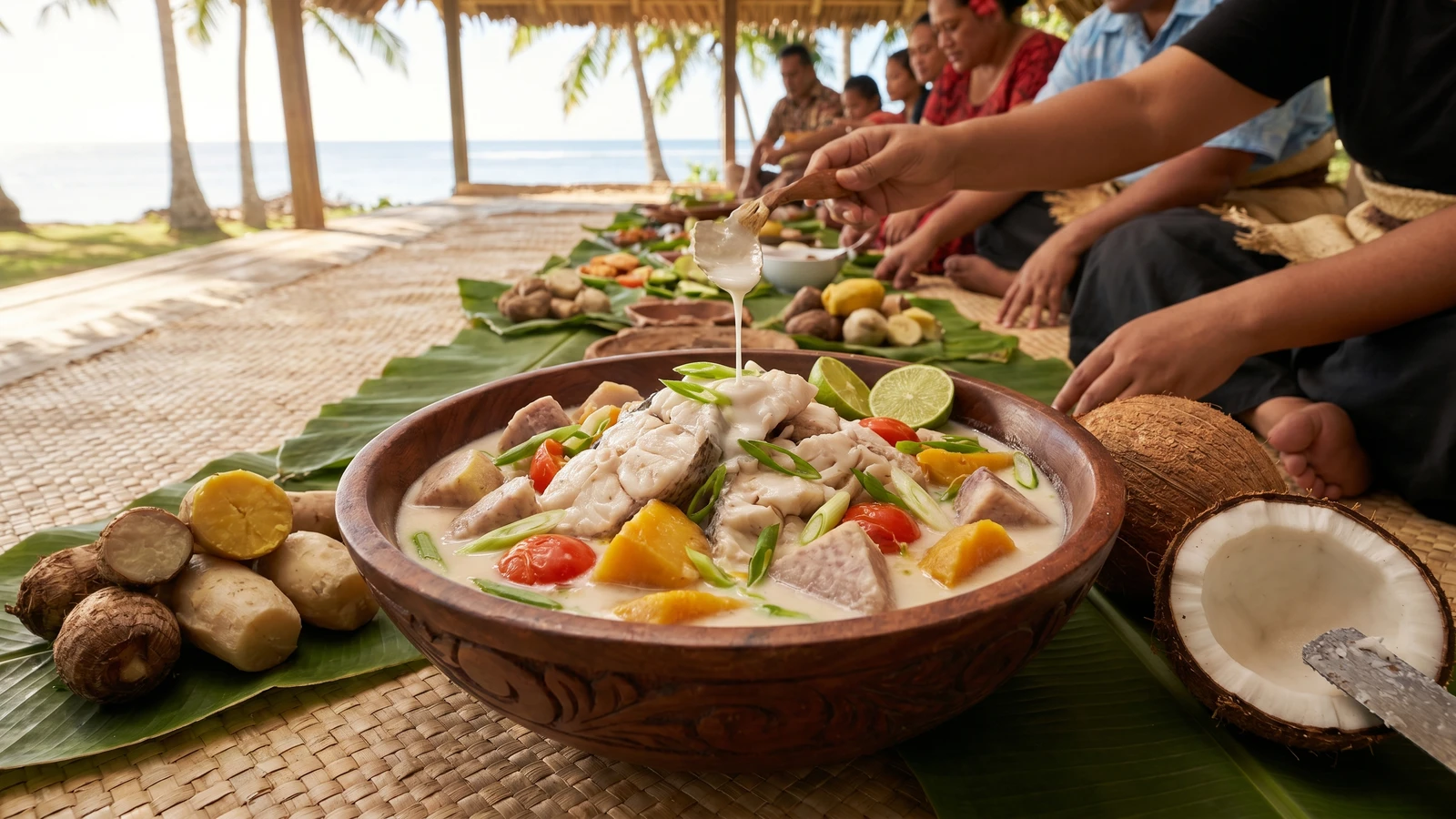
Tonga's kalapu lolo brings firm fish, lolo coconut cream, talo, ʻufi, and kumala into one gentle pot, the lagoon and the garden feeding the same table.
The ocean feeds you, the fonua (land) holds you, and at a Tongan table those two relatives meet in the pot. Kalapu lolo is Tonga's fish stew in lolo, coconut cream, with talo (taro), ʻufi (yam), kumala (sweet potato), or whatever root crop the house has ready. I learned to keep my mouth shut and watch when a Tongan auntie set it down, because the bowl already knew more than me.
The roots go first because the garden keeps slower time than the fish. Talo needs to give all the way through, ʻufi wants patience, kumala softens quick, and then the fish comes in gentle at the end so it flakes instead of breaks. The lolo ties them together. The lagoon and the garden speak one coconut language in a single pot.
No such thing as plain Polynesian food on a plate. Tonga has its own hand. The same ocean gives Sāmoa oka, Tahiti ʻia ota, the Cook Islands ika mata, Hawaiʻi poke, and Tonga ʻota ʻika, same fish, different bowl. Kalapu lolo is the cooked cousin, richer and quieter, made for comfort and for a spread where the root crops sit heavy and good.
Squeeze the coconut cream fresh if you can. That's where the old people will hear you. But if it's Tuesday night and the can is what you have, use it with a clean heart. For the deeper feast work, the order of the pola, the prayer, the duties of the family, go sit with Tongan elders. This dish is Tonga's, and I cook it with my hands open.
Around 900 BCE, Lapita voyagers reached Tonga, and over centuries the western Polynesian table grew from reef fish, coconut, talo (taro), ʻufi (yam), mei (breadfruit), and other canoe crops rooted in the fonua (land). By the Tuʻi Tonga chiefdom, from about the 10th century CE, food carried political and sacred order; the ʻinasi (first-fruits tribute), especially the presentation of yams, made ʻufi more than a starch. Kalapu lolo belongs to the everyday side of that same grammar: lagoon fish, coconut cream, and root crops in one pot, living today beside rice, sapasui, tinned fish, and corned beef.
Quantity
1 1/2 pounds
cut into 2-inch pieces
Quantity
1 1/2 teaspoons
divided, plus more to taste
Quantity
1
juiced, plus wedges for serving
Quantity
1 tablespoon
Quantity
1 large
thinly sliced
Quantity
2
lightly crushed
Quantity
2
chopped
Quantity
2 cups
peeled and cut into 1 1/2-inch chunks
Quantity
1 1/2 cups
peeled and cut into 1 1/2-inch chunks
Quantity
1 1/2 cups
peeled and cut into 1 1/2-inch chunks
Quantity
2 cups
Quantity
2 cups
squeezed from grated mature coconut, or one 13.5-ounce can thick coconut cream plus water to make 2 cups
Quantity
2 cups
torn
Quantity
2
thinly sliced, for serving
| Ingredient | Quantity |
|---|---|
| firm white fish fillets or steakscut into 2-inch pieces | 1 1/2 pounds |
| sea saltdivided, plus more to taste | 1 1/2 teaspoons |
| lime or lemonjuiced, plus wedges for serving | 1 |
| coconut oil or neutral oil | 1 tablespoon |
| onionthinly sliced | 1 large |
| garlic cloves (optional)lightly crushed | 2 |
| ripe tomatoeschopped | 2 |
| talo (taro)peeled and cut into 1 1/2-inch chunks | 2 cups |
| ʻufi (yam), manioke (cassava), or firm mei (breadfruit)peeled and cut into 1 1/2-inch chunks | 1 1/2 cups |
| kumala (sweet potato)peeled and cut into 1 1/2-inch chunks | 1 1/2 cups |
| fish stock or water | 2 cups |
| fresh lolo (coconut cream)squeezed from grated mature coconut, or one 13.5-ounce can thick coconut cream plus water to make 2 cups | 2 cups |
| pele leaves, water spinach, or baby spinach (optional)torn | 2 cups |
| green onionsthinly sliced, for serving | 2 |
Set the fish pieces in a shallow dish and season them with 1/2 teaspoon of the salt and the lime or lemon juice. Let them sit cold while the roots begin cooking, just long enough to wake the fish up. This is not ʻota ʻika, Tonga's raw fish in coconut and citrus, so no bury it in acid. The fish still has to taste like the ocean.
Warm the oil in a heavy pot over medium heat. Add the onion, garlic if you're using it, and tomatoes, and cook until the onion relaxes and the tomatoes give up their juice, about 5 minutes. You are not browning hard here. You are making a soft place for the roots and fish to land.
Add the talo and the ʻufi, manioke, or mei to the pot with the fish stock or water and 1 teaspoon of salt. Bring it to a steady simmer, cover, and cook for 10 minutes. The dense roots go first because they need time to give. No blame the taro if it stays hard. You rushed it.
Add the kumala, cover again, and simmer 10 to 12 minutes more, until all the root crops are nearly tender but not falling apart. The broth should smell sweet from the roots and savory from the onion and tomato.
Lower the heat and pour in the lolo, the coconut cream. Stir once, gently, then let the pot come back to a quiet simmer. Do not boil it hard or the cream can split and the fish will tighten. Fresh lolo carries the soul of this western Polynesian food, but a good can does the weeknight work, yeah, eat what you have.
Nestle the fish pieces into the coconut broth in one layer if you can. Cover and cook on low for 7 to 10 minutes, until the fish is opaque in the center and flakes with gentle pressure. Shake the pot instead of stirring hard. The fish is a relative in there, not gravel.
If using pele, water spinach, or baby spinach, fold it through during the last 2 to 3 minutes, just until glossy and tender. Taste the broth for salt and a little more lime or lemon. It should be round with coconut, clean with fish, and grounded by the talo and ʻufi.
Let the pot rest 5 minutes so the lolo settles around the fish and roots. Spoon it into a deep wooden bowl or straight from the pot, scatter green onion over the top, and pass lime or lemon wedges at the table. This is Tonga's bowl, generous and unfussy, enough for one more.
1 serving (about 430g)
Culinary guides, cultural storytelling, and the editorial depth that makes cooking meaningful.
Discover Culinary ExplorerChef Juliette
Marseille's great fish stew, saffron-gold and garlic-scented, proves that a hard boil can be the careful choice: it binds olive oil into broth before the whole pot meets bread.
Chef Juliette
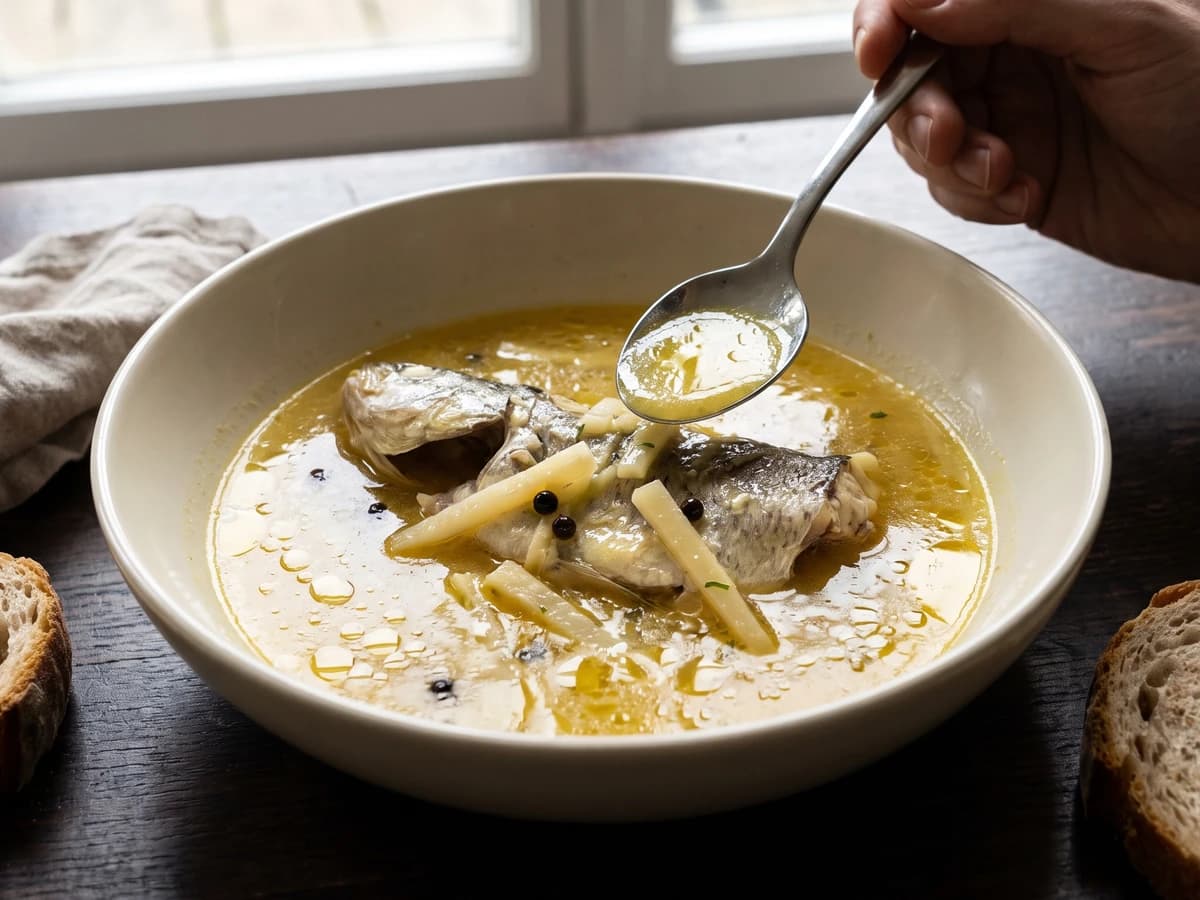
Waterzoi asks fresh, bone-in river fish to thicken its own buttery broth, with parsley root and pepper for company. No flour, no stockpot, just a brisk simmer watched closely.
Chef Juliette
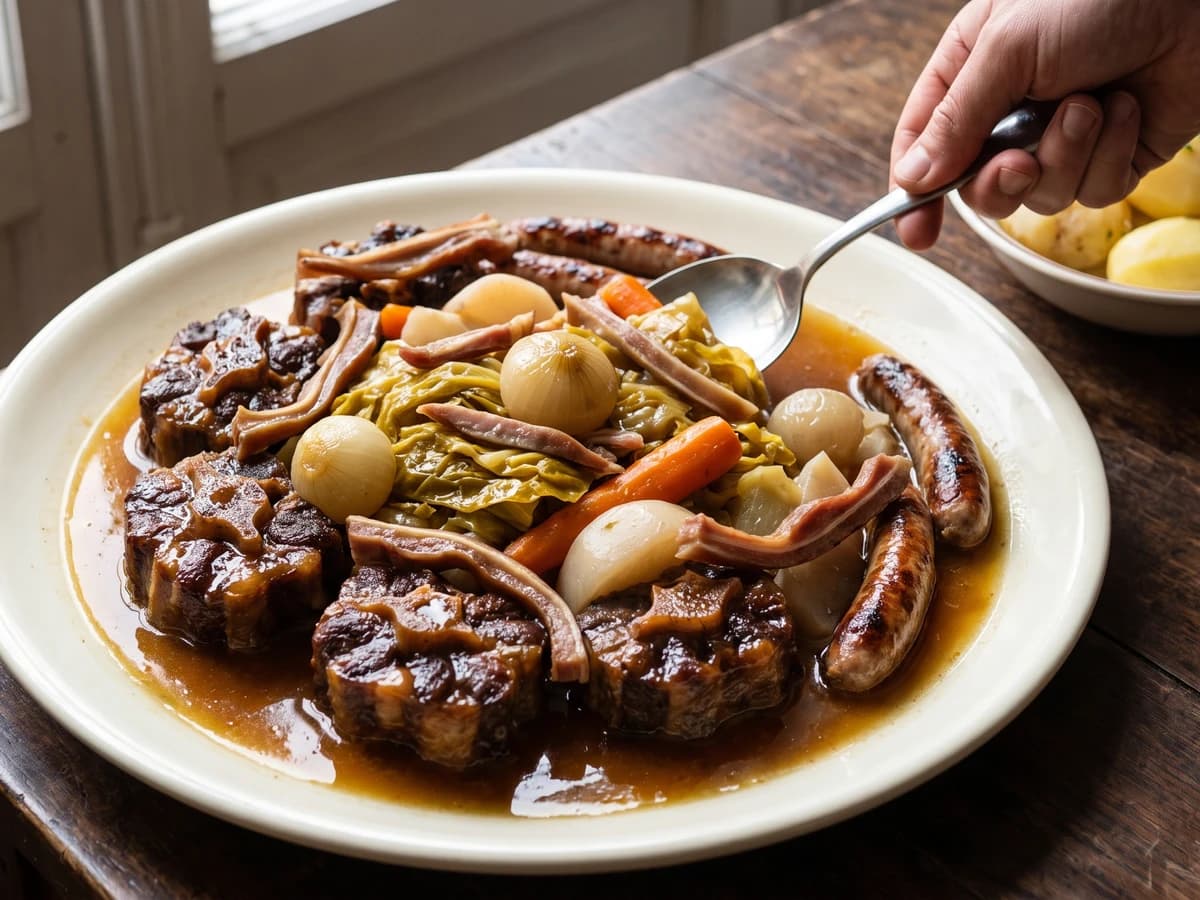
Queue de Bœuf en Hochepot gathers oxtail, pig's trotter and ear, cabbage, roots, and grilled chipolatas around a clear, gelatin-rich broth whose quiet simmer keeps every piece tender and distinct.
Chef Juliette
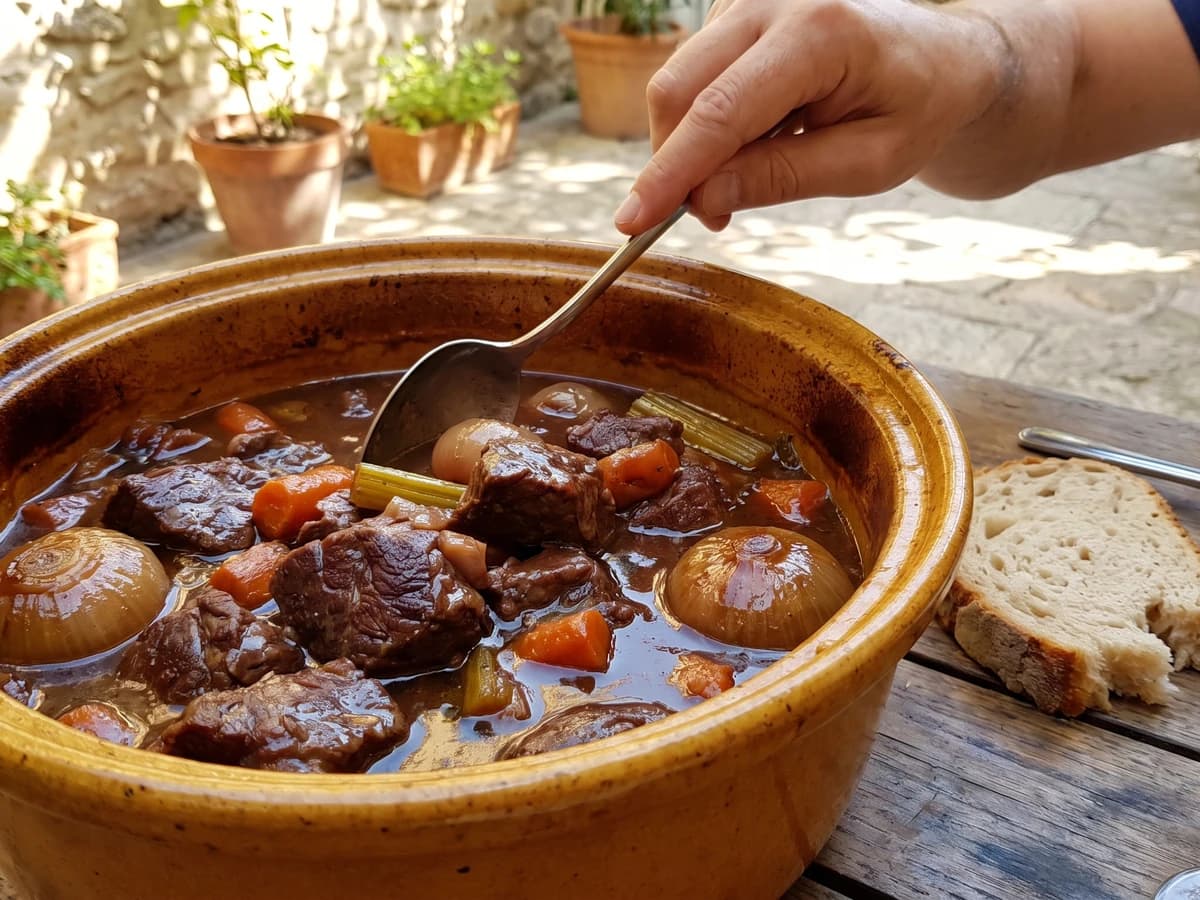
Beef shoulder larded with bacon, sharpened by red wine and vinegar, then sealed with garlic, vegetables, and dry lemon peel until the low oven turns it yielding and the gravy darkly glossy.