Chef Makoa
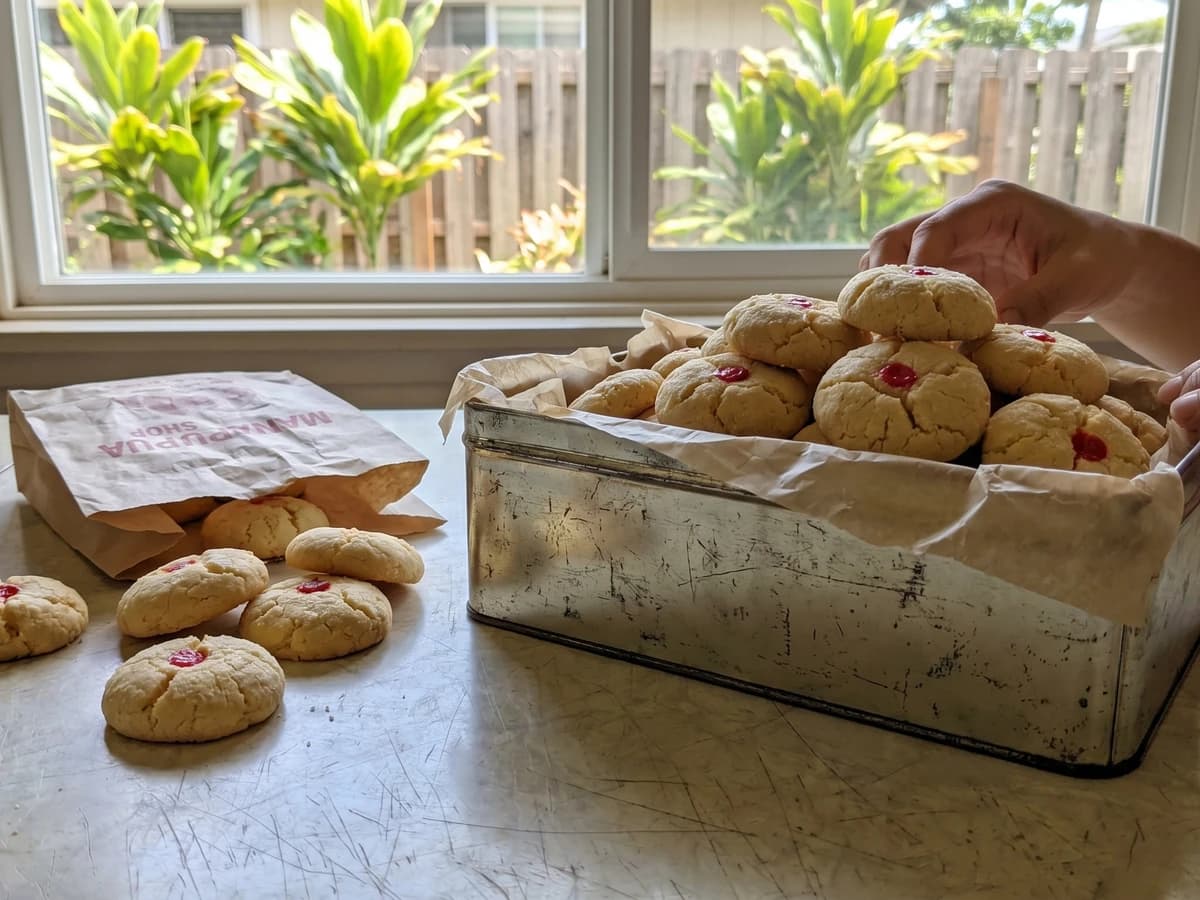
Chinese Almond Cookies (Hawaiʻi Local Red-Dot Cookies)
Buttery, sandy Chinese almond cookies from Hawaiʻi's Local table, marked with the lucky red dot, the kind you found in a bakery case, a manapua man's box, or a holiday tin.
A cooking platform built around craft, culture, and the stories behind what we eat.
Created by
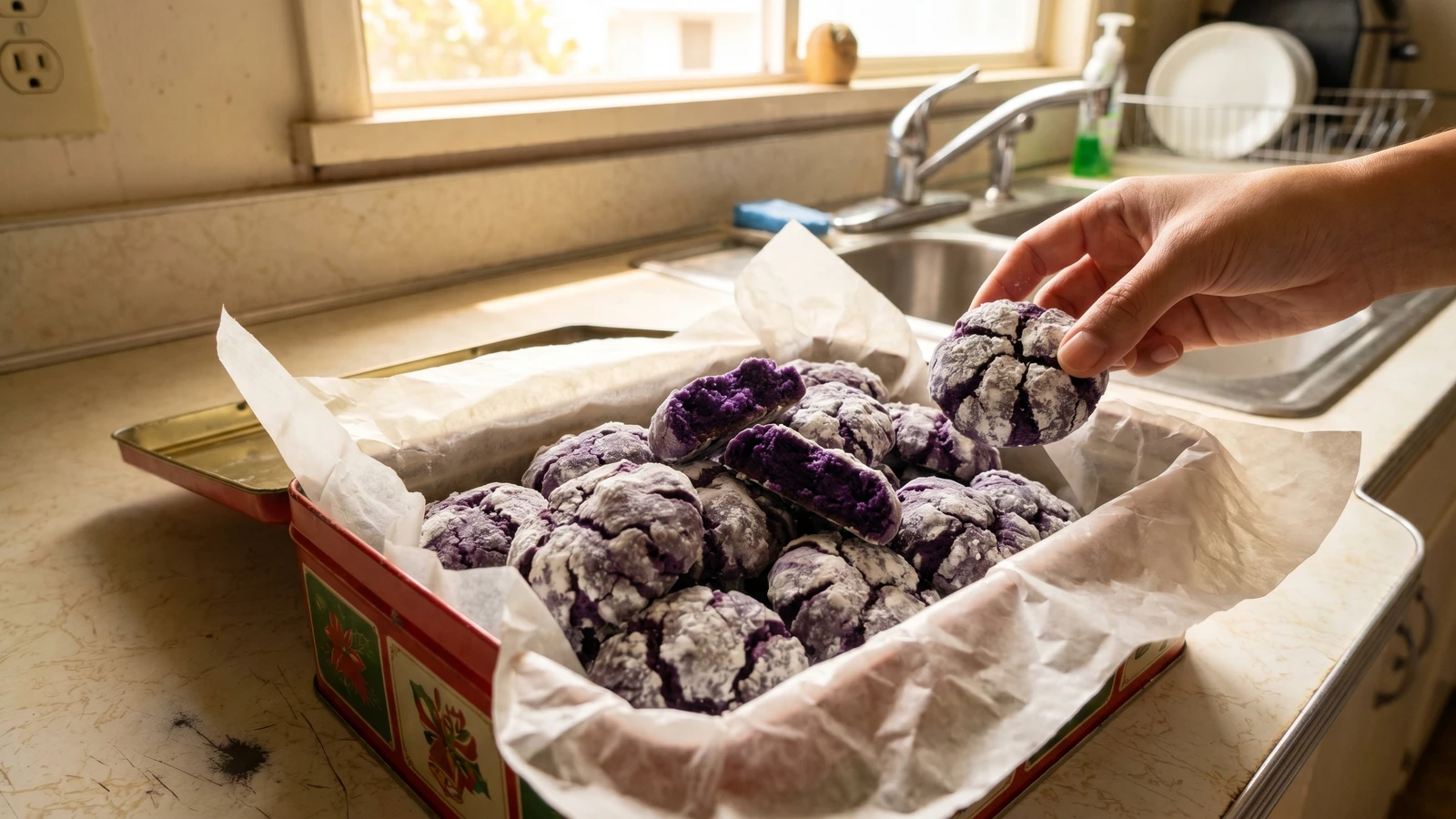
Filipino ube meets the Hawaiʻi Local cookie tin: purple yam, butter, and a snowy sugar coat baked into soft, chewy crinkles for the party table.
The cookie tin on the Formica table tells a different kind of genealogy. Not the loʻi, not the imu, not the deep food of Hāloa, but still kinship. Hawaiʻi took in Portuguese ovens, Japanese mochi hands, Okinawan andagi, Chinese gau, Filipino hopia, and the everyday sweets became Local because the people became neighbors, aunties, uncles, cousins by table if not by blood.
These ube crinkle cookies belong to that Hawaiʻi Local register, with a Filipino hand clear in the purple yam, the ube, and the bakery sweetness that followed Filipino families across the water. I don't claim that root as mine. Philippines food belongs to Filipino people, and they should tell the deepest story of it. Here in Hawaiʻi, though, you see ube in pan de sal, cake rolls, ice cream, butter mochi, and now these crackled cookies at graduations, baby parties, office potlucks, and Christmas tins.
So we cook it easy. Butter for richness, ube halaya for body, ube extract for that strong purple bakery color, then a long chill so the dough stops acting like paste and starts behaving like cookie dough. Roll it heavy in powdered sugar. Bake it only until the edges set and the centers stay soft. No need make it precious. Just name whose hand brought it, feed the room, and leave the tin open.
Ube, the purple yam central to many Filipino sweets, came into Hawaiʻi through Filipino migration tied especially to the plantation labor era that began in 1906, when sakadas, Filipino contract workers, arrived to work the sugar fields. Ube crinkle cookies are a newer Filipino and Filipino-diaspora bakery form, borrowing the American crinkle-cookie shape and filling it with a flavor that Filipino families already knew from halaya, cakes, and ice cream. In Hawaiʻi they sit honestly in the Local sweet table beside malasadas, mochi, and butter mochi, not as Kanaka Maoli deep food, but as proof that the islands keep taking in new hands.
Quantity
1 1/2 cups
Quantity
1 teaspoon
Quantity
1/2 teaspoon
Quantity
1/2 cup
softened
Quantity
3/4 cup
Quantity
1/2 cup
Quantity
1
room temperature
Quantity
1 teaspoon
Quantity
1 to 2 teaspoons
to taste and color
Quantity
1/2 cup
for rolling
| Ingredient | Quantity |
|---|---|
| all-purpose flour | 1 1/2 cups |
| baking powder | 1 teaspoon |
| fine sea salt | 1/2 teaspoon |
| unsalted buttersoftened | 1/2 cup |
| granulated sugar | 3/4 cup |
| ube halaya (Filipino purple yam jam) | 1/2 cup |
| large eggroom temperature | 1 |
| vanilla extract | 1 teaspoon |
| ube extractto taste and color | 1 to 2 teaspoons |
| powdered sugarfor rolling | 1/2 cup |
Whisk the flour, baking powder, and salt together in a bowl until there are no little pockets hiding. That even mix is what lets the cookie rise into cracks instead of baking up heavy in the middle.
Beat the softened butter and granulated sugar until the mixture looks lighter and a little fluffy, about 2 minutes by mixer or a few strong minutes by hand. Don't melt the butter. You want it soft enough to give, not shiny and oily.
Beat in the ube halaya until the butter turns purple and smooth, then beat in the egg, vanilla, and ube extract. The dough should smell like sweet yam and vanilla, with that Filipino bakery note right up front. Start with 1 teaspoon extract, then add more if you want the color deeper.
Add the dry mix and fold just until the flour disappears. Stop there. The dough will be soft and sticky, almost too soft to trust, but no panic. The chill is going to firm it up.
Cover the bowl and chill the dough at least 2 hours, or overnight if that fits your day better. This step keeps the cookies thick and chewy and gives the powdered sugar a chance to crack clean instead of melting into the surface.
Heat the oven to 350F and line baking sheets with parchment. Scoop the dough into 1 1/2 tablespoon balls, roll them smooth, then coat each one heavily in powdered sugar until no purple shows through. Heavy coat, yeah. That's what makes the crackle.
Set the dough balls 2 inches apart and bake 10 to 12 minutes, until the cookies puff, crack, and look set around the edges while the centers still look soft. Don't wait for browning, because purple cookies lie to you. Pull them while they still have a little give.
Let the cookies sit on the hot pan for 5 minutes so the centers finish setting, then move them to a rack. They should be soft in the middle, lightly chewy at the edge, and snowy on top with purple showing through the cracks. Pack them in a tin once cool, and put them where hands can reach.
1 serving (about 28g)
Culinary guides, cultural storytelling, and the editorial depth that makes cooking meaningful.
Discover Culinary ExplorerChef Makoa
Buttery, sandy Chinese almond cookies from Hawaiʻi's Local table, marked with the lucky red dot, the kind you found in a bakery case, a manapua man's box, or a holiday tin.

Chef Makoa
A Hawaiʻi Local bakery pie from Oʻahu: firm coconut haupia over chocolate cream in a flaky shell, chilled clean, topped with soft whipped cream.

Chef Makoa
Honolulu bakery-case comfort: crisp choux puffs filled with soft chocolate pudding and capped with Hawaiʻi-style Chantilly, the buttery cooked frosting that belongs to Oʻahu birthdays, office boxes, and after-school hands.

Chef Makoa
The Oʻahu home-tin cookie, buttery and crackly with cornflakes and rice cereal, baked by aunties for Christmas exchanges, church potlucks, and one more cousin reaching across the table.