
Chef Makoa
Chocolate Haupia Cream Pie (Hawaiʻi Local Coconut Pudding Pie)
A Hawaiʻi Local bakery pie from Oʻahu: firm coconut haupia over chocolate cream in a flaky shell, chilled clean, topped with soft whipped cream.
A cooking platform built around craft, culture, and the stories behind what we eat.
Created by
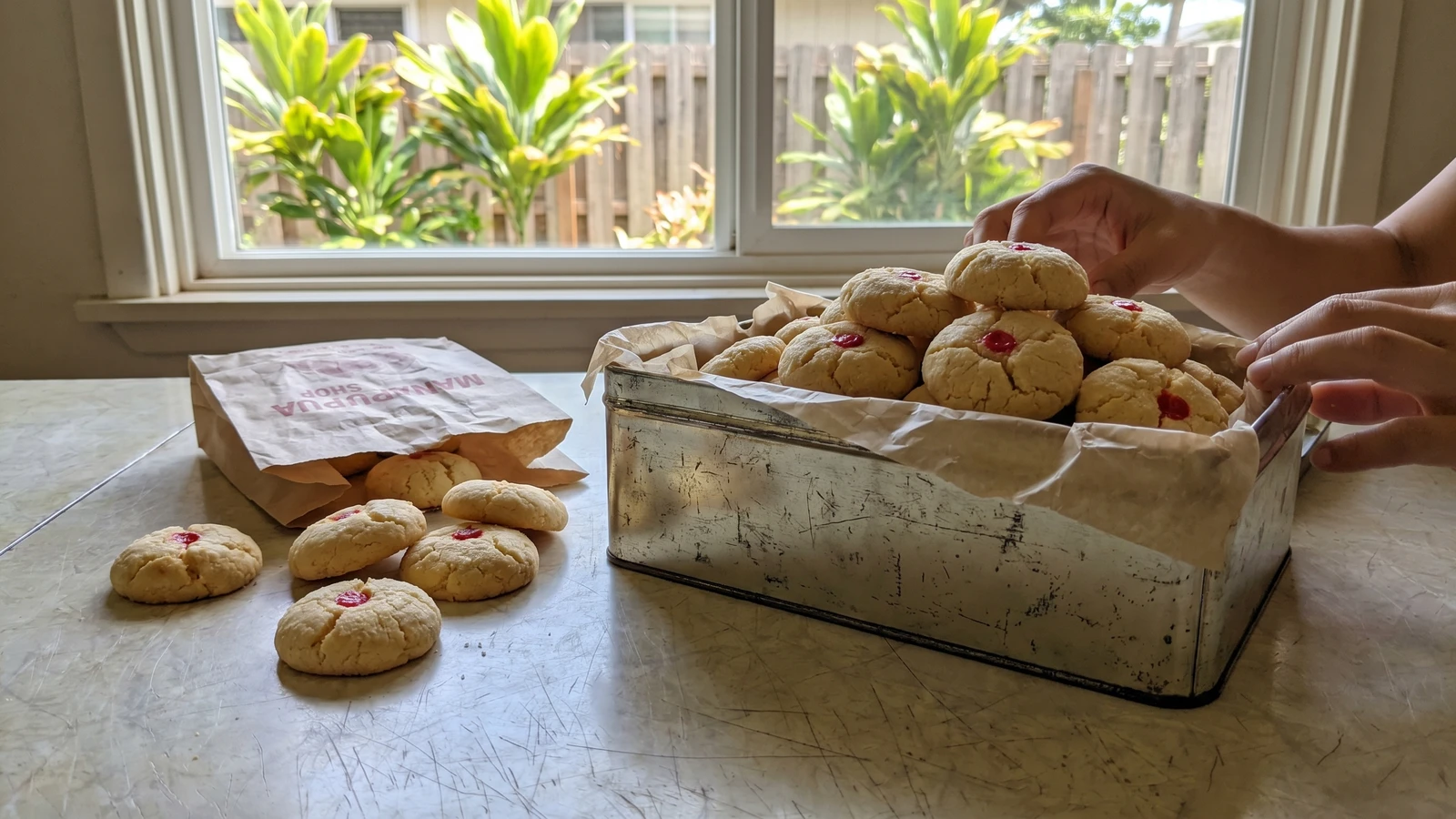
Buttery, sandy Chinese almond cookies from Hawaiʻi's Local table, marked with the lucky red dot, the kind you found in a bakery case, a manapua man's box, or a holiday tin.
The cookie tin is how a lot of Hawaiʻi aunties tell you you're family. It comes out from the cabinet already dented, wax paper folded back, and there they are: pale-gold Chinese almond cookies with the little red dot in the middle, enough for the cousins, enough for the kid who only came by to drop something off. This is Hawaiʻi Local food, from Chinese hands in the islands, not the deep food of the loʻi, the irrigated taro patch. Different side of the table. Still part of the table.
Back home on Oʻahu, we learn that ʻāina, kānaka, meaʻai (land, people, food) doesn't only mean the canoe crops. It also means the people who came to work the plantations, opened shops, fed each other between hard shifts, and left sweets that became everyday habits. The Portuguese malasada, Okinawan andagi, Filipino hopia, Chinese gau, and this almond cookie sit close in the holiday season. That's not one plain Polynesian plate. That's Hawaiʻi naming every hand.
Across the Triangle, the deep cousins still have their own names: Sāmoan palusami, Tongan lū, Cook Islands rukau, Hawaiian laulau. This cookie is not one of those canoe-root relatives, and I won't pretend it is. It is the later cousin that arrived and stayed: red dot for luck, almond smell in the kitchen, crumb under your thumb, a sweet from the Chinese restaurant counter and the manapua man's box brought forward into the home oven.
So keep the method unfussy. Shorten the dough with butter and shortening or lard, chill it so it holds, mark the dot clean, and don't bake the color out of it. The cookie should break soft and sandy, not hard. No need make it precious. Just make enough for one more.
Chinese laborers were recruited to Hawaiʻi's sugar plantations beginning in 1852, and Chinese families later built shops, restaurants, bakeries, and street-vendor routes that helped shape Hawaiʻi's Local food. The almond cookie is a Chinese American bakery and restaurant sweet with roots in southern Chinese and Cantonese pastry traditions, then carried through Hawaiʻi's Chinese restaurants, manapua vendors, and holiday cookie tins. It belongs to the Local register, not Kanaka Maoli deep food: the post-contact table where Chinese, Portuguese, Okinawan, Japanese, Filipino, and other immigrant hands sit alongside Hawaiian food without being blurred into one name.
Quantity
2 1/4 cups
spooned and leveled
Quantity
3/4 cup
Quantity
1/4 cup
Quantity
1 teaspoon
Quantity
1/2 teaspoon
Quantity
1/2 teaspoon
Quantity
1/2 cup
softened
Quantity
1/2 cup
softened
Quantity
3/4 cup
Quantity
1
room temperature
Quantity
1
room temperature
Quantity
1 1/2 teaspoons
Quantity
1/2 teaspoon
Quantity
1 large egg beaten with 1 teaspoon water
Quantity
a dab of gel or 3 to 4 drops
for the center dots
| Ingredient | Quantity |
|---|---|
| all-purpose flourspooned and leveled | 2 1/4 cups |
| finely ground almond flour | 3/4 cup |
| cornstarch | 1/4 cup |
| baking powder | 1 teaspoon |
| baking soda | 1/2 teaspoon |
| fine sea salt | 1/2 teaspoon |
| unsalted buttersoftened | 1/2 cup |
| vegetable shortening or leaf lardsoftened | 1/2 cup |
| granulated sugar | 3/4 cup |
| large eggroom temperature | 1 |
| large egg yolkroom temperature | 1 |
| almond extract | 1 1/2 teaspoons |
| vanilla extract | 1/2 teaspoon |
| egg wash | 1 large egg beaten with 1 teaspoon water |
| red gel food coloring or red liquid food coloringfor the center dots | a dab of gel or 3 to 4 drops |
Whisk the flour, almond flour, cornstarch, baking powder, baking soda, and salt in a bowl until the almond flour has no heavy lumps. The cookie wants a sandy, even crumb, so break up the little clumps now instead of chasing them later.
Beat the softened butter, shortening or lard, and sugar on medium speed until creamy and pale, about 2 minutes. Don't whip it like cake. The old bakery crumb is short, tender, and a little sandy under the teeth.
Beat in the egg, egg yolk, almond extract, and vanilla until the mixture looks smooth and smells strongly of almond. Scrape the bowl well. Almond extract is small but loud, yeah, so measure it instead of pouring from the bottle.
Add the dry mixture on low speed and mix just until the dough gathers into soft clumps. It should feel tender and a little oily from the shortening, not wet and sticky. Cover and chill 30 minutes so the fat settles and the cookies hold their round shoulders.
Heat the oven to 350F and line two rimmed baking sheets with parchment. Roll tablespoon-size portions into balls, set them 2 inches apart, and press each one gently into a thick round about 1/2 inch tall. Brush lightly with egg wash, just enough to leave a soft satin shine.
Dip the blunt end of a chopstick into the red food coloring and touch one clean dot in the center of each cookie. That's the red mark people look for in the tin, bright for luck and celebration, especially around New Year. Make a dot, not a puddle.
Bake 12 to 15 minutes, rotating the pan once, until the edges are pale gold and the tops are set with fine little cracks. They will still feel delicate. Let them sit on the pan 10 minutes before moving, because hot almond cookies break if you rush them.
Move the cookies to a rack and cool completely before stacking. Once the crumb firms and the almond smell settles, tuck them into a cookie tin with wax paper. Bring the tin out after dinner, or leave it on the table for whoever walks in. That's the Local way.
1 serving (about 24g)
Culinary guides, cultural storytelling, and the editorial depth that makes cooking meaningful.
Discover Culinary ExplorerChef Makoa
A Hawaiʻi Local bakery pie from Oʻahu: firm coconut haupia over chocolate cream in a flaky shell, chilled clean, topped with soft whipped cream.

Chef Makoa
Honolulu bakery-case comfort: crisp choux puffs filled with soft chocolate pudding and capped with Hawaiʻi-style Chantilly, the buttery cooked frosting that belongs to Oʻahu birthdays, office boxes, and after-school hands.

Chef Makoa
The Oʻahu home-tin cookie, buttery and crackly with cornflakes and rice cereal, baked by aunties for Christmas exchanges, church potlucks, and one more cousin reaching across the table.
Chef Makoa
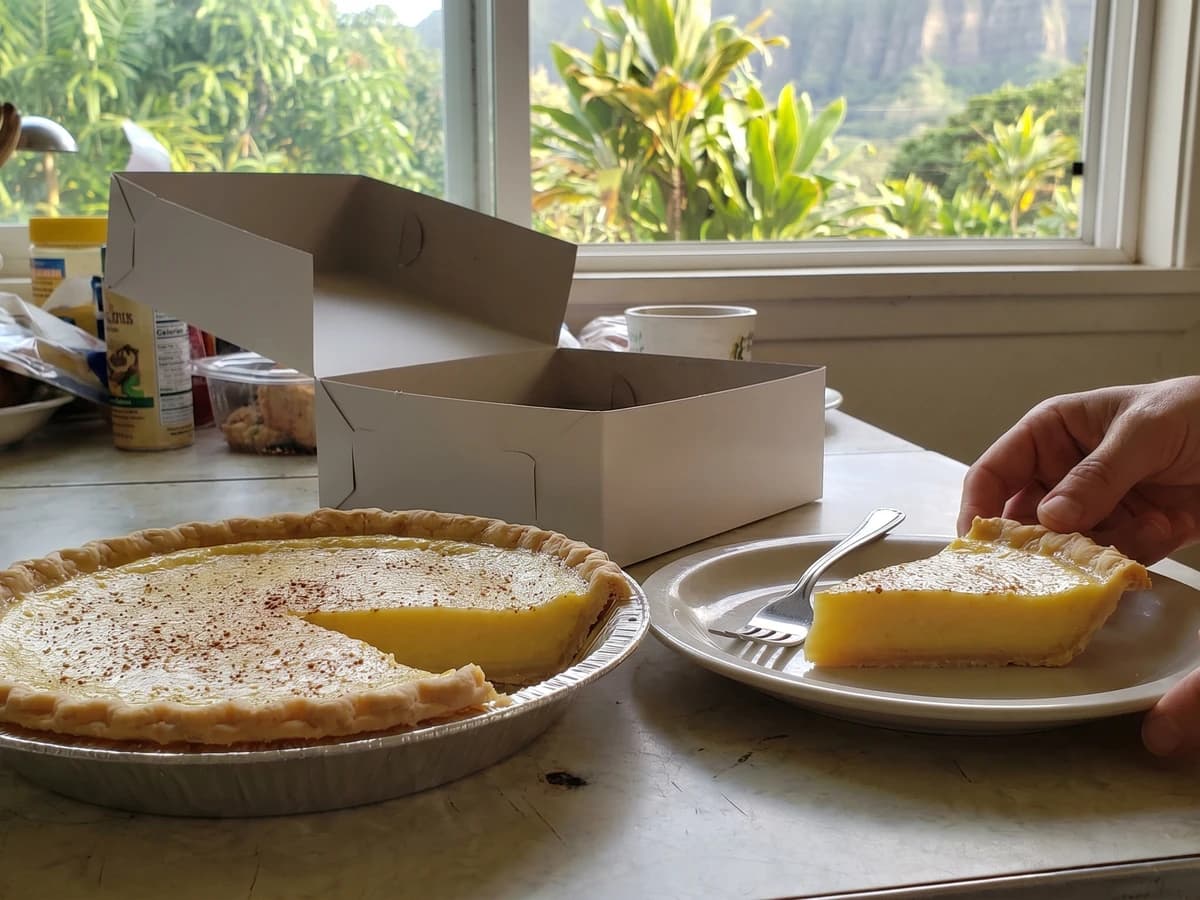
Hawaiʻi Local custard pie from the neighborhood bakery box: silky egg-and-evaporated-milk custard in a flaky crust, nutmeg freckles on top, the soft slice a grandparent kept ready for potluck and coffee.