
Chef Makoa
Nu (Cook Islands Young Coconut Water)
Cold Cook Islands nu, a green young coconut opened close to drinking, sweet water from the shell with soft flesh waiting after. Hawaiʻi calls the same cup niu.
A cooking platform built around craft, culture, and the stories behind what we eat.
Created by
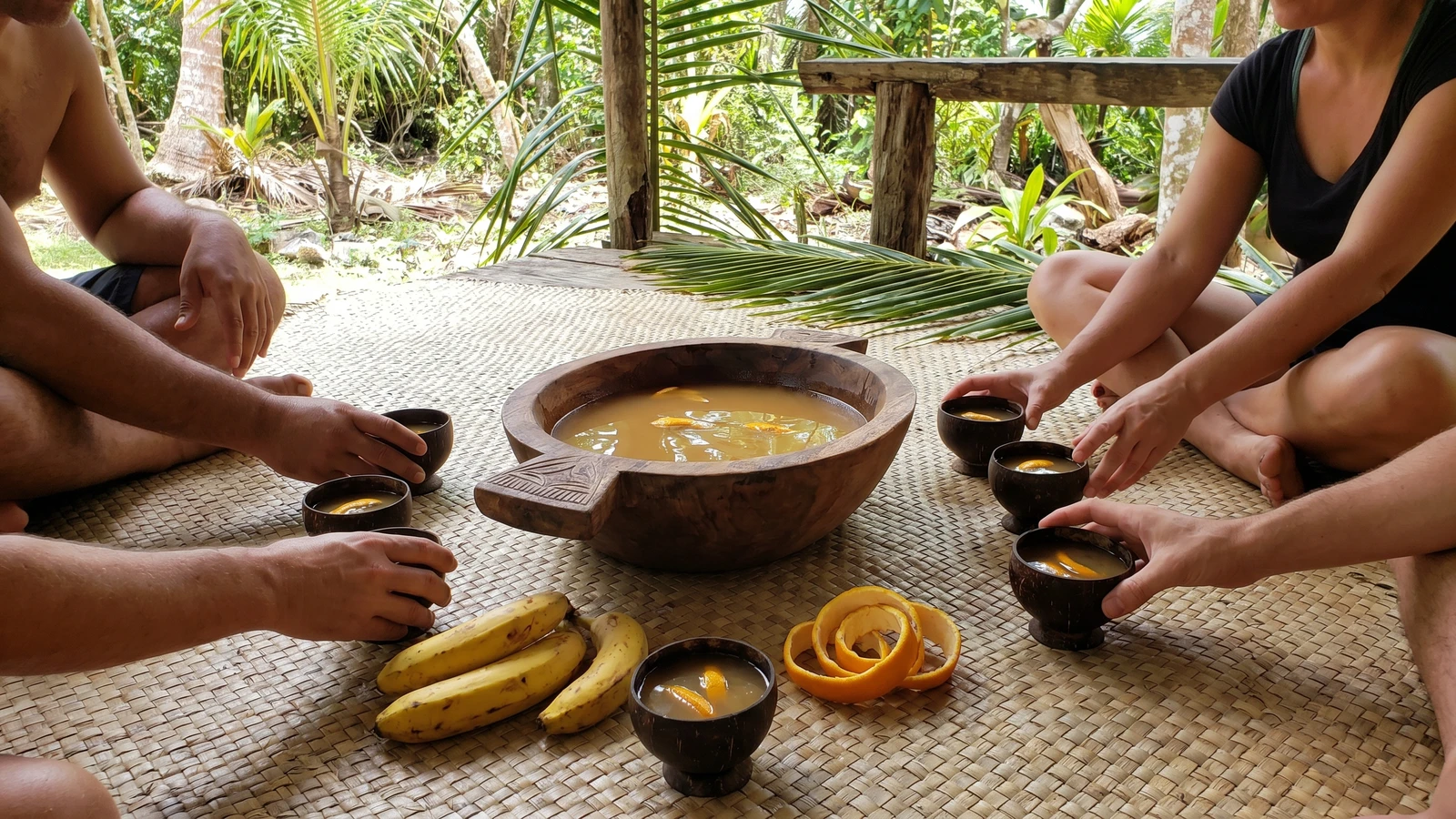
Atiu's bush-beer circle in a clean kitchen batch: citrus, banana, sugar, water, and yeast fermented light, served in small cups with respect for the people who keep the stump.
The stump has its own kind of kinship. Not Hāloa the taro elder, not the chiefly ʻava or kava root, but still a circle where people sit, listen, laugh, and remember who belongs. This is Tumunu from Atiu in the Cook Islands, the bush beer of that island's clubs, named for the hollowed stump where the drink was made and shared.
Tumunu is tied especially to Atiu in the Cook Islands, where bush-beer clubs grew around fermented orange and banana drink made and shared from a hollowed tree stump. The word tumunu refers to that stump or vessel, and the practice is often remembered alongside missionary-era pressure on older island drinking customs, when communal alcohol moved into the bush and into club circles. It is not the chiefly ʻava or kava round of Sāmoa, Tonga, Hawaiʻi, and other islands; same ocean of social drinking, different root, different vessel, different protocol.
Quantity
12 large
scrubbed
Quantity
2
peeled and mashed
Quantity
2 pounds
Quantity
2 gallons
divided
Quantity
1 packet, about 2 1/4 teaspoons
Quantity
1/4 cup
for body
Quantity
1 teaspoon
| Ingredient | Quantity |
|---|---|
| sweet orangesscrubbed | 12 large |
| ripe bananaspeeled and mashed | 2 |
| white sugar | 2 pounds |
| clean non-chlorinated waterdivided | 2 gallons |
| ale yeast or wine yeast | 1 packet, about 2 1/4 teaspoons |
| raisins (optional)for body | 1/4 cup |
| yeast nutrient (optional) | 1 teaspoon |
Wash and sanitize a 3-gallon food-safe fermenting bucket, lid, spoon, strainer, and any cups or bottles you will use. Atiu's old stump belongs to Atiu, so in a home kitchen we use clean gear and good sense. No airtight glass jar for active fermentation, yeah? Pressure can build and break it.
Zest 4 of the oranges in wide strips, avoiding the bitter white pith, then juice all the oranges. Add the juice, zest, mashed banana, sugar, raisins if using, and 1 gallon of water to the fermenting bucket. Stir until the sugar dissolves and the liquid smells bright, sweet, and a little green from the peel.
Add enough remaining water to reach about 2 gallons total, then stir in the yeast nutrient if using. The liquid should be room temperature, not hot. Sprinkle in the yeast, stir once, and cover with a lid fitted with an airlock or with a clean cloth secured tight.
Ferment at cool room temperature, about 68F to 75F, for 2 to 4 days. Stir with a sanitized spoon once a day. It should bubble, smell citrusy and yeasty, and lose some of its heavy sweetness. If it smells rotten, moldy, or sharp in a bad way, don't save face. Throw it out.
Strain out the orange peel, banana pulp, and raisins through a sanitized fine strainer or cloth. Let the tumunu settle cold for a few hours if you want it clearer, or serve it cloudy the way a living home brew often is. Taste before serving; it should be lightly alcoholic, tangy, fruity, and still gentle.
Serve chilled in small cups, passed and shared, never treated like a hollow party trick. This is Cook Islands, Atiu's hand, and for the real tumunu club order, the songs, the speech, the manners of the circle, go to the people of Atiu who carry it. They should tell their own story.
1 serving (about 345g)
Culinary guides, cultural storytelling, and the editorial depth that makes cooking meaningful.
Discover Culinary ExplorerChef Makoa
Cold Cook Islands nu, a green young coconut opened close to drinking, sweet water from the shell with soft flesh waiting after. Hawaiʻi calls the same cup niu.

Chef Juliette
Bavaroise turns the ribbon stage into a drink: yolks and sugar, boiling tea and milk, and Kirsch whisked into a light crown of foam. Keep the whisk moving, and the café comes home.

Chef Juliette
Bischoff turns Champagne, tilleul, citrus, and brandy into pale-gold granité, coarse enough to sparkle under the spoon. The scraping makes the texture, and the timer becomes your smallest member of the brigade.

Chef Juliette
Café glacé is coffee taught by texture: dark, sweet, vanilla-softened, and churned only until it moves like loose snow. Stop before ice cream, pour into cold cups, and take it outside.