Tsïkanarhikatas P'urhépechas con Charal y Chile Perón
Created by
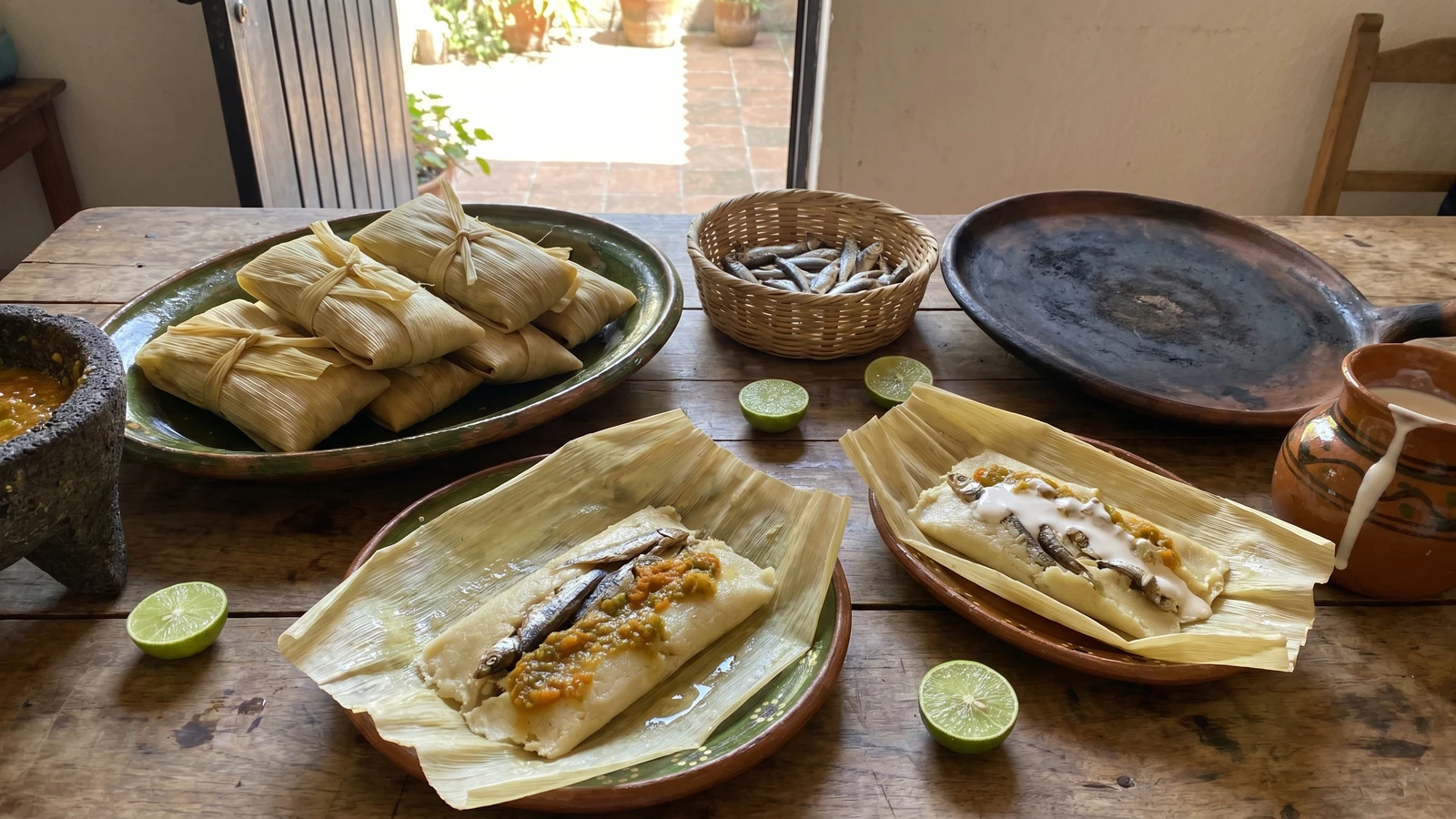
From the Meseta P'urhépecha of Michoacán, these small tamales wrap larded nixtamal masa, Pátzcuaro charal, and chile perón salsa in fresh maize leaves from the plant.
Appetizers & Snacks
Mexican
Special Occasion
Make Ahead
1 hr 10 min
Active Time
1 hr cook•2 hr 10 min total
Yield18 small tamales
Michoacán, in the Meseta P'urhépecha above Uruapan and toward Pátzcuaro, is where this dish lives. The state is the map. The P'urhépecha kitchen is the authority. Tsïkanarhikatas are not just tamales with a hard name. They belong to the Tarasca lineage that was here before the Mexica tried and failed to swallow this region.
The wrapper matters first: hoja de maíz fresca de la planta, the green maize leaf cut from the plant, not the dry husk you buy in a supermarket bag. The masa is masa nixtamalizada, softened with manteca de cerdo until it holds air. The filling here carries charal from the lake world of Pátzcuaro and chile perón, the thick-fleshed yellow chile with black seeds that vendors in some markets call manzano. Those black seeds are not decoration. They tell you you bought the right chile.
I learned to ask for the P'urhépecha name before I asked for the recipe. Corunda, uchepo, jahuácata, chápata, nacatamal, toquera, tsïkanarhikata. The outside world says tamal as if one word can hold all of them. It cannot. Each has its masa, its leaf, its fold, its day, and its women who keep it alive.
The cocineras tradicionales around Uruapan, Pátzcuaro, and the Meseta are the transmission. They are the archive. My mother's notebook from Jalisco did not have this word, and that is exactly the point: Mexican cuisine has 32 faces, and inside Michoacán the P'urhépecha face has its own language. Saber cocinar es saber vivir.
The P'urhépecha state, centered at Tzintzuntzan on Lake Pátzcuaro, resisted Mexica expansion before the Spanish arrival in the 1520s, and its language remains a language isolate with no proven relation to Nahuatl. The 2010 UNESCO inscription of Traditional Mexican Cuisine used the Michoacán paradigm and recognized community cooks, including cocineras tradicionales, as central to the transmission of milpa, nixtamal, and ceremonial cooking knowledge. Charales, small silverside fish of the Chirostoma genus including Chirostoma jordani, have long been part of the lacustrine diet around Pátzcuaro and Chapala, and their presence in tamales marks a lake-and-Meseta foodway, not a generic national filling.
The technique, the tradition, and the story behind every dish.
rinsed; 6 leaves torn into thin strips for tying; not dried corn husks
fresh masa nixtamalizada de maíz blanco or maíz criollo
Quantity
2 pounds
for tamales
manteca de cerdo
Quantity
3/4 cup
at room temperature, never shortening
sal de grano or fine sea salt
Quantity
1 1/2 teaspoons, plus more to taste
warm water
Quantity
1 to 1 1/4 cups
as needed for the masa
dried charales de Pátzcuaro (Chirostoma jordani et al.)
Quantity
1 cup
picked over and quickly rinsed
fresh chile perón, also sold as chile manzano
Quantity
3 to 4
stems removed, black seeds kept or partly removed
tomatillos milperos or small tomatillos
Quantity
1 pound
husked and rinsed
garlic cloves
Quantity
2
unpeeled
white onion
Quantity
1/4 medium
manteca de cerdo
Quantity
2 tablespoons
for frying the salsa and charales
fresh epazote
Quantity
2 sprigs
leaves chopped
crema de rancho (optional)
Quantity
1/2 cup
for serving
lime halves (optional)
Quantity
for serving
Ingredient
Quantity
hoja de maíz fresca de la plantarinsed; 6 leaves torn into thin strips for tying; not dried corn husks
24 leaves
fresh masa nixtamalizada de maíz blanco or maíz criollofor tamales
2 pounds
manteca de cerdoat room temperature, never shortening
3/4 cup
sal de grano or fine sea salt
1 1/2 teaspoons, plus more to taste
warm wateras needed for the masa
1 to 1 1/4 cups
dried charales de Pátzcuaro (Chirostoma jordani et al.)picked over and quickly rinsed
1 cup
fresh chile perón, also sold as chile manzanostems removed, black seeds kept or partly removed
3 to 4
tomatillos milperos or small tomatilloshusked and rinsed
1 pound
garlic clovesunpeeled
2
white onion
1/4 medium
manteca de cerdofor frying the salsa and charales
2 tablespoons
fresh epazoteleaves chopped
2 sprigs
crema de rancho (optional)for serving
1/2 cup
lime halves (optional)
for serving
Equipment Needed
•Comal de barro darkened by leña, or a cast iron comal
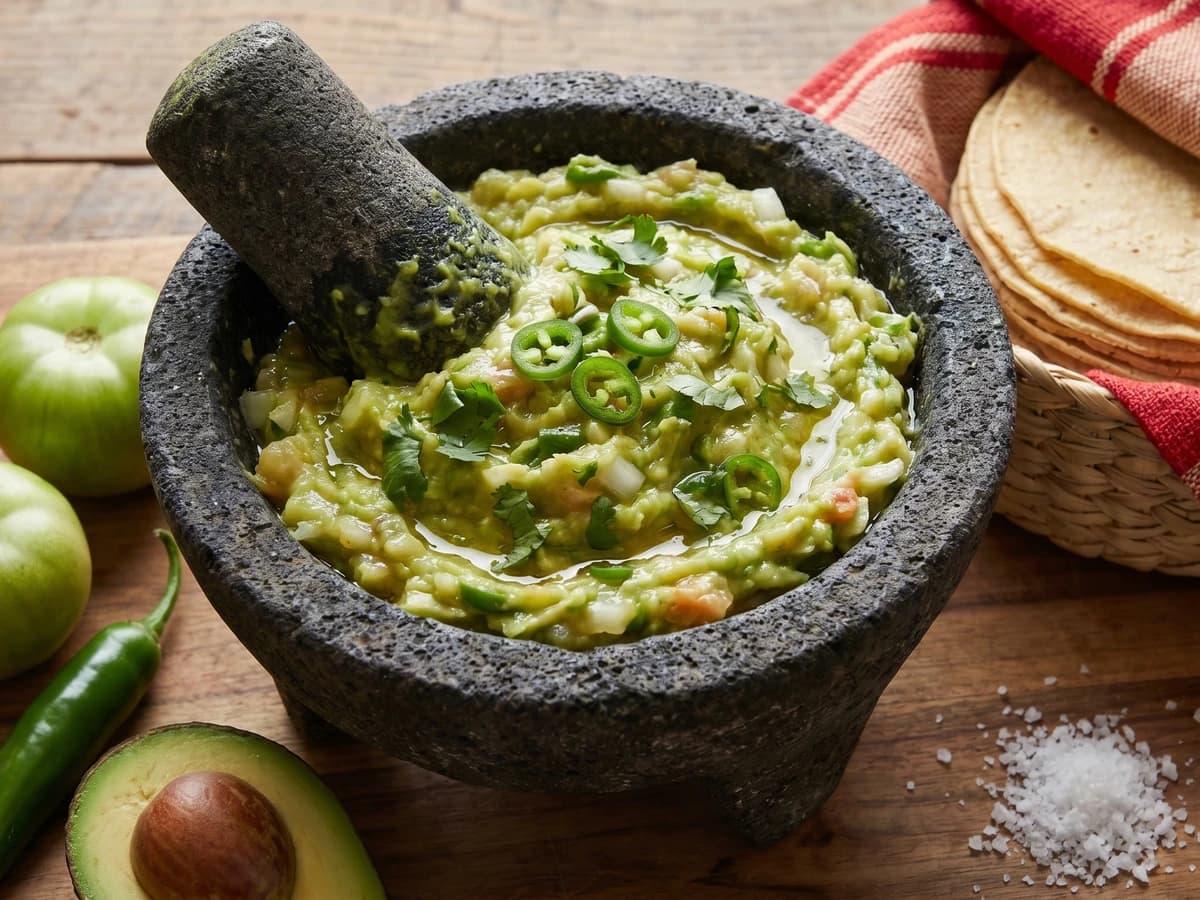
•Volcanic stone molcajete for chile perón salsa
•Tamalera or vaporera with a tight lid
•Wide clay cazuela from Capula or Patamban for frying the filling
•Cotton servilleta for keeping the fresh maize leaves pliable
Instructions
1
Soften the leaves
Work with hoja de maíz fresca de la planta, the green leaf from the maize plant, not dried corn husk. Rinse the leaves and pass them over a warm comal de barro or cast iron comal for 10 to 15 seconds per side, just until they bend without cracking. Keep them under a damp servilleta while you work. Tear the narrowest leaves into strips for tying.
2
Toast the charales
Pick through the dried charales and remove any grit. If they are very salty, rinse them quickly and pat them dry. Set a comal over medium heat and toast the charales for 2 to 3 minutes, moving them with your fingers or a wooden spoon, until they smell clean, nutty, and lake-sweet. Do not blacken them. Charal is small, and small fish punishes laziness fast.
Good charal smells like salt, clean water, and dried fish. If it smells rancid or like old oil, do not cook with it. Si no conoces el mercado, no conoces la cocina.
3
Make the salsa
Roast the tomatillos, chile perón, garlic, and onion on the comal until the tomatillos turn olive green with browned spots, the chile skins blister, and the garlic softens inside its paper. Peel the garlic. In a molcajete, grind the salt and garlic first, then the chile perón, then the onion, then the tomatillos. Leave the salsa with body. A blender works only if you pulse it. This is not a thin green soup.
Chile perón, called chile manzano in some markets, has black seeds. That is how you know it. If the vendor gives you serrano, she is selling you another chile.
4
Fry the filling
Melt 2 tablespoons manteca de cerdo in a small clay cazuela over medium heat. Add about half the chile perón salsa and fry it for 4 to 5 minutes, stirring, until the color deepens and the fat shines at the edge. Add the toasted charales and chopped epazote. Cook 2 minutes more, just enough to coat the fish. Keep the charales whole. This is filling, not paste. Reserve the remaining salsa for serving.
5
Beat the masa
In a wide bowl, beat the room-temperature manteca de cerdo with the salt until it looks creamy and lighter. Add the masa nixtamalizada in handfuls, working it with your fingers or a wooden spoon. Add warm water a little at a time until the masa is soft, spreadable, and leaves a light sheen of fat on your hands. Drop a small ball into cold water. If it floats, the masa has enough air. If it sinks, beat longer. No me vengas con atajos. La manteca es el sabor.
6
Wrap the tamales
Lay one softened maize leaf flat, or overlap two small leaves if they are narrow. Spread 2 heaping tablespoons masa in the center, leaving a clear border. Spoon 1 teaspoon charal filling down the middle. Fold the long sides over the filling, roll into a tight narrow packet, and tie the ends or the center with leaf strips. A corunda is triangular. This is not a corunda. Each tamal in Michoacán has its own architecture, and this one belongs to the Meseta.
7
Cook over steady heat
Line a tamalera or vaporera with extra fresh maize leaves. Add water below the rack and arrange the tsïkanarhikatas seam side down, leaving a little room between them. Cover with more leaves and a clean kitchen cloth, then close the pot. Cook over steady medium heat for 45 to 55 minutes, adding hot water if the pot runs low. Over leña is best when you can control it. In a city kitchen, keep the flame steady and do the work correctly.
8
Rest and serve
Turn off the heat and let the tamales rest in the closed pot for 10 minutes. Open one. The masa should pull cleanly from the leaf and the charal filling should sit intact inside. Serve on a green-glazed Michoacán clay plate with the reserved chile perón salsa, crema de rancho, and lime halves. Say the name at the table: tsïkanarhikata. The name is part of the dish. Cada estado, su propia cocina.
Chef Tips
•Ask for hoja de maíz fresca de la planta at a mercado or from someone who sells fresh maize. Dried totomoxtle will wrap a tamal, yes, but it will not give this green aroma. A substitution is a compromise, not an upgrade.
•Buy masa nixtamalizada from a molino that grinds for tamal. Tortilla masa is usually too fine and too wet. If you only have masa harina, you can feed people, but do not pretend the flavor is the same.
•Chile perón is thick, fruity, and hot, with black seeds. Use gloves if your hands are sensitive. Do not replace it with jalapeño and call it the same dish. It is not.
•Charal should be small and whole. Do not crush it into the masa. The point is to taste the lake, the chile, and the maize leaf in separate moments.
•Manteca de cerdo is not optional here. Shortening gives you a pale, empty tamal. La manteca es el sabor. Así se hace y punto.
Advance Preparation
•The chile perón salsa can be made up to 2 days ahead and refrigerated. Fry the charales into the salsa the day you assemble the tamales so the fish keeps its texture.
•The fresh maize leaves can be rinsed, softened, wrapped in a damp towel, and refrigerated 1 day ahead.
•The tsïkanarhikatas can be cooked 1 day ahead. Reheat them in a tamalera for 15 to 20 minutes, still wrapped, until the masa softens again.
•Do not beat the masa more than a few hours ahead. Manteca stiffens in the refrigerator and the masa loses the air you worked into it.
Frequently Asked Questions
Nutrition Information
1 serving (about 110g)
Calories
225 calories
Total Fat
13 g
Saturated Fat
5 g
Trans Fat
0 g
Unsaturated Fat
8 g
Cholesterol
25 mg
Sodium
330 mg
Total Carbohydrates
23 g
Dietary Fiber
3 g
Sugars
2 g
Protein
5 g
Where cooking meets culture.
Culinary guides, cultural storytelling, and the editorial depth that makes cooking meaningful.