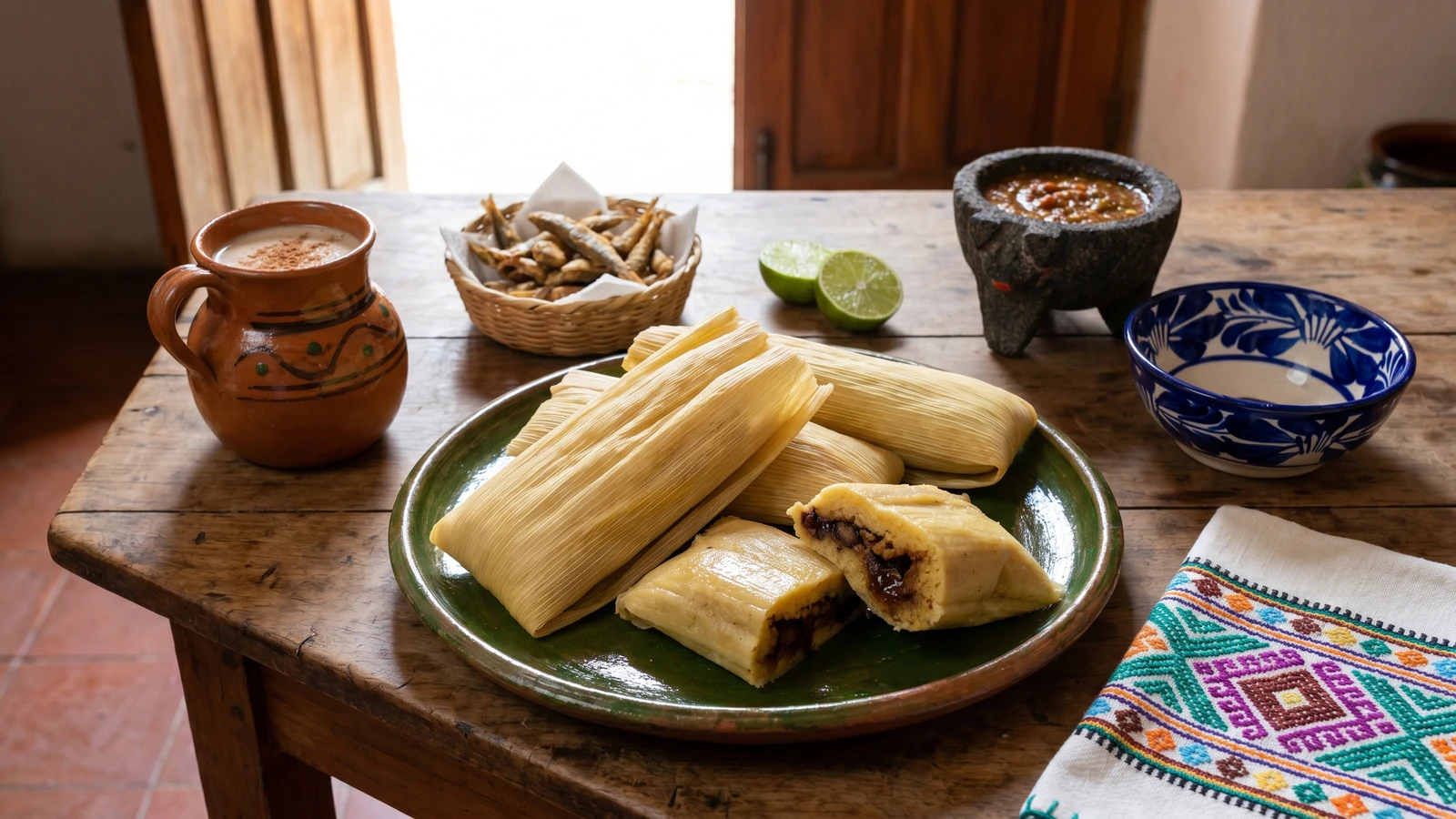
Michoacán's P'urhépecha chápata layers masa nixtamalizada with frijol endulzado en piloncillo, wrapped in fresh corn-plant leaf and steamed slow for a sweet tamal meant for hot atole.
Appetizers & Snacks
Mexican
Comfort Food
Make Ahead
Holiday
1 hr 15 min
Active Time
2 hr 30 min cook•3 hr 45 min total
Yield16 to 18 chápatas
Michoacán, especially the Meseta P'urhépecha and the lake country around Pátzcuaro, is where chápata belongs. Not every tamal from Michoacán is a corunda, and not every corn leaf packet is the same animal. This is a sweet P'urhépecha tamal, masa nixtamalizada layered with frijol endulzado en piloncillo, wrapped in hoja de maíz fresca de la planta and steamed until the leaf gives its green smell to the masa.
I learned to separate this family of tamales from the cocineras tradicionales of Uruapan, Pátzcuaro, and the Meseta. Corunda is triangular, plain or with cheese. Charicorunda is smaller, with chile in the masa. Jahuácata is layered masa and bean for Candelaria. Chápata is sweet piloncillo-bean. Tsïkanarhikata is the Meseta variant the outside world forgot. Nacatamal is the Day of the Dead offering of Angahuan. Toquera belongs to maíz nuevo. Each has its own masa, its own wrapper, its own occasion. Así se hace y punto.
The leaf matters. The fat matters. Fresh hoja de maíz from the plant is not the dried corn husk you buy in a plastic bag. Manteca de cerdo is not shortening. The women who kept this food alive did not treat those differences as decoration. They were the method. Cook over leña when you can, use a comal de barro when you cannot, and pay attention to the masa under your hand.
The P'urhépecha state centered around Tzintzuntzan and Lake Pátzcuaro remained independent of the Mexica empire before Spanish contact, so its corn-and-bean tamal vocabulary did not pass first through Nahua naming. In 2010, UNESCO inscribed Traditional Mexican Cuisine using the Michoacán paradigm, specifically recognizing the cocineras tradicionales and the milpa, nixtamal, comal, and communal transmission systems that kept dishes like corunda, uchepo, jahuácata, and chápata alive. Chápata belongs to that older tamal family: a sweet piloncillo-and-bean preparation tied to P'urhépecha home kitchens, not a restaurant dessert.
The technique, the tradition, and the story behind every dish.
fresh masa nixtamalizada de maíz blanco for tamales
Quantity
2 pounds
manteca de cerdo
Quantity
3/4 cup
softened, never shortening
warm bean cooking liquid or warm water
Quantity
3/4 to 1 cup
as needed
hojas de maíz frescas de la planta
Quantity
24 large leaves, plus extra for lining the steamer
rinsed
hot atole blanco or atole de pinole (optional)
Quantity
for serving
Ingredient
Quantity
dried frijol Flor de Mayo or frijol bayorinsed
1 cup
water
6 cups, plus more as needed
piloncillo conechopped
1 cone, about 7 ounces
Mexican cinnamon stick
1
sal de grano
1/2 teaspoon, plus more to taste
fresh masa nixtamalizada de maíz blanco for tamales
2 pounds
manteca de cerdosoftened, never shortening
3/4 cup
warm bean cooking liquid or warm wateras needed
3/4 to 1 cup
hojas de maíz frescas de la plantarinsed
24 large leaves, plus extra for lining the steamer
hot atole blanco or atole de pinole (optional)
for serving
Equipment Needed
•Tamalera or deep steamer with rack
•Comal de barro or cast iron comal for softening leaves
•Clay cazuela or heavy pot for the piloncillo beans
•Large mixing bowl or stand mixer for beating masa
•Clean kitchen towel for covering the steamer
Instructions
1
Cook the beans
Put the frijol Flor de Mayo or frijol bayo in a clay cazuela or heavy pot with 6 cups water. Bring to a steady simmer, then cook gently until the beans are fully tender, 1 hour 15 minutes to 1 hour 45 minutes depending on age. Do not sweeten hard beans. Piloncillo will tighten them before they finish cooking.
If the beans are old, soak them overnight. Old beans are stubborn. A señora in the mercado can tell you which sack is fresh if you ask.
2
Sweeten the filling
Drain the beans, reserving the cooking liquid. Return the beans to the pot with the piloncillo, cinnamon stick, and sal de grano. Cook over medium-low heat, stirring often, until the piloncillo melts and the beans turn glossy and thick, about 25 minutes. Mash them roughly with a wooden spoon. You want frijol endulzado en piloncillo that holds its shape, not a soup and not refried beans. Remove the cinnamon and let the filling cool.
3
Prepare the leaves
Rinse the hojas de maíz frescas de la planta and wipe away field dust. These are fresh leaves from the corn plant, not dried corn husks. If they are stiff, pass them quickly over a warm comal de barro or dip them in hot water for 30 seconds, just until flexible. Tear a few narrow strips for tying. The leaf should bend without cracking and smell green.
4
Beat the masa
In a large bowl, beat the manteca de cerdo until pale and light. Add the masa nixtamalizada and salt, then work in 3/4 cup warm bean cooking liquid with your hand. Add more liquid by the tablespoon until the masa spreads easily but does not run. La manteca es el sabor. Use shortening and the chápata will taste like nothing dressed as tradition.
5
Layer the chápatas
Lay one fresh corn-plant leaf on the table, glossy side down. Spread about 3 tablespoons masa into a thin rectangle in the center. Spoon 2 tablespoons of the piloncillo-bean filling over the masa, leaving a border. Cover with another thin layer of masa. Fold the long sides of the leaf over the filling, then fold the ends under to make a flat packet. Tie once or twice with leaf strips. Do not fold it like a corunda. Corunda is triangular. Chápata is layered. Cada estado, su propia cocina.
6
Set the steamer
Line the bottom of a tamalera with extra fresh corn-plant leaves, keeping the water below the rack. Stack the chápatas flat, not crushed, leaving room for the masa to expand. Cover the top with more leaves and then a clean kitchen towel before closing the lid. If you have leña, use it. If you do not, keep the gas flame steady and low.
7
Steam slowly
Steam for 1 hour 15 minutes to 1 hour 30 minutes. Keep the water at a steady simmer and check the pot once, adding boiling water along the side if needed. The chápatas are done when the leaf pulls away cleanly and the packet feels set in your hand. Let them rest, covered and off the heat, for 20 minutes. Resting finishes the masa. No me vengas con atajos.
8
Serve with atole
Open the leaves at the table and cut one chápata across so the masa and dark piloncillo-bean layers show. Serve warm with atole blanco or atole de pinole in clay jarritos. This is food for a kitchen table, a Candelaria basket, or a holiday morning, not a white plate with tweezers. Saber cocinar es saber vivir.
Chef Tips
•Ask for hoja de maíz fresca de la planta, the leaves from the standing corn cane. Do not confuse them with dried totomoxtle. Dried husks will wrap a tamal, yes, but they will not give the green scent or the same flexible hold. A substitution is a compromise, not an upgrade.
•Buy fresh masa nixtamalizada from a tortillería or molino if you can. Masa harina will work only when the market gives you no other choice. Hydrate it well, rest it for 30 minutes, and understand what you are missing.
•Manteca de cerdo is not optional here. The masa needs that fat to soften, carry the piloncillo, and pull cleanly from the leaf. La manteca es el sabor.
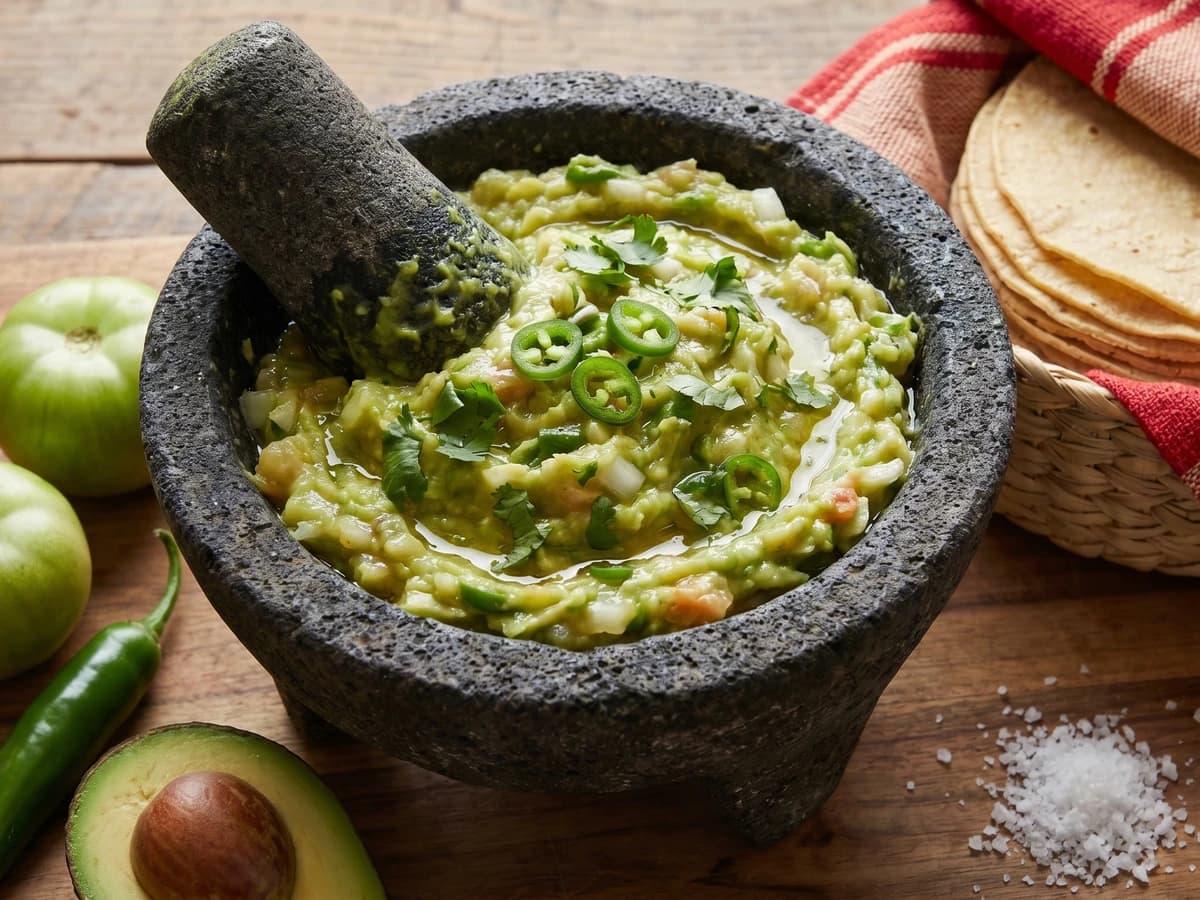
•Chile perón, called chile manzano in some markets, has black seeds and belongs to Michoacán salsas. Charal, Chirostoma jordani and its relatives from Lake Pátzcuaro, belongs to the same regional table. They do not go inside this sweet chápata. Knowing where an ingredient does not belong is also cooking.
•If the piloncillo-bean filling runs, cook it longer. It should mound on a spoon. Wet filling leaks into the masa and you lose the layered cut that makes chápata recognizable.
Advance Preparation
•The piloncillo-bean filling can be made 2 days ahead and refrigerated. Bring it to room temperature before layering so it spreads without tearing the masa.
•The fresh corn-plant leaves can be rinsed and wrapped in a damp towel 1 day ahead. Keep them refrigerated so they stay flexible.
•Cooked chápatas keep refrigerated for 4 days. Reheat them in a steamer for 12 to 15 minutes or warm them on a comal still wrapped in their leaves.
•Chápatas freeze well for 2 months. Thaw overnight in the refrigerator before reheating in the steamer.
Frequently Asked Questions
Nutrition Information
1 serving (about 110g)
Calories
280 calories
Total Fat
11 g
Saturated Fat
4 g
Trans Fat
0 g
Unsaturated Fat
7 g
Cholesterol
9 mg
Sodium
120 mg
Total Carbohydrates
40 g
Dietary Fiber
4 g
Sugars
12 g
Protein
5 g
Where cooking meets culture.
Culinary guides, cultural storytelling, and the editorial depth that makes cooking meaningful.