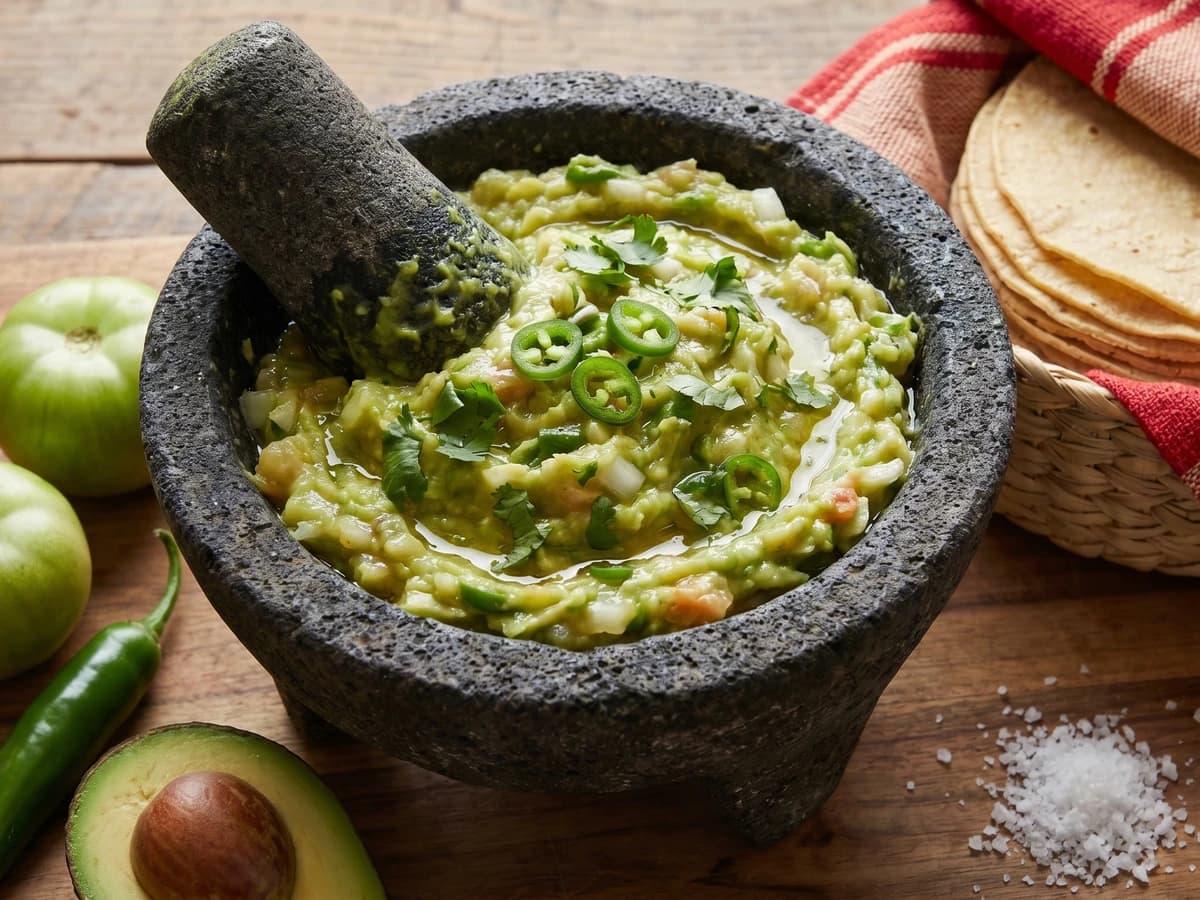
Michoacán's P'urhépecha bean tamal, pressed flat, layered with frijol and chile perón, then wrapped in fresh maíz leaf for Candelaria and Semana Santa.
Appetizers & Snacks
Mexican
Holiday
Make Ahead
Special Occasion
1 hr 30 min
Active Time
1 hr 10 min cook•2 hr 40 min total
Yield16 jahuácatas
Michoacán, the lake region around Pátzcuaro and the P'urhépecha Meseta, is where jahuácatas live. Not in a national tamal category. Not in a generic tray of holiday food. This is P'urhépecha cooking, the same family that gives us corunda, uchepo, chápata, tsïkanarhikata, nacatamal, toquera, kurucha, minguiche, and kamáta. Cada estado, su propia cocina, and inside Michoacán every town still has its own hand.
The P'urhépecha, historically called Tarascos by the Spanish, built a powerful state in western Mexico that resisted Mexica conquest before the 16th century, and their maize-based tamal vocabulary remains distinct from Nahua terminology. In 2010, UNESCO recognized Traditional Mexican Cuisine as Intangible Cultural Heritage using the Michoacán paradigm, specifically citing cocineras tradicionales as transmitters of techniques like nixtamalization, tamal making, and ceremonial cooking. Jahuácatas belong to a regional tamal family with separate forms and occasions: corundas are triangular, uchepos use tender new corn, chápatas are sweet with piloncillo and beans, and jahuácatas carry the bean layer associated with Candelaria and Semana Santa.
The technique, the tradition, and the story behind every dish.
also sold as chile manzano, stemmed and finely chopped
white onion
Quantity
1/2 small
finely chopped
garlic cloves
Quantity
2
peeled
manteca de cerdo for frying
Quantity
2 tablespoons
dried Mexican oregano
Quantity
1/2 teaspoon
crushed
hoja de maíz fresca de la planta
Quantity
24
rinsed and patted dry
kitchen twine or thin strips of fresh maíz leaf
Quantity
as needed
for tying
crema de rancho (optional)
Quantity
for serving
queso fresco or queso Cotija joven (optional)
Quantity
for serving
crumbled
chile perón salsa (optional)
Quantity
for serving
charales fritos from Pátzcuaro (optional)
Quantity
for serving on the side
lime halves (optional)
Quantity
for the charales
Ingredient
Quantity
fresh masa nixtamalizada for tamales
2 pounds
manteca de cerdoat room temperature
1 cup
fine sea salt
1 1/2 teaspoons, plus more to taste
warm water or bean cooking liquid
3/4 cup, as needed
cooked flor de mayo beans or bayo beansdrained
2 cups
fresh chile perónalso sold as chile manzano, stemmed and finely chopped
2
white onionfinely chopped
1/2 small
garlic clovespeeled
2
manteca de cerdo for frying
2 tablespoons
dried Mexican oreganocrushed
1/2 teaspoon
hoja de maíz fresca de la plantarinsed and patted dry
24
kitchen twine or thin strips of fresh maíz leaffor tying
as needed
crema de rancho (optional)
for serving
queso fresco or queso Cotija joven (optional)crumbled
for serving
chile perón salsa (optional)
for serving
charales fritos from Pátzcuaro (optional)
for serving on the side
lime halves (optional)
for the charales
Equipment Needed
•Tamalera or large steamer pot with rack
•Comal de barro or cast iron comal
•Clay cazuela from Capula or Patamban, or a heavy skillet
•Wooden spoon
•Large mixing bowl for beating masa
Instructions
1
Prepare the leaves
Choose flexible hoja de maíz fresca de la planta, the green leaf cut from the cane, not dried corn husk from a package. Rinse the leaves, pat them dry, and pass each one briefly over a warm comal until it softens and bends without cracking. This leaf gives a greener aroma and a tighter wrap. A dried husk belongs to other tamales. Not this one.
2
Fry the beans
Set a clay cazuela or heavy skillet over medium heat and melt 2 tablespoons manteca de cerdo. Add the onion and cook until translucent, then add the garlic and chile perón. Cook for two minutes, just until the chile smells sharp and fruity. Add the beans, oregano, and a pinch of salt. Mash with a wooden spoon until you have a thick paste that pulls from the bottom of the cazuela. If it is loose, keep cooking. Wet filling makes a heavy jahuácata.
3
Beat the masa
In a wide bowl, beat the cup of manteca de cerdo with the salt until soft and pale. Work in the masa nixtamalizada by hand, then add warm water or bean cooking liquid a little at a time until the masa is spreadable but not runny. Press a small ball between your fingers. It should feel tender, not gritty, and it should hold its shape. La manteca es el sabor. Shortening gives you a dull tamal and a guilty conscience for no reason.
4
Press the layers
Lay one softened maíz leaf on the work surface, glossy side down. Pat about 3 tablespoons masa into a thin rectangle, roughly 5 by 4 inches. Spread 1 tablespoon of the bean and chile perón paste over half of it, then fold the masa over itself so the bean sits between two layers. Press the edges lightly to seal. The jahuácata is built flat and layered, not filled like a fat city tamal. That architecture matters.
5
Wrap and tie
Fold the leaf around the layered masa into a flat packet, then tie it once around the middle with twine or a thin strip of fresh maíz leaf. Do not squeeze it like a package you are mailing. Leave the masa room to expand. Repeat with the remaining masa and filling. If a leaf tears, wrap with a second leaf. Pregúntale a las señoras del mercado, they will tell you the wrapper is part of the tamal, not decoration.
6
Cook in the tamalera
Line the bottom of a tamalera with extra maíz leaves. Add water below the rack, then stack the jahuácatas flat with a little space between them. Cover with more leaves and a clean kitchen towel, then the lid. Cook over medium heat for 60 to 70 minutes, keeping the water at a steady murmur. They are done when the masa pulls cleanly from the leaf and the packet feels firm but still tender.
7
Rest before cutting
Turn off the heat and let the jahuácatas rest in the covered pot for 10 minutes. Open one and cut through the center. You should see masa, a dark bean and chile line, then masa again. That layered cut is the proof. Serve warm with crema de rancho, crumbled cheese, chile perón salsa, and charales fritos with lime on the side if you are eating like the lake region eats.
Chef Tips
•Chile perón is also sold as chile manzano in many markets. It is the round fresh chile with black seeds. If the seeds are not black, you are holding a different chile. Do not let anyone sell you jalapeño and call it close enough.
•Hoja de maíz fresca de la planta is not the same as dried corn husk. The fresh leaf comes from the cane and carries a green field aroma. If you cannot find it, you can use fresh corn leaves from whole ears of corn, but understand the compromise.
•Use masa nixtamalizada from a tortillería if you can. Masa harina works in emergencies, but this dish depends on the living smell of corn treated with cal. Si no conoces el mercado, no conoces la cocina.
•Charal means the small endemic fish of the Pátzcuaro basin, including Chirostoma jordani and related species. Serve them fried beside the jahuácatas if you can find them from a reliable Mexican market. They are not garnish. They are lake memory on the table.
•Cook over leña when you have a safe outdoor setup. If not, use a tamalera and put a comal de barro to work for softening the leaves. No me vengas con atajos that erase the dish.
Advance Preparation
•The bean and chile perón paste can be made 2 days ahead and refrigerated. Warm it before assembling so it spreads cleanly.
•The masa can be beaten 4 hours ahead and held covered at room temperature. If it stiffens, work in a spoonful of warm water or bean cooking liquid.
•Cooked jahuácatas keep refrigerated for 3 days. Reheat in a tamalera until the masa softens again, or warm them on a comal de barro in their leaves for a drier, slightly toasted surface.
Frequently Asked Questions
Nutrition Information
1 serving (about 170g)
Calories
390 calories
Total Fat
24 g
Saturated Fat
11 g
Trans Fat
0 g
Unsaturated Fat
13 g
Cholesterol
65 mg
Sodium
720 mg
Total Carbohydrates
31 g
Dietary Fiber
5 g
Sugars
3 g
Protein
14 g
Where cooking meets culture.
Culinary guides, cultural storytelling, and the editorial depth that makes cooking meaningful.