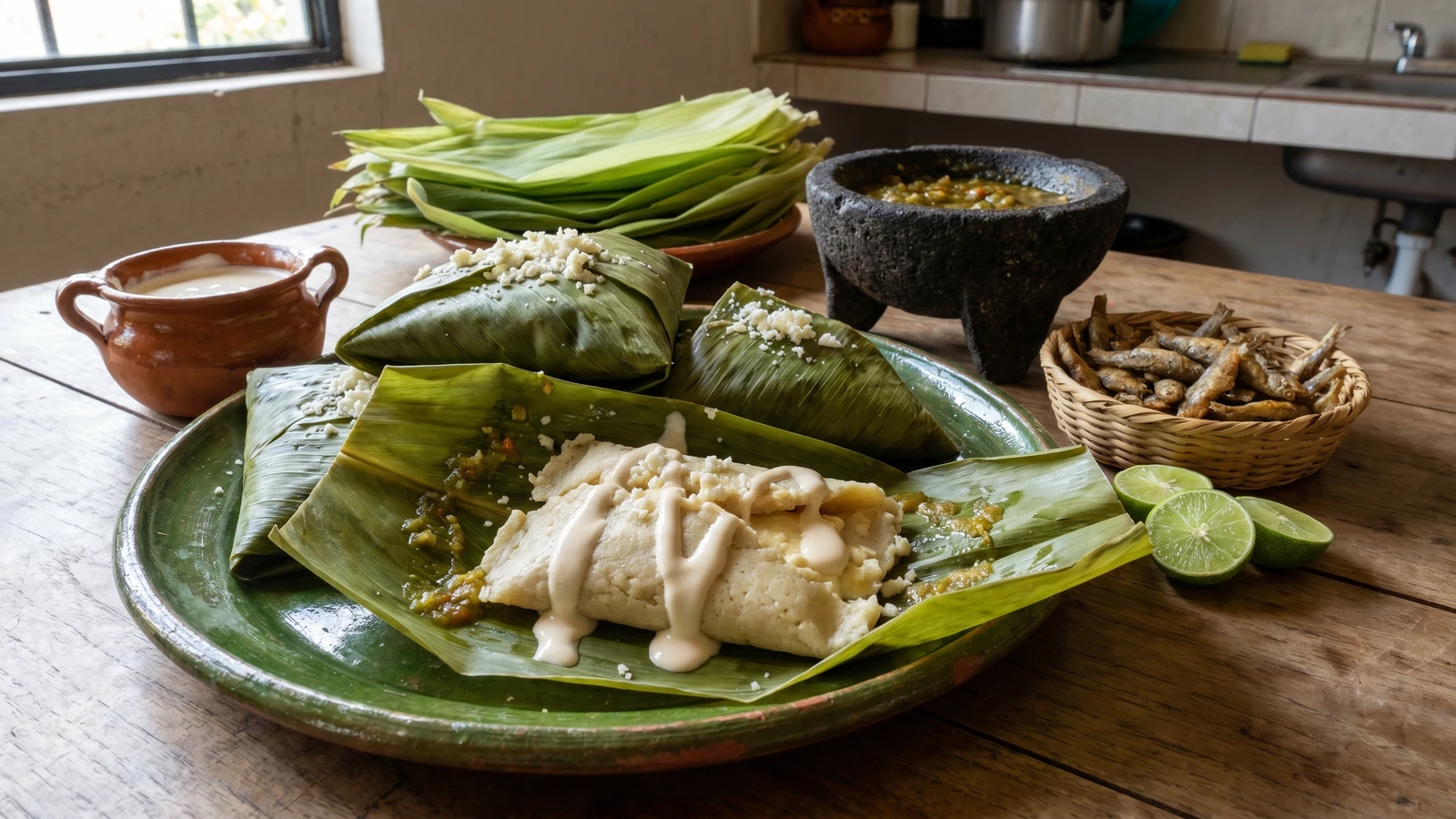
Michoacán's P'urhépecha triangular tamal, folded in hoja de maíz fresca de la planta with queso ranchero, manteca de cerdo, crema, and chile perón salsa.
Appetizers & Snacks
Mexican
Comfort Food
Make Ahead
Holiday
1 hr
Active Time
1 hr 20 min cook•2 hr 20 min total
Yield18 to 22 small corundas
Michoacán, especially Uruapan, Pátzcuaro, and the Meseta P'urhépecha, is where this dish lives. Corundas are not generic tamales with a different shape. They belong to the Tarasca kitchen, to the women who learned the triangular fold by watching hands older than any cookbook.
The wrapper matters. Use hoja de maíz fresca de la planta, the long green leaf cut from the corn cane, not dried corn husk. A dry husk gives you another tamal. The fresh leaf gives the corunda its tight triangular body and a green corn aroma that tells a Michoacán cook you did not fake it.
The masa is masa nixtamalizada beaten with manteca de cerdo until it feels light under the palm. No shortening. No me vengas con atajos. La manteca es el sabor. The queso goes inside in small pieces, not so much that the masa bursts, just enough that the center softens when the corunda cooks.
Serve them with crema de rancho and salsa de chile perón, the yellow Michoacán chile some markets call chile manzano, the one with black seeds. At Pátzcuaro I have eaten them beside baskets of charal, those small lake fish, Chirostoma jordani and its relatives, and every bite reminded me: cada estado, su propia cocina.
Corundas come from the P'urhépecha tamal family of Michoacán, a tradition that predates Mexica expansion and survived because the P'urhépecha state was never conquered by the Aztec empire. The UNESCO recognition of Traditional Mexican Cuisine in 2010 cited the Michoacán paradigm and the work of cocineras tradicionales as a living transmission system, not as museum material. Corunda, uchepo, jahuácata, chápata, tsïkanarhikata, nacatamal, toquera, and charicorunda are separate preparations with their own masa, wrapper, shape, and occasion.
The technique, the tradition, and the story behind every dish.
kitchen twine or thin strips from fresh corn-plant leaves (optional)
Quantity
as needed
for tying
crema de rancho or Mexican crema
Quantity
1 cup
for serving
queso Cotija or queso fresco
Quantity
1/2 cup
crumbled, for serving
fresh chile perón
Quantity
4
also called chile manzano in some markets, black seeds kept if you want heat
tomatillos
Quantity
6
husked and rinsed
garlic clove
Quantity
1 small
white onion
Quantity
2 tablespoons
chopped
fine sea salt for salsa
Quantity
1/2 teaspoon, plus more to taste
cilantro
Quantity
2 tablespoons
chopped
lime
Quantity
1
cut into halves, for serving
fried charales from Lake Pátzcuaro (optional)
Quantity
1 cup
Chirostoma jordani and related species, optional for serving
Ingredient
Quantity
fresh masa nixtamalizada for tamales
2 pounds
manteca de cerdoroom temperature
1 cup
fine sea salt
1 1/2 teaspoons
baking powder
1/2 teaspoon
warm water or warm corn nixtamal brothas needed
3/4 to 1 cup
queso ranchero or queso frescocut into 1/2-inch cubes
8 ounces
hojas de maíz frescas de la plantarinsed and patted dry
30 to 36
kitchen twine or thin strips from fresh corn-plant leaves (optional)for tying
as needed
crema de rancho or Mexican cremafor serving
1 cup
queso Cotija or queso frescocrumbled, for serving
1/2 cup
fresh chile perónalso called chile manzano in some markets, black seeds kept if you want heat
4
tomatilloshusked and rinsed
6
garlic clove
1 small
white onionchopped
2 tablespoons
fine sea salt for salsa
1/2 teaspoon, plus more to taste
cilantrochopped
2 tablespoons
limecut into halves, for serving
1
fried charales from Lake Pátzcuaro (optional)Chirostoma jordani and related species, optional for serving
1 cup
Equipment Needed
•Large tamalera or deep steamer with tight lid
•Comal de barro or heavy cast iron comal
•Large mixing bowl or stand mixer
•Molcajete or blender for chile perón salsa
•Clay cazuela from Capula or Patamban for serving
Instructions
1
Prepare the leaves
Rinse the hojas de maíz frescas de la planta and pat them dry. Sort the wide, flexible leaves for wrapping and tear a few narrow leaves into strips for tying. These are not dried corn husks. They are the green leaves from the corn plant, and they hold the triangular architecture of the corunda.
2
Beat the manteca
Put the manteca de cerdo in a large bowl or stand mixer and beat until pale and fluffy, 5 to 7 minutes by hand or 3 minutes by machine. It should look lighter and feel soft, not greasy and heavy. This is what gives the corunda lift. La manteca es el sabor.
Do not use shortening. It gives height but no flavor. A Michoacán corunda needs pork lard, and that is the end of the argument.
3
Mix the masa
Add the masa nixtamalizada, salt, and baking powder to the beaten lard. Mix with your hand, pressing and folding, while adding warm water or warm nixtamal broth a little at a time. The masa should be soft enough to spread but firm enough to hold its shape on a leaf. When you smear a little on your palm, it should not crack at the edges.
4
Test the masa
Pinch off a small ball of masa and drop it into a cup of cold water. If it floats, it is ready. If it sinks, keep beating for several more minutes and test again. This old market test is not decoration. It tells you whether enough air has been worked into the fat and masa.
5
Fill the corundas
Lay one fresh corn-plant leaf flat, shiny side down. Place 2 heaping tablespoons of masa near the wide end and press one cube of queso ranchero into the center. Cover the cheese with a little more masa. Do not overfill. A corunda is folded, not stuffed until it explodes.
6
Fold the triangle
Fold one side of the leaf over the masa on a diagonal, then fold again and again, keeping the masa trapped in a tight triangular packet. Tuck the narrow end under or tie with a strip of leaf if it feels loose. The shape should be three-cornered and firm in your hand. That fold is the signature. Así se hace y punto.
If the leaves crack, they are too dry or too old. Ask the women at the market for fresh hojas de milpa, not hojas para tamal secas.
7
Stack the steamer
Line the bottom of a tamalera with extra fresh leaves. Add water below the steamer rack and arrange the corundas upright and snug, folded ends down where possible. Cover the top with more leaves and then the lid. If you have a pot over leña, use it. If not, a heavy tamalera on the stove will do the work.
8
Steam until set
Bring the water to a strong simmer, then cook covered for 1 hour to 1 hour 15 minutes. Keep the water level steady. The corundas are done when the masa pulls cleanly from the leaf and the packet feels light for its size. Let them rest in the covered pot for 10 minutes before opening. Masa needs that pause to settle.
9
Make chile salsa
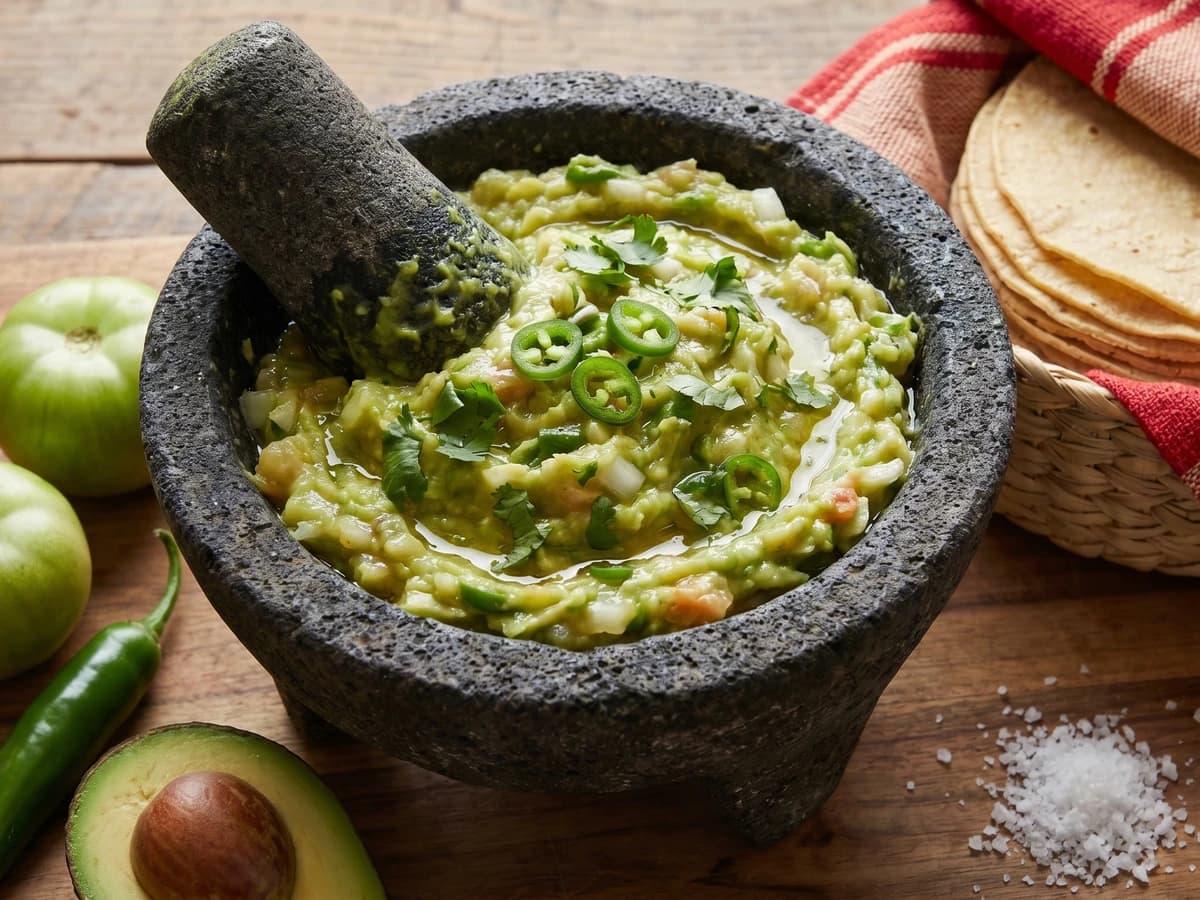
While the corundas steam, roast the chile perón and tomatillos on a comal de barro or cast iron comal until blistered in spots and softened. Blend with the garlic, onion, salt, and cilantro. Taste it. Chile perón has a fruity heat and black seeds, and it belongs in Michoacán kitchens. If the salsa tastes flat, it needs salt, not a lecture.
10
Serve with crema
Open the corundas at the table and spoon crema de rancho over the warm masa. Add the chile perón salsa and a little crumbled queso Cotija or queso fresco. Serve lime halves and fried charales on the side if you are setting a Pátzcuaro table. The crema softens the masa, the salsa wakes it up, and the cheese inside reminds you why this is comfort food.
Chef Tips
•Buy masa nixtamalizada from a tortillería that grinds fresh that morning. Masa harina works in emergencies, but it is a compromise, not an upgrade. You lose the wet corn aroma that makes a corunda taste alive.
•Chile perón is sold as chile manzano in many markets outside Michoacán. Look for the black seeds. That is the sign. If it has pale seeds, it is not the same chile.
•Do not confuse hoja de maíz fresca de la planta with dried corn husk. The fresh leaf is longer, greener, and more flexible, with a grassy perfume. The wrapper is part of the flavor.
•The P'urhépecha tamal family is not one dish. Corunda is triangular and plain or with queso. Charicorunda is smaller with chile in the masa. Jahuácata is layered masa and beans for Candelaria. Chápata is sweet with piloncillo and beans. Tsïkanarhikata belongs to the Meseta and deserves more attention than it gets. Nacatamal appears for Day of the Dead in Angahuan. Toquera is the maíz nuevo tamal-gordita hybrid. Learn the names. They carry the kitchen.
•If you can cook over leña, do it. If not, toast the salsa ingredients on a comal de barro or a heavy cast iron comal until they blister. A blender is acceptable here. Skipping the roasting is not.
Advance Preparation
•The chile perón salsa can be made one day ahead and refrigerated. Taste for salt after it chills because tomatillo dulls overnight.
•The masa can be mixed up to 6 hours ahead and kept covered at cool room temperature. Beat it again for 2 minutes before wrapping.
•Cooked corundas keep refrigerated for 3 days. Reheat them in a steamer for 15 to 20 minutes, still wrapped, so the masa stays tender.
•Wrapped uncooked corundas can be frozen on a tray, then bagged. Steam from frozen, adding 20 to 25 minutes to the cooking time.
Frequently Asked Questions
Nutrition Information
1 serving (about 110g)
Calories
255 calories
Total Fat
18 g
Saturated Fat
8 g
Trans Fat
0 g
Unsaturated Fat
10 g
Cholesterol
30 mg
Sodium
430 mg
Total Carbohydrates
16 g
Dietary Fiber
2 g
Sugars
2 g
Protein
7 g
Where cooking meets culture.
Culinary guides, cultural storytelling, and the editorial depth that makes cooking meaningful.