
Chef Lupita
Arroz a la Oaxaqueña
Oaxaca's red rice, stained with tomato and fried in lard, steamed with carrots, ejotes, black beans, and epazote. The side that anchors a Oaxacan family meal and earns its place beside the main.
A cooking platform built around craft, culture, and the stories behind what we eat.
Created by
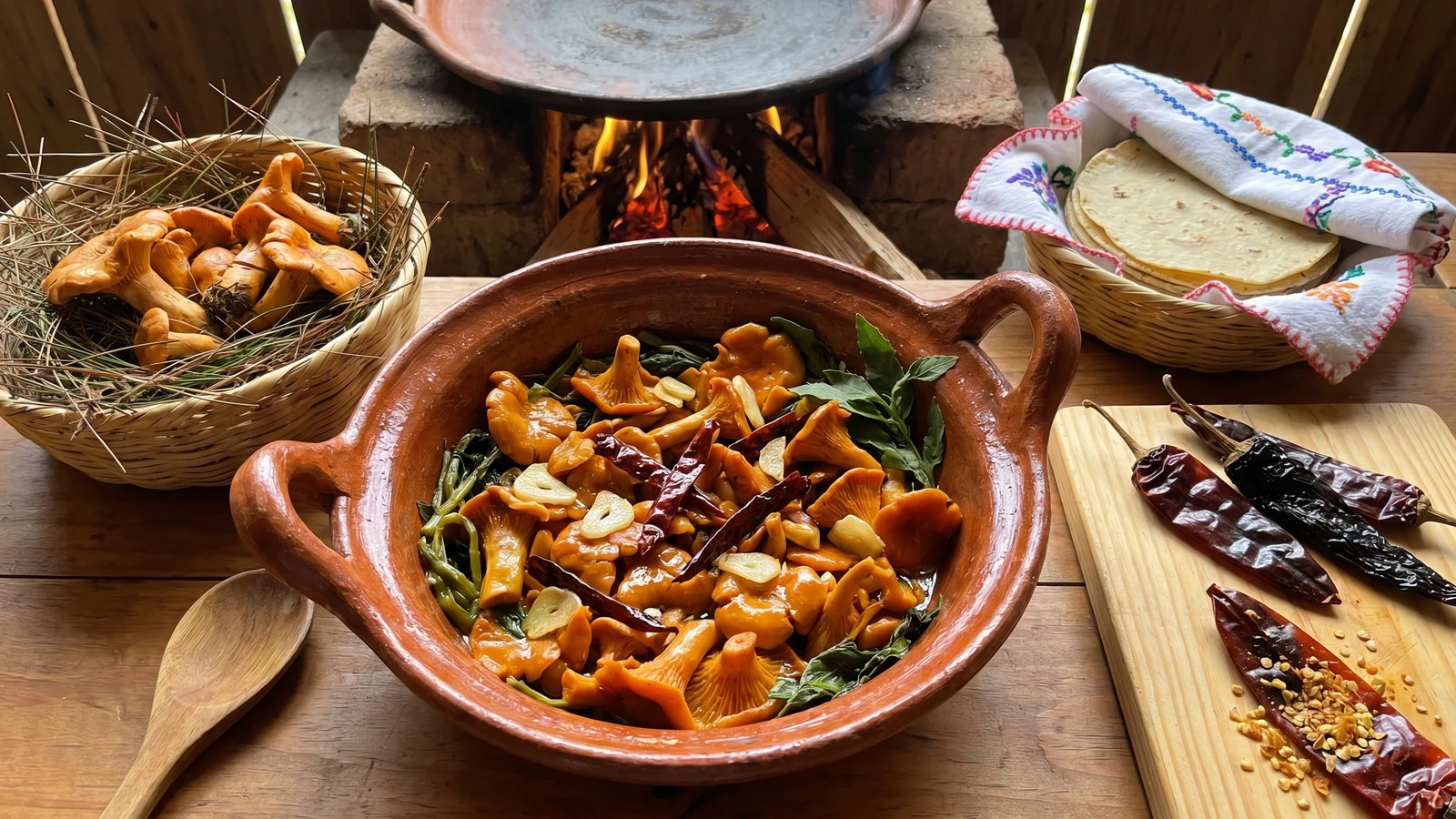
Michocan's rainy-season charamakua, trompa de puerco mushroom from the Meseta Purhepecha, cooked on a comal de lena with garlic, chile, epazote, and manteca de cerdo.
Michoacan, Meseta Purhepecha. This dish belongs to the pine-oak forests above Lake Patzcuaro and the pueblos where the rain decides the menu: Cocucho, Cheran K'eri, Comachuen, Nahuatzen. Trompa de puerco is the Spanish nickname. Charamakua is the Purhepecha name used for this bright-orange foraged mushroom, and that name comes first in any serious kitchen.
I learned this register from cocineras tradicionales who wait for July and August the way other cooks wait for a holiday. Maria Elena Reyes of Cocucho has shown foraged mushroom plates with the patience of someone who knows the forest is not a supermarket. The charamakua comes in with pine needles clinging to the stems, then it is cleaned, torn, and cooked in manteca de cerdo on a comal de lena. Not vegetable oil. Not a stainless pan over gas if you have a better choice. La manteca es el sabor, and the wood-fired comal gives the mushroom the dry heat it needs before the garlic goes in.
This is not calabacitas con elote y rajas. That is another dish, broadly Mexican and perfectly useful, but this is Purhepecha indigenous cooking from Michoacan's rainy forest. No me vengas con atajos. Outside July and August, the terekuecha plate is not available. The cocinera tradicional waits for the rain, and so do you.
Use chile guajillo for color, pasilla for depth, and a little chile poncho peron if you can get it in Michoacan. The quelites, if you add them, are cooked, never raw. The finished cazuela should taste of forest, garlic, chile, lard, and smoke. Cada estado, su propia cocina.
Purhepecha mushroom cookery in Michoacan is tied to the rainy season of the Meseta Purhepecha, when families gather edible fungi from pine-oak forests and cook them as terekuecha, a seasonal category that includes charamakua, iarini terekua, terekua kuin jatsiri, shakura, and chilke. Cocineras tradicionales such as Maria Elena Reyes of Cocucho have helped document these plates in contemporary Michoacan food festivals, while pueblos including Cheran K'eri, Comachuen, and Nahuatzen preserve local names and preparations for mushrooms such as chilke rojo and pata de pajaro. The July-August calendar is not decoration: it is the ecological window when these foraged mushrooms appear after rain.
Quantity
1 pound
foraged in July or August, cleaned and torn into thick strips
Quantity
3 tablespoons
Quantity
6
thinly sliced
Quantity
2
stemmed, seeded, toasted, and cut into thin strips
Quantity
1
stemmed, seeded, toasted, and cut into thin strips
Quantity
1/2
split open and thinly sliced
Quantity
1/2 small
thinly sliced
Quantity
1 large sprig
Quantity
1 cup
squeezed dry and roughly chopped
Quantity
1/2 teaspoon, plus more to taste
Quantity
for serving
warmed on the comal
| Ingredient | Quantity |
|---|---|
| fresh trompa de puerco mushroom (charamakua)foraged in July or August, cleaned and torn into thick strips | 1 pound |
| manteca de cerdo | 3 tablespoons |
| garlic clovesthinly sliced | 6 |
| dried chile guajillostemmed, seeded, toasted, and cut into thin strips | 2 |
| dried chile pasillastemmed, seeded, toasted, and cut into thin strips | 1 |
| fresh chile poncho peron (optional)split open and thinly sliced | 1/2 |
| white onionthinly sliced | 1/2 small |
| fresh epazote | 1 large sprig |
| cooked quelites (optional)squeezed dry and roughly chopped | 1 cup |
| coarse salt | 1/2 teaspoon, plus more to taste |
| hand-pressed corn tortillas (optional)warmed on the comal | for serving |
Trim away any tough or muddy ends from the charamakua. Brush off pine needles and forest grit with a dry cloth or soft brush. If the mushrooms are very sandy, rinse quickly and dry them well on a cloth. Do not soak them. A soaked mushroom goes limp on the comal and tastes of water, not forest.
Tear the trompa de puerco into thick strips with your hands. Keep the pieces uneven. Knife-perfect pieces are not the point here. The torn edges catch the manteca, garlic, and chile better than a smooth cut.
Heat a comal de barro over lena until it is hot but not smoking. Toast the guajillo and pasilla briefly, a few seconds per side, just until the skins darken slightly and smell deep. They should bend, not burn. Cut them into thin strips. If a chile turns black, throw it out. Burned chile makes bitter food, and there is no fixing it later.
Spread the torn charamakua on the hot comal in a single layer. Let the moisture cook off for 4 to 6 minutes, turning once or twice with a wooden cuchara. The pieces should soften, darken at the edges, and smell like wet pine and toasted corn. This first dry heat matters. If you add fat too early, the mushroom stews.
Push the mushrooms to one side and add the manteca de cerdo to the comal or cazuela set over the fire. When it melts and shines, stir the mushrooms through it. Add the onion and cook until it softens without browning hard, about 3 minutes. La manteca es el sabor. Vegetable oil will cook the mushroom, yes, but it will not make this dish.
Add the sliced garlic, guajillo strips, pasilla strips, and chile poncho peron if using. Stir constantly for 2 to 3 minutes. The garlic should turn pale gold at the edges and smell sweet, not sharp. If it browns too hard, it turns bitter. Keep the fire steady and the cuchara moving.
Add the epazote and the cooked quelites if using. Cook for 2 more minutes, just until the herb perfumes the fat and the quelites are hot. Quelites are cooked here, never raw. Salt, taste, and salt again if the mushroom asks for it. The finished charamakua should be glossy, orange-gold, garlicky, and lightly stained by the chiles.
Spoon the mushrooms into a rough red barro cazuela and serve immediately with hand-pressed corn tortillas warmed on the same comal. Set the cazuela in the center of the table. This is food to share, not to decorate. Recetas probadas y garantizadas.
1 serving (about 155g)
Culinary guides, cultural storytelling, and the editorial depth that makes cooking meaningful.
Discover Culinary ExplorerChef Lupita
Oaxaca's red rice, stained with tomato and fried in lard, steamed with carrots, ejotes, black beans, and epazote. The side that anchors a Oaxacan family meal and earns its place beside the main.
Chef Lupita
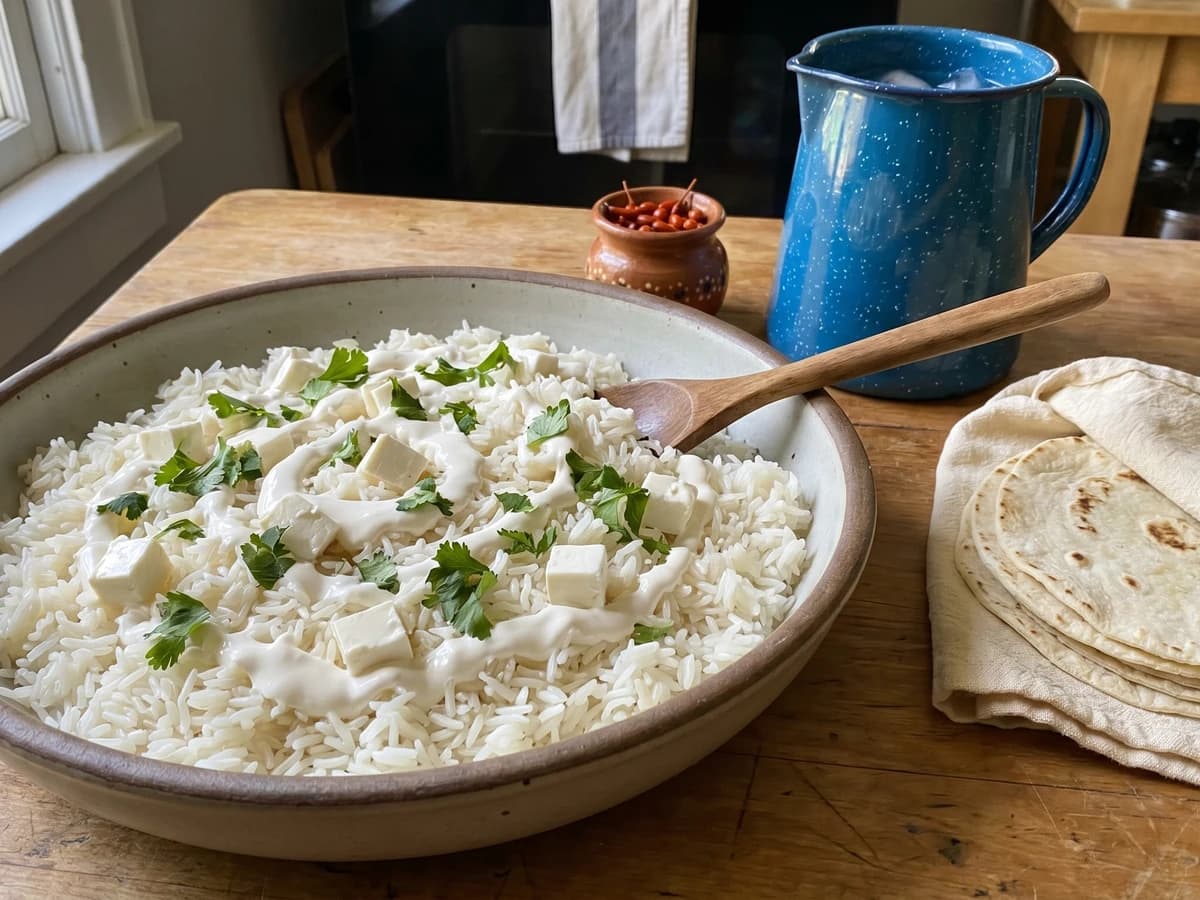
Sinaloa's home-cook white rice topped with cold cubes of cream cheese that soften into the warm grain, finished with crema and a sprinkle of chiltepin at the table. The trick that makes a side dish feel like a small luxury.
Chef Lupita
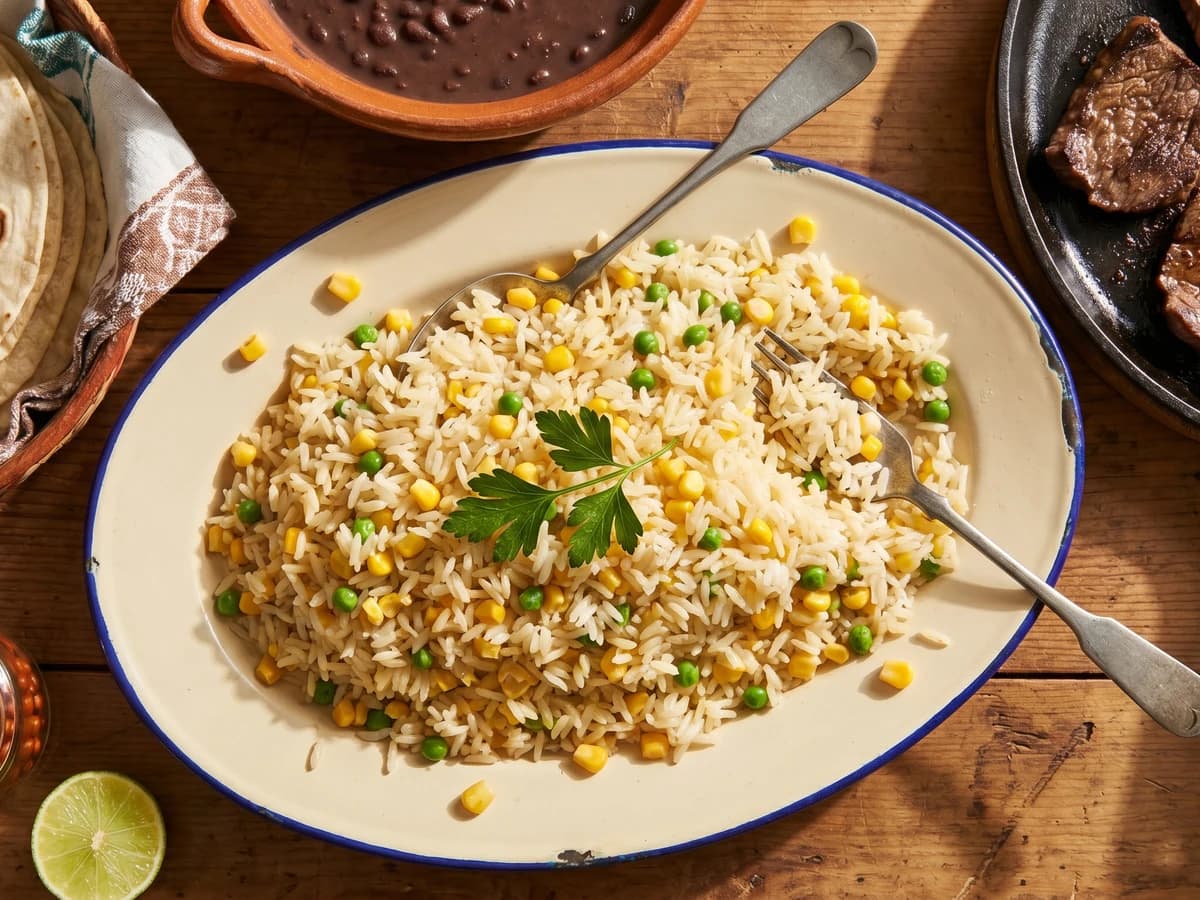
Sonora's white rice, toasted in butter and steamed with sweet corn and tender peas. The clean, quiet partner to a plate of carne asada, not the red rice of central Mexico.

Chef Lupita
Yucatán's white rice with sweet corn kernels, toasted in lard with garlic and onion. The quiet base that holds up against the peninsula's bold achiote-stained stews.