
Chef Lupita
Arroz a la Oaxaqueña
Oaxaca's red rice, stained with tomato and fried in lard, steamed with carrots, ejotes, black beans, and epazote. The side that anchors a Oaxacan family meal and earns its place beside the main.
A cooking platform built around craft, culture, and the stories behind what we eat.

Created by
Michoacán's P'urhépecha ayocotes, grown beside corn in the milpa, cooked in a clay olla, then guisados in pork lard with Cherán K'eri style chilke rojo and cooked quelites.
Michoacán, the Meseta P'urhépecha and the pueblos around Lake Pátzcuaro, is where this pot belongs. These are not small frijoles de la olla from anywhere. Ayocotes, Phaseolus coccineus, are the big runner beans of cold milpas, climbing the corn stalks where the mountain air is sharp and the soil keeps its memory.
In P'urhépecha kitchens I was given the word charámakua for this bean work, and the red chile base here is chilke rojo, the kind of serious sauce Cherán K'eri keeps in its own register. Guajillo gives clean red color. Pasilla gives depth. Chile poncho perón gives the Michoacán bite that tells you this pot did not come from a supermarket recipe card.
The beans cook first in an olla de barro with epazote and nurite if the market has it. Then they are guisados in manteca de cerdo until the sauce grabs the bean skins and the broth thickens. Oil will make the pot thinner and sadder. La manteca es el sabor.
If the rain has come, July and August only, the forest may give terekuecha. María Elena Reyes of Cocucho and the cooks of Comachuén and Nahuatzen taught the rule plainly: trompa de puerco, pashakua, and pata de pájaro wait for the rain. Outside that calendar, you wait too. No champiñón. No me vengas con atajos. Cada estado, su propia cocina.
Phaseolus coccineus, known in Spanish as ayocote from the Nahuatl ayecotli, is a highland runner bean cultivated in Mesoamerica before the Spanish conquest and still favored in cold mountain milpas where common beans struggle. By the 15th century, the P'urhépecha state centered around Lake Pátzcuaro controlled much of western Mexico, and its food system joined maize, beans, squash, chiles, quelites, lake fish, forest mushrooms, and wood-fired clay cooking. The manteca in this guiso arrived with Spanish pigs in the 16th century, but the ayocote, the milpa, and the rainy-season terekuecha calendar are Indigenous foundations.
Quantity
1 pound
picked over and soaked overnight
Quantity
10 cups, plus more for soaking
Quantity
1 medium
1/2 for the bean pot, 1/4 for the comal, 1/4 finely chopped
Quantity
4
2 bruised for the beans and 2 unpeeled for the comal
Quantity
2 sprigs
Quantity
1 small sprig
Quantity
2 1/2 teaspoons, plus more to taste
Quantity
5
stemmed and seeded
Quantity
2
stemmed and seeded
Quantity
2 medium
Quantity
1
split, half grated for the chilke and half roasted in strips
Quantity
4 tablespoons
divided
Quantity
4 packed cups
washed, tough stems removed, and chopped
Quantity
8 ounces
trompa de puerco (iarini terekua), pashakua (pashakua), or pata de pájaro (terékua kuín jatsíri), brushed clean and torn
Quantity
for serving
| Ingredient | Quantity |
|---|---|
| dried ayocote beans (Phaseolus coccineus)picked over and soaked overnight | 1 pound |
| water | 10 cups, plus more for soaking |
| white onion1/2 for the bean pot, 1/4 for the comal, 1/4 finely chopped | 1 medium |
| garlic cloves2 bruised for the beans and 2 unpeeled for the comal | 4 |
| fresh epazote | 2 sprigs |
| fresh nurite (optional) | 1 small sprig |
| sal de grano | 2 1/2 teaspoons, plus more to taste |
| dried chile guajillostemmed and seeded | 5 |
| dried chile pasilla mexicanostemmed and seeded | 2 |
| jitomates guaje or Roma tomatoes | 2 medium |
| fresh chile poncho perónsplit, half grated for the chilke and half roasted in strips | 1 |
| manteca de cerdodivided | 4 tablespoons |
| quelites de milpawashed, tough stems removed, and chopped | 4 packed cups |
| July-August foraged terekuecha mushrooms (optional)trompa de puerco (iarini terekua), pashakua (pashakua), or pata de pájaro (terékua kuín jatsíri), brushed clean and torn | 8 ounces |
| hand-pressed corn tortillas (optional) | for serving |
Pick through the ayocotes and remove stones, broken beans, and field dust. Rinse well, then cover with plenty of cool water and soak 10 to 12 hours. These are large mountain beans. Give them time or they will punish you at the stove.
Drain the soaked beans and put them in a clay olla with 10 cups fresh water, the half onion, and the 2 bruised garlic cloves. Bring to a gentle simmer over leña if you have it. Keep the bubbles slow. After 1 hour, add the epazote, nurite if using, and 2 teaspoons of the sal de grano. Cook 2 to 2 1/2 hours more, adding hot water when needed, until the ayocotes are creamy inside but still whole. Save the broth.
Heat a comal de barro over leña, or use a dry cast iron comal if that is the kitchen you have. Toast the guajillo and pasilla separately, 15 to 25 seconds per side, just until they soften, darken slightly, and smell deep. The pasilla burns faster. Watch it. Black chile gives bitter chilke and there is no fixing it later.
Cover the toasted chiles with hot water, not boiling, and let them soak for 15 minutes. Drain them. Hot water softens the flesh. Boiling water cooks the skins and pulls out bitterness. This is why one sauce tastes clean and another tastes tired.
On the same comal, roast the jitomates, the onion quarter, the 2 unpeeled garlic cloves, and the split chile poncho perón. Turn them until the tomato skins blister, the onion chars at the edges, and the garlic softens. Peel the garlic. Grate the flesh from half the chile perón for the sauce and cut the other half into thin roasted strips for serving.
Blend the soaked chiles, roasted jitomates, roasted onion, peeled garlic, grated chile perón, 1 cup of the ayocote broth, and the remaining 1/2 teaspoon sal de grano until very smooth. If you have a metate, use it. If you have a blender, let it work until the sauce is fine. Strain only if the chile skins stay tough. This is chilke rojo in the direction of Cherán K'eri, not tomato sauce with a little chile waved over it.
Heat 3 tablespoons of the manteca in a wide clay cazuela. Add the finely chopped onion and cook until it turns translucent and sweet, about 5 minutes. Pour in the chilke rojo. It will sputter. Stir with a wooden cuchara and cook 8 to 10 minutes, until the sauce darkens, thickens, and the manteca begins to shine around the edges. La manteca es el sabor.
Add the cooked ayocotes and 2 cups of their broth to the fried chilke. Simmer gently for 25 minutes, stirring from the bottom so the beans do not catch. Mash one ladleful of beans against the side of the cazuela and stir it back in. The broth should thicken enough to coat a tortilla, not run across the plate like soup.
Add the chopped quelites, the shakuá, and cook 5 to 8 minutes, until they darken and soften into the beans. Quelites are cooked, never raw in this pot. If your bunch has thick stems, blanch them first in salted water, chop them, and then add them to the cazuela. Así se hace y punto.
If it is July or August and a trusted forager has brought terekuecha, heat the remaining 1 tablespoon manteca on the comal or in a small cazuela. Cook the torn mushrooms until their liquid disappears and their edges take color, then fold them into the beans for the last 5 minutes. If it is not the rainy season, leave them out. Champiñón from a supermarket is not a workaround. It is another dish.
Rest the beans 10 minutes off the fire so the chilke settles into the broth. Serve family-style in rough red barro with the roasted chile perón strips on top and hand-pressed corn tortillas wrapped in a servilleta bordada. No flour tortillas. No shredded cheese. No raw salad thrown over the top. This is P'urhépecha food from Michoacán. Recetas probadas y garantizadas.
1 serving (about 360g)
Culinary guides, cultural storytelling, and the editorial depth that makes cooking meaningful.
Discover Culinary ExplorerChef Lupita
Oaxaca's red rice, stained with tomato and fried in lard, steamed with carrots, ejotes, black beans, and epazote. The side that anchors a Oaxacan family meal and earns its place beside the main.
Chef Lupita
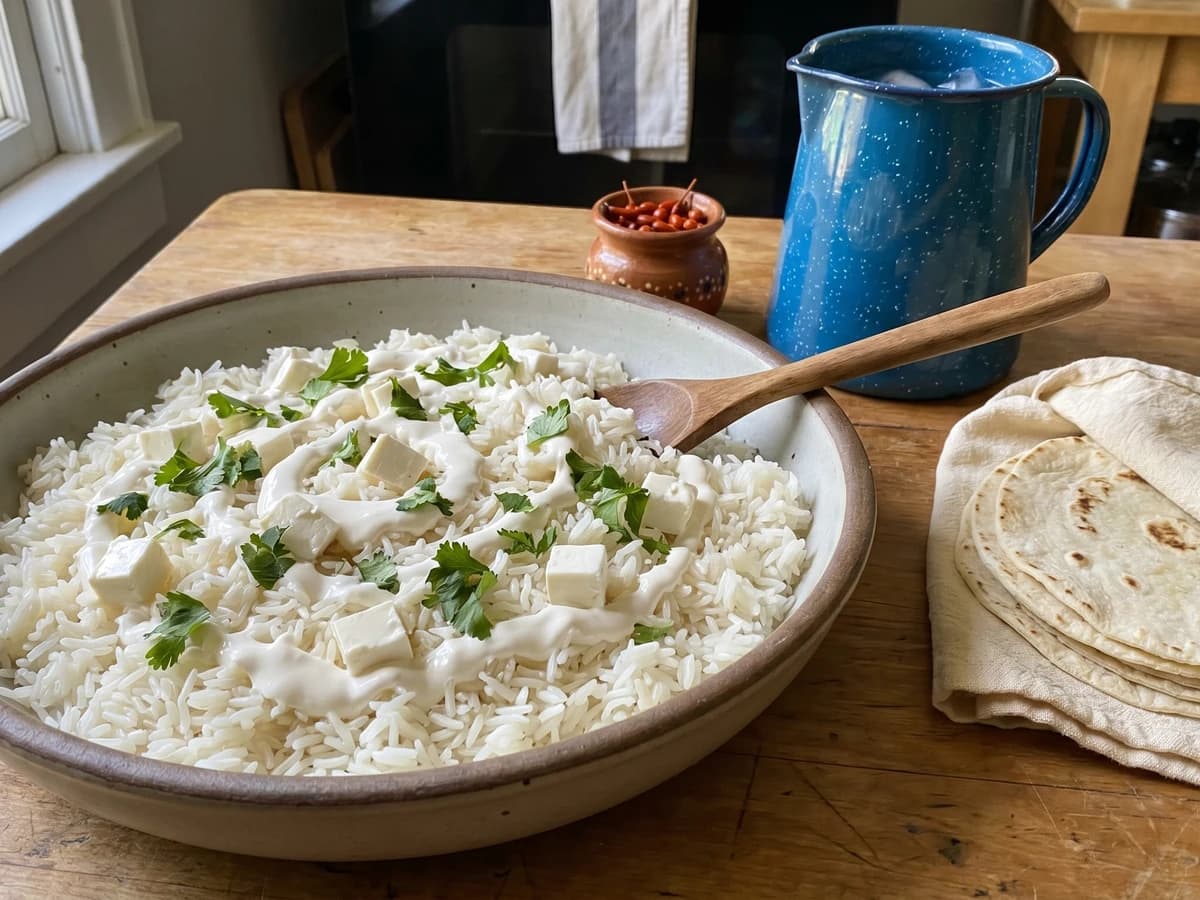
Sinaloa's home-cook white rice topped with cold cubes of cream cheese that soften into the warm grain, finished with crema and a sprinkle of chiltepin at the table. The trick that makes a side dish feel like a small luxury.
Chef Lupita
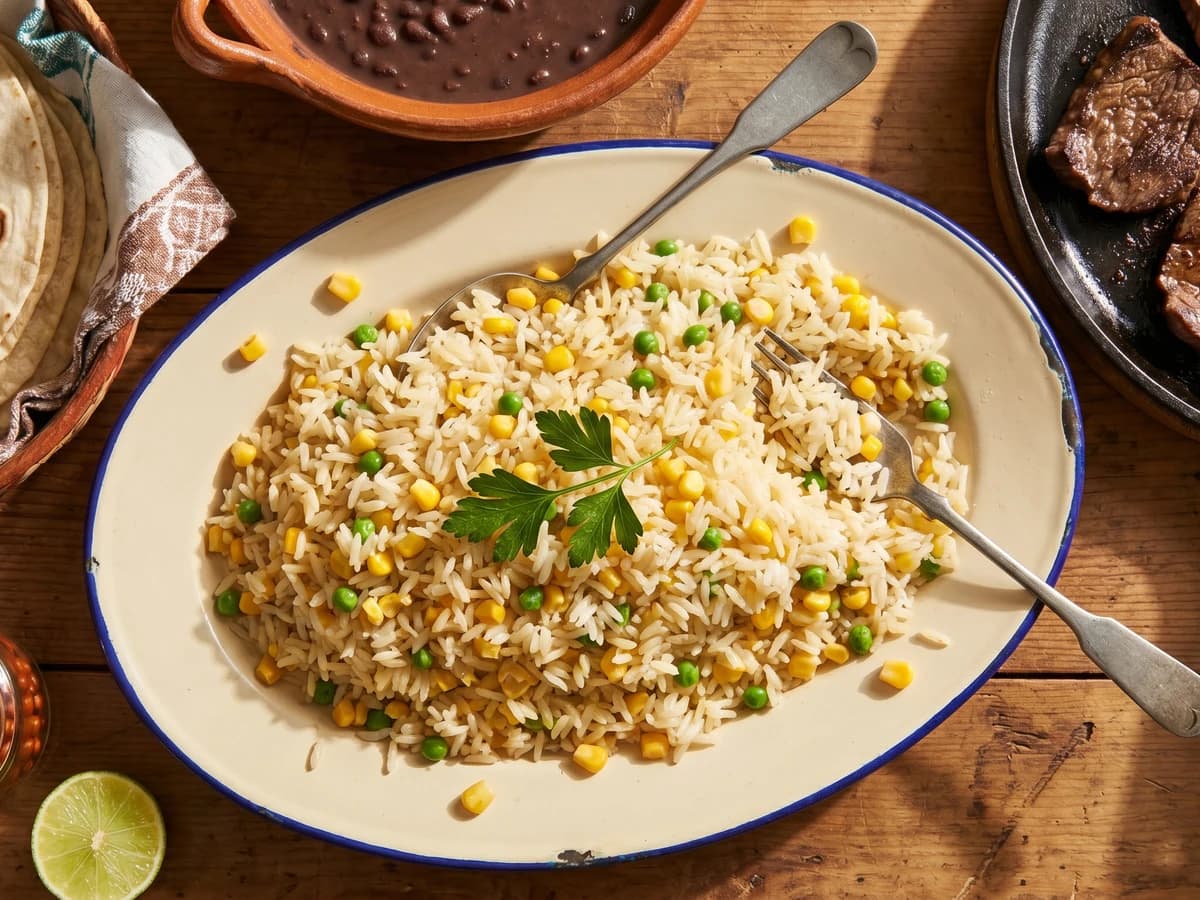
Sonora's white rice, toasted in butter and steamed with sweet corn and tender peas. The clean, quiet partner to a plate of carne asada, not the red rice of central Mexico.

Chef Lupita
Yucatán's white rice with sweet corn kernels, toasted in lard with garlic and onion. The quiet base that holds up against the peninsula's bold achiote-stained stews.