
Chef Lupita
Arroz a la Oaxaqueña
Oaxaca's red rice, stained with tomato and fried in lard, steamed with carrots, ejotes, black beans, and epazote. The side that anchors a Oaxacan family meal and earns its place beside the main.
A cooking platform built around craft, culture, and the stories behind what we eat.

Created by
Michoacán's Meseta P'urhépecha rainy-season mushrooms, hongo de ocote called iarini terekua, browned in pork lard on a wood comal with epazote, serrano, and corn tortillas beside the cazuela.
Michoacán, the Meseta P'urhépecha, in the pine country around Cherán K'eri, Paracho, Cocucho, Nahuatzen, and Comachuén, is where this dish lives. Hongo de ocote, called iarini terekua in P'urhépecha, comes with the rains. July and August. Not December, not whenever a supermarket feels like selling a white mushroom in plastic.
I learned foraged mushroom plates like this from cocineras who do not separate cooking from the forest, including María Elena Reyes of Cocucho. The mushroom arrives with pine needles still caught near the stem, and that is not dirtiness. That is evidence. You clean it carefully, brown it in manteca de cerdo, and let epazote cook into the fat. The herb is not decoration. It is part of the flavor.
The technique is direct: barro, leña, manteca, patience. The mushrooms release their liquid first, then the liquid reduces and the edges begin to brown. If you rush them, they taste wet and flat. If you use champiñón, you are not making iarini terekua. You are making sautéed mushrooms with a guilty conscience.
This is not Occidente mestizo calabacitas con elote y rajas. That is another good dish, from another table. This is P'urhépecha Indigenous cooking from Michoacán's highlands. Saber cocinar es saber vivir.
The P'urhépecha state, centered around Tzintzuntzan on Lake Pátzcuaro, remained independent from the Mexica empire until the Spanish invasion of the 1520s, and that history helps explain why Michoacán's highland cooking keeps a strong Indigenous vocabulary for corn, quelites, mushrooms, and sauces. In the Meseta P'urhépecha, rainy-season fungi are identified by local names: hongo de ocote is iarini terekua, pata de pájaro is terékua kuín jatsíri in the Comachuén and Nahuatzen register, and trompa de puerco is known as pashakua in related market language. Dishes and sauces such as charámakua, shakuá, and chilke rojo from Cherán K'eri belong to this same seasonal system, where the July and August rains decide what can be cooked.
Quantity
1 pound
cleaned, trimmed, and torn into large pieces
Quantity
3 tablespoons
Quantity
1/2 medium
thinly sliced
Quantity
2
sliced into thin rounds
Quantity
1
split, seeded if desired, and finely chopped
Quantity
2
thinly sliced
Quantity
1/2 teaspoon, plus more to taste
Quantity
4 large sprigs
leaves and tender stems roughly chopped
Quantity
2 tablespoons
only if the cazuela dries before the mushrooms soften
Quantity
for serving
warmed
| Ingredient | Quantity |
|---|---|
| foraged hongo de ocote (iarini terekua)cleaned, trimmed, and torn into large pieces | 1 pound |
| pork lard (manteca de cerdo) | 3 tablespoons |
| white onionthinly sliced | 1/2 medium |
| fresh chile serranosliced into thin rounds | 2 |
| fresh chile perón michoacano (optional)split, seeded if desired, and finely chopped | 1 |
| garlic clovesthinly sliced | 2 |
| sea salt | 1/2 teaspoon, plus more to taste |
| fresh epazoteleaves and tender stems roughly chopped | 4 large sprigs |
| water (optional)only if the cazuela dries before the mushrooms soften | 2 tablespoons |
| hand-pressed corn tortillaswarmed | for serving |
Begin before the fire. Confirm that the mushrooms are hongo de ocote, iarini terekua, gathered in the Meseta P'urhépecha during July and August. If the rain has not brought them to Cherán, Cocucho, Paracho, or the market women who know the forest, stop. Cook beans, squash, or cooked quelites today. Do not make this with champiñón. No me vengas con atajos.
Spread the iarini terekua on a clean cloth. Brush away pine needles and soil with your fingers or a soft brush. Trim only the dirty ends. Keep small caps whole and tear larger pieces by hand so the edges stay uneven and catch the lard. If they are muddy, rinse quickly and dry immediately. Do not soak them. Mushrooms drink water, then they boil instead of brown.
Set a cured clay comal over leña and warm a black clay cazuela from Capula or Tzintzuntzan gradually on top of it. Cold barro can crack if you bully it. When the cazuela is hot enough that a drop of water jumps and disappears, add the manteca de cerdo. Vegetable oil stays in the bottle. La manteca es el sabor.
Add the onion and chile serrano to the hot lard. If you have chile perón from the same Michoacán market, add it now. Cook with a wooden cuchara until the onion softens and the edges turn pale gold, about 4 minutes. Add the garlic for the last minute only. Garlic burns fast and burned garlic has no manners.
Add the cleaned mushrooms and the salt. Spread them across the cazuela and leave them alone for a full minute so the clay can work on them. Then turn them with the wooden spoon. They will release their forest liquid first, then the liquid will reduce and the edges will brown in the lard. Cook 8 to 10 minutes, stirring only enough to keep them from sticking. If the cazuela dries before the mushrooms soften, add the water one tablespoon at a time.
Fold in the chopped epazote and cook 2 minutes, until the leaves darken and cling to the mushrooms. Epazote is not confetti. Quelites are cooked, never raw, and epazote follows the same discipline here. La cocina no es decoración, es trabajo.
Taste for salt and spoon the mushrooms into a rough red barro cazuela for the table. Serve with warm hand-pressed corn tortillas wrapped in a P'urhépecha embroidered servilleta. If there is chilke rojo from Cherán K'eri, put it alongside, not over the mushrooms. No flour tortillas, no shredded cheese, no cream. This is corn country. Cada estado, su propia cocina.
1 serving (about 165g)
Culinary guides, cultural storytelling, and the editorial depth that makes cooking meaningful.
Discover Culinary ExplorerChef Lupita
Oaxaca's red rice, stained with tomato and fried in lard, steamed with carrots, ejotes, black beans, and epazote. The side that anchors a Oaxacan family meal and earns its place beside the main.
Chef Lupita
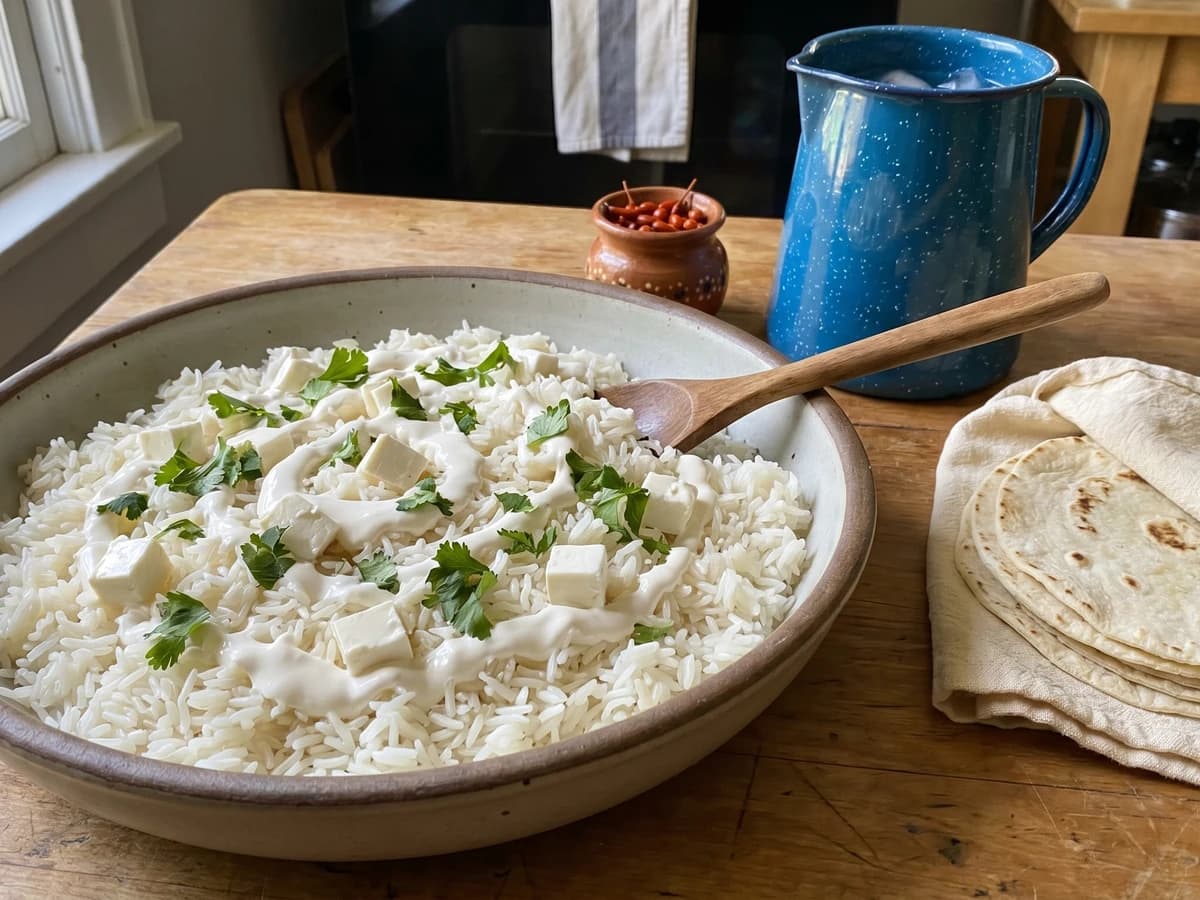
Sinaloa's home-cook white rice topped with cold cubes of cream cheese that soften into the warm grain, finished with crema and a sprinkle of chiltepin at the table. The trick that makes a side dish feel like a small luxury.
Chef Lupita
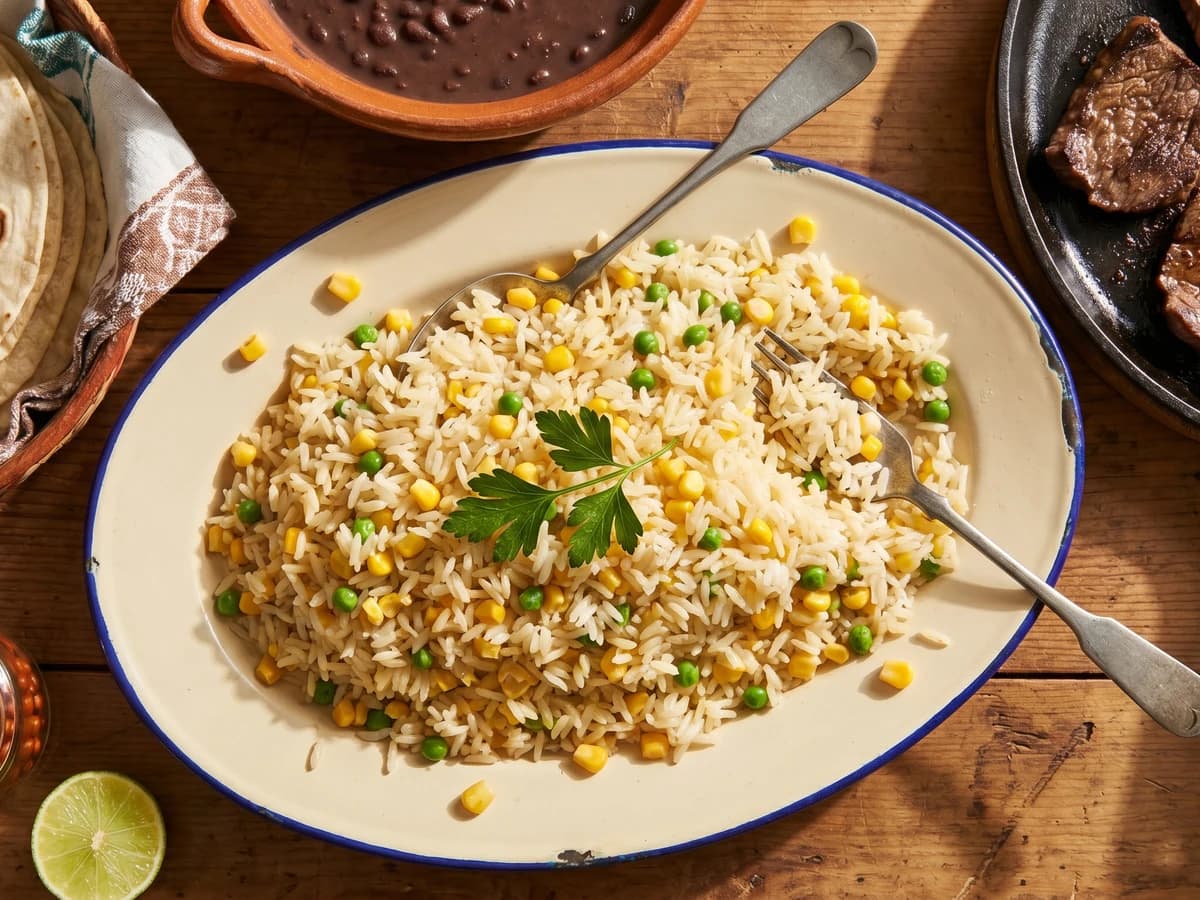
Sonora's white rice, toasted in butter and steamed with sweet corn and tender peas. The clean, quiet partner to a plate of carne asada, not the red rice of central Mexico.

Chef Lupita
Yucatán's white rice with sweet corn kernels, toasted in lard with garlic and onion. The quiet base that holds up against the peninsula's bold achiote-stained stews.