Culinary Explorer
A cooking platform built around craft, culture, and the stories behind what we eat.
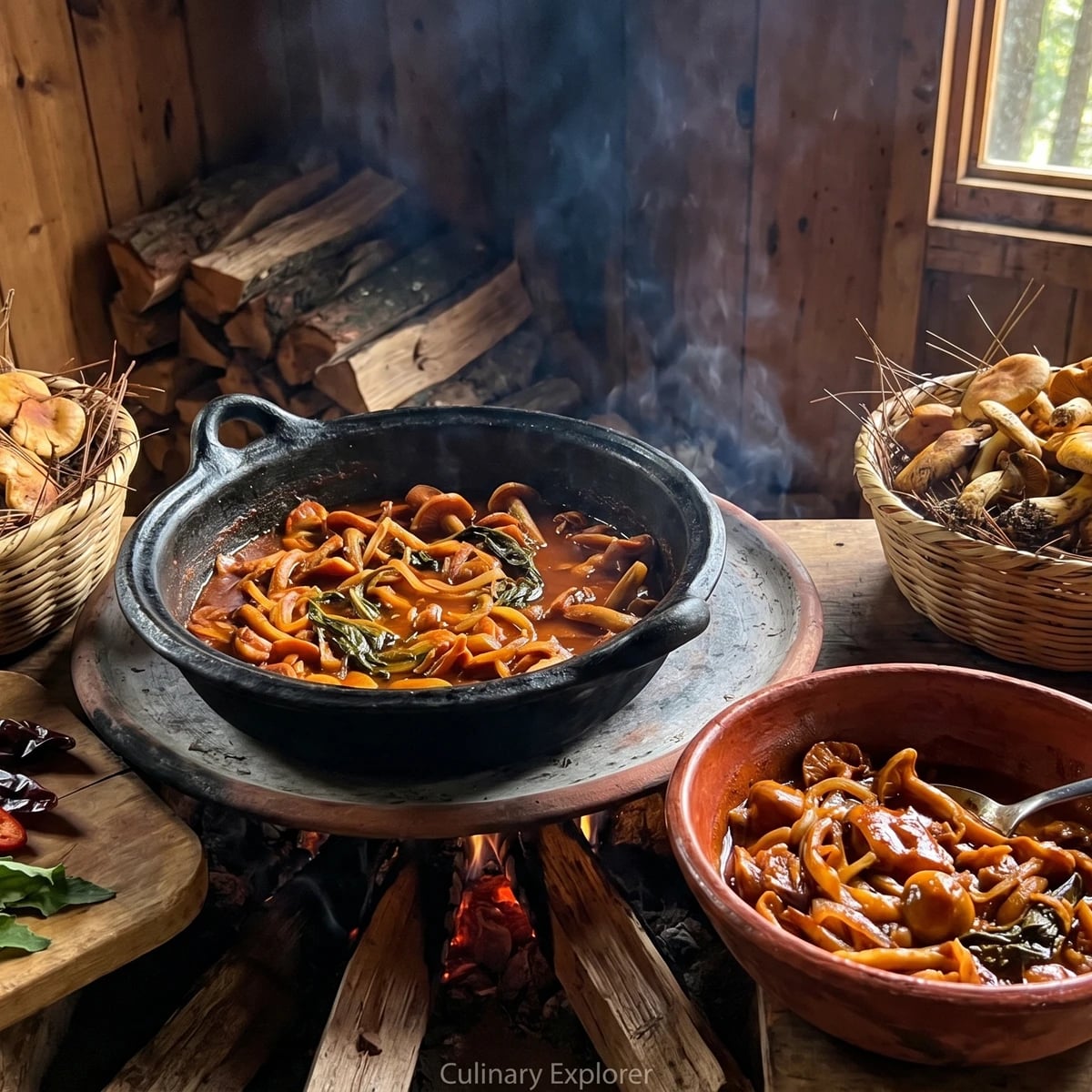
Hongos Amarillos al Chile Guajillo
Created by Chef Lupita
Michoacán's Meseta P'urhépecha rainy-season plate: yellow-capped terekuecha sauteed in manteca with toasted guajillo, onion, and cooked epazote, served from a Capula barro cazuela with corn tortillas.
Michoacán, Meseta P'urhépecha, in the pine country around Cocucho, Comachuén, Nahuatzen, and the road that drops toward Lake Pátzcuaro. This dish lives there after the rain. Not in March. Not because you feel like mushrooms. July and August, when the forest floor gives terekuecha and the women who know the paths come back with baskets that still smell of pine needles.
The yellow-capped mushrooms are called iarini terekua in the P'urhépecha register I was taught, and some cooks use charámakua for the foraged mushroom plate itself. Around Comachuén and Nahuatzen, the branching pata de pájaro is terékua kuín jatsíri. Pashakua, also called trompa de puerco by some Spanish-speaking vendors, is heard as shakuá. Names move by pueblo, so pregúntale a las señoras del mercado. Ask the women at the market. They know which basket came from which hill.
The chile is guajillo, with one pasilla for shadow, toasted on a comal de barro over leña and fried in manteca until it becomes a red chilke that clings to the mushrooms. Cherán K'eri has its own pride around chilke rojo. Cocucho has cocineras like María Elena Reyes, whose foraged mushroom plates show you that technique begins before the fire, with knowing what the rain brought and what it did not.
My mother used to say the market tells the truth before the stove does. Here, the forest tells it first. No me vengas con atajos. Champiñón blanco is not a substitute. A stainless saute pan on a gas burner will feed you, but it will not give you this dish. Use the right mushroom, the right fat, the right clay, and the patience to let the water cook out before the chile goes in. Así se hace y punto.
Ingredients
confirmed wild yellow-capped mushrooms, iarini terekua or charámakua
Quantity
1 1/2 pounds
from a knowledgeable P'urhépecha forager, cleaned and torn into bite-size pieces
confirmed seasonal companion mushrooms, such as trompa de puerco or pashakua, shakuá, or pata de pájaro, terékua kuín jatsíri (optional)
Quantity
small handful
only if gathered with the yellow mushrooms
dried chile guajillo
Quantity
5
stemmed and seeded
| Ingredient | Quantity |
|---|---|
| confirmed wild yellow-capped mushrooms, iarini terekua or charámakuafrom a knowledgeable P'urhépecha forager, cleaned and torn into bite-size pieces | 1 1/2 pounds |
| confirmed seasonal companion mushrooms, such as trompa de puerco or pashakua, shakuá, or pata de pájaro, terékua kuín jatsíri (optional)only if gathered with the yellow mushrooms | small handful |
| dried chile guajillostemmed and seeded | 5 |
Where cooking meets culture.
Culinary guides, cultural storytelling, and the editorial depth that makes cooking meaningful.
Discover Culinary Explorer