
Chef Lupita
Arroz a la Oaxaqueña
Oaxaca's red rice, stained with tomato and fried in lard, steamed with carrots, ejotes, black beans, and epazote. The side that anchors a Oaxacan family meal and earns its place beside the main.
A cooking platform built around craft, culture, and the stories behind what we eat.

Created by
Veracruz's Sotavento tostones are green plantain rounds fried twice in manteca de cerdo, salted hot, and served beside black beans, fish, or a sharp salsa macha.
Veracruz, especially the Sotavento and Los Tuxtlas, is where these tostones belong on the Mexican map. The green plantain grows in the humid lowlands, where the kitchen looks toward the Gulf and the Caribbean as much as toward the highlands. This is not a potato side. This is the tropical Veracruz table speaking in its own accent.
The technique is plain and exact: fry the green plantain once to soften it, smash it while it is still hot, then fry it again until the edges turn crisp and the center stays tender. The fat is manteca de cerdo. In Veracruz, lard carries the refried black beans, the platanos, the yuca. La manteca es el sabor. Use neutral oil if you must, but understand what you are losing.
I learned this version from a woman near Catemaco who served the tostones on banana leaf with frijoles negros refritos and a small jicara of salsa macha. She salted them the second they came out of the fat and looked at me like I should already know why. Salt sticks to hot fat. Wait two minutes and it falls off. Así se hace y punto.
Cada estado, su propia cocina. Veracruz has the Totonac and Huastec base, the Spanish hand, and the African line that put plantain, yuca, and malanga into the everyday pot. These tostones are quick food, yes, but quick does not mean careless. Saber cocinar es saber vivir.
Plantains arrived in Mexico through Spanish colonial trade routes that carried African and Caribbean foodways across the Gulf, and Veracruz became one of the places where that exchange stayed visible in daily cooking. In the Sotavento and Los Tuxtlas, plantain dishes sit beside yuca, malanga, black beans, and coastal fish, marking the Afromestiza vocabulary of the region. The twice-fried method is shared across the Caribbean, but the Veracruz table makes it its own with manteca de cerdo, frijoles negros, and salsa macha from the Gulf pantry.
Quantity
3 large
firm and unripe
Quantity
2 cups
or enough to come 1 inch up the pan
Quantity
1 1/2 teaspoons
divided
Quantity
2
finely grated
Quantity
1/4 cup
Quantity
1
halved
Quantity
for serving
made with chile de arbol, chile morita, garlic, peanuts, and sesame seeds
| Ingredient | Quantity |
|---|---|
| green plantainsfirm and unripe | 3 large |
| pork lard (manteca de cerdo)or enough to come 1 inch up the pan | 2 cups |
| kosher saltdivided | 1 1/2 teaspoons |
| garlic clovesfinely grated | 2 |
| warm water | 1/4 cup |
| lime (optional)halved | 1 |
| salsa macha veracruzana (optional)made with chile de arbol, chile morita, garlic, peanuts, and sesame seeds | for serving |
Cut off both ends of each green plantain. Score the peel lengthwise in two or three places, just deep enough to reach the fruit. Pry the peel away with your thumb or the back of a spoon. Green plantain fights you a little. That is normal. If it peels like a banana, it is too ripe for tostones.
Slice the plantains into rounds about 1 inch thick. Keep them even so they fry at the same pace. Thin slices turn into chips. Thick rounds become proper tostones, crisp outside and tender in the middle.
Stir the grated garlic, warm water, and 1/2 teaspoon salt in a small bowl. This is not a marinade. It is a quick seasoning dip used after the first fry, just enough to season the plantain before the second fry. Do not soak the plantains or they will spit badly in the hot fat.
Melt the manteca de cerdo in a heavy skillet or wide cazuela over medium heat until it reaches 325F. Add the plantain rounds in one layer. Fry for 3 to 4 minutes per side, until pale yellow and tender enough to press, but not browned. The first fry cooks the starch. Browning comes later.
Lift the plantains onto a paper-lined tray. While they are still hot, press each round between two pieces of banana leaf, parchment, or a clean plastic bag using the bottom of a glass, tortilla press, or tostonera. Flatten to about 1/4 inch thick. Press straight down, not at an angle, or the edges split.
Brush or quickly dip each flattened plantain in the garlic water, then shake off every extra drop. You want a kiss of garlic and salt, not a wet plantain going back into hot lard. No me vengas con atajos here. Water and hot fat need respect.
Raise the heat to 375F. Return the flattened plantains to the lard in batches. Fry for 2 to 3 minutes per side, until the edges are crisp, the surface is golden, and small blisters show across the plantain. Drain on a rack, not a pile of paper towels, so the bottoms stay crisp.
Salt the tostones immediately with the remaining 1 teaspoon salt while the fat still glistens on the surface. Serve hot on banana leaf with lime halves and salsa macha veracruzana, or beside frijoles negros refritos. The salt, the fat, the crunch. That is the dish.
1 serving (about 170g)
Culinary guides, cultural storytelling, and the editorial depth that makes cooking meaningful.
Discover Culinary ExplorerChef Lupita
Oaxaca's red rice, stained with tomato and fried in lard, steamed with carrots, ejotes, black beans, and epazote. The side that anchors a Oaxacan family meal and earns its place beside the main.
Chef Lupita
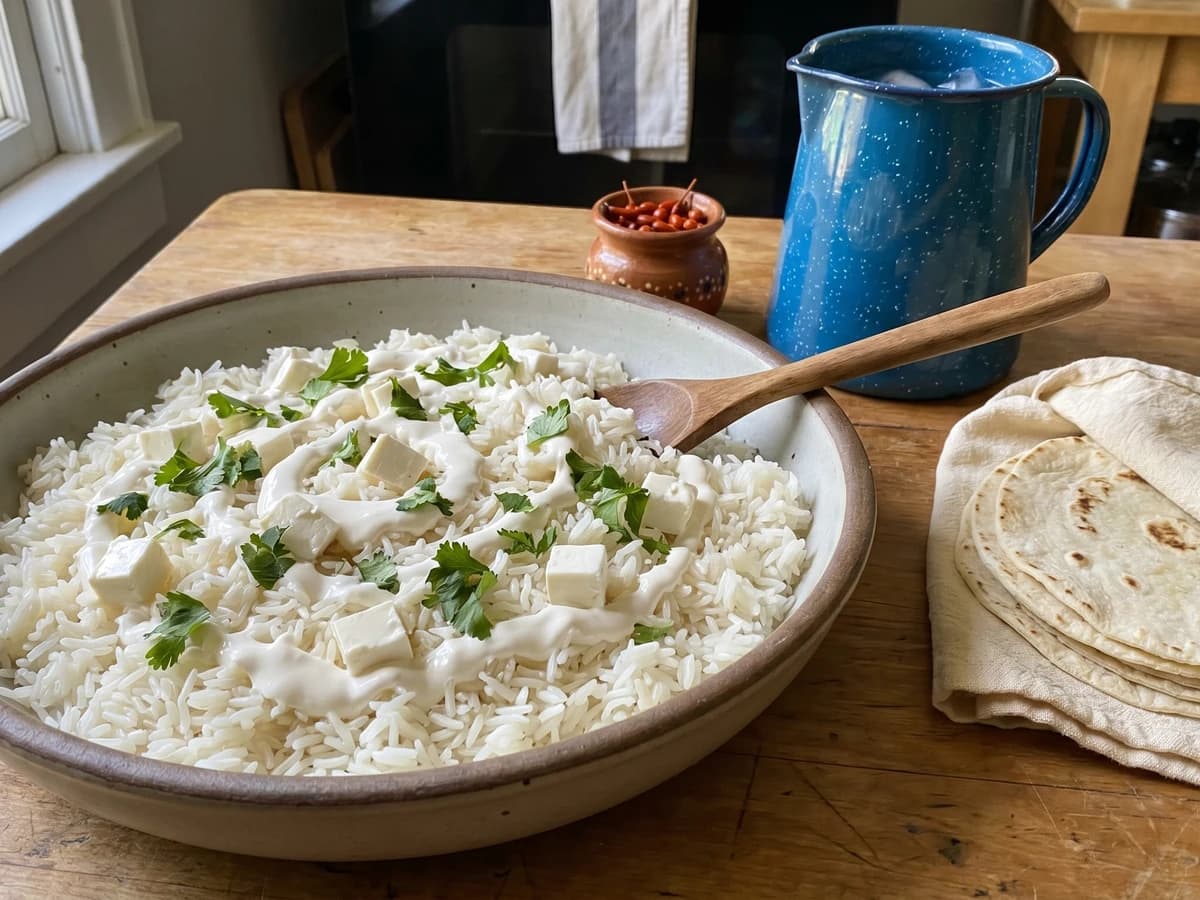
Sinaloa's home-cook white rice topped with cold cubes of cream cheese that soften into the warm grain, finished with crema and a sprinkle of chiltepin at the table. The trick that makes a side dish feel like a small luxury.
Chef Lupita
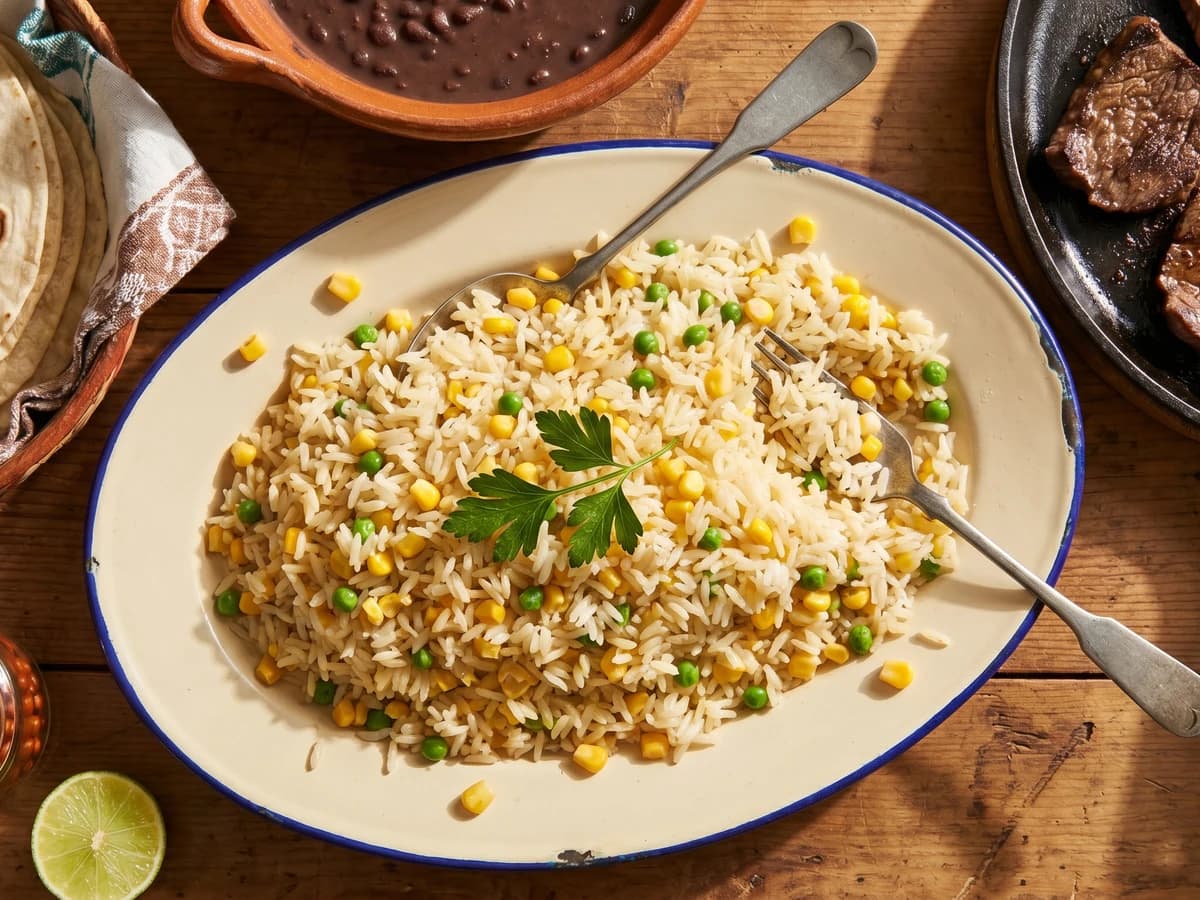
Sonora's white rice, toasted in butter and steamed with sweet corn and tender peas. The clean, quiet partner to a plate of carne asada, not the red rice of central Mexico.

Chef Lupita
Yucatán's white rice with sweet corn kernels, toasted in lard with garlic and onion. The quiet base that holds up against the peninsula's bold achiote-stained stews.