
Chef Lupita
Birria Tacos with Consome
Jalisco's goat birria, born around Cocula and carried into Guadalajara's markets, slow-braised in ancho, guajillo, cascabel, and chile de arbol, then tucked into corn tortillas crisped in its own red fat.
A cooking platform built around craft, culture, and the stories behind what we eat.
Created by
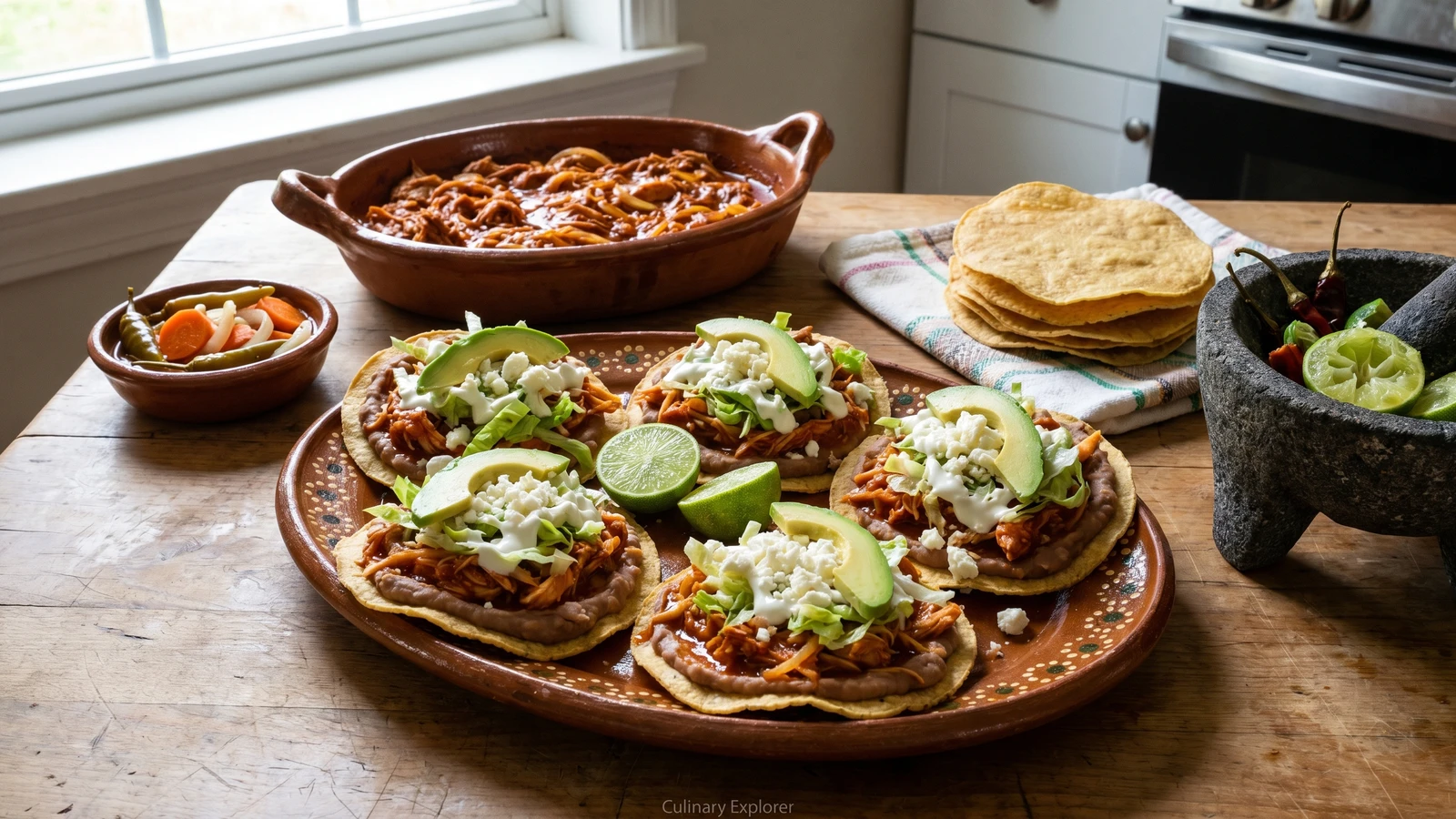
Guanajuato's Bajio table gives you crisp tostadas layered with lard-fried beans, smoky chipotle chicken tinga, queso fresco, crema espesa, and market lettuce.
Guanajuato, in the Bajio, is where I place these tostadas: market food from Celaya, Leon, Irapuato, and the kitchens that know how to turn one poached chicken into dinner for six. Tinga may have its older fame in Puebla, yes, but the Bajio took the guisado and put it to work on tostadas with good beans, dairy from the region, and a table full of pickled chiles. Cada estado, su propia cocina.
The chile that defines this version is chipotle, preferably chipotle meco for deeper smoke or chipotle morita if that is what your market carries. The sauce is jitomate, white onion, garlic, Mexican oregano, and a little of the chicken broth. Not ketchup. Not barbecue sauce. No me vengas con atajos. You cook the onion until it slumps and sweetens, then you fry the blended sauce in manteca de cerdo until it darkens. That is how the tinga stops tasting raw.
The tostada is built in layers because a wet guisado needs architecture. First frijoles refritos made with bayo beans and manteca, then the tinga, then queso fresco, shredded lechuga orejona or romaine, crema espesa, and chiles en escabeche on the side. The bean layer is not decoration. It protects the tostada from going soft before it reaches your mouth. La cocina no es decoración, es trabajo.
I learned this kind of practical cooking from women who could stretch food without making it feel poor. One chicken breast, a pot of beans, a stack of tostadas, and suddenly the whole table is eating well. Saber cocinar es saber vivir.
Tinga is most strongly associated with Puebla in 19th-century written sources, where shredded meat was cooked with tomato, onion, and chipotle into a saucy guisado for everyday meals. In the Bajio, especially Guanajuato and Queretaro, the dish became part of market and home tostada culture because crisp tortillas, refried beans, fresh dairy, and chiles en escabeche were already common table elements. The use of chipotle connects central Mexico's dried chile trade to household cooking: a smoked ripe jalapeno travels well, keeps well, and gives depth to quick guisados without needing a long mole process.
Quantity
1 1/2 pounds
Quantity
1/2 medium
for poaching
Quantity
2
for poaching
Quantity
1
Quantity
1 teaspoon, plus more to taste
Quantity
1 1/2 pounds
cored
Quantity
2 meco or 3 morita
stemmed
Quantity
1/4 cup
for soaking the chiles
Quantity
2 tablespoons
for frying the tinga sauce
Quantity
1
thinly sliced
Quantity
3
chopped
Quantity
1 teaspoon
Quantity
1/4 teaspoon
Quantity
1 cup
Quantity
3 cups
with 1/2 cup of their cooking liquid
Quantity
3 tablespoons
for refrying the beans
Quantity
12
Quantity
2 cups
shredded
Quantity
1 cup
crumbled
Quantity
3/4 cup
Quantity
1
sliced
Quantity
for serving
Quantity
for serving
| Ingredient | Quantity |
|---|---|
| bone-in chicken breast or thighs | 1 1/2 pounds |
| white onionfor poaching | 1/2 medium |
| garlic clovesfor poaching | 2 |
| bay leaf | 1 |
| kosher salt | 1 teaspoon, plus more to taste |
| ripe jitomate Romacored | 1 1/2 pounds |
| dried chile chipotle meco or dried chile chipotle moritastemmed | 2 meco or 3 morita |
| hot waterfor soaking the chiles | 1/4 cup |
| manteca de cerdofor frying the tinga sauce | 2 tablespoons |
| large white onionthinly sliced | 1 |
| garlic cloveschopped | 3 |
| dried Mexican oregano | 1 teaspoon |
| ground cumin | 1/4 teaspoon |
| reserved chicken broth | 1 cup |
| cooked bayo beans or pinto beanswith 1/2 cup of their cooking liquid | 3 cups |
| manteca de cerdofor refrying the beans | 3 tablespoons |
| crisp corn tostadas | 12 |
| lechuga orejona or romaine lettuceshredded | 2 cups |
| queso frescocrumbled | 1 cup |
| crema espesa | 3/4 cup |
| avocado (optional)sliced | 1 |
| lime halves (optional) | for serving |
| chiles en escabeche with carrots and onion (optional) | for serving |
Put the chicken in a saucepan with the half onion, 2 garlic cloves, bay leaf, salt, and enough water to cover by 1 inch. Bring to a gentle simmer, then lower the heat and cook 25 to 30 minutes, until the meat is cooked through and pulls from the bone. Do not boil it hard. Hard boiling gives you tough chicken and cloudy broth.
Lift the chicken onto a plate and let it cool just enough to handle. Strain and reserve the broth. Pull the meat from the bone and shred it by hand into thin strands. Hand-shredded chicken catches the sauce better than neat knife cuts. The women in the market know this without making a speech about it.
Place the chipotle meco or morita in a small bowl and cover with the hot water for 15 minutes. They should soften and smell smoky, not harsh. If using canned chipotles en adobo because that is all your market has, use 2 chiles and 1 tablespoon adobo. It works, but the dried chile has cleaner smoke. A substitution is a compromise, not an upgrade.
Blend the jitomates, soaked chipotles with their soaking water, chopped garlic, Mexican oregano, cumin, and 1/2 cup reserved chicken broth until smooth. Taste the raw sauce only for salt and chile strength. It will taste sharp now. The frying is what turns it into tinga.
Melt 2 tablespoons manteca de cerdo in a wide cazuela or heavy skillet over medium heat. Add the sliced white onion and cook 8 to 10 minutes, stirring often, until the onion bends, turns glossy, and begins to take a little color at the edges. The onion is the body of the tinga. Do not leave it raw.
Pour the blended jitomate and chipotle sauce into the onions. It will sputter. Cook 10 to 12 minutes, stirring from the bottom, until the sauce darkens to brick red and the manteca begins to shine at the edges. That fat separating is your sign. Skip this and the sauce tastes like blender. Así se hace y punto.
Add the shredded chicken and the remaining 1/2 cup chicken broth. Fold gently so every strand is coated. Simmer 8 to 10 minutes, until the chicken has absorbed the sauce but still looks glossy. Taste for salt. The tinga should be smoky, tomato-rich, and savory, not sweet.
In a separate skillet, melt 3 tablespoons manteca de cerdo over medium heat. Add the cooked bayo beans with their cooking liquid and mash with a bean masher or the back of a spoon. Cook 8 to 10 minutes, stirring, until thick and spreadable. La manteca es el sabor. Beans fried in oil taste thinner because they are thinner.
Set out the tostadas, hot refried beans, tinga, shredded lettuce, queso fresco, crema espesa, avocado, lime halves, and chiles en escabeche. Tostadas wait for nobody once they are assembled, so everything must be ready before the first one is built.
Spread each tostada with a firm layer of refried beans. Spoon tinga over the beans, then add lettuce, queso fresco, crema espesa, and avocado if using. Serve with lime and chiles en escabeche on the side. Eat while the tostada is still crisp. Recetas probadas y garantizadas.
1 serving (about 460g)
Culinary guides, cultural storytelling, and the editorial depth that makes cooking meaningful.
Discover Culinary ExplorerChef Lupita
Jalisco's goat birria, born around Cocula and carried into Guadalajara's markets, slow-braised in ancho, guajillo, cascabel, and chile de arbol, then tucked into corn tortillas crisped in its own red fat.

Chef Lupita
Sonora's working morning burrito: chicharrón de cáscara stewed in chile colorado with diced potato, rolled tight in a paper-thin tortilla sobaquera and eaten standing up at the carreta.

Chef Lupita
Mocorito's pork chilorio, shredded and confited in lard with chile ancho and pasilla, rolled into a thin handmade flour tortilla. The burrito Sinaloa sends out into the world.

Chef Lupita
Sonora's morning burrito of mashed pinto frijoles puercos and melted queso asadero, wrapped in a paper-thin sobaquera and seared on the comal until the cheese pulls in long strings.