
Chef Lupita
Birria Tacos with Consome
Jalisco's goat birria, born around Cocula and carried into Guadalajara's markets, slow-braised in ancho, guajillo, cascabel, and chile de arbol, then tucked into corn tortillas crisped in its own red fat.
A cooking platform built around craft, culture, and the stories behind what we eat.
Created by
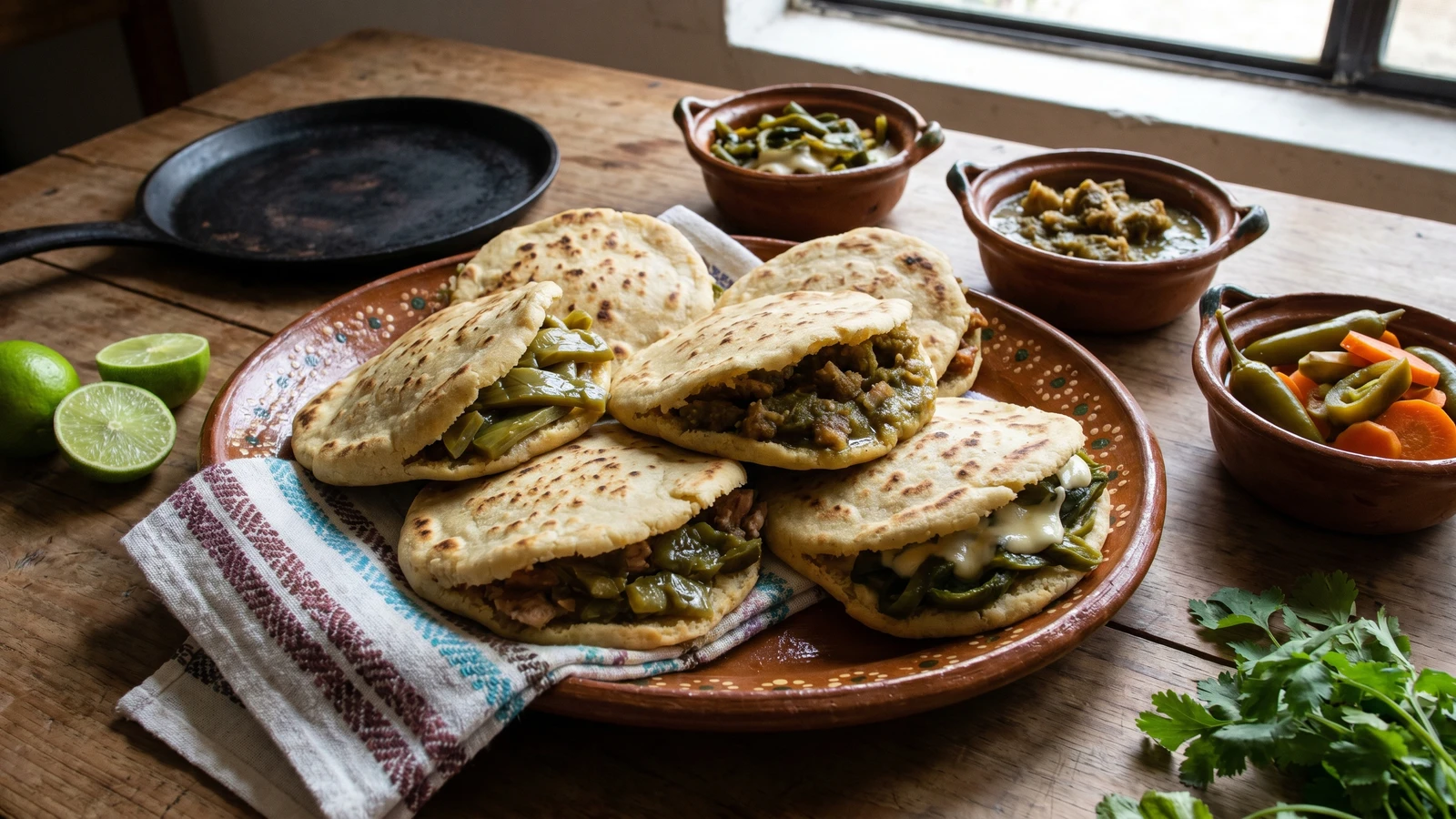
San Luis Potosí's Altiplano gorditas, baked hard and fragrant in a hot horno, then split open for nopales, chicharrón en salsa verde, and rajas con queso.
San Luis Potosí, especially the Altiplano and the market kitchens of the capital, knows this gordita by the smell of corn hitting a hot horno. It is not the fried gordita from the center of the country and it is not a flour wrap. Flour tortillas belong to the north. Here the dough is maíz nixtamalizado, manteca de cerdo, salt, and the dry force of a clay or brick oven.
The women in the mercados perfected the rhythm: slap the masa into thick disks, bake until the outside takes brown freckles, split them while hot, and fill them with the guiso that is ready that day. Nopales with epazote when the paddles are tender. Chicharrón quebrado in salsa verde when the tomatillo is sharp. Rajas de chile poblano with queso ranchero when the poblanos are good. If the market does not have good nopales, you do not force nopales. Pregúntale a las señoras del mercado.
At Mercado República in the capital, I watched a señora work a wood-fired horno with the calm of someone who had repeated the same motion for thirty years. She did not measure the water. She pressed the masa and listened. When the edge cracked, she added a palmful more. La cocina no es decoración, es trabajo.
The filling is flexible. The masa is not. Use fresh nixtamal masa if you can, and use lard because it keeps the crumb tender after the oven's dry heat. No me vengas con atajos. Cada estado, su propia cocina.
San Luis Potosí was founded in 1592 after silver was found at Cerro de San Pedro, and its market food developed around miners, muleteers, rural vendors, and families who needed filling corn-based meals that traveled well. The domed adobe and brick horno came through colonial bread baking, but cooks in the Potosino Altiplano adapted that oven to nixtamal masa, making thick gorditas that could be split and filled after baking. Gorditas de horno are a separate branch from enchiladas potosinas of Soledad de Graciano Sánchez, where chile ancho goes into the masa before sealing on the comal and crisping in manteca.
Quantity
3 pounds
preferably medium-ground masa para gordita
Quantity
1/2 cup, plus 2 tablespoons
room temperature
Quantity
2 teaspoons, plus more to taste
Quantity
1/2 to 3/4 cup
as needed
Quantity
1 pound
husked and rinsed
Quantity
4
stemmed
Quantity
2
Quantity
1/4 medium
Quantity
1/2 cup
Quantity
1 tablespoon
for the chicharrón guiso
Quantity
8 ounces
broken into coarse pieces
Quantity
2 sprigs
Quantity
1 1/2 pounds
cleaned and diced
Quantity
1/2 small
finely diced
Quantity
2
finely chopped
Quantity
2 ripe
diced
Quantity
1 tablespoon
for the nopales
Quantity
1 sprig
Quantity
2 tablespoons
chopped
Quantity
6
Quantity
1 medium
thinly sliced
Quantity
1 tablespoon
for the rajas
Quantity
8 ounces
crumbled
Quantity
for serving
Quantity
for serving
Quantity
for serving
| Ingredient | Quantity |
|---|---|
| fresh nixtamal masa de maízpreferably medium-ground masa para gordita | 3 pounds |
| manteca de cerdoroom temperature | 1/2 cup, plus 2 tablespoons |
| fine sea salt | 2 teaspoons, plus more to taste |
| warm wateras needed | 1/2 to 3/4 cup |
| tomatilloshusked and rinsed | 1 pound |
| fresh chile serranostemmed | 4 |
| garlic cloves | 2 |
| white onion | 1/4 medium |
| fresh cilantro leaves and tender stems | 1/2 cup |
| manteca de cerdofor the chicharrón guiso | 1 tablespoon |
| chicharrón de cerdo quebradobroken into coarse pieces | 8 ounces |
| fresh epazote | 2 sprigs |
| nopalescleaned and diced | 1 1/2 pounds |
| white onionfinely diced | 1/2 small |
| fresh chile serranofinely chopped | 2 |
| jitomate guaje or Roma tomatoesdiced | 2 ripe |
| manteca de cerdofor the nopales | 1 tablespoon |
| fresh epazote | 1 sprig |
| fresh cilantrochopped | 2 tablespoons |
| fresh chile poblano | 6 |
| white onionthinly sliced | 1 medium |
| manteca de cerdofor the rajas | 1 tablespoon |
| queso ranchero or queso frescocrumbled | 8 ounces |
| chiles jalapeños en escabeche (optional) | for serving |
| lime halves (optional) | for serving |
| salsa de molcajete (optional) | for serving |
If you have a wood-fired clay or brick horno, build the fire 45 minutes before baking. Let the floor and walls get fully hot, then rake the coals to the side. For a home kitchen, heat the oven to 500F with a baking stone or baking steel inside for at least 45 minutes. It is a compromise, not an upgrade, but it gives the masa the hard heat it needs.
Put the tomatillos and 4 serranos in a saucepan and cover with water. Simmer 8 to 10 minutes, until the tomatillos turn olive green and soften. Blend them with the garlic, the 1/4 onion, cilantro, and 1 teaspoon salt until smooth. This is for the chicharrón, so do not make it watery.
Melt 1 tablespoon manteca in a clay cazuela or heavy skillet over medium heat. Pour in the salsa verde and cook 5 minutes, stirring, until the color deepens and the salsa thickens. Add the chicharrón quebrado and 2 sprigs epazote. Simmer 6 to 8 minutes, just until the chicharrón softens but still has coarse pieces. A gordita filling must hold itself. Soup belongs in a bowl.
Put the diced nopales in a wide skillet with a pinch of salt and cook over medium heat for 8 minutes, stirring often, until their liquid cooks off and the green turns darker. Add 1 tablespoon manteca, the 1/2 diced onion, 2 chopped serranos, diced jitomates, and 1 sprig epazote. Cook 10 to 12 minutes more, until the nopales are tender and the guiso is thick. Stir in the chopped cilantro at the end.
Roast the poblanos directly over a flame or on a hot comal until the skins blister and blacken in patches. Cover them in a bowl for 10 minutes, then peel, seed, and slice into strips. Do not rinse them under water. You worked for that roasted flavor, so do not wash it down the drain. Melt 1 tablespoon manteca in a skillet, cook the sliced onion until soft, add the rajas and salt, then fold in the queso ranchero until it softens.
In a large bowl, knead the fresh masa with 1/2 cup manteca and 2 teaspoons salt. Add warm water a few tablespoons at a time only if the masa feels stiff. It should feel soft and alive, not sticky, and the edge should not crack when you press it. If it cracks, it needs water. If it smears, it needs a little more masa. This is why the señora presses before she cooks.
Divide the masa into 12 balls. Press each one by hand or in a tortilla press lined with plastic into a thick disk about 4 inches wide and 1/2 inch thick. Keep the edges a little rounded, not thin. Thin edges bake hard and break when you split them.
Place the gorditas directly on the hot horno floor or on the preheated baking stone. Bake 8 to 12 minutes, turning once, until they have browned freckles, dry matte patches, and a firm outside. They should puff slightly but they will not balloon like a tortilla. Pull them before they turn hard all the way through.
Wrap the baked gorditas in a clean cotton servilleta for 5 minutes. While still warm, cut a slit halfway around the edge with a small knife and open the pocket gently with your thumb. Do not cut all the way through. You need a hinge, not two separate tortillas.
Fill some gorditas with nopales, some with chicharrón en salsa verde, and some with rajas con queso. Wipe a comal with the remaining manteca and warm the filled gorditas 1 minute per side, just enough to gloss the outside and settle the filling into the masa. La manteca es el sabor.
Pile the gorditas on a clay platter and set out chiles jalapeños en escabeche, lime halves, and salsa de molcajete. Serve them wrapped in paper or a servilleta, the way they hand them across a market counter. Recetas probadas y garantizadas.
1 serving (about 600g)
Culinary guides, cultural storytelling, and the editorial depth that makes cooking meaningful.
Discover Culinary ExplorerChef Lupita
Jalisco's goat birria, born around Cocula and carried into Guadalajara's markets, slow-braised in ancho, guajillo, cascabel, and chile de arbol, then tucked into corn tortillas crisped in its own red fat.

Chef Lupita
Sonora's working morning burrito: chicharrón de cáscara stewed in chile colorado with diced potato, rolled tight in a paper-thin tortilla sobaquera and eaten standing up at the carreta.

Chef Lupita
Mocorito's pork chilorio, shredded and confited in lard with chile ancho and pasilla, rolled into a thin handmade flour tortilla. The burrito Sinaloa sends out into the world.

Chef Lupita
Sonora's morning burrito of mashed pinto frijoles puercos and melted queso asadero, wrapped in a paper-thin sobaquera and seared on the comal until the cheese pulls in long strings.