Culinary Explorer

A cooking platform built around craft, culture, and the stories behind what we eat.
Discover Culinary Explorer
Tosta de Zurrapa de Lomo Andaluza

Tosta de Zurrapa de Lomo Andaluza

Created by

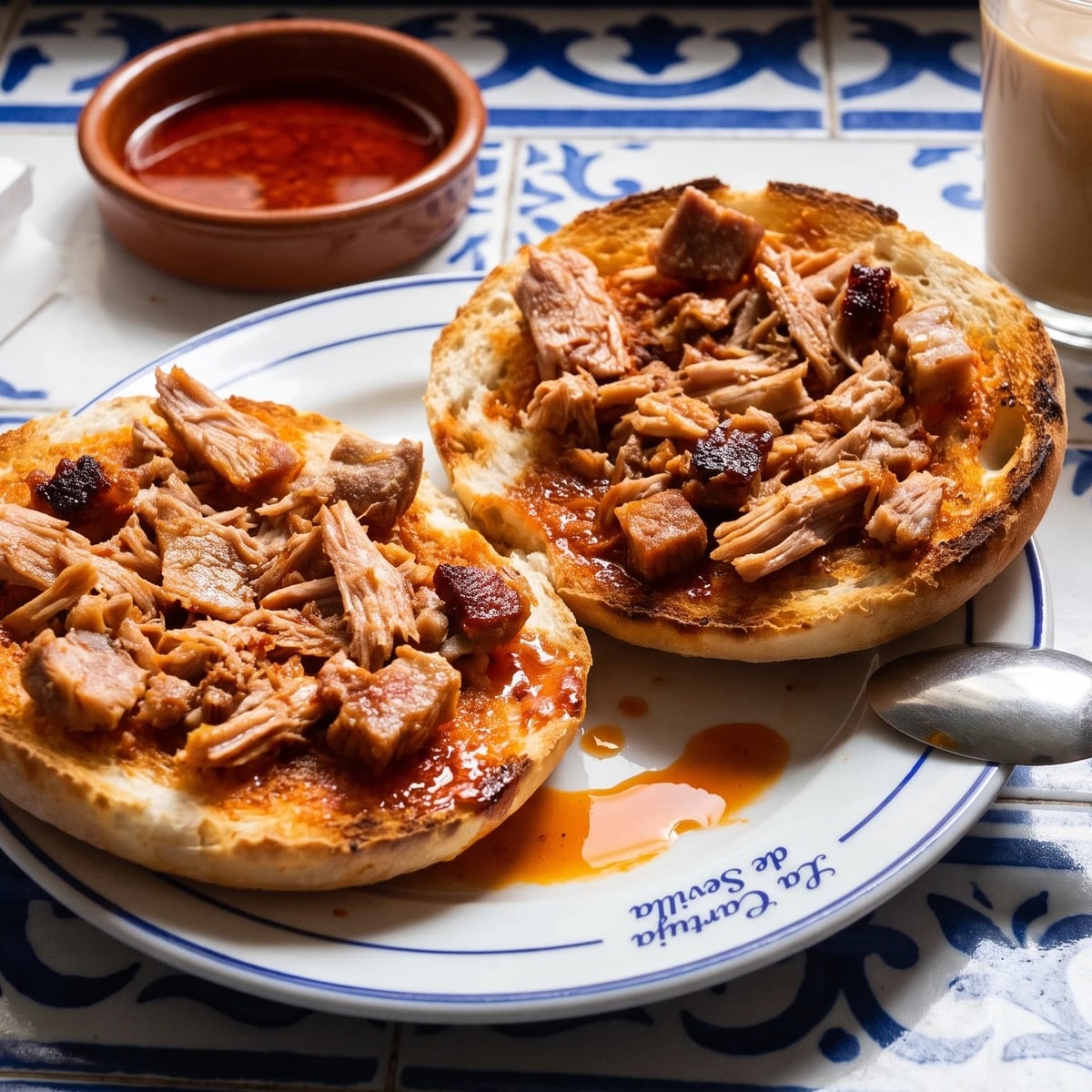
Zurrapa de lomo is Andalusia's chunky pork preserve, lomo cooked slowly in seasoned manteca until it shreds, then spooned onto warm bread with its red fat.

Sandwiches & Wraps
Spanish
Budget Friendly
Comfort Food
Weeknight
20 min
Active Time
1 hr 20 min cook1 hr 40 min total
Yield6 open-faced tostas

Tosta de zurrapa de lomo is Andaluz, especially the breakfast and merienda counter of the south: pork loin cooked slowly in manteca, pork lard, with garlic, oregano, bay, and pimentón until the meat breaks into rough shreds. It is not the smooth smear of manteca colorá. The zurrapa is the good bit at the bottom, the meat, the spice, the fat, all together on warm bread.

The method that decides it is the heat. Keep the pork at the quietest bubble in the manteca, never frying hard, or the lean lomo tightens and turns dry before it can soften. Low heat gives you tender shreds and red, seasoned fat that melts into the toast. Rush it and you get tough pork in greasy bread. Nobody needs that on a Tuesday.

If you can't find mollete, the soft Andalusian breakfast roll, use a white country roll or a mild sourdough with a tender crumb. It won't be quite the same, because mollete drinks the manteca without scratching your mouth, but it gets you there. Use real pork lard, not butter, and pimentón de la Vera if you can find it. Siempre sale, si lo sigues.

Zurrapa belongs to the Andalusian habit of preserving pork from the matanza, the household slaughter, by cooking it in manteca so the fat sealed and carried it for later meals. In places such as Cádiz, Málaga, and Sevilla, it became breakfast food on toasted molletes, sold beside manteca colorá and served simply because the preserve was already waiting in the larder. The name points to the scrapings and shredded bits left in the seasoned fat, once humble, now the part people ask for first.

The technique, the tradition, and the story behind every dish.

Discover Culinary Explorer

Ingredients

pork loin

Quantity

600g

trimmed and cut into 3cm cubes

pork lard

Quantity

350g

garlic cloves

Quantity

5

lightly crushed

sweet pimentón de la Vera

Quantity

2 teaspoons

hot pimentón de la Vera (optional)

Quantity

1/2 teaspoon

dried oregano

Quantity

1 teaspoon

bay leaves

Quantity

2

dry white wine

Quantity

90ml

vinagre de Jerez (sherry vinegar)

Quantity

1 tablespoon

fine sea salt

Quantity

10g

freshly ground black pepper

Quantity

1/2 teaspoon

molletes or thick slices of rustic white bread

Quantity

6

split or sliced

extra virgin olive oil (optional)

Quantity

as needed

for brushing the bread

Equipment Needed

  • Heavy frying pan or shallow cazuela, 26 to 28cm
  • Two forks for shredding
  • Clean jar or covered ceramic dish for storing

Instructions

  1. 1

    Season the pork

    Put the pork loin in a bowl with the salt, black pepper, oregano, bay leaves, crushed garlic, wine, and sherry vinegar. Turn it well, cover, and leave it 30 minutes at room temperature, or up to 8 hours in the refrigerator. Pésalo, no lo adivines: lean pork needs the salt measured so it seasons through without turning harsh.

  2. 2

    Melt the manteca

    Set a heavy pan over low heat and melt the pork lard gently. Lift the pork from its marinade and pat it mostly dry, saving the liquid. Add the pork and garlic to the melted manteca. The fat should barely murmur around the meat, not spit and brown hard.

  3. 3

    Cook low and slow

    Cook the pork uncovered over low heat for 45 to 55 minutes, turning now and then, until a piece presses apart easily with a fork. If the fat starts to snap or the meat browns fast, lower the heat. This is the whole dish: quiet cooking in manteca so the lomo softens instead of tightening.

  4. 4

    Color the fat

    Stir the pimentón into the saved marinade, then pour it into the pan. Let it bubble gently for 8 to 10 minutes, until the wine smell is gone and the fat turns brick red and glossy. Do not scorch the pimentón; burnt pimentón tastes bitter and no bread can hide it.

  5. 5

    Shred the zurrapa

    Take out the bay leaves. Crush and pull the pork into rough shreds with two forks right in the pan, leaving some small chunks. Stir so every piece is coated in the red manteca. Taste for salt while it is warm.

  6. 6

    Toast and serve

    Toast the molletes or bread until the surface is crisp but the middle stays tender. Brush with a little olive oil if the bread is very dry. Spoon the warm zurrapa over the toast with enough red manteca to soak in at the edges. Serve at once, with a little extra fat from the pan for the person who knows what they're doing.

Chef Tips

  • Use pork loin for the classic lean texture, but do not choose a bone-dry supermarket piece if you can help it. A little fat along the edge is welcome. If all you can find is very lean loin, add 50g more lard and keep the heat even lower.
  • Real pork lard matters here. Butter makes a different thing, and olive oil alone misses the point. If you can find ibérico lard, use it; if not, plain rendered pork lard from a butcher still gives you the dish.
  • Mollete is the right bread: soft, pale, and good at drinking the red manteca. Far from Andalucía, use a soft white roll, a split bolillo, or a mild country loaf. A very sour, hard-crusted bread fights the zurrapa.
  • This is richer after a night in the fridge. Warm it gently until the manteca loosens, then stir before spooning it onto toast. Do not microwave it hard or the pork tightens.

Advance Preparation

  • The pork can be seasoned up to 8 hours ahead and kept covered in the refrigerator. Bring it back toward room temperature before it goes into the manteca.
  • The finished zurrapa keeps 5 days refrigerated in a covered jar or dish, with the meat pressed below the layer of manteca. Reheat only what you need over low heat.
  • For breakfast, toast the bread fresh and warm the zurrapa while the coffee is going. The bread should meet the fat hot, not sit under it going limp.

Frequently Asked Questions

Nutrition Information

1 serving (about 210g)

Calories
895 calories
Total Fat
68 g
Saturated Fat
26 g
Trans Fat
0 g
Unsaturated Fat
39 g
Cholesterol
120 mg
Sodium
1080 mg
Total Carbohydrates
39 g
Dietary Fiber
3 g
Sugars
2 g
Protein
28 g

Note: Chef personas and recipes are created with AI assistance. Cook with care: follow safe food-handling practices, check doneness with a thermometer when needed, and adapt for allergies and your kitchen.

Where cooking meets culture.

Culinary guides, cultural storytelling, and the editorial depth that makes cooking meaningful.

Discover Culinary Explorer

More from Montaditos, Tostas & Pa amb Tomàquet

Browse the full collection