Culinary Explorer

A cooking platform built around craft, culture, and the stories behind what we eat.
Discover Culinary Explorer
Tortitas de Papa Poblanas en Caldillo de Jitomate

Tortitas de Papa Poblanas en Caldillo de Jitomate

Created by

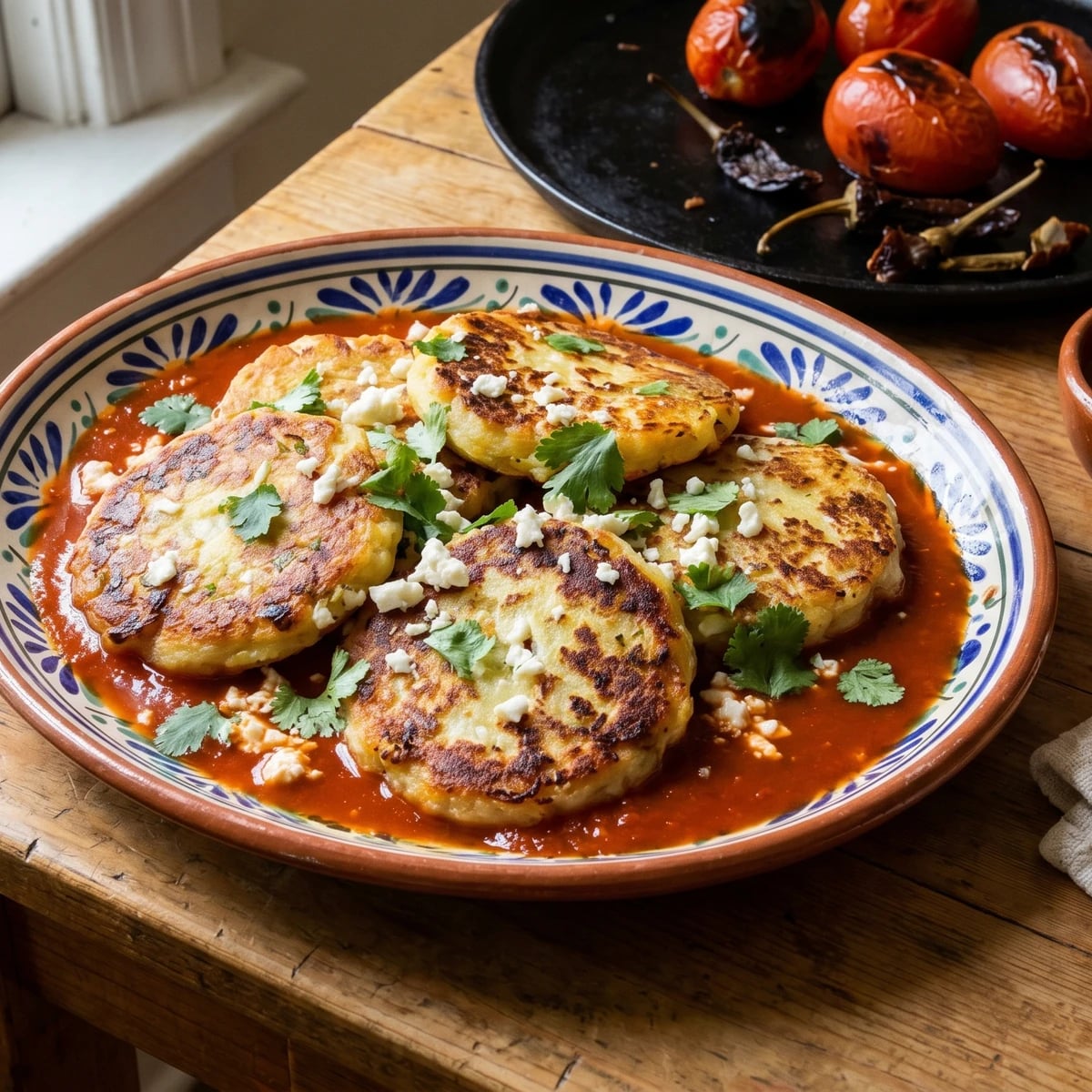
Valle de Puebla potato cakes for Cuaresma, mashed by hand with queso fresco, pan-fried until the edges crisp, then set into a tomato caldillo scented with one chile chipotle meco.

Side Dishes
Mexican
Easter
Comfort Food
Budget Friendly
35 min
Active Time
45 min cook1 hr 20 min total
Yield6 servings

Puebla, the Valle de Puebla, is where I place these tortitas de papa. Not because only Puebla fries mashed potato with cheese, central Mexico is full of this Cuaresma cooking, but because the light caldillo of jitomate with one chile chipotle meco belongs to that poblano table: tomato first, smoke second, heat last.

The potato is native to the Andes, not Mexico, and entered New Spain through colonial exchange routes after the 16th century; it took firm root in the cool central highlands where Puebla, Tlaxcala, and Estado de Mexico had the right climate for it. Tortitas de papa became part of cocina de vigilia, the meatless cooking of Lent, when households turned eggs, cheese, vegetables, and tomato caldillos into filling meals without breaking the Catholic calendar. Puebla and Tlaxcala both have recognizable versions, but Puebla's use of chipotle meco in tomato sauces gives this one its regional mark.

The technique, the tradition, and the story behind every dish.

Discover Culinary Explorer

Ingredients

papa blanca, Yukon Gold, or russet potatoes

Quantity

2 pounds

scrubbed

kosher salt

Quantity

1 tablespoon for the potato water, plus 1 teaspoon for the mash

queso fresco

Quantity

6 ounces

crumbled

large eggs

Quantity

2

lightly beaten

fine dry breadcrumbs or crumbs from day-old bolillo

Quantity

1/4 cup

white onion

Quantity

2 tablespoons

finely chopped

fresh cilantro

Quantity

2 tablespoons

chopped

freshly ground black pepper

Quantity

1/4 teaspoon

all-purpose flour

Quantity

1/2 cup

for dusting

neutral oil, such as safflower or corn oil

Quantity

1/2 cup

for frying

ripe jitomate guaje or Roma tomatoes

Quantity

1 1/2 pounds

dried chile chipotle meco

Quantity

1

stemmed and seeded

fresh chile serrano

Quantity

1 small

stemmed

white onion

Quantity

1/4 medium

garlic cloves

Quantity

2

unpeeled

neutral oil

Quantity

1 tablespoon

for frying the caldillo

water

Quantity

1 1/2 cups

fresh epazote

Quantity

1 small sprig

kosher salt

Quantity

1/2 teaspoon, plus more to taste

crumbled queso fresco (optional)

Quantity

2 tablespoons

for serving

fresh cilantro leaves (optional)

Quantity

for serving

Equipment Needed

  • Medium pot for boiling potatoes
  • Potato masher or sturdy fork
  • Cast iron comal or heavy skillet
  • Blender
  • Wide skillet for frying
  • Shallow Puebla talavera platter or barro rojo cazuela

Instructions

  1. 1

    Cook the potatoes

    Put the whole potatoes in a pot and cover with cold water by one inch. Add 1 tablespoon salt. Bring to a steady simmer and cook until a knife slides through the center without resistance, 25 to 35 minutes depending on size. Start them in cold water so the center cooks before the outside falls apart. Waterlogged potato makes weak tortitas.

  2. 2

    Dry and mash

    Drain the potatoes and return them to the warm pot for 2 minutes so the surface moisture leaves. Peel while warm, then mash by hand. Not in a blender. Not in a food processor. You want fluffy potato, not glue. Leave a few small lumps. A señora in the Mercado de la Acocota would not panic over a lump of potato.

    If the potatoes seem wet, spread the mash on a tray for 10 minutes before mixing. Moisture is the enemy of a clean fry.
  3. 3

    Mix the masa

    Add the crumbled queso fresco, beaten eggs, breadcrumbs, chopped white onion, cilantro, 1 teaspoon salt, and black pepper to the warm mash. Mix with your hands until it holds together when squeezed. The egg binds, the bolillo crumbs absorb extra moisture, and the cheese gives little salty pockets. This is kitchen economy, not decoration.

  4. 4

    Shape the tortitas

    Divide the mixture into 12 portions. Shape each into a cake about 3 inches wide and 1/2 inch thick. Dust lightly with flour on both sides and set on a tray. Rest for 15 minutes. That short rest lets the crumbs hydrate and keeps the tortitas from breaking in the pan. No me vengas con atajos.

  5. 5

    Toast the chiles

    Heat a dry comal or heavy skillet over medium. Toast the chile chipotle meco for 10 to 15 seconds per side, just until it smells smoky and alive. Do not blacken it. Put it in a small bowl and cover with hot water for 10 minutes. Char the tomatoes, serrano, onion, and unpeeled garlic on the same comal until the tomatoes blister and soften and the garlic gives under your fingers.

  6. 6

    Blend the caldillo

    Peel the garlic. Drain the chipotle meco. Blend the charred tomatoes, serrano, onion, garlic, chipotle, 1 1/2 cups water, and 1/2 teaspoon salt until smooth. This caldillo should taste like tomato with a little smoke behind it. It is not supposed to punish anyone. Not all Mexican food is hot. The lazy people keep saying that because they don't know the market.

  7. 7

    Fry the caldillo

    Heat 1 tablespoon oil in a wide cazuela or saucepan over medium. Pour in the blended caldillo carefully, because it will sputter. Cook 8 to 10 minutes, stirring often, until the color deepens and the raw tomato smell disappears. Add the epazote sprig for the last 5 minutes, then remove it. Epazote is strong. It should speak, not shout.

  8. 8

    Fry the tortitas

    Heat 1/2 cup oil in a wide skillet over medium until a pinch of flour sizzles on contact. Fry the tortitas in batches, 3 to 4 minutes per side, until the edges are golden and crisp and the centers feel set when pressed lightly. Do not crowd the pan. These are Cuaresma tortitas, so the oil is clean vegetable oil. This is not because I fear manteca. La manteca es el sabor, but vigilia has its own rules.

  9. 9

    Set in sauce

    Spoon the warm caldillo into a shallow serving cazuela or talavera platter. Lay the fried tortitas into the sauce just before serving so the bottoms drink a little caldillo while the tops stay crisp. Scatter with crumbled queso fresco and cilantro leaves. Serve at once. If you drown them and let them sit, they will soften. Then don't blame the recipe. Recetas probadas y garantizadas.

Chef Tips

  • Use potatoes that mash dry and fluffy. In Mexico I ask for papa blanca. In the United States, Yukon Gold gives better flavor and russet gives a drier texture. Either works. Waxy red potatoes fight you.
  • Chile chipotle meco is the right chile for this poblano caldillo: tan, dry, smoky, not canned in adobo. If you only have chipotle morita, use one small one and understand the sauce will be sweeter and darker. A substitution is a compromise, not an upgrade.
  • The caldillo should stay light enough to show the tomato. If you add a fistful of chile, you have made another sauce. Good food knows restraint.
  • Do not make the potato mixture in a blender or stand mixer. Overworked potato turns elastic. Mash by hand and stop when it holds together. Así se hace y punto.
  • Serve these with rice, beans de la olla, or a plate of sauteed quelites. Flour tortillas do not belong here. That is northern geography, not the Puebla table.

Advance Preparation

  • The potato mixture can be shaped into tortitas up to 8 hours ahead. Keep them covered in the refrigerator and dust with flour right before frying.
  • The caldillo can be made one day ahead and reheated gently. Add the epazote only when reheating so it does not turn harsh.
  • Fried tortitas are best the day they are made. To revive leftovers, warm them on a lightly oiled comal until the edges crisp again, then spoon hot caldillo around them.

Frequently Asked Questions

Nutrition Information

1 serving (about 360g)

Calories
400 calories
Total Fat
21 g
Saturated Fat
6 g
Trans Fat
0 g
Unsaturated Fat
15 g
Cholesterol
85 mg
Sodium
1060 mg
Total Carbohydrates
41 g
Dietary Fiber
6 g
Sugars
6 g
Protein
13 g

Note: Chef personas and recipes are created with AI assistance. Cook with care: follow safe food-handling practices, check doneness with a thermometer when needed, and adapt for allergies and your kitchen.

Where cooking meets culture.

Culinary guides, cultural storytelling, and the editorial depth that makes cooking meaningful.

Discover Culinary Explorer

More from Central Mexican Side Dishes

Browse the full collection