Chef Graziella
Zuppa Imperiale
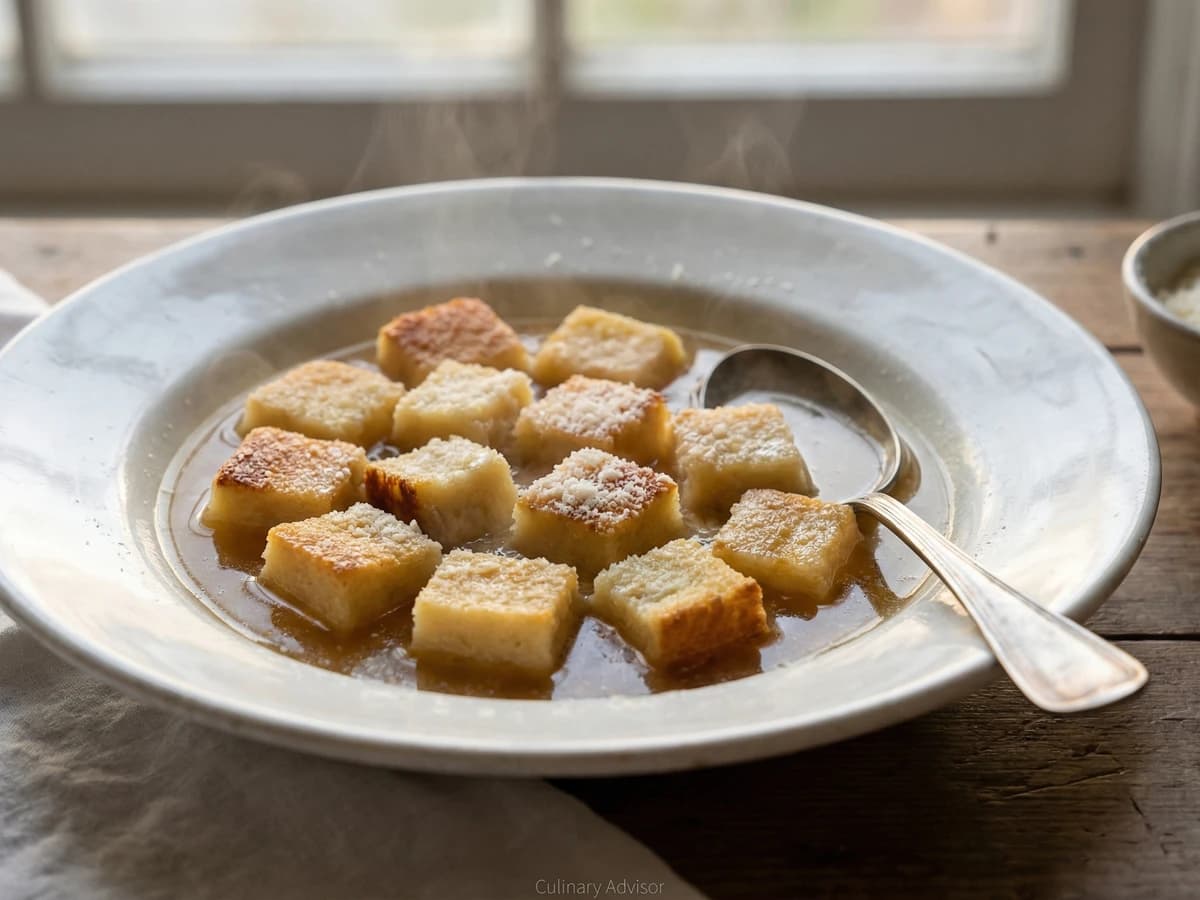
The noble soup of Bologna's Christmas table, where golden cubes of baked semolina float in crystalline broth. Lighter than tortellini in brodo, yet every bit as festive.
A cooking platform built around craft, culture, and the stories behind what we eat.
Created by
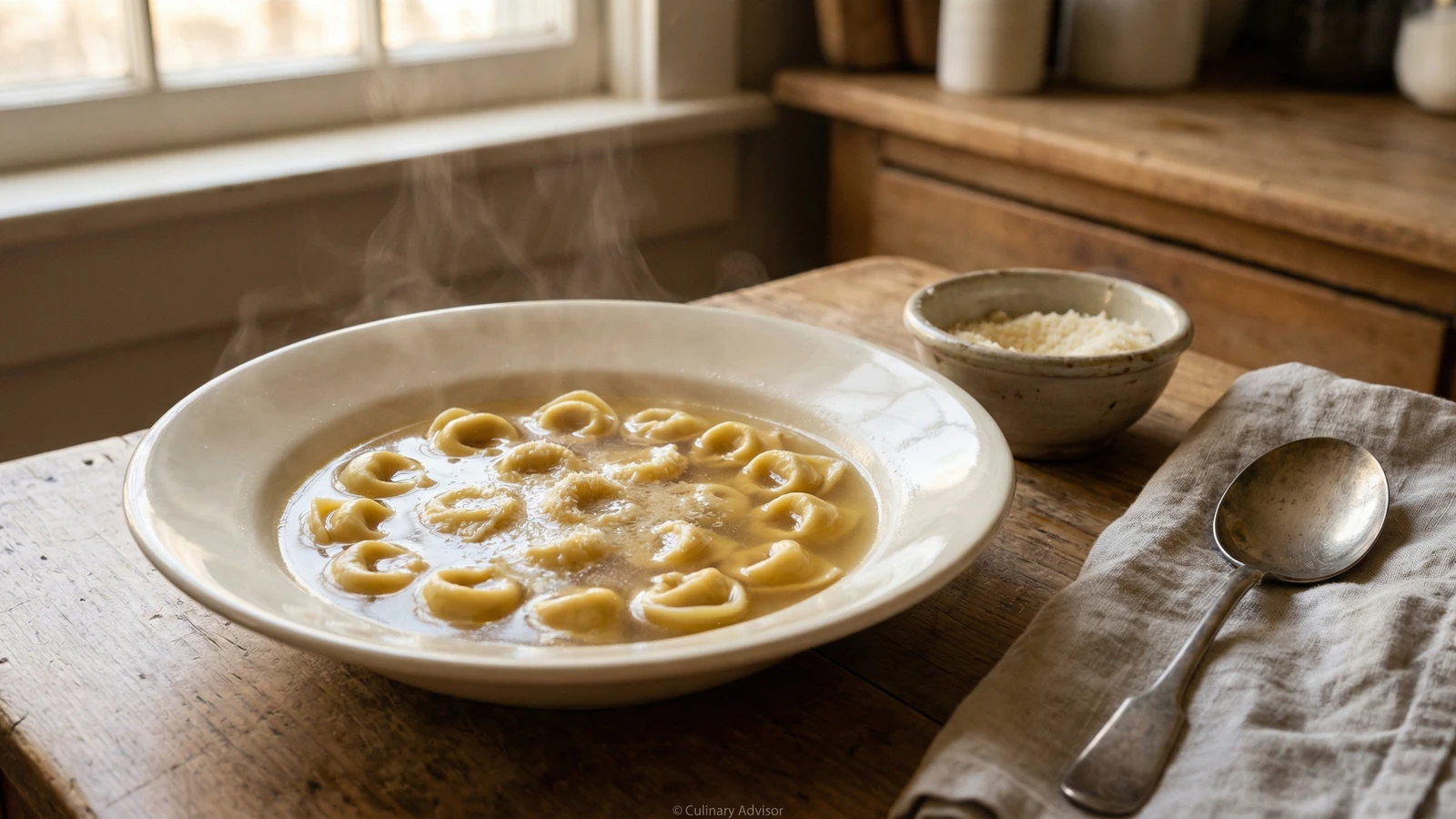
The Christmas dish of Bologna, where hand-folded pasta encloses a filling of pork, mortadella, and Parmigiano, floating in clear capon broth that has simmered for hours. This is not merely soup. It is ritual.
In Bologna, tortellini in brodo is served on Christmas Day, and it has been served this way for generations beyond counting. Families gather in kitchens the day before, grandmothers and mothers and daughters folding hundreds of tiny pasta rings while the capon simmers on the stove. The work is meditative. The reward is transcendent.
The filling is precise: pork loin browned in butter, prosciutto di Parma, mortadella di Bologna, Parmigiano-Reggiano, egg, and nutmeg. No garlic, despite what you may have read elsewhere. No herbs. The cured meats provide depth, the cheese binds everything together, and the nutmeg adds the faintest warmth. Anything more would be a corruption.
The broth matters as much as the pasta. In Emilia-Romagna, they use capon, that magnificent bird that exists almost solely for this purpose. A stewing hen combined with beef shin produces acceptable results. Chicken broth from a supermarket carton does not. The broth must be clear, golden, and rich enough to coat your lips. It is the medium through which the tortellini swim, and it must be worthy of them.
I do not expect you to make this on a weeknight. This is a project, a commitment, an act of love. Begin the broth the day before. Make the filling that evening. Wake early on the serving day to roll pasta and shape tortellini. When you ladle those first bowls, steaming and fragrant, you will understand why this dish has survived for five centuries. Some things are worth the effort.
Tortellini appear in Bologna's historical record as early as the 12th century, though the dish likely predates written documentation. The Accademia Italiana della Cucina registered an official recipe in 1974, codifying proportions that Bolognese families had debated for generations. Today, the Learned Order of the Tortellino continues to guard the tradition with an earnestness that would seem comical if the stakes were not so delicious.
Quantity
1 (about 6 pounds)
Quantity
2 medium
peeled and halved
Quantity
2
halved
Quantity
1 medium
halved
Quantity
1
halved
Quantity
6
Quantity
1
Quantity
to taste
Quantity
4 ounces
Quantity
2 tablespoons
Quantity
4 ounces
sliced thin
Quantity
4 ounces
Quantity
1 cup freshly grated (about 3 ounces)
Quantity
1
Quantity
1/4 teaspoon
freshly grated
Quantity
to taste
Quantity
400 grams (about 3 1/4 cups)
Quantity
4
Quantity
for serving
freshly grated
| Ingredient | Quantity |
|---|---|
| capon | 1 (about 6 pounds) |
| carrotspeeled and halved | 2 medium |
| celery stalks with leaveshalved | 2 |
| yellow onionhalved | 1 medium |
| ripe tomatohalved | 1 |
| whole black peppercorns | 6 |
| bay leaf | 1 |
| kosher salt | to taste |
| pork loin | 4 ounces |
| unsalted butter | 2 tablespoons |
| prosciutto di Parmasliced thin | 4 ounces |
| mortadella di Bologna | 4 ounces |
| Parmigiano-Reggiano | 1 cup freshly grated (about 3 ounces) |
| large egg | 1 |
| nutmegfreshly grated | 1/4 teaspoon |
| fine sea salt | to taste |
| tipo 00 flour | 400 grams (about 3 1/4 cups) |
| large eggs | 4 |
| Parmigiano-Reggianofreshly grated | for serving |
Place the capon in a large stockpot and cover with cold water by three inches. Bring slowly to a simmer over medium heat. This takes 30 to 40 minutes. Do not rush it. As the water heats, gray foam will rise to the surface. Skim it away with a slotted spoon until the broth remains clear. This patience determines whether your broth will be crystalline or murky.
When the foam subsides and the broth is clear, add the carrots, celery, onion, tomato, peppercorns, and bay leaf. The tomato adds subtle sweetness and a faint golden color. Adjust heat to maintain the gentlest simmer, with bubbles breaking lazily at one corner of the pot. Cover partially and cook for 3 hours. The meat should be falling from the bones.
Remove the capon and vegetables. Strain the broth through a fine-mesh sieve lined with cheesecloth into a clean pot. You should have about 4 quarts of clear, golden broth. Season with salt to taste. The broth must be well seasoned on its own; it carries the entire dish. Let cool, then refrigerate. The fat will solidify on top. Remove it before reheating.
Cut the pork loin into one-inch cubes. Melt the butter in a small skillet over medium heat. When the foam subsides, add the pork and cook, turning occasionally, until golden on all sides and cooked through, about 10 minutes. The interior should show no pink. Remove and let cool completely.
Pass the cooled pork, prosciutto, and mortadella through a meat grinder fitted with the fine disk, or pulse in a food processor until very finely minced but not pureed. Transfer to a bowl. Add the grated Parmigiano, egg, nutmeg, and a pinch of fine salt. Mix thoroughly with a fork until the filling is uniform and holds together when pressed. Cover and refrigerate for at least one hour.
Mound the flour on a wooden board or clean work surface. Make a well in the center deep enough to hold the eggs. Crack the eggs into the well. Beat the eggs with a fork, gradually drawing flour from the inner walls of the well until a shaggy dough forms. Knead vigorously for 10 minutes, pushing the heel of your hand into the dough, folding, and turning. The dough should be smooth, elastic, and not sticky. If it clings to your hands, add flour sparingly. Wrap in plastic and rest for 30 minutes.
Divide the dough into four pieces. Work with one piece at a time, keeping the rest covered. Roll through a pasta machine, starting at the widest setting and progressing to the second-thinnest. The pasta should be translucent enough to see your hand through it. If rolling by hand, roll the dough into sheets as thin as possible. This is not pappardelle. Tortellini require sheets so thin they seem fragile.
Using a sharp knife or pasta wheel, cut the sheets into 2-inch squares. Place a scant half-teaspoon of filling in the center of each square. Fold the square in half diagonally to form a triangle, pressing the edges firmly to seal and expel any air. Air pockets cause tortellini to burst in the broth.
Hold the triangle with the long edge facing you. Bring the two pointed corners together around your index finger, overlapping them slightly, and press to seal. The filled portion should puff outward. Pull your finger free. The tortellini should resemble a small ring with a peaked cap. Place finished tortellini on a lightly floured tray, not touching. Work quickly; fresh pasta dries fast.
Bring the strained broth to a gentle simmer. Add the tortellini in batches to avoid crowding. They will sink, then float to the surface within 2 to 3 minutes. Let them cook one minute more after floating. The pasta should be tender, the filling hot through. Ladle into warm shallow bowls, placing 15 to 20 tortellini per serving with abundant broth. Pass grated Parmigiano at the table. Do not add the cheese to the pot; each diner should season their own bowl.
1 serving (about 375g)
Culinary guides, cultural storytelling, and the editorial depth that makes cooking meaningful.
Discover Culinary ExplorerChef Graziella
The noble soup of Bologna's Christmas table, where golden cubes of baked semolina float in crystalline broth. Lighter than tortellini in brodo, yet every bit as festive.
Chef Juliette
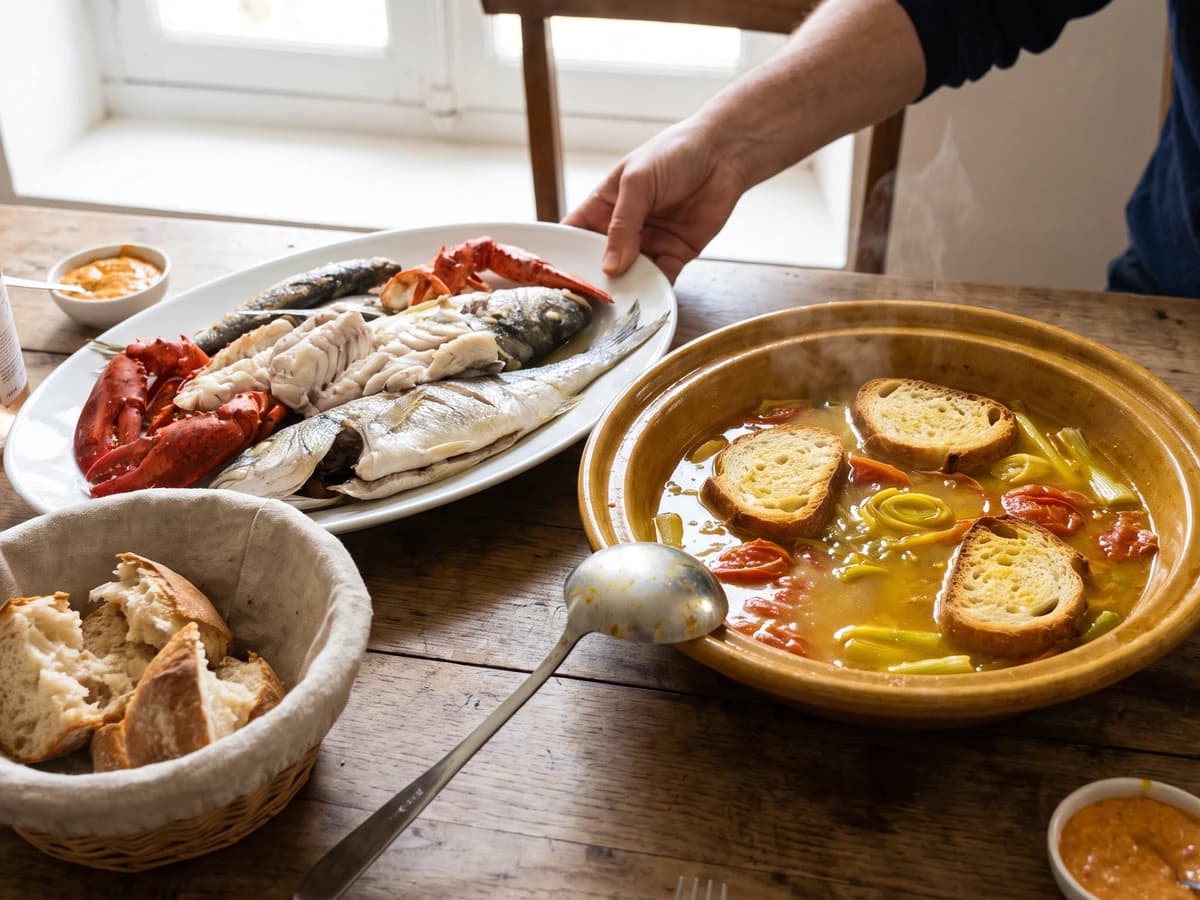
Marseille's great fish stew, saffron-gold and garlic-scented, proves that a hard boil can be the careful choice: it binds olive oil into broth before the whole pot meets bread.
Chef Juliette
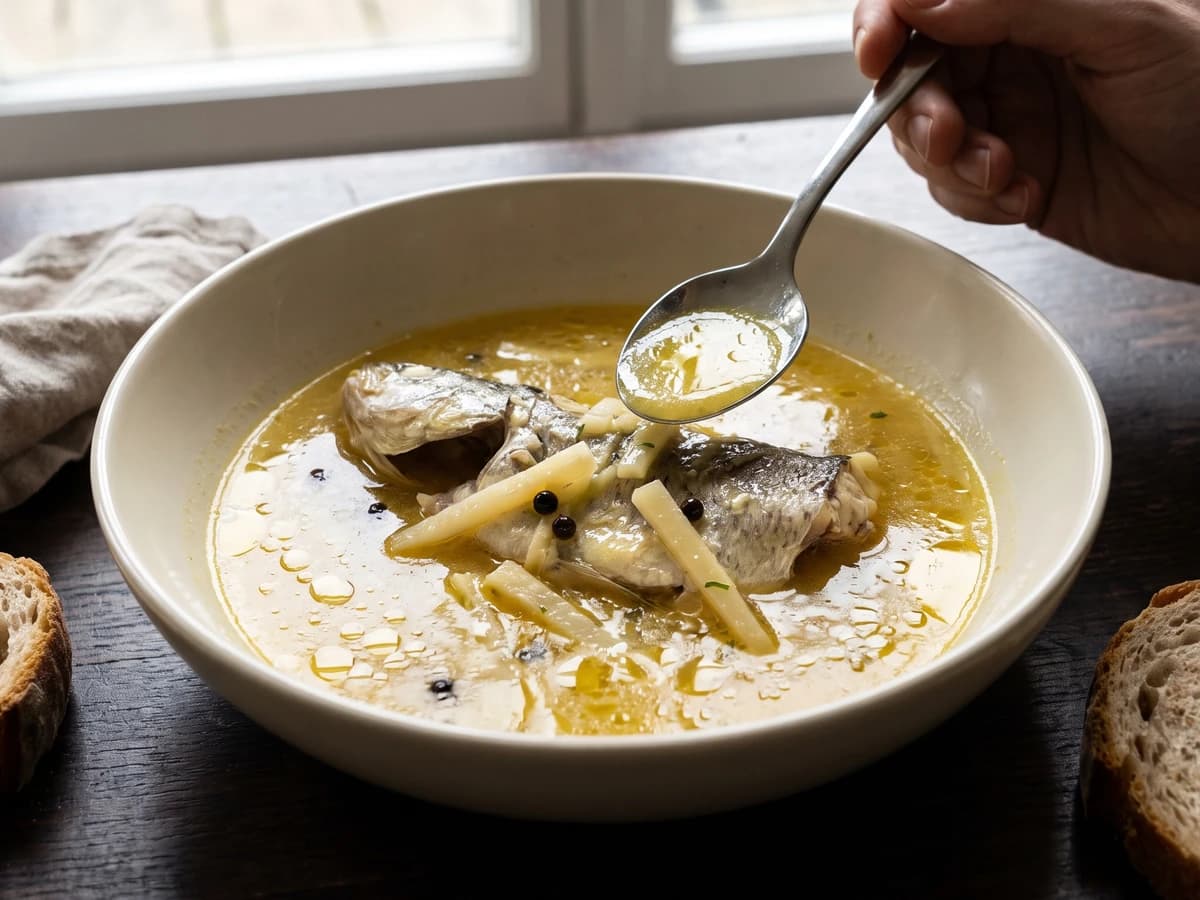
Waterzoi asks fresh, bone-in river fish to thicken its own buttery broth, with parsley root and pepper for company. No flour, no stockpot, just a brisk simmer watched closely.
Chef Juliette
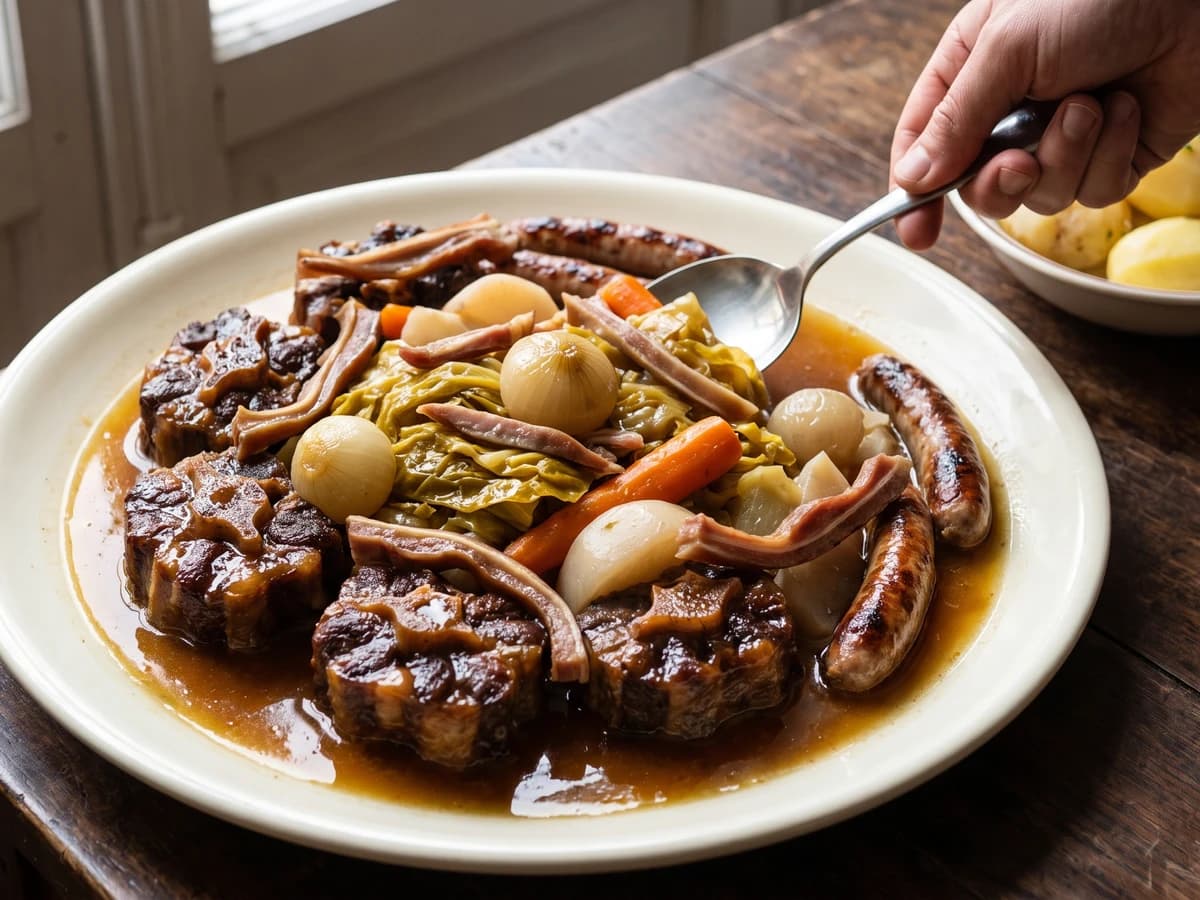
Queue de Bœuf en Hochepot gathers oxtail, pig's trotter and ear, cabbage, roots, and grilled chipolatas around a clear, gelatin-rich broth whose quiet simmer keeps every piece tender and distinct.