
Chef Graziella
Babà al Rum Napoletano
The yeast-risen sponge that Naples claimed from Poland and perfected. Baked to a burnished gold, then drowned in rum syrup until it weeps with every bite.
A cooking platform built around craft, culture, and the stories behind what we eat.
Created by
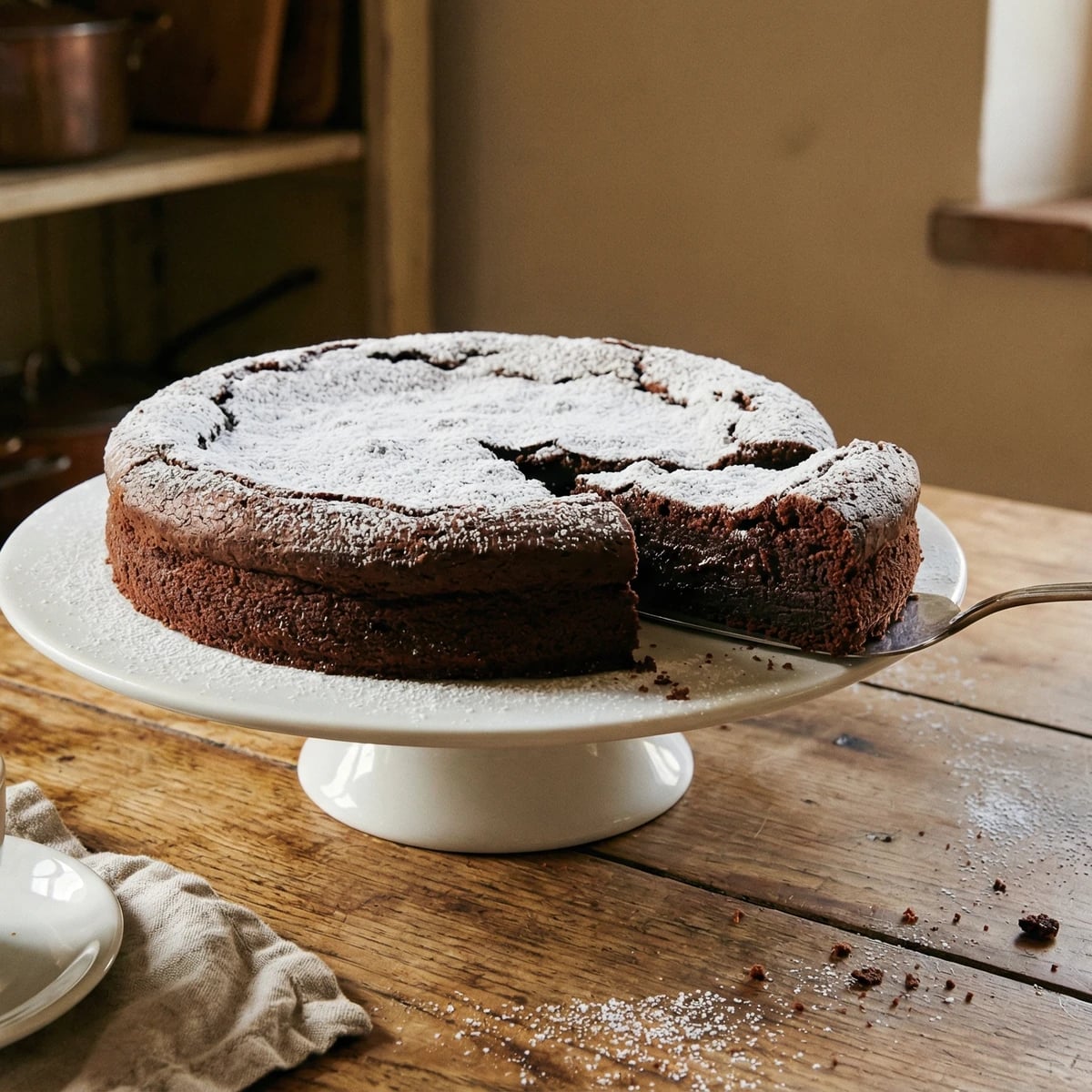
The legendary flourless chocolate cake of Capri, born from a baker's mistake and perfected by generations of Neapolitan home cooks. Dense, fudgy, and honest about what it is.
There is no flour in this cake. None. The structure comes entirely from eggs, almonds, and chocolate. This is not a modern accommodation for those who cannot eat gluten. This is how the cake has always been made on Capri, long before dietary restrictions became fashionable.
The legend says a baker forgot to add flour to a chocolate almond cake he was making for a visiting dignitary. When he realized his error, it was too late. He served it anyway, and the dignitary proclaimed it the finest cake he had ever tasted. Whether this story is true matters less than what it teaches: sometimes what you leave out creates something better than what you intended.
The cake falls as it cools. The top cracks dramatically. This alarms American bakers who want cakes that look like they came from a box. The appearance of Torta Caprese is the appearance of authenticity. It should be dense, almost truffle-like in the center, with a thin crackled crust that shatters when you press a fork through it. The sweetness is restrained. The chocolate and almonds speak for themselves.
Torta Caprese originated on the island of Capri in the 1920s, attributed to the pastry chef Carmine Di Fiore, who allegedly forgot the flour while baking for a group of Italian-American gangsters visiting the island. The 'mistake' proved so successful that it became the island's signature dessert, eventually spreading to pastry shops throughout Campania and beyond.
Quantity
200g
chopped
Quantity
150g
cut into pieces, plus more for the pan
Quantity
150g
Quantity
4
separated, at room temperature
Quantity
150g
Quantity
1/4 teaspoon
Quantity
for dusting
| Ingredient | Quantity |
|---|---|
| dark chocolate (70% cacao)chopped | 200g |
| unsalted buttercut into pieces, plus more for the pan | 150g |
| blanched almonds | 150g |
| large eggsseparated, at room temperature | 4 |
| granulated sugar | 150g |
| fine sea salt | 1/4 teaspoon |
| confectioners' sugar | for dusting |
Position a rack in the center of the oven and heat to 325°F (160°C). Butter a 9-inch springform pan generously, then line the bottom with parchment paper and butter the parchment. This cake is delicate. It will stick if you are careless.
Place the blanched almonds in a food processor. Pulse in short bursts until you have a fine powder with some slightly larger pieces remaining. Do not process continuously or you will make almond butter. The texture should resemble coarse sand, not paste. This takes 20 to 30 one-second pulses. Set aside.
Place the chopped chocolate and butter in a heatproof bowl set over a pot of barely simmering water. The bottom of the bowl must not touch the water. Stir occasionally until completely melted and smooth. The mixture should be glossy and homogeneous. Remove from heat and let cool until warm but not hot, about 10 minutes. If it is too hot, it will cook the egg yolks.
In a large bowl, whisk the egg yolks with 100g of the sugar until the mixture is thick, pale yellow, and falls in ribbons when you lift the whisk. This takes 3 to 4 minutes of vigorous whisking by hand, less with an electric mixer. The color should lighten considerably.
Pour the cooled chocolate mixture into the beaten yolks, stirring gently with a spatula until completely combined. The batter will be thick and glossy. Fold in the ground almonds and salt until no white streaks remain.
In a clean, dry bowl with a clean whisk, beat the egg whites until they hold soft peaks. Any trace of fat will prevent them from mounting properly. Add the remaining 50g sugar gradually while continuing to beat until the whites hold stiff, glossy peaks. They should not be dry or grainy.
Stir one-quarter of the whipped whites into the chocolate batter to lighten it. Do not be gentle here. Then fold in the remaining whites in two additions, using a large spatula and turning the bowl as you fold. Work quickly but carefully. Some white streaks are acceptable. Overmixing is not.
Pour the batter into the prepared pan and smooth the top gently. Bake until the top is puffed and crackled and a toothpick inserted in the center comes out with moist crumbs clinging to it, 35 to 40 minutes. The center should still have a slight wobble. The cake continues cooking as it cools. Do not overbake or you will lose the fudgy interior that makes this cake what it is.
Let the cake cool completely in the pan on a wire rack. It will fall and crack as it cools. This is correct and expected. When completely cool, run a thin knife around the edge and release the springform ring. Invert onto a plate, remove the parchment, then invert again onto a serving plate so the crackled top faces up.
Just before serving, dust the top generously with confectioners' sugar through a fine sieve. The white against the dark crackled surface is the traditional presentation. Serve at room temperature. The cake improves overnight as the flavors deepen and the texture becomes more fudgy.
1 serving (about 82g)
Culinary guides, cultural storytelling, and the editorial depth that makes cooking meaningful.
Discover Culinary Explorer
Chef Graziella
The yeast-risen sponge that Naples claimed from Poland and perfected. Baked to a burnished gold, then drowned in rum syrup until it weeps with every bite.

Chef Graziella
The chocolate custard of Piedmont, dense with cocoa and crushed amaretti, crowned with bitter caramel. This is the dessert your Torinese grandmother made for feast days.

Chef Graziella
Dense, bittersweet Italian chocolate pudding with a silky texture that proves you do not need a box, a microwave, or five minutes. You need good chocolate, proper technique, and the patience to let it chill.

Chef Graziella
Sicily's frozen treasure, where sheep's milk ricotta becomes ice cream studded with jewels of candied fruit and pistachios, embraced by tender sponge cake. Baroque simplicity, if such a thing exists.