
Chef Graziella
Coppa di Mascarpone con Caffè
Individual mascarpone parfaits layered with espresso-soaked biscuits and dusted with cocoa. The essence of tiramisù, distilled into something a home cook can master without fear.
A cooking platform built around craft, culture, and the stories behind what we eat.
Created by
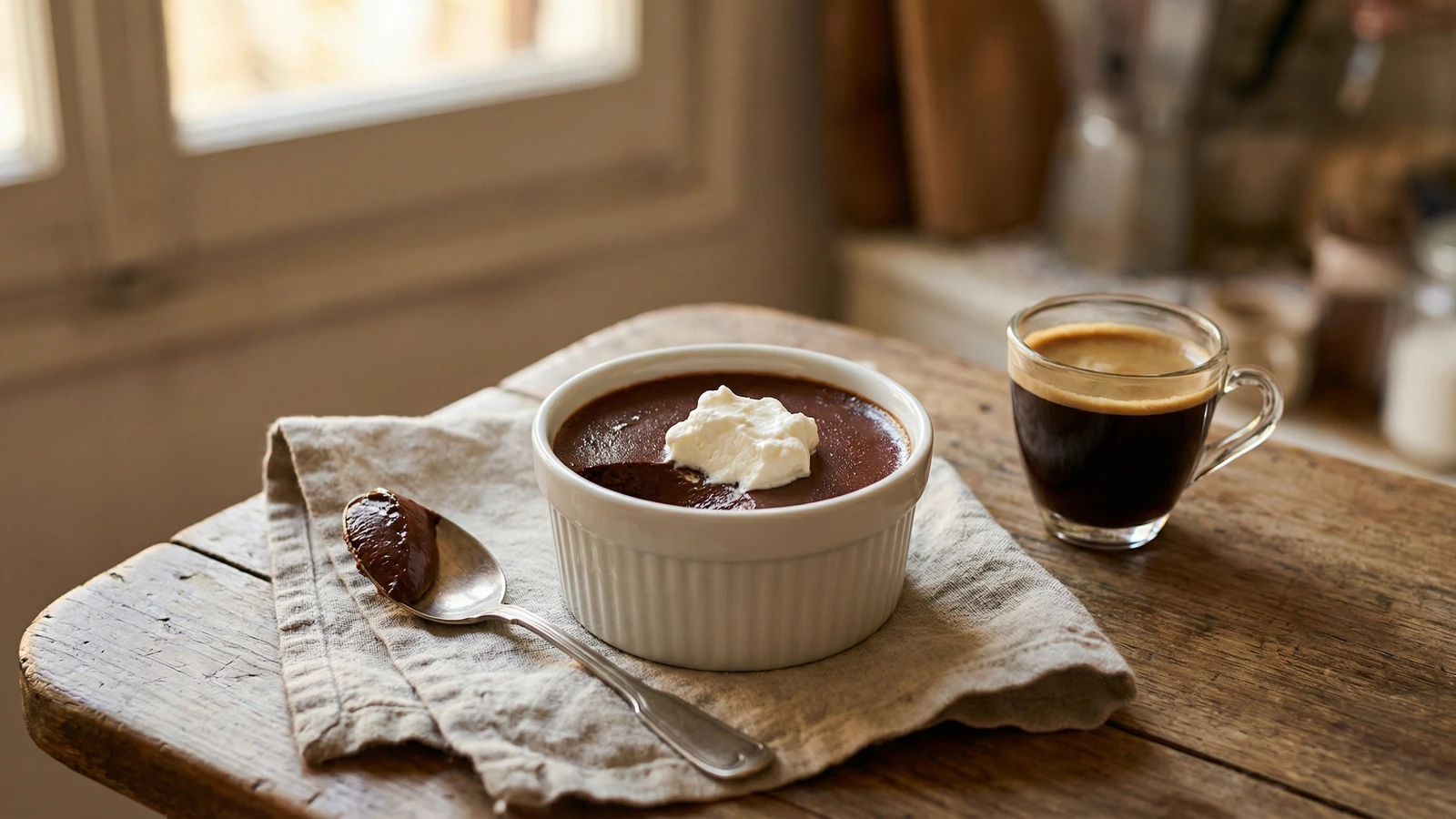
Dense, bittersweet Italian chocolate pudding with a silky texture that proves you do not need a box, a microwave, or five minutes. You need good chocolate, proper technique, and the patience to let it chill.
Americans know pudding from a box. You tear open a packet, add milk, whisk for two minutes, and call it dessert. This is not pudding. This is flavored starch with a vague memory of chocolate.
Proper budino is a custard, made with egg yolks and real chocolate and the understanding that good things require patience. The texture should be dense but yielding, rich but not cloying. Each spoonful should coat your tongue with bittersweet chocolate that tastes like chocolate, not like sugar pretending to be chocolate.
The technique is simple. You heat milk. You temper eggs. You stir until it thickens. You add chocolate. You wait. There is nothing complicated here, only the requirement that you pay attention and use quality ingredients. If your chocolate is cheap, your pudding will taste cheap. There is no sauce to mask it, no topping to distract from it. The chocolate must be good.
Budino descends from the rich egg custards that Italian cooks mastered during the Renaissance, when sugar and eggs were signs of wealth. Chocolate arrived from Spain in the 17th century, and by the 1800s, chocolate budino had become a fixture in Italian home kitchens, particularly in the north where dairy was abundant and chocolate houses flourished in Turin and Milan.
Quantity
6 ounces
finely chopped
Quantity
2 cups
Quantity
1 cup
Quantity
4
Quantity
1/2 cup
Quantity
3 tablespoons
Quantity
1/4 teaspoon
Quantity
1 teaspoon
Quantity
2 tablespoons
cold, cut into pieces
Quantity
for serving
| Ingredient | Quantity |
|---|---|
| bittersweet chocolate (70% cacao)finely chopped | 6 ounces |
| whole milk | 2 cups |
| heavy cream | 1 cup |
| large egg yolks | 4 |
| granulated sugar | 1/2 cup |
| cornstarch | 3 tablespoons |
| fine sea salt | 1/4 teaspoon |
| pure vanilla extract | 1 teaspoon |
| unsalted buttercold, cut into pieces | 2 tablespoons |
| lightly sweetened whipped cream (optional) | for serving |
Place the finely chopped chocolate in a large heatproof bowl and set it aside. The chocolate must be chopped small, into pieces no larger than a pea. Large chunks will not melt evenly and you will have a grainy pudding. This is not difficult. It requires only a sharp knife and five minutes of your attention.
In a medium saucepan, combine the milk and cream. Set it over medium heat and warm until small bubbles appear around the edges and steam rises from the surface. Do not let it boil. Remove from heat and set aside.
In a separate bowl, whisk together the egg yolks, sugar, cornstarch, and salt until smooth and pale yellow. This takes about two minutes of vigorous whisking. The mixture should fall from the whisk in thick ribbons. Scrape down the sides of the bowl. Every bit of cornstarch must be incorporated or you will have lumps.
While whisking constantly, pour about half a cup of the hot milk mixture in a thin stream into the egg mixture. Whisk until combined. Add another half cup, whisking all the while. Now pour the tempered egg mixture back into the saucepan with the remaining milk. Whisk thoroughly to combine.
Set the saucepan over medium heat. Stir constantly with a wooden spoon or heatproof spatula, reaching into the corners and across the bottom. The custard will seem thin at first, then suddenly it will thicken. This happens quickly, between eight and twelve minutes. When it begins to bubble and the first thick blurps appear on the surface, cook for exactly one minute more, stirring vigorously. Remove from heat immediately.
Pour the hot custard through a fine-mesh strainer directly over the chopped chocolate. Let it sit for one minute. The heat of the custard will melt the chocolate. Then whisk slowly from the center outward, incorporating the chocolate until the mixture is completely smooth and uniformly dark. Add the vanilla extract and the cold butter pieces. Whisk until the butter melts and disappears.
Divide the pudding among six ramekins or small bowls, about half a cup each. If you want to prevent a skin from forming, press plastic wrap directly onto the surface of each pudding. If you prefer the skin (some do; it is a matter of taste), leave them uncovered. Refrigerate for at least four hours, or overnight. The pudding must be completely cold and set before serving.
Remove the puddings from the refrigerator. If you covered them, peel away the plastic. Serve cold, with a small spoonful of lightly whipped cream if you like. The cream is not necessary. The pudding is complete without it. What you keep out is as significant as what you put in.
1 serving (about 180g)
Culinary guides, cultural storytelling, and the editorial depth that makes cooking meaningful.
Discover Culinary ExplorerChef Graziella
Individual mascarpone parfaits layered with espresso-soaked biscuits and dusted with cocoa. The essence of tiramisù, distilled into something a home cook can master without fear.

Chef Graziella
The silky baked custard of Italian Sunday tables, where eggs, milk, and bitter caramel require nothing but technique and patience. What you keep out matters as much as what you put in.

Chef Graziella
The frozen dessert of Italian home cooks who understand that you do not need an ice cream machine to make something extraordinary. Crushed amaretti and a whisper of almond liqueur in every cold, creamy slice.

Chef Juliette
Five almond preparations, one discipline: remove the skins cleanly, dry every kernel through, then cut, toast, or cloak it in pale caramel without letting its fragrant oils escape.