
Chef Lupita
Agua de Alfalfa
Ciudad de México's highland market agua fresca, fresh alfalfa blended with pineapple and lime until bright green, strained clean, and poured cold from the vitrolero.
A cooking platform built around craft, culture, and the stories behind what we eat.
Created by
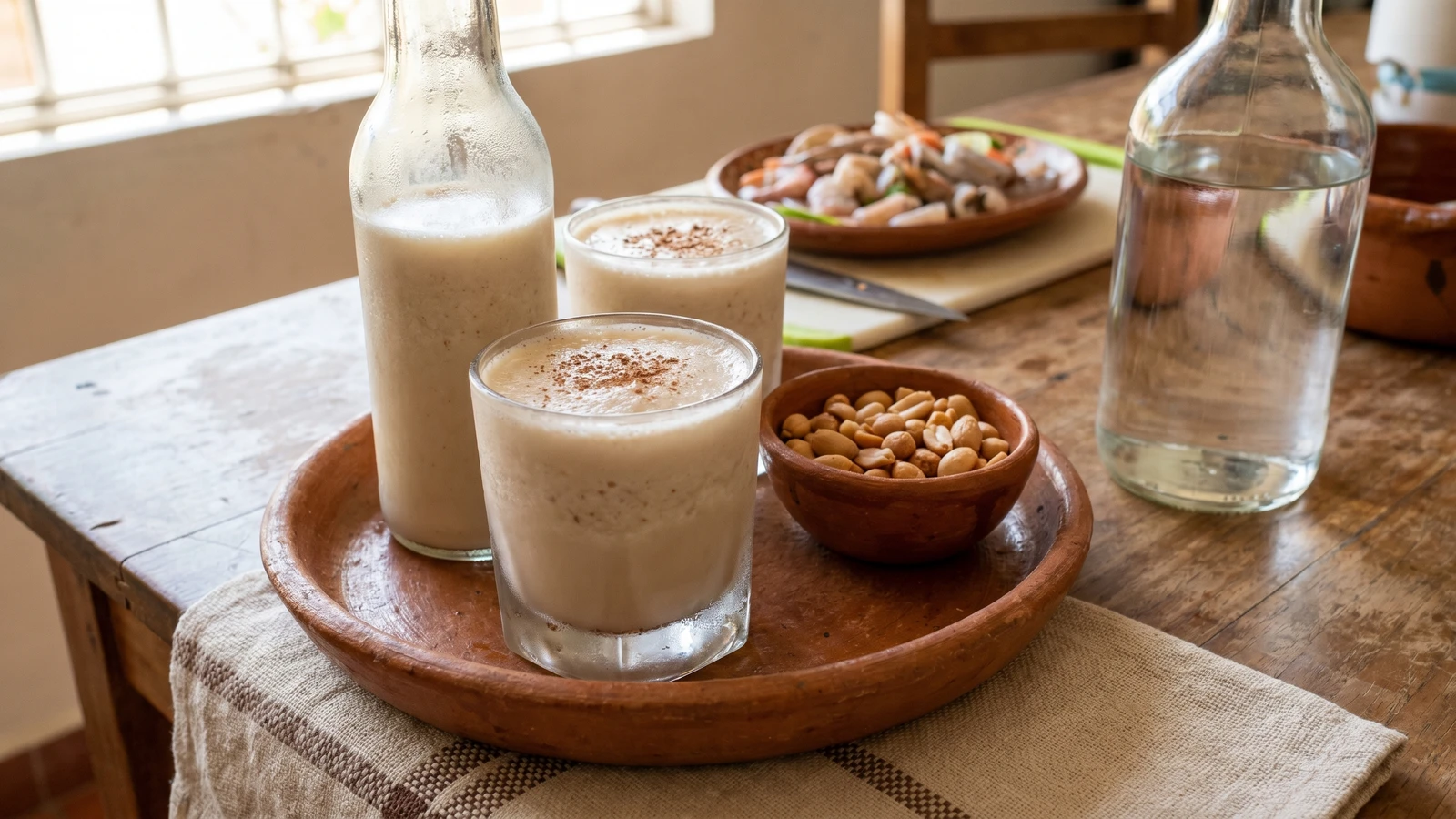
Colima's coastal version of the creamy torito, thick with chilled milks, roasted peanut or strong coffee, and cane aguardiente, served frappe before a serious seafood table.
Colima sits between the Pacific coast and the volcano, small on the map and never small in the kitchen. This torito lives in that heat: Manzanillo seafood tables, Comala bottles of ponche, family parties where a sweet creamy drink arrives cold enough to slow everybody down for a moment.
The body comes from evaporated milk and condensed milk. The character comes from roasted peanut or strong coffee. The bite comes from aguardiente de cana, because sugarcane grows in the western lowlands and a creamy drink without that dry cane edge turns childish fast. No chiles here. Not every Mexican drink needs chile. This is a 32-state cuisine, not one lazy idea repeated with lime and heat.
I learned versions of this from women who kept a bottle in the back of the refrigerator and served it in small glasses, never big ones. They measured with a can, tasted with a spoon, and corrected the blender by sound. If it drags, it needs a splash of milk. If it tastes flat, it needs salt. If it tastes like dessert with no backbone, you were afraid of the aguardiente. No me vengas con atajos.
Toritos are most strongly documented in Veracruz, where aguardiente, milk, fruit, peanut, and coffee versions became common in cantinas and home celebrations during the 20th century. Colima's version belongs to the western habit of creamy bottled celebration drinks, especially around Comala, where ponches made with local fruit, dairy, nuts, coffee, and cane alcohol are part of the state's drinking culture. The drink shows how regional Mexican beverages travel and settle into local ingredients: Gulf torito technique meeting Colima's cane, coffee, peanut, and coastal table.
Quantity
1 cup
skins removed
Quantity
1 can (12 ounces)
chilled
Quantity
1 can (14 ounces)
chilled
Quantity
1 cup
chilled
Quantity
1 cup
chilled
Quantity
1 teaspoon
Quantity
1/4 teaspoon
Quantity
2 cups, plus more for serving
Quantity
for serving
Quantity
3/4 cup
chilled, for coffee variation in place of peanuts
| Ingredient | Quantity |
|---|---|
| roasted unsalted peanutsskins removed | 1 cup |
| evaporated milkchilled | 1 can (12 ounces) |
| sweetened condensed milkchilled | 1 can (14 ounces) |
| whole milkchilled | 1 cup |
| aguardiente de cana or charandachilled | 1 cup |
| Mexican vanilla extract | 1 teaspoon |
| fine sea salt | 1/4 teaspoon |
| ice | 2 cups, plus more for serving |
| ground canela (optional) | for serving |
| strong cold cafe de olla or espresso (optional)chilled, for coffee variation in place of peanuts | 3/4 cup |
Put the roasted peanuts in a bowl and cover them with the chilled whole milk. Let them stand for 20 minutes. This is not decoration. The soaking softens the nut enough for the blender to make a drink that is thick and smooth, not gritty.
Pour the peanuts and milk into a blender. Add the evaporated milk, condensed milk, Mexican vanilla, and sea salt. Blend on high for 60 to 90 seconds, until the mixture looks satin-smooth and pale beige. Stop and rub a drop between your fingers. If you feel peanut grains, blend again.
Add the chilled aguardiente de cana and blend for 10 seconds, just enough to combine. Do not pour in cheap neutral vodka and call it the same thing. Cane alcohol has its own bite, a dry edge that cuts through the milk. That is why the drink works.
Transfer the torito to a pitcher or glass bottle and refrigerate for at least 2 hours. The drink needs time for the peanut fat, dairy, and cane alcohol to settle into one body. Shake or stir before serving because real ingredients separate. That is normal.
Blend the chilled torito with 2 cups of ice until thick and slushy, or pour it over cracked ice in small glasses. Dust lightly with ground canela if you use it. Serve small portions before a seafood table or after dinner. It is rich. Respect that.
For torito de cafe, leave out the peanuts and the soaking step. Blend the evaporated milk, condensed milk, whole milk, chilled cafe de olla or espresso, vanilla, salt, and aguardiente until smooth. Coffee should taste like coffee, not sugar with a brown costume. Use a strong brew.
1 serving (about 210g)
Culinary guides, cultural storytelling, and the editorial depth that makes cooking meaningful.
Discover Culinary ExplorerChef Lupita
Ciudad de México's highland market agua fresca, fresh alfalfa blended with pineapple and lime until bright green, strained clean, and poured cold from the vitrolero.

Chef Lupita
Aguascalientes' Lenten agua fresca, jewel-red from cooked beet and full of apple, banana, orange, lettuce, and ground peanuts, served cold when Holy Week meets the Feria de San Marcos.

Chef Lupita
Sonora and Sinaloa's creamy malted barley water, built on toasted cebada perla, Mexican canela, vanilla from Papantla, and evaporated milk. Pink-beige, rich, and served cold over heavy ice in a heavy glass tumbler. Liquid cookie comfort the northwest way.

Chef Lupita
Yucatán's everyday tonic of boiled chaya leaves blended with lima agria, sugar, and ice. The bright green jarra that sits on every Peninsula table from Mérida to Valladolid.