
Chef Lupita
Agua de Alfalfa
Ciudad de México's highland market agua fresca, fresh alfalfa blended with pineapple and lime until bright green, strained clean, and poured cold from the vitrolero.
A cooking platform built around craft, culture, and the stories behind what we eat.
Created by
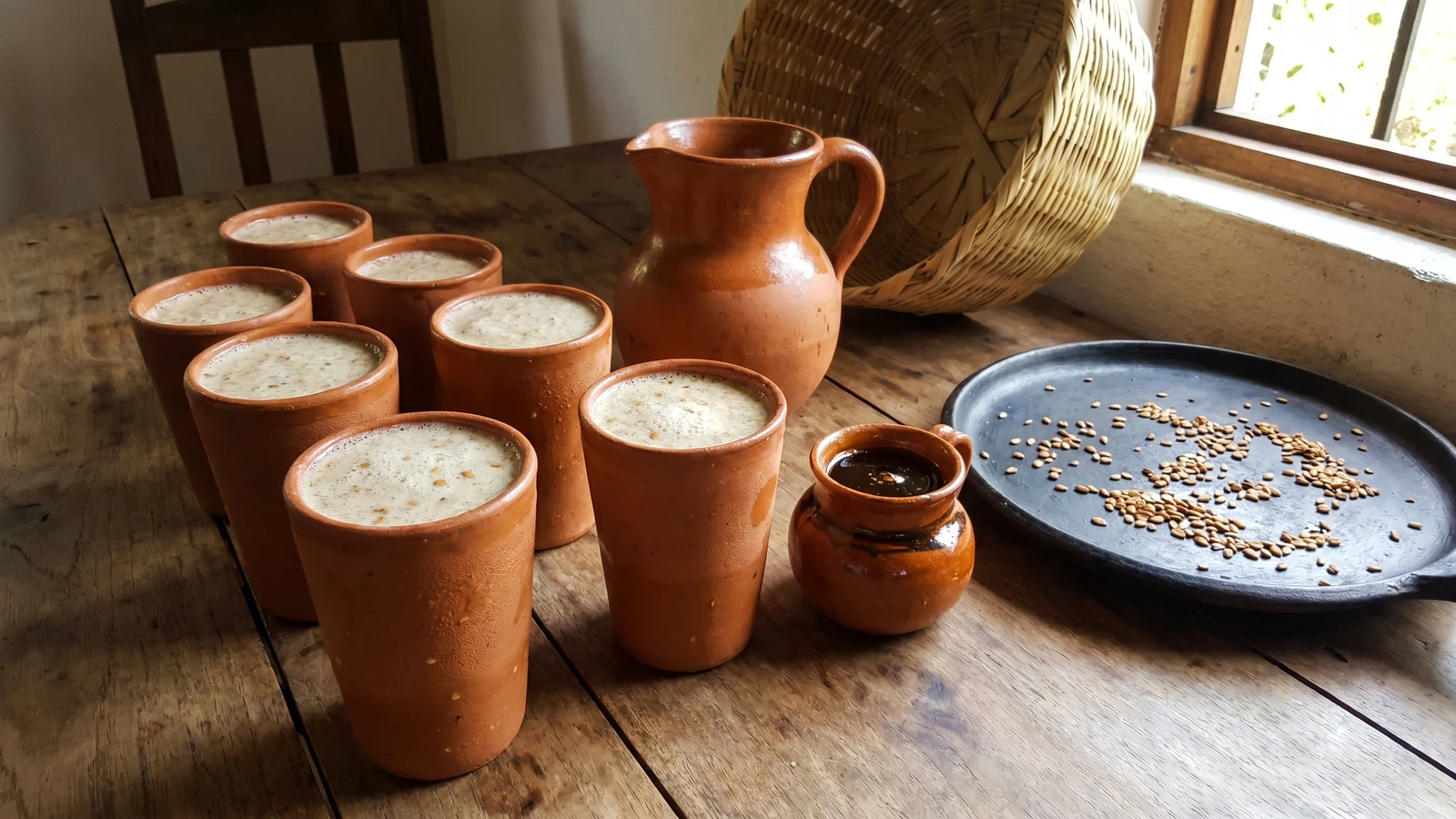
Colima's cold bate is toasted chan seed beaten with water until thick and frothy, then sweetened with piloncillo syrup, the kind of market drink that proves not all Mexican beverages need fruit.
Colima makes bate with chan, and that is where you start: in a small Pacific state between the Volcan de Fuego and the coast, where the mercados still sell seed drinks that do not care about smoothie fashion. This is not a licuado. No milk, no banana, no blender full of nonsense. Toasted chan, water, piloncillo. Así se hace y punto.
I first drank bate in Colima city from a clay cup, cold enough to bead on the outside, handed to me by a woman who corrected my notebook before I even tasted it. The chan had to be toasted, she said. Not raw. The piloncillo syrup had to cool before mixing. And the drink had to be beaten, not stirred lazily, because the body and the froth are the point.
Chan is the ingredient that makes this Colima's drink. It behaves a little like chia, thickening in water, but the flavor is nuttier once it touches the comal. You grind it fine enough to give body and coarse enough to remind you it came from seed, not powder from a packet. Cada estado, su propia cocina, and Colima's kitchen knows how to make refreshment from almost nothing.
My mother did not make bate in Colonia Roma. She was jalisciense. But in her notebook she wrote one line after a trip west: "preguntar por chan, no chia." Ask for chan, not chia. She was right. Si no conoces el mercado, no conoces la cocina.
Bate de chan is associated with Colima and the broader western Mexican tradition of pre-Hispanic seed drinks, where toasted seeds were ground on a metate and mixed with water before cane sweeteners entered the kitchen. Chan, often identified as a chia relative in the Salvia family or as regional "chan" seed depending on the market, thickens water through its mucilage and made a practical drink in hot coastal and volcanic climates. Piloncillo, made from sugarcane introduced after the Spanish conquest in the 16th century, later replaced older sweeteners and became the standard syrup for the modern Colima version.
Quantity
1 cup
picked over for small stones or stems
Quantity
4 cups, divided, plus more to adjust
Quantity
6 ounces
chopped
Quantity
1 cup
Quantity
1 small
Quantity
1 pinch
Quantity
for serving
| Ingredient | Quantity |
|---|---|
| chan seedspicked over for small stones or stems | 1 cup |
| cold water | 4 cups, divided, plus more to adjust |
| piloncillochopped | 6 ounces |
| water for piloncillo syrup | 1 cup |
| Mexican cinnamon stick | 1 small |
| sea salt | 1 pinch |
| ice (optional) | for serving |
Put the chopped piloncillo, one cup water, Mexican cinnamon stick, and pinch of salt in a small saucepan. Simmer over medium heat for 8 to 10 minutes, stirring until the piloncillo dissolves and the syrup smells like cane sugar and cinnamon. Remove the cinnamon and let the syrup cool. Do not pour hot syrup into the chan paste. You are making a cold drink, not a confused atole.
Heat a dry comal or heavy skillet over medium-low. Add the chan seeds and toast them for 3 to 5 minutes, shaking the pan constantly, until they smell nutty and look one shade darker. They are small and they burn quickly. If they scorch, the drink turns bitter. Start again. No me vengas con atajos.
Transfer the toasted chan to a metate, molcajete, or spice grinder. Grind until the seeds break down into a coarse, sandy meal. In Colima, the old way is the metate because it crushes instead of slicing. A spice grinder works if you pulse and stop before the seeds turn oily. The texture should thicken water, not become seed butter.
Put the ground chan in a large clay or glass pitcher. Add one cup cold water and stir with a wooden spoon until you have a thick paste with no dry pockets. This first hydration matters. If you dump in all the water at once, the ground seed clumps and you will chase lumps around the pitcher like a beginner.
Add the remaining three cups cold water a little at a time, whisking hard after each addition. Use a molinillo if you have one, or a balloon whisk if that is what your kitchen has. The drink should turn beige, thick, and lightly frothy, with the body of a thin porridge but the refreshment of an agua fresca. This is why it is called bate: you beat it until it wakes up.
Stir in half the cooled piloncillo syrup, taste, then add more until the drink is sweet enough but not candy-sweet. Chan has a quiet toasted flavor. Do not bury it. Add more cold water if it is too thick. Chill for at least 10 minutes, then whisk again before serving because the ground seed settles.
Serve over ice in clay cups, jicaras, or heavy glasses. Spoon a little extra piloncillo syrup over the top for anyone who wants it sweeter. Drink it the same day, while the froth is still alive and the toasted seed tastes clean. Recetas probadas y garantizadas.
1 serving (about 255g)
Culinary guides, cultural storytelling, and the editorial depth that makes cooking meaningful.
Discover Culinary ExplorerChef Lupita
Ciudad de México's highland market agua fresca, fresh alfalfa blended with pineapple and lime until bright green, strained clean, and poured cold from the vitrolero.

Chef Lupita
Aguascalientes' Lenten agua fresca, jewel-red from cooked beet and full of apple, banana, orange, lettuce, and ground peanuts, served cold when Holy Week meets the Feria de San Marcos.

Chef Lupita
Sonora and Sinaloa's creamy malted barley water, built on toasted cebada perla, Mexican canela, vanilla from Papantla, and evaporated milk. Pink-beige, rich, and served cold over heavy ice in a heavy glass tumbler. Liquid cookie comfort the northwest way.

Chef Lupita
Yucatán's everyday tonic of boiled chaya leaves blended with lima agria, sugar, and ice. The bright green jarra that sits on every Peninsula table from Mérida to Valladolid.