
Chef Lupita
Agua de Alfalfa
Ciudad de México's highland market agua fresca, fresh alfalfa blended with pineapple and lime until bright green, strained clean, and poured cold from the vitrolero.
A cooking platform built around craft, culture, and the stories behind what we eat.
Created by
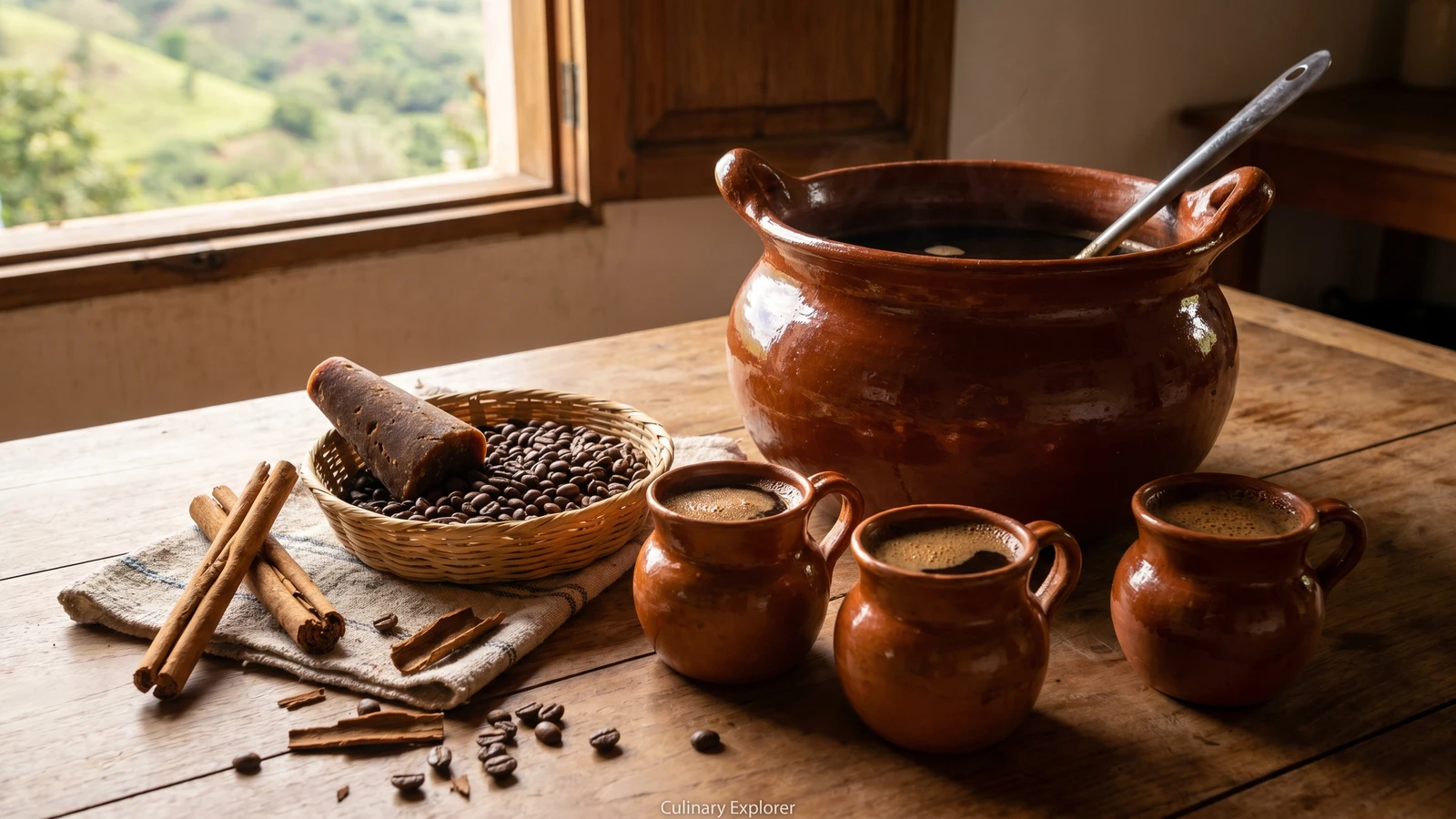
Colima's café de Comala is dark coffee from the volcanic highlands, brewed in an olla de barro with piloncillo and canela, the kind served in the plaza when the afternoon turns cool.
Colima first. Comala specifically, the white village tucked below the Volcán de Fuego, where coffee grows on green slopes with volcanic soil and enough altitude to give the bean body without turning it sharp. This is not dessert coffee. This is a serious cup from a small state people forget too easily.
The coffee is the ingredient that defines it. Use whole-bean arabica from Comala or nearby Suchitlán if you can find it, roasted medium-dark, ground just before brewing. The clay olla matters too. Barro holds heat gently and gives the piloncillo and canela time to settle into the coffee instead of bullying it. You are making coffee, not syrup.
I first drank this in Comala's plaza, served in a small clay jarro while the volcano sat in the distance like it owned the table. The señora who poured it told me, 'No lo tapes con azúcar.' Don't cover it with sugar. She was right. The piloncillo should round the bitterness, not erase it. Cada estado, su propia cocina.
Coffee arrived in Mexico in the late 18th century and spread through highland regions where altitude, shade, and rainfall supported arabica cultivation. Colima's coffee identity developed around Comala and communities such as Suchitlán, where volcanic soils from the Colima volcanic complex shaped small-scale production rather than large plantation culture. Café de olla, brewed in clay with piloncillo and canela, became common in central and western Mexico during the 19th and 20th centuries as a practical household method for making coffee for several people at once.
Quantity
6 cups
Quantity
3/4 cup
medium-dark roast, coarsely ground just before brewing
Quantity
3 ounces
chopped, plus more to taste
Quantity
1 stick, about 3 inches
Quantity
1 strip
white pith removed
Quantity
pinch
| Ingredient | Quantity |
|---|---|
| water | 6 cups |
| Comala or Suchitlán arabica coffeemedium-dark roast, coarsely ground just before brewing | 3/4 cup |
| piloncillochopped, plus more to taste | 3 ounces |
| Mexican cinnamon stick (canela) | 1 stick, about 3 inches |
| orange peel (optional)white pith removed | 1 strip |
| fine sea salt | pinch |
Rinse a clay olla with warm water, then add the 6 cups water. Set it over medium heat. Clay dislikes sudden changes, so don't put a cold olla over aggressive heat and then act surprised when it cracks. Cooking is attention.
Add the chopped piloncillo, canela, orange peel if using, and the pinch of salt. Bring the water to a gentle simmer and stir until the piloncillo dissolves completely, 5 to 7 minutes. The liquid should smell of cane sugar and canela, not candy. If it smells too sweet already, you used too much piloncillo.
Lower the heat. Stir in the coarsely ground Comala coffee and let it bloom for 30 seconds on the surface before stirring once. Keep the pot at a bare simmer for 4 minutes. Do not boil it hard. Boiled coffee turns harsh, and good beans from Colima deserve better.
Turn off the heat and let the coffee rest for 5 minutes. The grounds will sink and the canela will finish its work. This pause is not laziness. It gives you a cleaner cup without stripping the coffee through paper like it has no character.
Strain the coffee through a fine-mesh strainer or a cloth coffee sock into clay jarritos. Taste before adding more piloncillo. The cup should be dark, lightly sweet, aromatic, and still taste like coffee from Comala. Así se hace y punto.
1 serving (about 250g)
Culinary guides, cultural storytelling, and the editorial depth that makes cooking meaningful.
Discover Culinary ExplorerChef Lupita
Ciudad de México's highland market agua fresca, fresh alfalfa blended with pineapple and lime until bright green, strained clean, and poured cold from the vitrolero.

Chef Lupita
Aguascalientes' Lenten agua fresca, jewel-red from cooked beet and full of apple, banana, orange, lettuce, and ground peanuts, served cold when Holy Week meets the Feria de San Marcos.

Chef Lupita
Sonora and Sinaloa's creamy malted barley water, built on toasted cebada perla, Mexican canela, vanilla from Papantla, and evaporated milk. Pink-beige, rich, and served cold over heavy ice in a heavy glass tumbler. Liquid cookie comfort the northwest way.

Chef Lupita
Yucatán's everyday tonic of boiled chaya leaves blended with lima agria, sugar, and ice. The bright green jarra that sits on every Peninsula table from Mérida to Valladolid.