Culinary Explorer

A cooking platform built around craft, culture, and the stories behind what we eat.
Discover Culinary Explorer
Colima Coconut Tuba Compuesta

Colima Coconut Tuba Compuesta

Created by

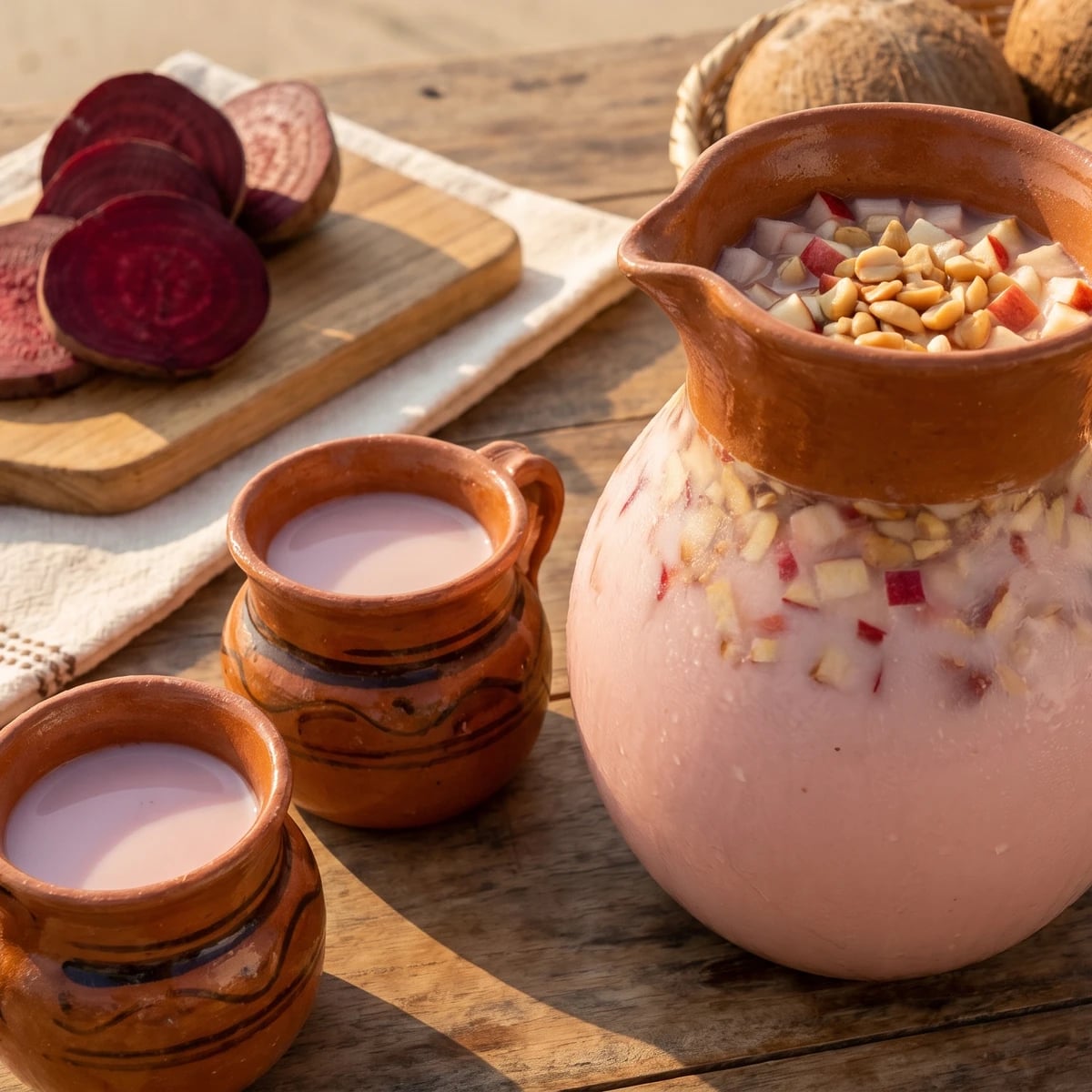
Colima's coastal tuba compuesta, made with fresh coconut-palm sap tinted pink with betabel, then served cold with chopped apple and toasted peanuts.

Beverages
Mexican
Outdoor Dining
Picnic
Budget Friendly
20 min
Active Time
0 min cook1 hr 20 min total
Yield6 servings

Colima owns this drink along the coconut belt, from the city of Colima to Comala, Tecoman, Armeria, and the road stalls where the tuberos carry their jugs in the heat. This is not horchata. This is not coconut water dressed up for a party. Tuba comes from the sap of the coconut palm, cut and collected before the day gets too hot, then sold young, cold, and barely fermented.

The color in tuba compuesta is betabel, beet, not red dye. The texture is the point: pale pink liquid, chopped manzana floating at the top, toasted cacahuates giving salt and fat against the sweet-sour sap. It is a drink you eat a little. In Colima they serve it in plastic cups from street carts, but at home I like a clay jarro or a glass pitcher sweating on the table, because outdoor food needs generosity, not decoration.

I learned this version from a woman near Comala who corrected me before I had even opened my notebook. She said the tuba must taste alive, but not sour like neglect. That is the line. Use fresh tuba if you are in Colima or near a tubero who knows his palm. If you are far away, I give you the coconut-water compromise below, but understand what you are missing. A substitution is a compromise, not an upgrade. Cada estado, su propia cocina.

Tuba arrived on Mexico's Pacific coast through the Manila Galleon trade, which connected the Philippines and New Spain from 1565 to 1815 through the port of Acapulco. Filipino sailors and coconut workers brought palm-sap collection and fermentation techniques that took root in coastal Colima, Guerrero, and parts of Jalisco, but Colima made tuba a daily street drink. The pink tuba compuesta, colored with betabel and served with chopped fruit and peanuts, is a later market-cart style that turned a working coastal drink into one of the state's most recognizable refreshments.

The technique, the tradition, and the story behind every dish.

Discover Culinary Explorer

Ingredients

fresh tuba de coco

Quantity

6 cups

well chilled

beet (betabel)

Quantity

1 small

peeled and thinly sliced

piloncillo syrup

Quantity

2 tablespoons, or to taste

sea salt

Quantity

1 small pinch

crisp red apple

Quantity

1 cup

finely diced

roasted unsalted peanuts

Quantity

1/2 cup

roughly chopped

fresh lime juice (optional)

Quantity

1 tablespoon

only if the tuba tastes flat

Equipment Needed

  • Clean glass pitcher or clay water jar
  • Fine-mesh strainer
  • Sharp knife and cutting board
  • Long spoon for serving

Instructions

  1. 1

    Check the tuba

    Taste the cold tuba before you touch anything else. It should be lightly sweet, gently tangy, and clean, with a faint coconut-palm aroma. If it smells rotten, harsh, or alcoholic in a strong way, do not use it. Tuba is alive, yes, but neglect is not tradition.

  2. 2

    Tint with betabel

    Put the sliced betabel in a clean glass jar or pitcher and pour in 2 cups of the tuba. Refrigerate for 45 to 60 minutes, until the liquid turns a soft pink. Do not blend the beet into the drink. You want color, not beet juice soup. Strain out the beet slices and discard them.

  3. 3

    Season the pitcher

    Pour the pink tuba back into the remaining 4 cups of cold tuba. Stir in the piloncillo syrup and the small pinch of sea salt. Taste. The salt should not announce itself. It should make the coconut-palm sweetness clearer, the way a good market vendor seasons fruit without making it taste salty.

  4. 4

    Add the fruit

    Add the finely diced apple and stir once or twice. The pieces should float and stay crisp. If the apple is mealy, do not use it. This drink is built on freshness. A bad apple in tuba compuesta is not a small problem, it is the first thing your mouth will find.

  5. 5

    Finish with peanuts

    Add the chopped roasted peanuts just before serving so they keep their bite. If the tuba tastes flat, add the lime juice now, but only then. Good fresh tuba already has its own acidity. No me vengas con atajos. Taste first, correct second.

  6. 6

    Serve very cold

    Serve in clay jarritos or sturdy glasses with a spoon for the apple and peanuts. Keep the pitcher cold and drink it the same day. Tuba keeps fermenting as it sits, and the bright Colima flavor belongs to the fresh window, not tomorrow's refrigerator experiment.

Chef Tips

  • Real tuba de coco comes from coconut-palm sap, not the liquid inside a mature coconut. If you are in Colima, ask for fresh tuba from a tubero in the morning. Si no conoces el mercado, no conoces la cocina.
  • If you cannot get fresh tuba, use 5 cups unsweetened coconut water mixed with 1 cup fresh young coconut water, 2 tablespoons piloncillo syrup, 1 tablespoon lime juice, and a tiny pinch of salt. It will make a good cold coconut drink. It will not be true tuba.
  • Because fresh tuba is lightly fermented, it can contain trace alcohol depending on age and handling. For children, pregnancy, or strict zero-alcohol needs, use the coconut-water compromise and call it what it is.

Advance Preparation

  • The betabel-tinted tuba can be prepared up to 2 hours ahead and kept refrigerated.
  • Dice the apple no more than 30 minutes before serving so it stays crisp.
  • Add the peanuts only at the table. They soften if they sit too long in the drink.

Frequently Asked Questions

Nutrition Information

1 serving (about 280g)

Calories
180 calories
Total Fat
6 g
Saturated Fat
1 g
Trans Fat
0 g
Unsaturated Fat
5 g
Cholesterol
0 mg
Sodium
35 mg
Total Carbohydrates
30 g
Dietary Fiber
2 g
Sugars
27 g
Protein
4 g

Note: Chef personas and recipes are created with AI assistance. Cook with care: follow safe food-handling practices, check doneness with a thermometer when needed, and adapt for allergies and your kitchen.

Where cooking meets culture.

Culinary guides, cultural storytelling, and the editorial depth that makes cooking meaningful.

Discover Culinary Explorer

More from Occidente Beverages

Browse the full collection